ProductPai Weekly Roundup: 5 New AI Products Worth Watching

A roundup of the top 5 new AI products from ProductPai's weekly rankings, spanning creation, imaging, and efficiency tools.
Based on ProductPai's weekly rankings (June 22–28), this article reviews the top five new AI products: the emotional voting app "Are These Two a Good Match?", the macOS efficiency app Frosted, the open-source layout tool Kami, the conversational AI imaging studio Zopia, and the top-ranked family AI picture book platform Tonghui—revealing how AI is lowering creative barriers.
In an era where AI products emerge one after another, efficiently discovering genuinely valuable new tools has become a real challenge. Rather than searching for needles in a haystack across social media every day, it's far more effective to rely on product discovery communities for precise filtering. Based on the weekly rankings from "ProductPai" (产品派) between June 22 and June 28, this article rounds up the top five AI tools and new products, examining the practical needs each one addresses.
ProductPai: A Community Focused on Product Discovery
"ProductPai" isn't a single AI tool, but rather a product discovery community. Here, you can find the latest product launches, various product rankings, curated content, and related discussions, and you can also directly search for tools you're interested in.
The product discovery community model was first popularized abroad by Product Hunt. Founded in 2013, it became an important launchpad for independent developers and startups worldwide to release new products, thanks to a mechanism where entrepreneurs submit new products daily and community users vote on rankings. The core logic of such communities is to filter information through collective intelligence: faced with hundreds of new tools every day, individuals can hardly evaluate them one by one, but through voting, comments, and ranking mechanisms, the community focuses user attention on products that have been preliminarily validated. Domestic platforms like "ProductPai" have continued this approach while making localized optimizations tailored to the habits of Chinese creators, product managers, and new-media professionals.
For new-media professionals, product managers, and developers, the most noteworthy feature is its ranking page. The rankings are broken down into multiple dimensions such as daily, weekly, monthly, active, and developer-interaction rankings, and the page clearly lists the most-followed products within a given time period. The advantage of this layered mechanism is that it can capture short-term hits while also surfacing high-quality products that have been validated over the long term, helping users save significant time on filtering. The mobile browsing experience is also well done, allowing you to check out the latest product updates anytime, anywhere.
Emotional Interaction and Efficiency Tools: Fifth and Fourth Place
Ranked fifth is "Are These Two a Good Match?" (这俩人合适吗?), a lightweight voting product centered on emotional relationships. Users can browse through different relationship scenarios and make their own judgment on whether two people are a good match. After voting, they can see whether their choice aligns with the majority opinion.
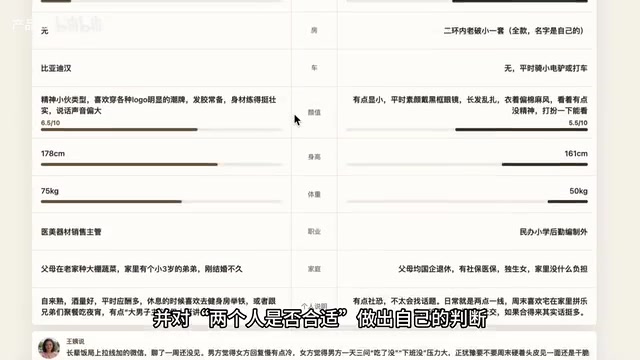
It's more like a small-scale social experiment with an interactive feel, suitable for observing the differences in how various groups judge intimate relationships, ways of getting along, and boundaries. The value of such products lies not in functional complexity, but in the way they trigger users' desire to express themselves and their curiosity—a typical example of lightweight social play.
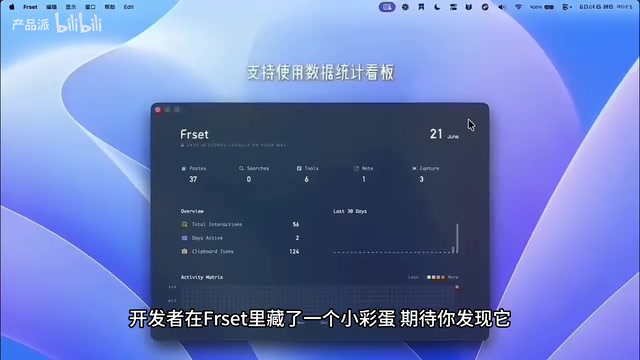
Ranked fourth is "Frosted," a macOS app that combines clipboard management with a variety of efficiency tools. It integrates clipboard management, screenshot search, Markdown notes, AI tools, developer tools, system monitoring, and calendar/schedule viewing, placing system status and calendar information within easier reach and reducing the cost of extra searching and switching.
The clipboard manager is a long-standing yet continuously evolving category of efficiency tools. An operating system's native clipboard usually only retains the most recently copied content—once you copy something new, the old content is overwritten—which becomes an obvious bottleneck in workflows requiring frequent information transfer across windows. Third-party clipboard managers continuously record copy history in the background, enabling storage, retrieval, categorization, and quick pasting of multiple entries. In recent years, such tools have further integrated OCR screenshot recognition, Markdown editing, code snippet management, and even AI processing capabilities, gradually evolving into integrated efficiency hubs—and Frosted is a representative of this trend.
Frosted's core idea is to make the clipboard no longer just a one-time transit station, but a content gateway that can be viewed, organized, and quickly reused at any time. It's worth noting that the developer has also hidden a little easter egg in the app for users to discover—these kinds of details often boost a product's word-of-mouth and memorability.
Document Formatting and AI Imaging: Third and Second Place
Ranked third is "Kami," an open-source document layout and design skill pack, mainly used to improve the visual presentation and stylistic consistency of AI-generated documents. It comes with ten common document templates, covering scenarios such as one-pagers, resumes, slides, portfolios, and landing pages.
For those who frequently use AI coding tools to generate documentation, presentation materials, or personal profile pages, Kami can significantly reduce the time spent manually adjusting layouts afterward, bringing the output closer to a state that's ready to read, share, or print directly. It addresses a real pain point: AI excels at generating content but often falls short on layout and visual consistency, and Kami fills exactly this gap. As an open-source project, its extensibility is also worth developers' attention.
Ranked second is "Zopia," a conversational AI imaging studio whose core goal is to minimize the barrier to short-film creation. You simply describe an idea in text, and the system automatically completes the entire workflow—from script, characters, and scene design to storyboards and the finished film—supporting a variety of visual styles including anime, live-action, and 3D.

Behind Zopia lies the combination of Text-to-Video technology and Agent orchestration. Since the emergence of models like OpenAI's Sora, Runway Gen-3, Kling, and Vidu, AI has been able to generate coherent video clips directly from text descriptions. However, pure video generation models struggle to handle the complex elements required for a complete short film, such as scripts, storyboards, and character consistency. As a result, a new generation of products tends to use Agent workflows to break creation down into multiple steps, completed collaboratively by different models, while allowing users to continuously adjust each stage through multi-round natural language conversations.
Zopia's biggest feature is that the entire process supports continuous fine-tuning through multi-round natural language dialogue. This means creators don't need to master professional video production skills—they can iterate toward a satisfying final product simply through conversation, dramatically lowering the technical barrier to content creation.
The Top-Ranked Product: The Family-Oriented AI Picture Book Platform "Tonghui"
The number one product in this week's rankings is "Tonghui" (铜绘), an AI picture book and animation creation platform aimed at children and families. It integrates story conception, image generation, animation production, and voice synthesis, enabling even those without any drawing or writing background to easily create their own picture books.
Using it is very simple: just enter a theme, or chat with the AI for a few sentences about your story, and the platform will automatically generate characters, scenes, and complete illustrations. It comes with over 180 picture book styles—including watercolor, ink wash, 3D, paper-cut, and felt—which can be switched with a single click while ensuring the entire book maintains a consistent style and consistent character appearances. This is especially crucial for picture book creation, because character consistency is precisely one of the current technical challenges in AI image generation.
Character consistency is a widely recognized technical challenge in the field of AI image and video generation. Diffusion models essentially generate images frame by frame and independently based on text prompts, lacking any memory of the same character's appearance across images, which easily leads to the same character drifting in facial features, hairstyle, or clothing across different pages. The industry uses techniques such as LoRA fine-tuning, reference image injection (e.g., IP-Adapter), and character embedding vectors to lock in character features. The picture book scenario has particularly stringent consistency requirements, because readers flip through the entire book continuously, and any sudden change in a character's appearance would break the immersion of reading—which is exactly where the technical value behind Tonghui's emphasis on "consistent character appearances throughout the book" lies.

Beyond static picture books, Tonghui can also turn works into dynamic animated shorts, automatically adding camera movement, voiceover, and background music, so children can read their own stories as if watching a cartoon. In addition, it offers an interactive story mode with multi-ending branching plots, where every choice a child makes leads to a different development—well suited for reading and thinking at the same time. For voiceover, the platform provides human-like voices and supports page-by-page narration in multiple languages including Chinese, English, and Japanese. Finished works can be shared to the community or printed into physical picture books for a fee, making a unique gift for children.
In terms of product positioning, Tonghui precisely targets the group of parents, children, schools, and educational institutions, and can be used for parent-child reading, creative courses, or personal creation, turning stories directly from ideas into picture books and animations. Its rise to the top also reflects how AI content creation is extending into high-emotional-value vertical scenarios like education and family.
Summary
Several clear trends can be seen from this week's rankings: AI is continuously lowering the barrier to professional creation (imaging, picture books, layout), enabling ordinary people to produce high-quality content; at the same time, efficiency tools and lightweight social products still have stable demand. Whether you're looking for office tools, learning resources, or are simply curious about new ways to play with AI, tracking new products through discovery communities like ProductPai is a time-saving and efficient approach.
Key Takeaways
Related articles

The Design Philosophy of Agent Skills: Making AI Interrogate Your Development Methodology
Deep analysis of Matt Pocock's open-source Skills repo: Grill Me interrogation-style alignment, Wayfinder decision mapping, smart/dumb zones, and the shift from tactical to strategic programming.

Spring AI 2.0 in Practice: Core Agent Development Capabilities and Code Generation Assistant Project
Deep dive into Spring AI 2.0 core updates, covering Agent autonomous reasoning, tool calling, and iterative loops, with a hands-on Claude Code-style assistant project using ChatClient, Streaming, Memory, Tools, and MCP.

Continue Open-Source AI Coding Assistant: Complete Setup Guide for a Free Copilot Alternative
Complete guide to setting up Continue, the open-source VS Code AI coding assistant. Connect free Gemini or Claude APIs for zero-cost Copilot alternative with inline editing and model freedom.