Project Winter V2 Update Returns: Hands-On With the New Game Mode

Project Winter V2 adds a shorter, faster game mode — but player reactions are mixed.
Project Winter's Version 2 update introduces a streamlined mode with just two objectives: repair the radio and collect 18 units of fuel to call a helicopter escape. This hands-on breakdown covers the new crafting systems (fuel from Red Berries, scrap from wood and stone), bunker co-op mechanics, multi-channel walkie-talkie communication, and classic Traitor sabotage plays. The session ended in dramatic chaos with more Traitors than expected and a scramble for limited helicopter seats. Players called it fun overall but noted the short mode doesn't quite match the depth of the longer format — and small map size plus input bugs leave room for improvement.
Project Winter, a classic social deduction survival game, recently received its Version 2 major update. This multiplayer title — which previously appeared at the Jingle Jam event — finally delivers a long-requested change from the community: a faster, shorter new game mode. Based on a live multiplayer session, this article breaks down what's changed and how the new mode actually plays.
A New Mode: Shorter, Snappier Pacing
Veteran players know Project Winter's core loop well: a group of survivors must gather resources, repair equipment, and escape the map — all while hiding among them are Traitors whose goal is to sabotage the escape plan.
The biggest change in the V2 update is the introduction of a streamlined game mode. According to players in the session, the mode is "shorter, which is exactly what we wanted" — a sign that the developers are listening to community feedback. The new mode distills the core objectives down to just two: repair the radio, and collect 18 units of Fuel. Once both are done, survivors can call in a helicopter and escape.

The map size has been scaled down accordingly. Players noted during the session that "it's a pretty small map," and the developers' intent is clearly to make resources easier to find and speed up the overall pace of play. Not everyone is sold, though — one player flatly stated "this mode isn't as fun as the other one," a divide worth noting.
The original standard match in Project Winter typically runs 30–45 minutes, requiring players to complete multiple complex objectives (such as repairing a generator, radar, and helicopter pad) across a much larger map. That design gives plenty of time for information gathering, team coordination, and betrayal scheming — but it also means a high cost per session. If Traitors cause serious disruption early on, the remaining time can feel grueling for everyone involved. The streamlined mode directly addresses this pain point: two objectives, a smaller map, fewer resource conflicts. In theory, each match becomes tighter and the barrier to jumping into the next round is lower. This "short-session" philosophy is also seen in similar social deduction games like Among Us and Goose Goose Duck, reflecting a broader demand in the casual multiplayer market for tighter per-session time commitments.
Character Roles and the Resource System
The new mode retains Project Winter's signature role system. Traitors have class-specific abilities, and some survivors have dedicated roles as well. In this session, one player was assigned as an Engineer, while certain crates were labeled "Traitors Only" — accessible only to players of that specific faction.
Resource gathering is the game's central loop. Fuel must be crafted from Red Berries — a mechanic that kept coming up as a teaching moment throughout the session, as several players instinctively ate the berries as food instead. Scrap requires wood and stone to craft. Opening Bunkers — which contain large caches of loot — typically requires two players to simultaneously hold down switches.

Inside bunkers, players can find weapons like the crossbow, sniper rifle, and M4, along with Electronic Scrap (convertible into walkie-talkies), medkits, and other useful gear. It's worth noting that medkits can only be used on yourself — you can't heal teammates — which limits the space for cooperative support plays. Trap-disarming tools, fuel canisters, and backpacks are also scattered across the map.
Social Deduction and the Joy of Betrayal
Project Winter's real magic lies in the trust dynamics between players. This session delivered plenty of classic social deduction moments: one player secretly poisoned a teammate at the very first bunker, leading to a chain of misunderstandings when the poison kicked in during a one-on-one encounter later. Traitors also disrupted progress by throwing poison traps at escape objectives and stealing already-deposited fuel and scrap.
The Walkie-Talkie system is central to how information flows through the game. Different colors (blue, purple, yellow) correspond to different channels, letting players set up private squad channels — but this also creates plenty of confusion around identity. The session saw multiple instances of "I thought that was someone else talking" leading to misfired accusations.

One entertaining sideshow: a player whose keyboard and mouse weren't responding properly (unable to remap keybinds, mouse clicks not registering) ended up going largely AFK for the match and was suspected of being a Traitor by the rest of the group. It's a minor but telling sign that the game may have some rough edges in its input settings.
Project Winter's social mechanics share a design DNA with the board game Werewolf — information asymmetry and hidden identity — but the addition of real-time survival pressure makes the timing and cost of betrayal far more nuanced. Traitors can't simply "vote out" survivors; they have to slow things down indirectly through sabotage, poisoning, and luring enemies, all while maintaining their cover. This means a skilled Traitor must constantly balance "actively contributing to seem trustworthy" against "quietly undermining things to complete their objective." The walkie-talkie's multi-channel design amplifies the fragmentation of information: private chats between survivors can help confirm alliances, but they can just as easily be exploited by Traitors to manufacture misunderstandings or false alliances. Every word spoken carries potential strategic weight.
The Endgame and Overall Verdict
As the fuel count climbed, the survivors banded together into a self-styled "Team Rotund," armed with M4s and a sniper rifle, attempting to escort their teammates to safety. But the number of Traitors turned out to be higher than expected — the endgame devolved into a chaotic free-for-all with multiple Traitors revealed. With limited helicopter seats and ticket requirements to board, several players were left stranded at the extraction point.
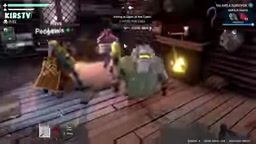
The finale had genuine dramatic flair: some players successfully boarded the helicopter and escaped, while those left behind scrambled to find an Escape Pod as an alternative. Even players who had already died could return as ghosts, using spectral powers to drain the body heat of survivors and interfere with their escape.
Post-game, the group's overall verdict was that it was "fun" and that switching up the mode was a nice change of pace. But the sentiment that "the new short mode isn't as good as the old one" was clearly voiced, and combined with the small map size and input configuration issues, it suggests that while the V2 update makes a genuine attempt at innovation, whether the streamlined mode can truly stand alongside the longer format remains up for debate. For players who enjoy the blend of Werewolf-style social deduction and survival gameplay, this update is still worth a look.
Related articles

JobRunner MCP Server: AI Agents Can Now Fix Failed Java Jobs
JobRunner launches an open-source MCP server enabling AI agents to view cluster status, diagnose failures, and recover Java jobs—incident response from any cloud coding environment or existing agent.

MLAI Digital Launches 9 Security Agents: MCP Server Safeguards the Full Lifecycle of Agentic AI
MLAI Digital launches Security MCP Server with nine built-in specialized security agents covering vulnerability discovery, attack simulation, prompt injection detection, API and infrastructure assessment, and accelerated remediation—embedding security validation across the full Agentic AI lifecycle from development to production.

Running Isaac Lab on H100 GPUs: Exploring Better Approaches
Exploring optimization methods for running Isaac Lab on NVIDIA H100 GPUs, including MIG configuration, mixed precision, TensorRT acceleration, and community experience to improve robotics simulation and reinforcement learning efficiency.