Proofrr: One Workspace for Creative Feedback, Review, and Approval

Proofrr brings creative review, version comparison, and client approval into one workspace with no-login links and AI.
Creative teams have long struggled with feedback scattered across platforms and chaotic version management. Proofrr is an early-stage Product Hunt launch that consolidates design and video workflow feedback, version control, and approvals into a single workspace. Key features include side-by-side draft comparison, threaded annotations, no-login shareable review links, and AI-assisted review. The no-login link stands out as a UX highlight that lowers the barrier for external clients. With 79 upvotes and an 11th-place ranking on launch day, Proofrr faces established competitors like Frame.io and Filestage, and is best suited for small design studios and independent creatives looking to run a pilot.
Creative teams spend a surprising amount of energy just switching between tools: feedback buried in WhatsApp threads, file versions piling up in Google Drive, and final approval buried somewhere in an email chain. The actual creative work gets steadily eaten away by bloated review processes. Proofrr, a recent addition to Product Hunt, takes direct aim at this problem — bringing feedback, review, and approval for creative projects into a single unified workspace.
Why Creative Review Needs a Dedicated Workspace
Design and video workflows share a defining challenge: deliverables are visual, go through multiple iterations, and feedback typically comes from clients with non-technical backgrounds. General-purpose collaboration tools — chat apps, cloud storage, email — have an inherent gap when handling these needs. A client says "make the logo bigger" in a chat message, but the designer has no idea which version they're referring to. Approval decisions get scattered everywhere, and nobody can say with confidence which version was actually signed off on.
Proofrr's goal is to consolidate all of these steps in one place. According to its Product Hunt page, it offers project management capabilities tailored to design and video workflows, unifying versions, comments, and approval status in a single location so that information doesn't get lost across multiple platforms. This "vertical" approach follows the same logic as products like Figma and Frame.io that have focused specifically on creative collaboration.
Frame.io and Figma are the two benchmark references in this space. Frame.io, acquired by Adobe in 2021, focuses on video content review and version management — it lets teams pin precise timestamped comments on a timeline, and clients can participate in reviews without installing any software. It's become the industry standard for Hollywood post-production and ad agencies. Figma, on the other hand, has set an extremely high bar on the design side, merging the design tool and review process into a single interface through real-time multiplayer editing and commenting. Together, these products have validated the market logic of vertical collaboration tools: the closer a product fits a specific workflow, the more it reduces communication friction between creative teams and external clients. Proofrr attempts to cover both design and video in a lighter-weight package, positioning itself somewhere between the two — which means it must compete with both, while also differentiating itself from similar aggregation tools like Filestage and Ziflow.
Core Features Breakdown
Based on the officially listed features, Proofrr's capabilities center on a few key areas:
Side-by-Side Version Comparison
Version management is the biggest headache in creative iteration. Proofrr supports side-by-side draft comparison, giving reviewers a clear visual diff between two versions. For work like design and video that relies heavily on visual judgment, this is far more efficient than trying to describe changes in words.
Annotations and Threaded Comments
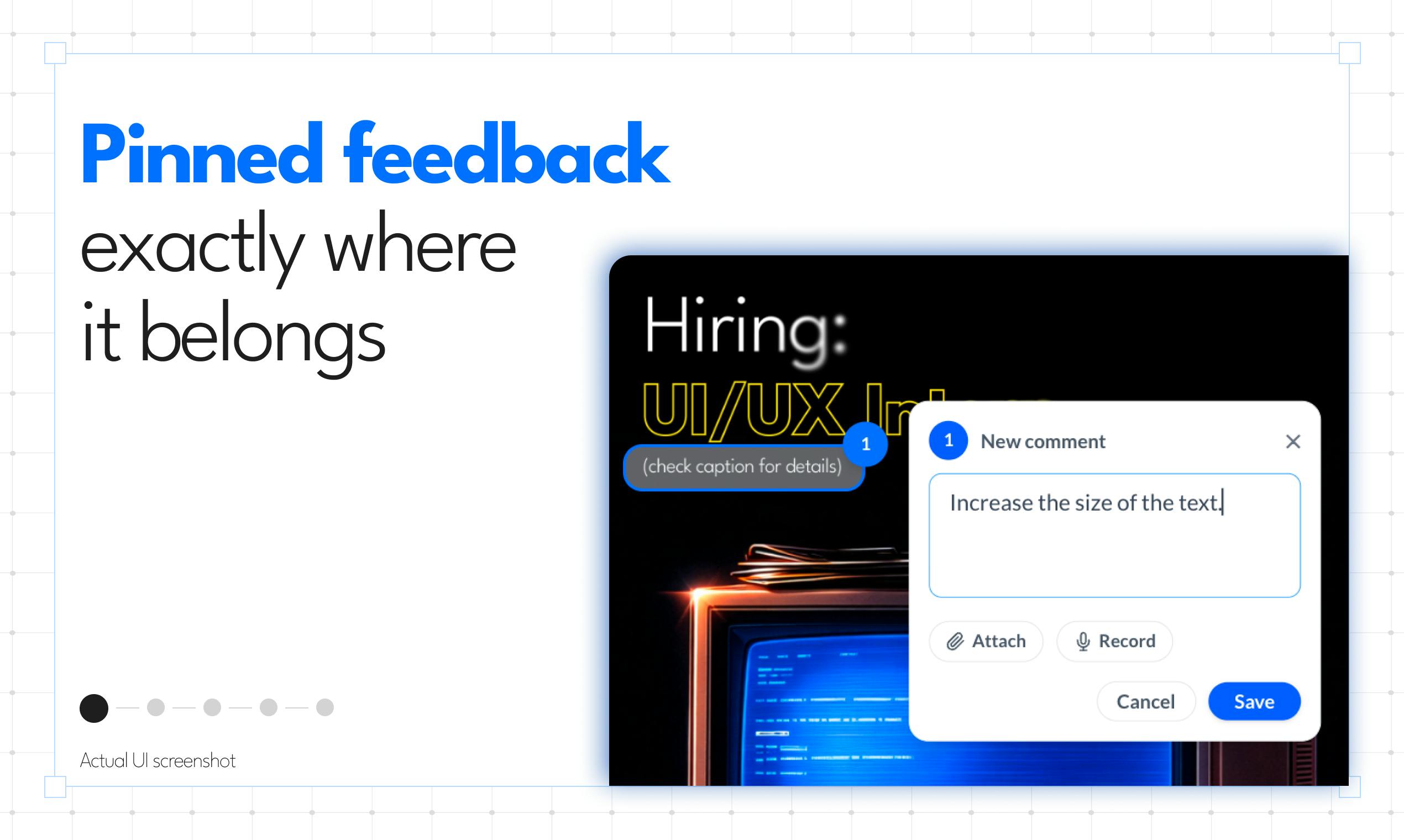
The tool provides annotations and threaded comments. Reviewers can mark up directly on the canvas, with feedback organized as conversation threads to prevent comments from turning into an unmanageable mess. This addresses the core pain point of feedback scattered across chat apps.
Shareable Review Links — No Client Login Required
One notable feature is the shareable review link that requires no client login. Client experience is often what determines whether tools like this actually get adopted — if every review session requires clients to register an account and remember a password, that friction directly kills adoption rates. Proofrr lets external clients participate with just a link, lowering the barrier to collaboration significantly.
AI-Assisted Review
Proofrr also introduces AI-assisted reviews, positioned around accelerating feedback. While the official description is fairly brief and doesn't detail exactly what the AI does, industry trends suggest these features typically include automatically summarizing feedback, identifying duplicate comments, and generating revision checklists. This is also part of why it appears under Product Hunt's Artificial Intelligence category.
Looking at how AI has been implemented in existing creative collaboration tools, the most common approaches include: using large language models to semantically cluster all comments — merging feedback like "font too small," "text size is off," and "hard to read" into a single action item; automatically generating changelogs based on version history to reduce manual work for designers; and producing structured revision checklists at the point of final approval that can be directly converted into actionable tasks. Since Proofrr hasn't yet disclosed the specifics of its AI implementation, real-world effectiveness remains to be seen. It's also worth noting that the value of AI-assisted review depends heavily on the volume of comment data accumulated — for teams just getting started, the AI's usefulness may be quite limited in the early stages when data is sparse.
Market Performance and Positioning
Proofrr launched on Product Hunt with 79 upvotes and 9 comments, ranking 11th for the day across the Design Tools, Productivity, and Artificial Intelligence categories. It was made by Shikhar Bower. By the numbers, this is an early-stage product that has attracted modest attention but hasn't broken through to viral status.
It's entering a competitive field — Frame.io (video review), Filestage, Ziflow, Markup.io, and others are all vying for the creative review market. Proofrr's path to standing out may depend on whether it can deliver a smooth, cohesive combination of project management, version comparison, no-login review, and AI acceleration — and whether that combination creates meaningful differentiation for specific audiences, such as small-to-mid-sized design studios and independent creatives.
Who Should Try It
If your team is struggling with any of the following, Proofrr is worth putting on your shortlist: feedback scattered across multiple chat tools, chaotic version management, or an opaque client approval process. It's especially relevant for creative teams that frequently work with external clients and don't want to lose them to a complicated registration flow — in that context, the no-login review link could be genuinely useful.
That said, as an early-stage product, its feature maturity, stability, and ecosystem integrations are still an open question. The actual effectiveness of AI-assisted review and the depth of integration with existing tools like Drive and Slack will be key factors in determining whether it can truly replace your current workflow. Teams that are curious would be well advised to run a small pilot on a real project before committing to a full migration.
Related articles

SimpliSafe's New Video Doorbell: AI + Live Agents Actively Watching Your Front Door
SimpliSafe's $199.99 Video Doorbell Series 2 pairs with its Active Guard service to combine AI screening and live agents for proactive home security monitoring and intervention.

Fujifilm Instax Pal 2 Mini Camera: A Meaningful Upgrade That Finally Adds a Screen
Fujifilm's Instax Pal 2 mini digital camera adds a screen and viewfinder, fixing the original model's blind-shooting flaw and making it a more practical instant imaging device.

German Companies Are Almost Entirely Dependent on American AI Models and Services
German companies rely almost entirely on US AI vendors like OpenAI and Google. This article examines the causes, GDPR data sovereignty tensions, and Europe's path toward AI autonomy.