Publicit: One API for Buying Omnichannel Ads, with Direct Placement by AI Agents

Publicit connects CTV, outdoor, and mobile ad buying through a single API and supports direct placement by AI agents.
Publicit launches on Product Hunt as omnichannel ad infrastructure for marketers and AI agents. Built on OpenRTB, it uses one API and a proprietary real-time bidder to connect CTV, outdoor screens, and mobile—users set audience and budget, upload creative, and the platform auto-purchases ad slots with pricing shown upfront. It offers hourly performance measurement and a native MCP server so AI assistants like Claude and ChatGPT can execute placement instructions directly. Free and self-serve, it suits teams wanting multi-screen coverage with less effort, but is still early-stage, with inventory quality, data dimensions, and cross-channel attribution yet to be verified.
Ad placement is undergoing an infrastructure-level reconstruction. Publicit has launched on Product Hunt, positioned as "omnichannel advertising infrastructure for marketers and AI agents," attempting to connect three vastly different advertising scenarios—connected TV, outdoor screens, and mobile—through a single API. The emergence of this product points to a more noteworthy trend: ad buying is transforming from a manually operated back office into an interface that can be invoked programmatically.
One API Connects Three Types of Screens
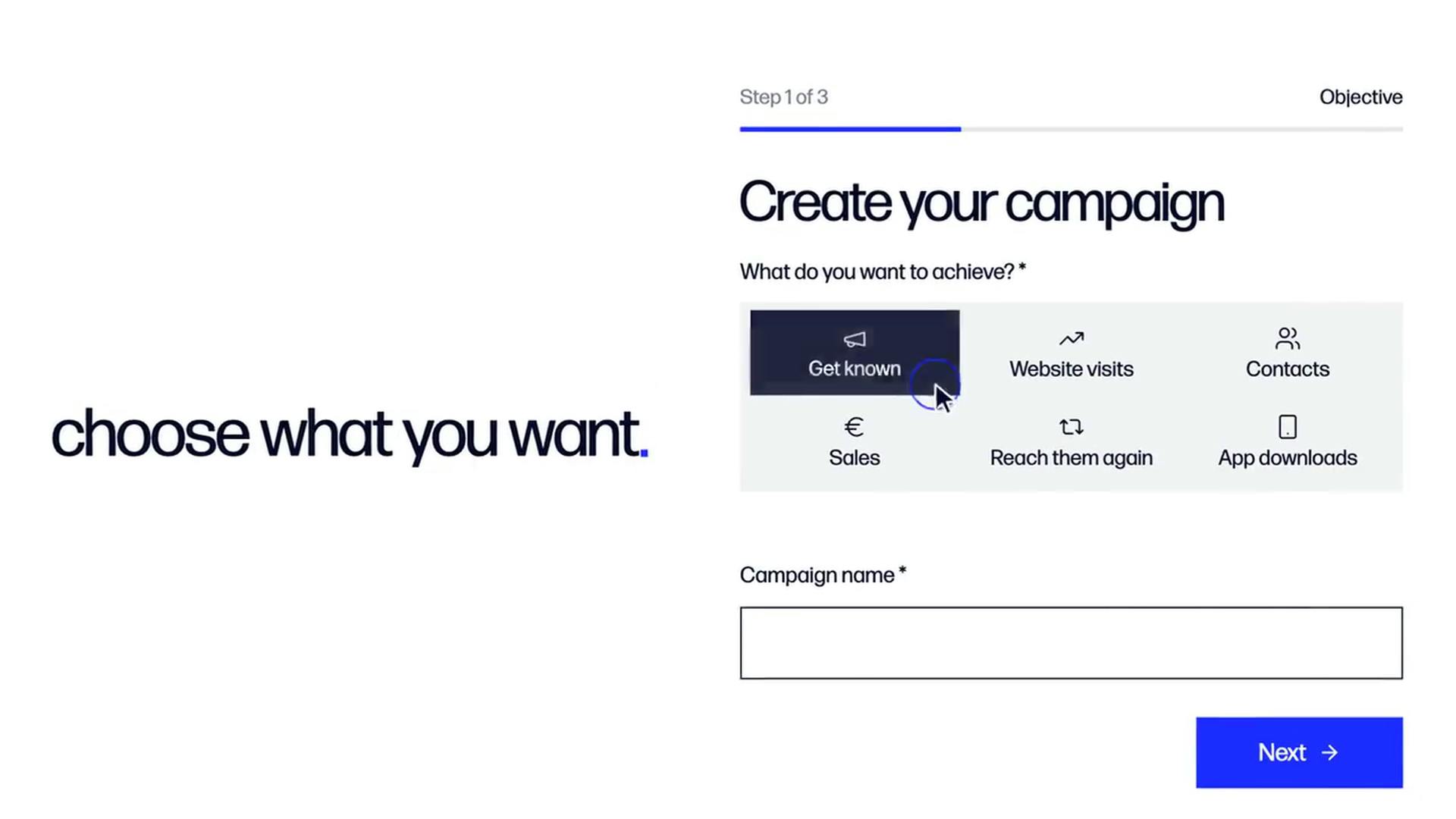
Publicit's core proposition is self-serve cross-channel ad buying. Users select a target audience and budget, upload creative assets, and the platform's proprietary real-time bidder automatically purchases ad inventory across channels. Built on the OpenRTB protocol, it essentially uses a standardized bidding language to bring connected TV, street screens, and mobile ad inventory into a single procurement workflow.
The practical significance of this design for marketing teams lies in reducing channel-switching costs. Under traditional approaches, CTV advertising typically requires a separate DSP or direct media buying, outdoor screens often rely on offline agency negotiations, and mobile placement uses yet another ad platform. Each channel prices and settles independently, making budget allocation and performance comparison difficult. Publicit integrates these into a single interface and a single API, using unified audience and budget logic to cover different screens.
One detail worth noting: the platform emphasizes that pricing is displayed for every ad slot before purchase. This price transparency is a differentiating point for ad buyers accustomed to operating within the black box of bidding.
OpenRTB is the real-time bidding communication standard established by the Interactive Advertising Bureau (IAB), short for Open Real-Time Bidding, with current mainstream versions being 2.5 and 2.6. It uses JSON format to define the field structures of Bid Requests and Bid Responses, enabling ad exchanges (Ad Exchange/SSP) to broadcast ad slot information in real time to multiple demand-side platforms (DSPs), which respond with bids and creatives within milliseconds. The core value of OpenRTB is interoperability: as long as both parties follow the same set of field semantics, there is no need to develop a separate integration for each media outlet. CTV, digital out-of-home screens, and mobile correspond to different media types and device fields within OpenRTB, and Publicit leverages this unified protocol to bring all three screen types into a single bidding workflow.
Real-Time Bidding and Hourly Performance Measurement
Publicit's real-time bidder handles the core execution of cross-channel procurement. After users set their audience and budget, the system automatically bids for ad slots across all three channels. Matching this automation is the "hourly" performance measurement it provides—delivery data is not aggregated the next day but reported at hourly granularity.
The value of hourly measurement lies in shortening the feedback loop. Advertisers can identify abnormal performance on a particular channel or ad slot type within a single day and adjust budgets or creative assets promptly, rather than waiting for the daily report. For teams with limited budgets and little room for trial and error, this granularity can reduce wasted spend.
However, it should be noted that the materials only mention "delivery measured hourly" without specifying the specific metric dimensions, data latency, or attribution methods. Judging actual delivery performance still depends on whether the platform's data granularity is sufficiently fine and whether it supports cross-channel attribution comparison.
DSP (Demand-Side Platform) is a software system used by advertisers or agencies to programmatically purchase ad inventory. It connects to multiple ad exchanges and supply-side platforms (SSPs), bidding on behalf of the buyer each time an impression opportunity arises. Traditionally, CTV placement often relies on a dedicated CTV DSP or direct media buying, outdoor screens are mostly negotiated through offline agencies, and mobile is handled by yet another DSP or ad network—with budgets, audience targeting, and reporting standards fragmented across all three. The article mentions that Publicit integrates these into a single interface, essentially using a unified DSP layer to cover multi-channel inventory, thereby reducing the complexity of cross-channel budget allocation and performance comparison.
Native MCP Server: Letting AI Agents Place Ads Directly
Publicit's most forward-looking feature is its built-in native MCP server. MCP (Model Context Protocol) enables AI assistants like Claude and ChatGPT to directly invoke external tools and interfaces. In the advertising context, this means marketers can issue placement instructions directly to an AI assistant, with the AI agent handling ad slot selection, creative upload, and budget setting.
Behind this design is a clear judgment: ad buying is becoming one of the tasks that AI agents can execute. Once the placement workflow is API-ified and parameters are structured, AI agents can complete work that previously required multiple manual steps, guided by natural language instructions from humans. Publicit positions itself as infrastructure for both "marketers and AI agents," rather than just a back office for human users—a positioning worth noting.
Currently, public information about the actual MCP integration experience is still limited. The specific workflow, instruction boundaries, and permission controls for running campaigns from Claude or ChatGPT require hands-on testing to assess maturity.
MCP (Model Context Protocol) is an open protocol launched by Anthropic in late 2024 to standardize how AI models connect to external tools and data sources. It uses a client-server architecture: AI applications (such as Claude Desktop or ChatGPT plugin hosts) act as clients, while external services expose an MCP server that declares which tools, resources, and prompt templates they provide. During a conversation, the model selects a tool to invoke based on user intent, and the host program executes it and returns the result. For advertising platforms, implementing an MCP server is equivalent to "translating" the capabilities of the placement API into a set of tools that AI can understand and invoke, enabling natural language instructions to directly trigger operations such as ad slot queries, budget setting, and creative upload—without manual step-by-step clicking in a back office.
Who It's For, and What to Watch
Publicit's free registration lowers the barrier to entry, and the self-serve workflow means users can get started without sales contact. It is better suited for marketing teams looking to cover multiple screen types with minimal effort, and for developers already using the OpenRTB ecosystem who want to extend bidding capabilities to CTV and outdoor scenarios.
The product currently has 70 votes, ranks 10th, and has few comments, indicating it is still in an early exposure phase. Beyond the official website information, third-party validation of its delivery performance and channel inventory quality remains limited. For teams considering adoption, it is advisable to first verify several things: the actual inventory coverage of connected TV and outdoor screens, the specific metrics behind hourly data, the availability of the MCP integration, and whether cross-channel attribution supports a unified standard. The value of advertising infrastructure ultimately depends on inventory quality and data credibility—API elegance is only the starting point.
Key Takeaways
- Publicit uses a single API to connect connected TV, street screen, and mobile ad inventory purchasing, built on the OpenRTB protocol with a built-in real-time bidder.
- Delivery performance is measured hourly, pricing is displayed for ad slots before purchase, and registration is free with self-serve operation.
- The native MCP server supports running campaigns directly from Claude or ChatGPT, a forward-looking design for AI agent-driven placement.
- The product is still in an early stage, and channel inventory quality, data metric dimensions, and cross-channel attribution methods remain to be verified in practice.
One-line Summary
Publicit uses a single API to connect CTV, outdoor, and mobile ad buying, and supports direct placement by AI agents.
Paragraph Summary
Publicit has launched on Product Hunt, positioned as omnichannel advertising infrastructure for marketers and AI agents. Built on the OpenRTB protocol, it uses a single API and proprietary real-time bidder to connect three advertising scenarios—connected TV, outdoor screens, and mobile. Users set audience and budget, upload creative assets, and the platform automatically purchases ad slots, with pricing displayed before purchase. The platform provides hourly delivery performance measurement to shorten the feedback loop, and its built-in native MCP server enables AI assistants like Claude and ChatGPT to directly execute placement instructions. The product offers free registration and self-serve operation, suitable for teams looking to cover multiple screen types with minimal effort, but it is still early-stage, and channel inventory quality, data metric dimensions, and cross-channel attribution capabilities remain to be verified.
Related articles

Prompt Engineering for Beginners: From Writing Prompts to Engineering Thinking
Starting from the essence and four functions of prompts, this article systematically explains the six-step process, four success criteria, learning value, and practical limitations of prompt engineering to help you build a complete understanding.

Anthropic Launches Nasdaq IPO: AI Giant's Listing and Risk Disclosures
Anthropic officially launches its Nasdaq IPO under ticker ANT, with market valuation expected to potentially exceed SpaceX's record. The prospectus devotes nearly 100 pages to AI risks, while first-half revenue grew over 14x but net losses widened sharply, reigniting the AI bubble debate.

Rust cURL Clone Uses 4,832 unsafe Blocks—Is the Memory Safety Myth Broken?
A Rust cURL clone uses 4,832 unsafe keywords, challenging Rust's memory safety narrative. We analyze what unsafe really means, compare Fil-C, and examine rewrite motives.