Python + AI Learning Roadmap for Beginners: A Three-Stage Plan from Zero to Employable

A three-stage Python learning roadmap — foundations, advanced concepts, and real projects — to take beginners from zero to job-ready.
This article presents a structured Python learning path built around three progressive stages: foundational syntax and programming mindset, advanced concepts like functions and OOP, and hands-on projects covering web scraping, office automation, and data analysis. It argues that learning order matters more than content volume, emphasizes hands-on practice over passive watching, and notes that mastering Python's logic makes picking up future languages significantly faster.
For beginners with no prior experience, Python has become the go-to language for entering the fields of AI, data analysis, and automation — largely because of its clean syntax and mature ecosystem. Yet many people get stuck on a fundamental question: how should I learn it, and in what order? This article draws on the course structure of a systematic Python tutorial series to map out a practical learning path and help beginners build a clear framework for progressing from zero to job-ready.
Why Learning Order Matters More Than Learning Content
Many beginners fall into the habit of collecting resources from different sources and watching scattered videos. The result: they absorb a lot of individual concepts but can never connect them into a coherent system. The real value of a structured course isn't how much ground it covers — it's how it breaks the learning process into progressively layered stages.
This approach divides the entire journey into three modules: foundational syntax, advanced mastery, and hands-on practice. Think of it as "laying the foundation → building the frame → finishing the interior." This sequence follows the natural pattern of skill acquisition. Without a solid foundation, functions and object-oriented programming in the advanced stage become nearly insurmountable barriers. And without real-world practice, the syntax you've learned never converts into actual problem-solving ability.
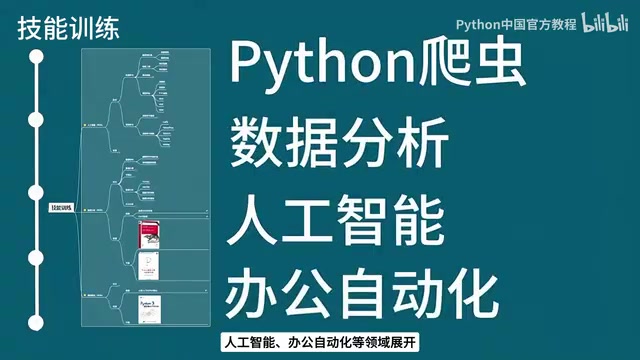
Stage 1: Foundational Syntax — Building a Programming Mindset
The goal of the foundational stage isn't to memorize as many functions as possible — it's to build a basic programming mindset. The core content at this stage includes setting up the Python environment, variables and operations, loop structures, and string handling.
These topics may seem simple, but they determine everything that comes after. Variables and data types are the foundation for understanding how programs run, while loops and conditional statements form the skeleton of program logic. At this stage, beginners are strongly encouraged to type out code actively rather than just watch videos. Understanding how a computer executes instructions step by step matters far more than memorizing syntax rules.
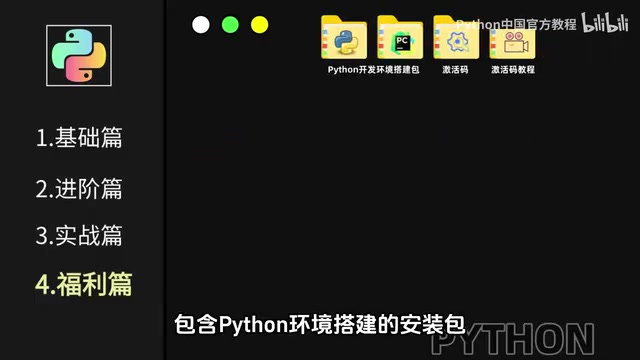
For those starting from zero, environment setup is often the first roadblock that makes people quit. Clear installation guides and bundled setup packages can significantly lower the barrier to entry — one of the key advantages a structured course has over scattered tutorials.
Stage 2: Advanced Mastery — Conquering the Core Challenges
The advanced stage is where the real gap in learner levels starts to show. This phase focuses on functions, object-oriented programming (OOP), regular expressions, file operations, and related topics.

Functions and OOP are universally recognized as the hardest hurdles for beginners. Functions address the problem of code reuse; OOP is a way of thinking about organizing complex programs. Once these two concepts click, both the efficiency and the structural quality of your code will improve dramatically. Using simple, relatable examples to explain these abstract concepts is the right approach — abstract ideas can only be truly absorbed when grounded in concrete scenarios.
Supplementary materials — slide decks, source code files, and mind maps — help learners organize their understanding at this stage. The advanced phase involves many interconnected concepts, and a clear mind map is often more effective for building a holistic picture than rewatching videos repeatedly.
OOP deserves a special note, as it confuses many beginners. The core idea is to bundle data and the methods that operate on that data together into "objects." A real-world analogy: a car has both attributes (color, brand, speed) and behaviors (accelerating, braking, steering). OOP uses "classes" to describe this kind of structure, and creates concrete objects through "instantiation." In Python, classes are defined with the class keyword, and the three core pillars are inheritance, encapsulation, and polymorphism. Understanding why OOP matters comes down to scale: real-world codebases are far larger than practice exercises, and object-oriented design makes code easier to reuse, maintain, and extend. Regular expressions are another common pain point — they're a tool for matching, searching, or replacing text using specific character patterns, widely used in data cleaning and web scraping. Beginners are advised to use an online testing tool like regex101.com to validate regex patterns in real time.
Stage 3: Project Practice — Turning Knowledge into Capability
What ultimately determines learning outcomes is the hands-on practice stage. This phase includes multiple real-world projects such as scraping images and videos, sending automated emails, and analyzing hotel room prices during a national holiday.

These projects cover Python's most common application areas:
- Web scraping: Extracting images, videos, and other data from web pages — a foundational skill for data collection
- Office automation: Automatically sending emails and batch-processing files — directly applicable to workplace productivity scenarios
- Data analysis: Using real hotel pricing data to practice data cleaning and analysis
The real value of practical projects is that they integrate all the scattered syntax you've learned into a complete workflow. Only when you can independently complete a web scraping project can you say you've truly mastered the language. The curriculum also extends into artificial intelligence, laying the groundwork for deeper exploration of AI.
Web scraping is the most representative entry-level project in Python practice. The basic principle: send HTTP requests to retrieve a webpage's HTML content, then use a parsing library (such as BeautifulSoup or lxml) to extract target data. Commonly used libraries in Python's ecosystem include requests (sending requests), BeautifulSoup (parsing static pages), and Selenium (handling dynamic pages that require JavaScript rendering). For office automation, smtplib is the standard for sending emails, while openpyxl or pandas handle Excel files. The core toolkit for data analysis is pandas (data processing) + matplotlib/seaborn (visualization). Understanding how these mainstream libraries divide responsibilities helps you quickly identify the right tools during the hands-on stage and avoid getting lost among too many options.
Master One Language, and Every Language After Gets Easier
The curriculum makes a point worth highlighting: once you've internalized Python's syntax logic, the time it takes to learn a second programming language drops significantly. This aligns with a well-established pattern in programming education.
Programming languages share a vast amount of underlying logic — variables, loops, functions, and object-oriented concepts exist in nearly every language. Truly mastering your first language means acquiring a transferable "programming mindset." Switching to another language afterward is simply a matter of learning new syntax for the same ideas. This is precisely why so many people recommend Python as a first programming language: its clean syntax lets beginners focus their attention on logic itself, rather than fighting the language.
Practical Advice for Beginners
Based on the structure of this curriculum, here are a few actionable tips for those just getting started:
Don't skip the fundamentals. Many people rush to build "impressive" projects, only to hit walls at every turn in the advanced stage. A solid foundation is what sustains long-term learning.
Keep practicing by doing. Programming is a craft — there's a large gap between understanding something and being able to write it. Following a study schedule and maintaining a consistent pace is far more effective than binge-studying followed by long breaks.
Get to real projects as early as possible. Even a simple scraper or automation script counts. The sense of accomplishment from completing something that actually runs — and the way it consolidates your knowledge — far outweighs watching theory videos on repeat.
For learners aiming to move into data analysis or AI, Python offers an excellent return on time invested. Follow the "foundations → advanced → hands-on" path steadily, with solid structured resources to support you, and even a complete beginner can work their way to a job-ready level.
Related articles

Chain of Thought Isn't Just for AI: How Humans Can Use CoT to Improve Thinking Quality
Chain of Thought isn't just a prompt trick for large models. Starting from a Hacker News discussion, this article analyzes why CoT works for human thinking too, breaks down actionable ways to transfer it, and highlights the key differences between human CoT and machine CoT.
Cloudflare Teams Up with OpenAI: Closi…
Cloudflare Teams Up with OpenAI: Closing the Loop from Vulnerability Discovery to Defense with AI
Cloudflare uses OpenAI Daybreak to investigate security vulnerabilities and generate reviewable remediation plans, while developers use Codex to boost coding efficiency and quality.

Orca Multi-Agent Orchestration in Practice: A Guide to Parallel Collaboration with Claude and Codex
Orca is Stable AI's free open-source agent workbench supporting 34 agents like Claude Code and Codex in parallel. Learn its Git worktree isolation, multi-model orchestration, and mobile management.