Python Learning Path for Absolute Beginners: A Science-Based Guide to Avoid Common Pitfalls

A structured 3-stage Python learning roadmap to help absolute beginners build skills efficiently and avoid common pitfalls.
This guide maps out a scientific Python learning path for absolute beginners, organized into three progressive stages: fundamentals (syntax, variables, loops), advanced topics (OOP, closures, decorators), and skills training (web scraping, data analysis, machine learning, office automation). It explains why scattered tutorials lead to confusion and how structured, systematic learning builds genuine programming ability.
Article Content
For beginners with no programming background, Python is often the go-to language. This choice is backed by deep language design philosophy — Python was released in 1991 by Dutch programmer Guido van Rossum, with a core design philosophy emphasizing code readability and simplicity. Its syntax closely resembles natural English, significantly lowering the cognitive barrier to entry.
Python's origins have a unique history. When designing Python, Guido explicitly introduced "The Zen of Python," where principles like "Beautiful is better than ugly" and "Readability counts" have deeply influenced every design decision in the language. Python also uses a dynamic type system — no need to explicitly declare variable types like in Java — further reducing the learning curve for beginners.
It's worth understanding that Python's dynamic type system is more than just "no need to declare types" — it's underpinned by a philosophy known as Duck Typing: "If it walks like a duck and quacks like a duck, then it's a duck." Python doesn't care about an object's specific type label; it only cares whether the object has the methods and attributes required in the current context. This design gives Python code exceptional flexibility and reusability, and also explains why Python is so popular in data science — scientists can focus on the logic itself without expending energy on a complex type system. Compared to C++ or Java, Python uses indentation instead of curly braces to define code blocks, freeing beginners from wrestling with complex syntax rules.
Additionally, Python has an incredibly rich third-party library ecosystem. PyPI (Python Package Index), the official Python package repository, currently hosts over 500,000 packages, covering virtually every technical domain from web development and data science to DevOps. pip, Python's standard package manager, drastically lowers the barrier to installing third-party libraries — a key infrastructure reason behind Python's rapid rise in data science and AI. According to the Stack Overflow Annual Developer Survey, Python has consistently topped the "Most Popular Programming Language" chart for multiple years. Yet, as one senior Python developer with nine years of experience put it: there are thousands of scattered tutorials online, but none offer a complete, structured system — the more you consume, the more confused and frustrated you become, to the point of wanting to quit. This article draws on the structure of a well-regarded, comprehensive Python course to map out a scientific learning path that helps beginners avoid common pitfalls.
Why Scattered Tutorials Leave You More Confused
Many beginners find themselves in this situation: spending hours piecing together videos, yet never forming a complete knowledge system. The root cause is that scattered content lacks coherence and progression — watch a web scraping example today, study some data analysis code tomorrow. It may feel like you're picking up a lot of tricks, but the foundational groundwork remains shaky.
The course author emphasizes: if Python beginners don't build a solid foundation and blindly jump into high-difficulty projects in pursuit of quick results, their IT career will be an uphill struggle. This is a point every beginner should take seriously. Programming skill development is inherently incremental — skipping stages tends to backfire. Truly effective Python learning should follow a complete chain from fundamentals to advanced concepts to real-world practice.
Three Modules That Build a Complete Python Learning System
A well-designed Python curriculum typically divides the learning journey into three progressively layered modules. This structured design is precisely what sets it apart from scattered tutorials.

Fundamentals Module: Building the Programming Foundation
The fundamentals module covers core concepts including software installation, variables, operators, loops, strings, and tuples. The goal at this stage is to give learners an initial understanding of Python and to quickly grasp basic syntax and the ability to write simple programs. For those with zero experience, setting up the environment and learning basic syntax may seem tedious, but it's a prerequisite for everything that follows. Beginners are strongly encouraged to actively type out code at this stage rather than just passively watching.
On the environment setup front, modern Python development typically recommends using virtual environment tools (such as venv or Conda) to isolate dependencies across different projects and avoid package version conflicts. While this is considered an advanced practice, the earlier you establish this habit the better — it's a fundamental part of engineering-grade Python development and represents the first step from "getting code to run" to "developing professionally." For absolute beginners, starting with the Anaconda distribution is recommended, as it integrates a commonly used data science toolchain and significantly reduces the mental overhead of environment configuration.
Advanced Module: Deepening Understanding and Upgrading Your Thinking
The advanced module covers deeper topics including functions, object-oriented programming (OOP), and regular expressions. This stage represents the critical leap from "writing a few lines of code" to "designing program architecture."
Object-oriented programming (OOP) originated in the 1960s with the Simula language, was further systematized by Alan Kay in Smalltalk, and later became a core paradigm in mainstream languages like C++, Java, and Python. OOP is essentially a software engineering methodology rather than just a syntactic feature — its greatest engineering value lies in decomposing complex systems into cooperating object units, making large codebases maintainable and extensible. OOP is often the first genuine cognitive barrier that beginners encounter in the advanced stage. The core idea of OOP is to abstract real-world entities into "objects," where each object contains attributes (data) and methods (behaviors). In Python, a "class" is used to define the template for objects — for example, you could define a "Student" class with attributes like name and age, and methods like "study" and "take exam." The four core characteristics of OOP — encapsulation (bundling data and methods together), inheritance (subclasses reusing parent class features), polymorphism (same interface, different implementations), and abstraction (hiding implementation details) — together form the foundational architectural paradigm for large-scale software engineering.
It's worth noting that Python's OOP implementation is more flexible than Java's: Python supports multiple inheritance (a class can inherit from multiple parent classes simultaneously, with the MRO algorithm resolving the diamond inheritance problem); it allows dynamic modification of class structures at runtime; and thanks to the duck typing mentioned earlier, Python's polymorphism can be achieved without explicit interface declarations. This allows Python to maintain the rigor of object-oriented design while preserving great programming flexibility. Additionally, the advanced stage should place strong emphasis on understanding closures and decorators — decorators are a Python-specific syntactic sugar whose underlying mechanism is the application of closures. They are widely used in web frameworks (such as Flask's route registration) and testing frameworks, and represent an important dividing line between junior and intermediate Python developers. It's especially important to note that OOP is not a matter of memorizing syntax — it's a fundamental shift in thinking, one that must be truly internalized through the design of real projects (such as a library management system or a student information management system) to genuinely embrace the programming philosophy of "thinking in objects."
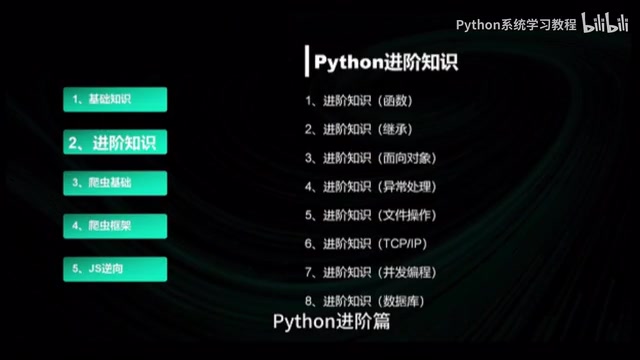
Skills Training Module: Applying Knowledge in Real-World Practice
The skills training module explores practical application domains including web scraping, data analysis, machine learning, and office automation — each of which has clear market value in today's industry landscape.
The core technology stack for the web scraping direction includes requests (HTTP requests), BeautifulSoup/lxml (HTML parsing), Scrapy (scraping framework), and Selenium/Playwright (dynamic page handling). Its core value lies in data acquisition — in the internet age, data is an asset, and enterprise demand for competitive monitoring, sentiment analysis, and market research remains consistently strong.
It's important to note that while web scraping technology is extremely valuable for data acquisition, learners also need to understand its legal and ethical boundaries. The robots.txt protocol is an industry convention by which websites declare which content may be crawled. Large-scale collection of copyright-protected content or users' personal private data is subject to clear restrictions under legal frameworks including China's Data Security Law, the Personal Information Protection Law, and the EU's GDPR. Responsible scraping developers should comply with the terms of service of target websites and avoid placing unnecessary burden on servers by implementing rate limiting and setting reasonable request intervals. The development of technical capability and legal awareness should go hand in hand.
The data analysis direction uses Pandas as its core data processing tool, with NumPy providing high-performance vectorized numerical computation implemented in C, and Matplotlib/Seaborn/Plotly handling data visualization. This has become the foundational toolchain for business intelligence (BI) and data-driven decision-making, with particularly strong demand in finance, e-commerce, and healthcare.
It's worth understanding why Pandas and NumPy achieve high-performance computation: they delegate compute-intensive operations to underlying libraries written in C/Fortran (such as BLAS and LAPACK), and avoid the performance bottleneck of Python's interpreter executing line by line through vectorized operations. This explains why "use Pandas built-in methods rather than Python for loops to iterate over DataFrames" is a core performance optimization principle in the data analysis field. For scenarios involving even larger data volumes, tools like Dask and Polars serve as high-performance alternatives to Pandas and represent an important advancement direction for data engineers.
The machine learning direction uses Scikit-learn as the entry-level framework, providing standardized interfaces for supervised and unsupervised learning algorithms, and then extends into deep learning frameworks like TensorFlow (led by Google) and PyTorch (led by Meta).
PyTorch and TensorFlow represent two technical approaches to deep learning frameworks: PyTorch uses a dynamic computation graph (Define-by-Run) approach, building the computation graph in real time during each forward pass. The debugging experience is closer to ordinary Python programs, greatly lowering the barrier for researchers. TensorFlow originally used a static computation graph (Define-and-Run) approach, requiring the complete computation graph to be defined before execution. While debugging was less convenient, it has mature advantages in industrial deployment (TensorFlow Serving), mobile inference (TensorFlow Lite), and edge computing scenarios. Both have since borrowed from each other (TensorFlow 2.x introduced dynamic graph support through Eager Execution), but PyTorch's dominance in large model training and academic research is now well established — the vast majority of top conference papers and open-source large models (such as LLaMA and Mistral) are implemented with PyTorch as their foundation. This is the hottest skill direction in today's era of large AI models.
The office automation direction uses libraries like openpyxl and python-docx to enable batch processing of Excel and Word files, while PyAutoGUI can further enable desktop-level automation. Professionals without a technical background can often compress hours of repetitive work into seconds within a matter of weeks, achieving significant gains in work efficiency.
The core significance of this module is to transform the abstract knowledge learned previously into the ability to solve real problems, laying a solid foundation for diving deeper into the AI field.
Learning Tools and Supporting Resources Are Equally Important
A complete Python learning solution should include not just video content itself, but also supplementary resources such as learning mind maps, lecture notes, practice materials, and reference e-books.
The effectiveness of mind maps as a learning aid has theoretical support from cognitive science. Cognitive Load Theory, proposed by Australian psychologist John Sweller in 1988, divides cognitive load into three types: intrinsic load (the inherent complexity of the learning material), extraneous load (unnecessary informational interference), and germane load (the cognitive investment required for knowledge integration and schema building). Effective instructional design should reduce extraneous load, manage intrinsic load, and maximize germane load. For programming learners, the biggest problem with scattered tutorials is that they dramatically increase extraneous cognitive load — learners must expend additional cognitive resources judging the credibility of content and piecing together the connections between concepts, energy that should be devoted to genuine knowledge internalization. When learning content exceeds working memory capacity, learning efficiency drops sharply.
The proposal of Cognitive Load Theory has important neuroscientific backing: human working memory capacity is extremely limited. As early as 1956, psychologist George Miller demonstrated through his "magical number 7±2" that working memory has an upper limit on the number of information units it can simultaneously process. The programming knowledge system is vast and complex, with intricate dependency relationships between concepts (for example, understanding OOP requires mastering functions first; understanding decorators requires understanding closures first). Linear learning approaches struggle to represent this web-like knowledge structure. Mind maps use visualization to externalize knowledge nodes and their relationships, effectively transferring temporary information from working memory to long-term memory and helping learners build a holistic understanding framework. They keep learners consistently aware of where they are in the knowledge system and where they still need to go — this is especially important for absolute beginners, helping them avoid the trap of "seeing only the trees, not the forest."
Four Core Pieces of Advice for Learning Python from Scratch
Drawing on the design philosophy of structured courses, here are several general recommendations for getting started with Python:
First, prioritize fundamentals and resist skipping ahead. Don't be drawn to complex, flashy projects at the expense of basic skills — variables, loops, and functions may seem simple, but they are the true foundation of programming ability.
Second, commit to systematic learning. Choosing one comprehensive, well-structured course and completing it from start to finish is far more effective than chasing multiple scattered tutorials simultaneously.
Third, prioritize hands-on practice over passive watching. Programming is an intensely practical skill, and watching without doing is the trap beginners most easily fall into. It's recommended to use the Feynman Technique to verify your understanding — try to explain a concept you just learned in the simplest possible terms to someone who knows nothing about programming. If you can't, your understanding isn't deep enough yet, and it's time to go back and relearn.
Fourth, connect to real-world applications as early as possible. After mastering the basics, choose a practical project based on your interests (web scraping, data analysis, office automation, etc.) to let your knowledge take root in reality.
Conclusion: With the Right Path, Python Is Not That Hard
Learning Python from scratch isn't inherently difficult — the hard part is finding the right path and sticking to it. Rather than repeatedly losing your way in a sea of scattered content, choose a course with a complete, structured curriculum and steadily progress from the fundamentals module through to the skills training module. The scientific three-stage learning framework — fundamentals to consolidate syntax comprehension, advanced to complete the thinking upgrade, skills training to put knowledge into practice — can significantly improve learning efficiency and help beginners avoid unnecessary detours. For everyone who wants to enter the world of programming, building a solid foundation and progressing step by step is the only shortcut to Python mastery.
Related articles
Alibaba Launches Happy Shrimp: AI-Powered One-Click Complete Song Generation
Alibaba launches Happy Shrimp, an AI music generation tool that creates complete songs with lyrics, melody, arrangement, and vocals from natural language descriptions. In-depth analysis of its core features, differentiation from competitors like Suno, and industry impact.
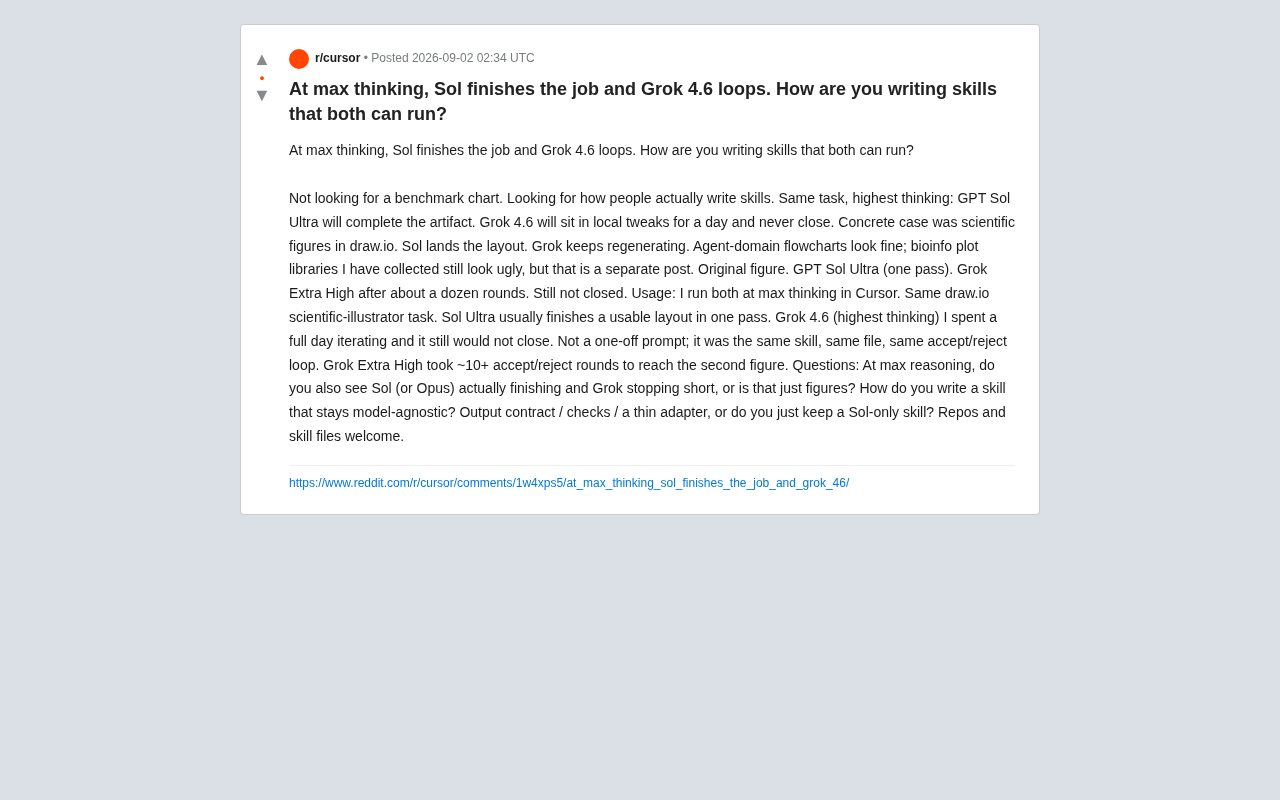
GPT Sol Ultra vs Grok 4.6: Real-World Task Completion Benchmark in Reasoning Mode
Developer benchmark reveals GPT Sol Ultra completes draw.io scientific diagrams in one iteration while Grok 4.6 fails to converge despite maximum reasoning mode, exposing that reasoning depth ≠ task delivery capability.
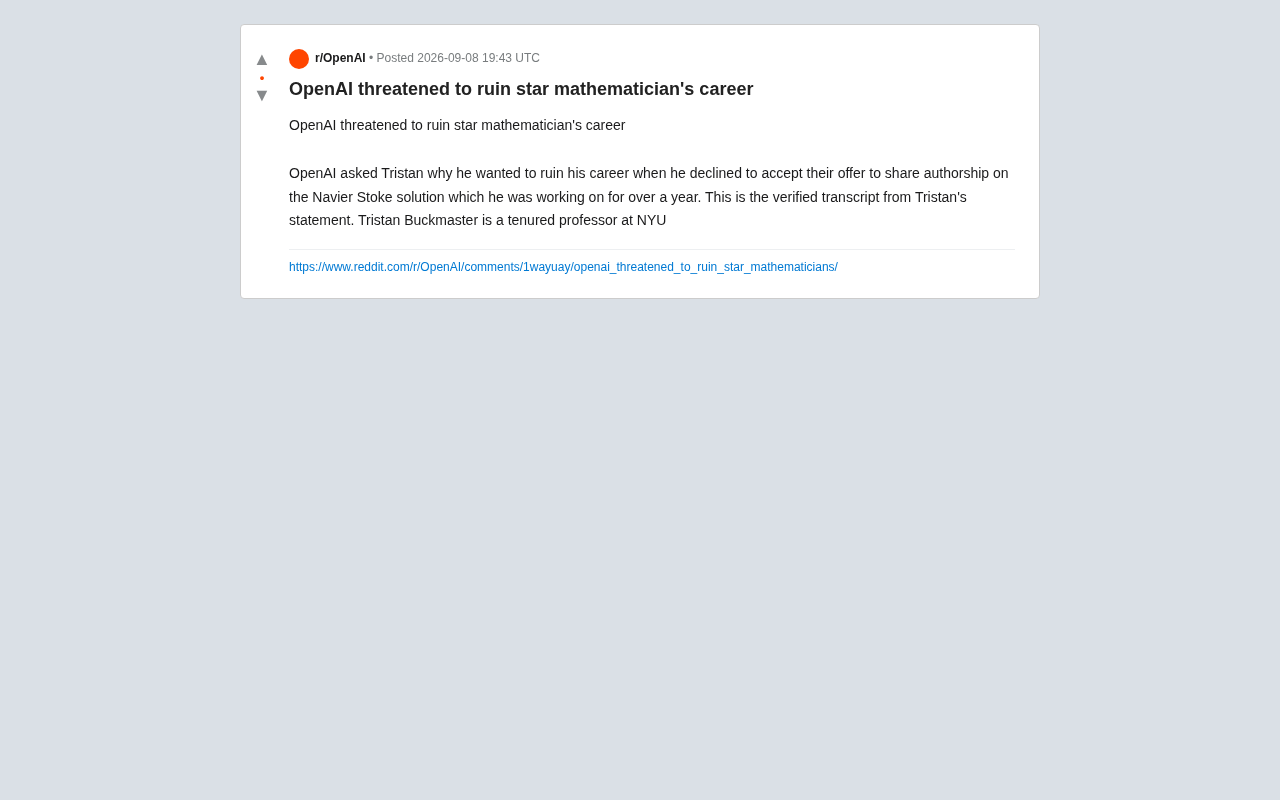
OpenAI Authorship Dispute: The Battle Over Academic Boundaries in the AI Era
OpenAI disputes authorship with mathematician Tristan Buckmaster over Navier-Stokes research, raising ethical questions about AI involvement in science.