PyTorch Day Japan 2026 Coming to Tokyo on December 10

PyTorch Day Japan 2026 heads to Tokyo on December 10 with technical talks and community discussions for AI developers.
PyTorch Day Japan 2026 is scheduled for December 10, 2026 in Tokyo, marking a significant step in the PyTorch Foundation's expansion into the Asia-Pacific region. Built around technical talks and interactive discussions, the event will cover framework updates, performance optimization, distributed training, and model deployment. For developers in the region who rarely attend Western conferences, it offers both first-hand technical insights and valuable networking opportunities.
PyTorch Community Event Lands in Tokyo
PyTorch Day Japan 2026 will be held in Tokyo on December 10, running as a full-day event. Aimed at the open-source AI community, it brings together technical talks and interactive discussions to foster collaboration among developers, researchers, and enterprise users.
As one of the most widely adopted open-source frameworks in deep learning, PyTorch has steadily expanded its community events from North America and Europe into the Asia-Pacific region. This Tokyo edition reflects the PyTorch Foundation's recognition of the developer ecosystem in Japan and across East Asia. Japan has deep roots in areas like autonomous driving, robotics, and industrial AI — making local events like this an effective bridge between the global community's latest advances and regional practitioners' real-world needs.
PyTorch was open-sourced by Meta (formerly Facebook) AI Research in 2016, with dynamic computation graphs (eager execution) as its core design philosophy, allowing developers to debug neural networks much like ordinary Python code. In 2022, PyTorch was officially transferred to the independent PyTorch Foundation (under the Linux Foundation), reinforcing its neutral, open community identity. Today, PyTorch and TensorFlow stand as the two dominant deep learning frameworks in both industry and academia — though in research publications and large model training, PyTorch usage has pulled noticeably ahead. Its ecosystem spans official libraries such as torchvision, torchaudio, and torchtext, as well as a wealth of third-party tools like Hugging Face Transformers, Lightning, and vLLM, forming a complete chain from model development to production deployment.
Event Format and Content
According to official information, PyTorch Day Japan 2026 will be organized around two tracks: technical talks and interactive discussions. The former typically covers in-depth topics like core framework updates, performance optimization, distributed training, and model deployment; the latter emphasizes face-to-face experience sharing and problem-solving, giving attendees direct opportunities for dialogue.
This dual-track "talks + discussions" structure is the hallmark format of the PyTorch event series. Compared to typical product launches, PyTorch Day leans heavily toward engineering and research, with content that tends to run deep — making it well-suited for practitioners already using PyTorch for project development or academic research.
Distributed training and model deployment are currently the two most active technical areas in the PyTorch community, and they consistently draw the most attention at events like this. On the distributed training side, PyTorch offers native solutions such as DDP (DistributedDataParallel) and FSDP (Fully Sharded Data Parallel) for efficiently training large-scale models across multi-GPU or multi-node environments. On the deployment side, TorchScript, torch.export, and interoperability with ONNX serve as critical bridges connecting research prototypes with production systems. With the explosion of demand for large language model (LLM) training and inference, the pace of evolution in these foundational capabilities has accelerated sharply — developers often need community events and official channels to stay current with the latest best practices.
Value for Developers
For developers focused on open-source AI toolchains, the value of in-person events like this goes beyond first-hand technical information — it's also about community networking. The PyTorch ecosystem spans everything from low-level tensor computation to high-level large model training frameworks, and the tools, libraries, and best practices built around it are iterating rapidly.
Attending PyTorch Day helps developers understand the framework's roadmap direction, gain practical insights on performance optimization and deployment, and build connections with peers from diverse companies and research institutions. For developers based in Japan or the broader Asia-Pacific region who can't easily attend conferences in Europe or North America, this is a relatively accessible window into the global community.
Summary
PyTorch Day Japan 2026 marks another step in the open-source AI community's regional expansion strategy. While publicly available details remain limited at this stage, the event's positioning and format suggest it will be a high-quality technical gathering for engineering and research professionals. Interested developers should follow PyTorch's official channels for further information on the agenda and registration.
Related articles

AI Daily Briefing: Qwen3-Omni Full-Modality Model Launches, Huawei Ascend 960 and Grok's New Model Surface
AI Daily: Qwen3-Omni Flash launches with full-modality support and 93% cost cuts; Huawei unveils million-processor AI architecture; Ascend 960 rumored; Grok spotted on GCP; N8N hits CVSS 10 vulnerability.
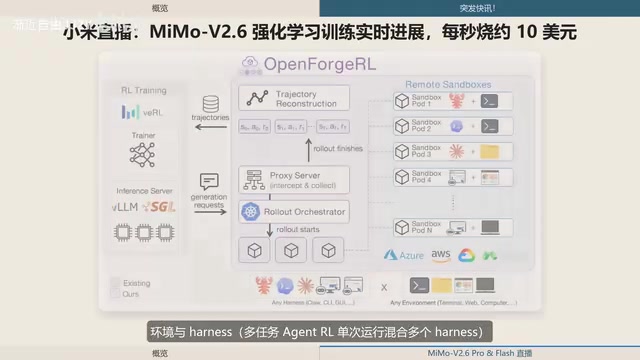
Xiaomi MiMo-V2.6 Live Training: ¥8.55M Spent in One and a Half Days, ~$10 per Second
Xiaomi's MiMo team live-streams MiMo V2.6 Pro/Flash RL training, spending ¥8.55M (~$1.28M) in 1.5 days — ~$10/sec. Covers compute scaling, open-source plans, and DeepSWE benchmarks.

ByteDance Trae Work Getting Started Guide: 11 Use Cases Explained
A hands-on guide to ByteDance's Trae Work AI agent — covering Work, Code, and Design sections across 11 use cases including PPT generation, data analysis, coding, and more.