Quad9 Withdraws from France: Why Public DNS Services Are Exiting Under Geopolitical Regulation

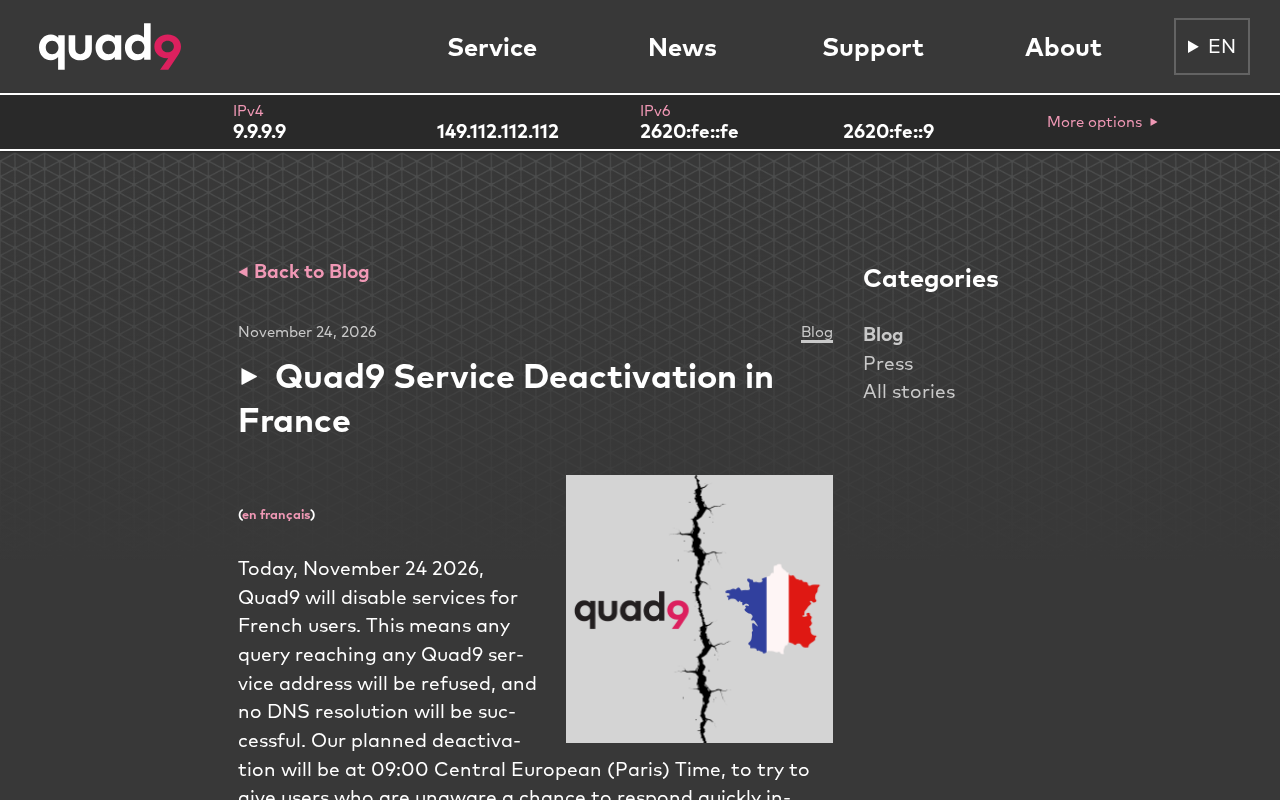
Quad9 announces discontinuation of its French service, reflecting the tension between regulation and privacy for public DNS.
Quad9's official announcement confirms the discontinuation of its public DNS resolution service in France, with the news gaining hundreds of points and over a hundred comments on Hacker News. The article notes that public DNS has evolved from a simple "phone book" into an intermediary layer handling malicious domain blocking and privacy protection, making it more likely to become a regulatory focal point. French users need to migrate to other public resolution services or ISP default DNS; for the industry, a single provider's exit will intensify fragmentation of the public DNS landscape, and cross-border deployments can no longer assume globally consistent availability. The article also reminds individual users to check device and router DNS configurations, and operations staff to treat DNS as a dependency with regional risk and reserve switching capability, while noting that a contraction in service scope may weaken Quad9's network effects and threat intelligence coverage.
Public DNS resolution service Quad9 has announced the discontinuation of its service in France, a piece of news that quickly sparked discussion on Hacker News, accumulating hundreds of points and over a hundred comments in a short time. For a free DNS service that has long marketed itself on privacy and openness, exiting a core European market is no small matter—it reflects the increasingly tense relationship between public infrastructure and local regulation.
According to an announcement on Quad9's official blog, the company has initiated the process of discontinuing its service in France. The announcement itself is not long, but combined with community discussion, it's clear that what users care about most is not technical resolution performance, but whether such services can continue to maintain neutrality under regulatory pressure.
The Role of Public DNS Is Changing
DNS resolvers have long been regarded as the internet's "phone book," and users often assume that the resolution service provided by their ISP is sufficient. The value of public resolution services like Quad9 lies in two things: first, providing security capabilities such as malicious domain blocking, and second, committing not to log user queries. For privacy-conscious users, handing resolution requests to a non-ISP entity is itself a choice to reduce the risk of being tracked.
The problem is that when resolution services begin to take on security filtering and privacy protection functions, they are no longer purely technically neutral pipes but become an intermediary layer with a stance. Which domains to block, which logs to retain, and whose requests to respond to all become focal points for regulators. This is why public DNS services face increasingly divergent policy environments across countries.
How DNS resolvers basically work: When a user enters a domain name in a browser, the device first sends a query to a recursive resolver, which starts from the root servers and asks level by level, ultimately obtaining the IP address corresponding to the domain and caching the result. ISP default DNS is usually bound to the user's network, while public DNS allows users to manually specify any reachable resolution address, thereby bypassing the local ISP. This also means that visibility of resolution requests shifts from the ISP to the public resolution service provider—whoever can see query logs holds a profile of user access behavior. Quad9's emphasis on not logging queries is precisely a commitment made in response to this transfer of trust.
How malicious domain blocking is implemented: Public DNS services typically maintain a threat intelligence blacklist, and when a query hits the blacklist, they directly return an empty response or an error address, thereby blocking access before a connection is established. This filtering occurs at the resolution layer, is transparent to end users, and requires no client software installation. However, its effectiveness is highly dependent on the breadth and update speed of intelligence sources. The larger the user base and the wider the network coverage, the richer the samples of malicious domains collected, forming a positive feedback loop. This is also the fundamental reason why a contraction in service scope can in turn affect blocking capability.
What the Exit from the French Market Means
From the user perspective, the most direct impact is that French internet users can no longer obtain service through Quad9's resolution addresses and need to switch to other public resolution providers or fall back to their ISP's default DNS. For home users and small organizations accustomed to using Quad9 for malicious domain filtering, this brings migration costs in configuration.
From an industry perspective, a single provider exiting a national market will further intensify the fragmentation of the public DNS landscape. In the past, users could freely choose among a few global resolution services, but now regional availability itself has become a parameter that must be verified when selecting a service. For enterprises with cross-border deployments, this means DNS configuration can no longer assume "globally consistent availability."
The Tension Between Regulation and Privacy
A recurring theme in community discussion is that free public services have almost no bargaining room when facing national-level regulatory requirements. A resolution service that does not charge users and operates on partnerships and donations finds it hard to invest resources in responding to complex local compliance requirements the way large commercial companies do. Exiting is often a better way to preserve its core commitments than compromising.
This choice also comes at a cost. A contraction in service scope weakens its network effects, and a declining user base may affect the data coverage of its threat intelligence, thereby affecting blocking effectiveness. For privacy advocates, every neutral resolution option that disappears narrows users' actual choice space.
Regulatory tools at the DNS level: Regulatory interventions in DNS vary from country to country. Common tools include requiring resolution providers to block specific domains (such as copyright-infringing sites, gambling or adult content sites), retain query logs for law enforcement access, or cooperate with network blocking lists. For resolution services operating in multiple locations, blocking lists and log retention obligations in different jurisdictions may conflict with one another—satisfying one country's requirements may violate another country's privacy regulations. It is precisely this compliance fragmentation that makes a globally unified resolution strategy increasingly difficult to maintain, leading some providers to adjust by region or even exit specific markets.
Advice for Ordinary Users and Operations Staff
For individual users, it is worth checking whether your devices or router have DNS manually pointed to Quad9. If so, you need to promptly adjust to another available resolution service to avoid internet anomalies caused by resolution failures. For operations staff, this incident reminds us that DNS configuration should be managed as a dependency with regional risk, with switching capability reserved in the architecture, rather than hardcoding a single resolution service into configurations everywhere.
Public DNS was once treated as a basic setting that "you configure once and forget about," but now it increasingly resembles a service dependency that requires continuous attention to policy developments. Quad9's exit from France may be just one case among such adjustments.
Frequently Asked Questions
Why did Quad9 exit France?
According to Quad9's official announcement, its service in France has been discontinued. The announcement does not elaborate on the full details of the reasons in the materials provided, and community discussion generally links it to the local regulatory environment.
Can French users still use Quad9?
After the service discontinuation, users within France can no longer obtain resolution services through Quad9 and need to switch to other public DNS or their ISP's default resolution.
Does this affect users in other countries?
Judging from the scope of the announcement, this discontinuation targets the French market. But it points to a more general issue: the availability of public DNS services may adjust with regional regulatory changes, and service status should be verified when used across regions.
One-line Summary
Quad9 announces discontinuation of its French service, reflecting the tension between regulation and privacy for public DNS.
Paragraph Summary
Quad9's official announcement confirms the discontinuation of its public DNS resolution service in France, and the news has gained hundreds of points and over a hundred comments on Hacker News. The article points out that public DNS has evolved from a simple "phone book" into an intermediary layer that handles malicious domain blocking and privacy protection, making it more likely to become a regulatory focal point. For French users, they need to migrate to other public resolution services or their ISP's default DNS; for the industry, a single provider's exit will intensify the fragmentation of the public DNS landscape, and cross-border deployments can no longer assume globally consistent availability. The article also reminds individual users to check the DNS configuration of their devices and routers, and operations staff should treat DNS as a dependency with regional risk and reserve switching capability. It also notes that a contraction in service scope may weaken Quad9's network effects and threat intelligence coverage.
Related articles

MIT PhD Takes You from Scratch to Build DeepSeek: A 25-Hour Hardcore Course
MIT PhD Raj Dandekar launches a 25+ hour Bilibili course building DeepSeek from scratch—MoE, MLA, GRPO, hand-written code plus math derivations, aiming to reproduce mini R1.
DeepSeek Harness in Practice: From Installation to Plugin Ecosystem, Building a Fully Automated AI Workflow
Based on a hardcore Bilibili tutorial, this guide systematically covers DeepSeek Harness installation, three plugin installation methods, and real-world use cases to help developers quickly build customizable AI Agent workflows.
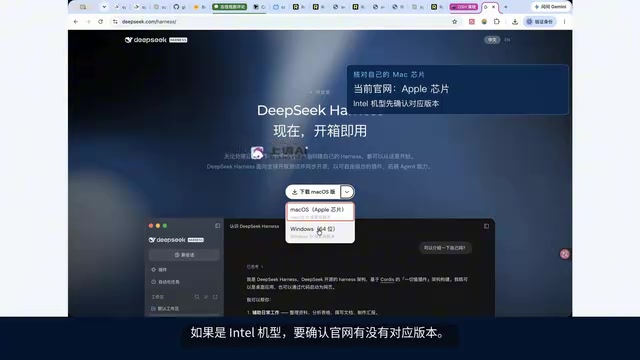
DeepSeek Harness in Practice: From Installation to Automated Workflows
Hands-on DeepSeek Harness tutorial covering Mac/Windows installation, login, workspace binding, model & permission setup, and minimal closed-loop verification for AI automation workflows.