Qwen 3.6 MTP Real-World Test: The Secret to a 20% Speed Boost with Just Three Parameters

MTP accelerates LLM inference by predicting multiple tokens in a single forward pass
Multi-Token Prediction (MTP) technology adds extra prediction heads during model training that share the main model's hidden state, enabling a single forward pass to generate multiple tokens simultaneously (e.g., token+1, +2, +3). This breaks through the bottleneck of traditional autoregressive inference where only one token can be generated at a time. The technique requires no additional models — the acceleration capability is built directly into the model weights, making it fundamentally different from speculative decoding methods like DFlash.
What is MTP? Multi-Token Prediction with a Single Model
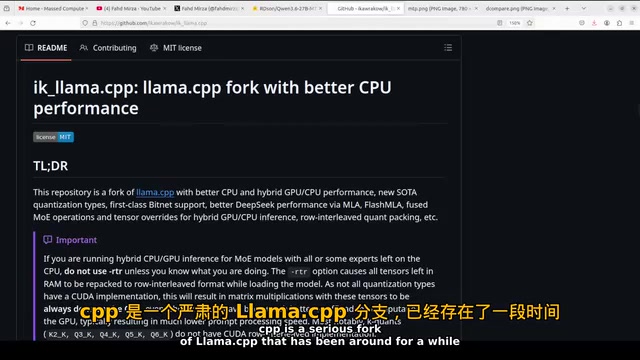
Recently, the hottest topic in the local AI inference community has been Multi-Token Prediction (MTP) technology. Ever since DeepSeekAd's DFlash drew widespread attention, everyone has been eagerly waiting for the llama.cpp mainline to merge the MTP support PR. However, some in the community couldn't wait — they implemented MTP support directly on a llama.cpp fork (ik_llama.cpp) and ran real-world tests based on the Qwen 3.6 model.
So what exactly is MTP? To understand it, you first need to grasp the bottleneck of traditional inference. Autoregressive inference is the foundational paradigm for how large language models generate text today: the model can only predict the next token based on existing context at each step. This serial dependency limits generation speed to the latency of a single forward pass. Even for models with billions of parameters, the inference bottleneck often isn't compute capacity but rather memory bandwidth — generating each token requires loading all model weights from VRAM to the compute units, resulting in massive bandwidth waste. This is the core problem MTP aims to solve: how to make each memory load "work to its fullest potential" and produce more useful tokens.
In the most straightforward terms: in traditional autoregressive inference, the model can only generate one token per forward pass, then must run again to generate the next one. MTP adds extra prediction heads inside the model during the training phase, and these heads share the same hidden state as the main prediction head — that is, the model's internal understanding of the text it has already processed.
Hidden state sharing is the key design detail for understanding why MTP can achieve zero quality loss. In the Transformer architecture, the hidden state is a high-dimensional semantic representation formed after the model performs multi-layer attention computations on the input sequence, containing rich contextual information. MTP's extra prediction heads directly reuse this representation rather than computing from scratch, so the additional computational overhead is minimal. More importantly, these prediction heads are jointly optimized with the main model during training — while the model learns to predict token+1, it simultaneously learns how to leverage the same hidden state to predict token+2 and token+3. This gives the additional prediction heads' output quality a theoretical guarantee, rather than being a heuristic approximation.
This means that a single forward pass can simultaneously produce multiple tokens: the main head outputs token+1, the first MTP head outputs token+2, and the second MTP head outputs token+3. Three tokens, one computation. No need to download a second model, no extra processes — the speed boost is directly "baked into" the model weights.
MTP vs DFlash: The Fundamental Difference Between Two Acceleration Approaches
Many people confuse MTP with the previously viral DFlash, but they are fundamentally different in architecture. Understanding this distinction requires first knowing the technical lineage they both belong to — Speculative Decoding.
The core idea of speculative decoding was proposed by Google DeepMind in 2023: use a small, fast draft model to predict multiple tokens ahead of time, then have the large model verify them all in parallel, accepting the correct portions and rejecting the incorrect ones. Since verification is parallel, the overall latency is far lower than generating tokens one by one. MTP can be viewed as an "internalization" of this idea.
Related articles
 Product Reviews
The Programmer's Desk Setup Guide: Building a Workspace That Feels Like Home
Discover how programmers build productive, comfortable workspaces. From multi-monitor setups to ergonomic design, explore the desk philosophy that drives focus and flow.
 Product Reviews
Qoder vs Cursor Real-World Comparison: Which $20/Month AI IDE Is Better?
Hands-on comparison of Qoder vs Cursor AI IDEs: Agent autonomy, human interaction count, and architecture decisions. Qoder needed only 2 interactions vs Cursor's 8.
 Product Reviews
Cursor Cloud Agent Demo: Eliminating Bottlenecks Across the Entire Software Development Lifecycle
Deep analysis of Cursor's Cloud Agent demo showing how cloud VMs, automated test artifacts, and a full-chain control plane systematically eliminate human bottlenecks across the software development lifecycle.