Qwen 3.8 Flash Next Deep Dive: Three Technical Innovations Reshaping the Open-Source AI Landscape
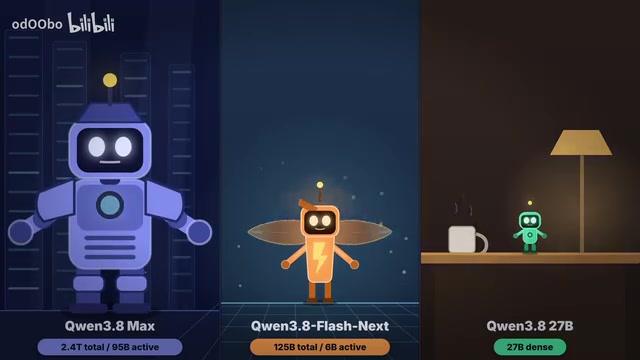
Qwen 3.8 Flash Next introduces three key innovations in its MoE architecture to rival closed-source AI models.
Alibaba's Qwen 3.8 Flash Next leverages a Mixture of Experts architecture with three technical breakthroughs — Qwen Sparse Attention (QSA), gated residual connections, and N-gram embedding memory — to deliver performance rivaling large closed-source models like DeepSeek R1 while remaining fully open-source and efficient enough for edge deployment.
Alibaba's Qwen 3.8 Flash Next has generated significant buzz in the open-source AI community. Built on a Mixture of Experts (MoE) architecture, this model has demonstrated performance comparable to large closed-source systems like DeepSeek R1 in initial benchmarks — and it's completely free and open-source.
Qwen 3.8 Flash Next Architecture: The Leap from Dense to Sparse
The Qwen model lineup features a clear product tier structure. The top-tier Qwen 3.8 Max is massive — the 27B version is a traditional dense model suited for high-performance desktops or servers. The 3.8 Flash Next, however, takes an entirely different technical approach — Mixture of Experts (MoE).
The core advantage of this architecture is that only a small subset of the model's parameters are activated when processing each token. This makes it particularly well-suited for hardware environments with limited memory bandwidth, such as NVIDIA's AGX Orin or Jetson platforms. Real-world testing on a dual AGX Orin system showed inference speeds of 38 tokens/second — quite impressive for edge devices. Community developers have already ported it to run on even lower-spec hardware.
Three Core Technical Breakthroughs Explained
Qwen Sparse Attention (QSA)
Traditional full attention has quadratic complexity — doubling the context length quadruples the computational cost. This leads to severe performance degradation and skyrocketing costs in long-context conversations.
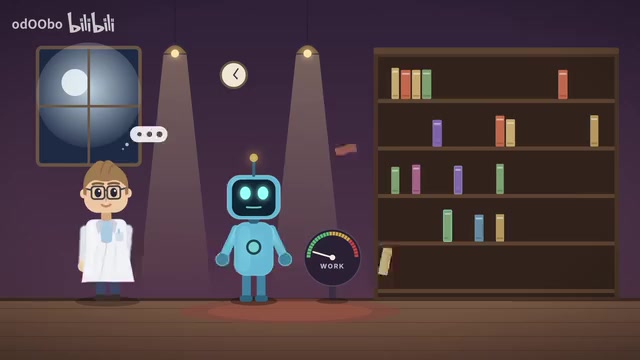
DeepSeekAd previously proposed DSA (DeepSeek Attention), which mitigates this issue by selectively attending to important tokens. Qwen's QSA goes a step further: it packs tokens into small blocks and computes attention only between these blocks. This block-level sparse attention further reduces the overhead of long-context processing, enabling the model to handle extended conversations and large documents more efficiently.
Gated Residual Connections
In traditional Transformers, all layers share a single residual stream, which can lead to "interference" — later layers may overwrite important information extracted by earlier layers. Qwen introduces a four-branch gated residual mechanism that allows different types of information to flow through independent channels.

This design lets the model selectively preserve certain information streams unchanged while updating other branches. It's similar to skip connections in ResNet but more flexible and controllable, effectively mitigating gradient vanishing and information degradation in deep networks.
N-gram Embedding Memory
The meaning of "hot dog" is entirely different from understanding "hot" and "dog" separately. Qwen uses N-gram embeddings to build dedicated lookup tables for phrase-level token combinations.
This is an improvement over DeepSeek's approach: DeepSeek distributes this lookup memory across multiple layers, whereas Qwen consolidates it into a single large lookup layer at the front of the model. This design simplifies the architecture, accelerates inference, and improves the model's understanding of common phrases and idioms.
Benchmark Results and Real-World Applications
According to initial test results, Qwen 3.8 Flash Next approaches or even surpasses some of the best open-source models across multiple benchmarks, and on certain tasks, it rivals the much larger DeepSeek R1 Pro. Considering this is only the first release in the "Next" series, launched just days ago, the results are remarkably impressive.
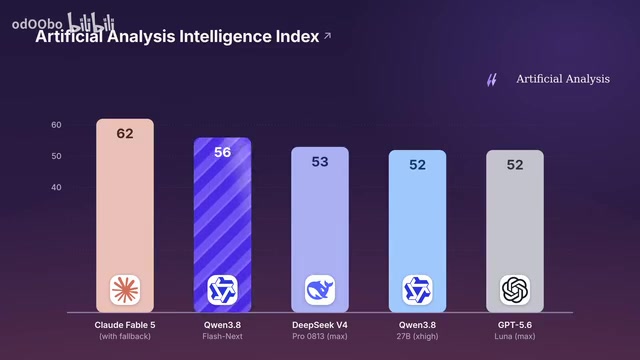
More importantly, as an open-source model, users can permanently download, deploy, and commercialize it for free — no subscription fees required. This provides crucial support for AI democratization, enabling both enterprises and individual developers to access capabilities approaching commercial closed-source systems at minimal cost.
A Milestone for the Open-Source AI Ecosystem
This model's release reaffirms a growing trend: open-source AI is rapidly closing the gap with closed-source commercial systems. From GPT-4 to Claude, and now DeepSeek and Qwen, the paid subscription model faces a formidable challenge from open-source alternatives.
For developers, this means greater freedom of choice and lower migration costs. For the AI research community, the public disclosure of technical details (including accompanying papers) accelerates knowledge dissemination and innovation across the entire field.
The three technical innovations — sparse attention, gated residuals, and N-gram embeddings — not only boost Qwen's own performance but also provide replicable paradigms for future model design. As more outstanding open-source AI systems continue to emerge, the pace of innovation and the democratization of technology across the entire industry are advancing at an unprecedented rate.
Related articles

Python 3.15 New Feature: Is the sentinel Type Better Than None?
Python 3.15 adds the sentinel type, using named unique sentinel objects to replace None and bare object(), resolving confusion among missing values, explicit emptiness, and invalid input while avoiding type hint failures.

Deep Learning's Three Architectures and the Universal Approximation Theorem: A Complete Guide to MLPs, CNNs, and Transformers
Explaining the inductive bias differences among MLP, CNN, and Transformer, the existence meaning of the Universal Approximation Theorem (UAT), and the role of Taylor expansion in approximation analysis, while clearing up common misconceptions.

GitLab Emergency Patch Release: Analysis of Critical Security Fixes
GitLab releases critical patch 19.5.1, sparking 355 points of discussion on Hacker News. This article analyzes the background, upgrade steps for self-hosted instances, and verification points to help DevOps teams respond quickly to security updates.