Qwen 4 Max Hands-On: Alibaba's Powerful AI Model Tested for Coding and Overall Experience

Qwen 4 Max hands-on: generates an FPS game prototype with stunning visuals but incomplete gameplay and high cost.
Based on a YouTube hands-on video, this article covers Alibaba's Qwen 4 Max: 2.4T parameters, 1M token context, and visual input. Used via OpenRouter in OpenCode, it built a Call of Duty–style FPS over several hours and 4 iterations, costing 360K tokens and about $31. The Blacksite prototype has impressive visuals but lacks a health bar, minimap, and sprint, with weak AI enemies. It is a major leap over Qwen 3.8 Max with better token efficiency, but is best suited as an auxiliary tool for complex projects given the high cost and incomplete single-pass results.
Alibaba's Qwen series has received a major update — Qwen 4 Max. According to a hands-on video from a YouTube channel, the model officially launched shortly after its preview release. The creator called the API through the OpenRouter platform and, within the OpenCode terminal environment, ran a development test building a Call of Duty–style first-person shooter game. The whole test process revealed the real capability boundaries of this model.
Model Specs and Benchmark Performance
According to the video, Qwen 4 Max has 2.4 trillion parameters, supports visual input, and offers a context window of 1 million tokens. In benchmarks, the model competes with top-tier models such as Claude Sonnet 5.5 and GPT 6.1 across multiple scenarios, and often comes out ahead when compared with Kimi K2.1. Notably, official data shows the new version has made clear improvements in token efficiency — compared with the previous generation Qwen 3.8 Max, the number of tokens required to complete similar tasks is substantially reduced.

The creator selected the Qwen 4.0 Max model on OpenRouter, set the reasoning level to High, and then entered a prompt to create a Call of Duty–style game. The API used for the test bills input and output tokens separately, and the overall cost was not low.
Parameter Scale and Context Window
2.4 trillion parameters places it among the ultra-large-scale models currently available, typically implemented with a MoE (Mixture of Experts) architecture — that is, only part of the expert networks are activated per inference, thereby controlling per-inference compute cost while maintaining a huge total parameter count. A 1 million token context window means the model can process, in one pass, information equivalent to dozens of full-length novels — especially critical for tasks that require reading through large codebases or long documents. Visual input capability indicates the model has a native multimodal architecture and can directly understand image content, rather than relying on an external vision encoder for post-hoc stitching.
OpenRouter and Reasoning Level
OpenRouter is a unified calling platform that aggregates APIs from multiple model providers, letting developers switch between vendors' models through the same interface and pay by token usage — which is why it is often used for side-by-side hands-on comparisons. Setting the "reasoning level to High" refers to the controllable reasoning (reasoning effort) mechanism: before giving a final answer, the model first performs an internal chain-of-thought deduction. The higher the level, the more reasoning tokens are allocated; answer quality is usually better, but latency and cost rise accordingly. This is also one of the important reasons the test cost was relatively high.
Game Development Hands-On: Hours and Multiple Rounds of Iteration
The model took several hours to complete the task, with 4 rounds of iteration in total. The final generated project was named Blacksite, a first-person shooter game prototype. In its output, the model admitted it was not fully satisfied with the result and believed it had not reached a level comparable to Call of Duty. The entire process consumed 360,000 tokens and cost about $31 — the creator said bluntly, "this is expensive."
From an engineering perspective, several hours of generation time and a cost in the hundreds of RMB mean Qwen 4 Max is better suited as an auxiliary tool for complex projects rather than the first choice for lightweight, rapid prototyping. For scenarios requiring deep reasoning and large amounts of code generation, this investment may be acceptable, but for everyday small tasks it seems uneconomical.
Game Experience: Stunning Visuals, Rough Gameplay
Following the instructions given by the model, the creator entered the project directory and started the server, and the game ran smoothly.
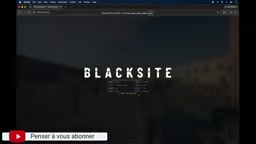
In terms of visuals, the details were quite stunning — scene modeling and lighting effects exceeded expectations, and the creator called it "quite impressive." However, gameplay issues were obvious: the player could not see their own health display, there was no familiar minimap in the top-left corner, and the character could not sprint.
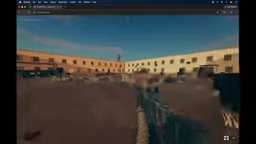
The AI enemies' behavior was also not intelligent enough — they seemed unable to actively spot or shoot the player. These problems indicate that the model performs excellently in visual presentation but still falls short in game logic and interaction completeness. The creator noted that these issues could be fixed by adding follow-up prompts, but this also shows that a single generation struggles to deliver a complete, playable result.
Comparison with the Previous Generation: Visible Progress
The video specifically showed how Qwen 3.8 Max performed on the same task as a control. The gap between the two is very obvious — Qwen 4 Max represents a qualitative leap in visual quality and code structure completeness. The creator described this generational upgrade as a "huge difference" and believed that even with gameplay flaws, the overall result is a major improvement over the previous generation.
This progress is also reflected in token efficiency. Official benchmarks show the new model completes equivalent tasks with fewer tokens, and given the complexity demonstrated in the hands-on test — several hours and multiple rounds of iteration — the impact of efficiency gains on actual usage cost cannot be ignored.
What Token Efficiency Actually Means
Token efficiency refers to the number of tokens consumed to complete the same task, and it affects both cost and generation time. Under token-billed API pricing, efficiency gains translate directly into lower costs; in complex tasks with multiple rounds of iteration, fewer tokens also mean a shorter reasoning chain and a lower probability of error accumulation. The official claim of "completing equivalent tasks with fewer tokens" essentially reflects improvements in the model's planning ability and first-pass code success rate — reducing ineffective trial and error is precisely the hardest-to-quantify yet most practically impactful indicator in a generational upgrade.
Usage Recommendations and Limitations
Qwen 4 Max's demonstrated strengths are concentrated in complex code generation and visual content creation, making it suitable for development scenarios with clear requirements where users are willing to invest time and cost in multiple rounds of tuning. For users who want to quickly validate ideas, the relatively high calling cost and long generation time are factors to weigh. In addition, the model struggles to guarantee complete gameplay logic in a single generation, requiring human intervention or follow-up prompts to fill in details.
The model's positioning is more like a highly capable but guidance-dependent collaborative partner than a one-click automated delivery tool. As subsequent iterations and the ecosystem mature, its potential in game development, interactive applications, and other fields deserves continued attention.
One-line Summary
Qwen 4 Max hands-on test generates an FPS game prototype: stunning visuals but incomplete gameplay, and high cost.
Paragraph Summary
Based on a hands-on video from a YouTube channel, this article introduces the performance of Alibaba's Qwen 4 Max. The model has 2.4 trillion parameters, a 1 million token context window, and supports visual input; in benchmarks it competes with Claude Sonnet 5.5 and GPT 6.1. The creator called the API through OpenRouter and, in the OpenCode terminal environment, developed a Call of Duty–style FPS game, taking several hours and 4 rounds of iteration, consuming 360,000 tokens at a cost of about $31. The resulting Blacksite has stunning visual detail but lacks a health display, minimap, and sprint function, and the AI enemies' behavior is not intelligent enough. It represents a qualitative leap over Qwen 3.8 Max, with noticeably improved token efficiency. The author believes the model is suitable for auxiliary development of complex projects, but its cost is high, and a single generation struggles to deliver a complete, playable result.
Related articles
How the Grok Team Hits 11,000 PRs a Month: Replacing Manual Review with Deterministic Constraints
Inside the Grok team's formula for 11,000 monthly PRs at a 0.5% rollback rate: Lint rules, type systems, and formal verification as deterministic constraints.

Is Spacetime Made of Something? Six Possible Answers from Quantum Gravity
Is spacetime made of something? This article surveys the main candidate answers from quantum gravity: spacetime may be fundamental, geometry quantized, causal relations prior to distance, spacetime an emergent state of matter, geometry derived from string theory, or no spacetime atoms needed at all.
After GTA 6, Where Does the Game Industry Go?
The Vergecast talks with Game File's Stephen Totilo about GTA 6's impact on gaming: billion-dollar budgets, console market struggles, cloud gaming tests, and the future of microtransactions—and whether it marks the end of an era.