Qwen 4 Max Preview Released: Contradictory Benchmark Data and Missing Official Baselines

Alibaba releases Qwen 4 Max Preview with official silence and contradictory independent test results.
Alibaba released Qwen 4 Max Preview, a flagship preview rather than the full Qwen 4 series, supporting text, image, and video input with a 1M token context, valid until Nov 25. No official benchmark scores were published, and independent evaluations diverge: ModelDial scored it 78.8 (14th), with 90 for knowledge work but only 59 for code aesthetics; the GameFeel maintainer reported performance below older Qwen models. The article notes different tests measure different dimensions, and with the mysterious CoDuck model updated daily, different testing times may not mean the same build. Technical clues point to a Gated DeltaNet and sparse attention hybrid, but Qwen 4 weights are not released, and the 27B version is absent. It suggests trying it but avoiding production decisions on incomplete data.
Alibaba released Qwen 4 Max Preview on November 11, but the launch raised more questions than expected. No official benchmark scores were published, while independent test results present a sharply different picture—some are impressed, others skeptical.
What Was Released: A Flagship Preview, Not a Full Series
The exact name of this release is Qwen 4 Max Preview, and the name itself reveals a lot. This is the flagship model, not the complete Qwen 4 family. It supports text, image, and video input, has reasoning capabilities, can call tools, and run agentic workflows. The most striking spec is the 1 million token context window—roughly equivalent to fitting a small library's worth of text into a single conversation.
Access is available through Alibaba's Token PlanAd subscription, or via Coder and Qwen's own app. The key limitation: this is a preview version, valid until November 25.
According to analysis from a YouTube channel, this "preview" positioning means the model ID will be retired after expiration, and the formal release will follow under a new name. With a 15-day testing window, feedback is the focus.
Context Window refers to the total number of tokens a model can "see" simultaneously in a single invocation, including both input prompts and output content. A token is the smallest unit of text a model processes—roughly equivalent to 0.75 words in English and about 1–2 Chinese characters. A 1 million token window means the model can process hundreds of pages of documents, an entire medium-length book, or a large codebase in one go, but the demands on GPU memory and inference costs rise significantly. The size of the context window does not directly equate to the model's ability to effectively utilize all that information—what the industry often calls "effective context" is typically much smaller than the nominal upper limit and needs to be independently verified through long-text retrieval benchmarks. Therefore, 1 million tokens is a noteworthy spec, but it alone cannot demonstrate the model's actual performance on long-document tasks.
Official Silence vs. Divergent Independent Tests
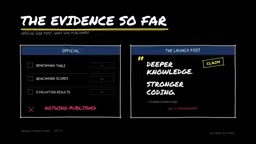
The official channels are straightforward: no benchmark tables, no scores. Alibaba's launch post promises "deeper knowledge" and "stronger coding capabilities," but these are claims, not measurements.
On the independent evaluation side, ModelDial ran tests using its own private coding and knowledge tasks, with Qwen 4 Max Preview scoring 78.8 out of 100, ranking 14th among 54 models. That's not embarrassing, but it's hardly dominance either. More interesting is the score structure: 90 for knowledge work, around 80 for backend and frontend code, but only 59 for aesthetics and maintainability. Measured by this yardstick, it's a powerful thinker, but code quality may be rough.
According to cross-analysis from a YouTube channel and Bilibili creators, the maintainer of the GameFeel benchmark (a test measuring a model's ability to build games) reported that this preview scored lower than older Qwen models—even lower than early Qwen 4 test versions—on a specific test. The maintainer described the overall situation as "confusing." However, the specific scores and testing conditions have not been independently verified, making this more of a warning signal than a final verdict.
On the other side, other developers posted one-shot frontend demos they liked. Same launch, completely different vibes.
Why Do Test Results Contradict Each Other?
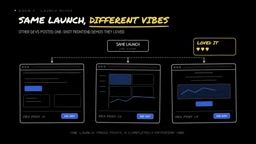
These tests measure fundamentally different things: knowledge capability, game-building ability, visual polish—each with its own standards. Add different settings, tiny sample sizes, and possibly different build versions, and no single result can invalidate another.
Multi-source analysis shows that such contradictions are not uncommon in AI model evaluation, but what makes Qwen 4 Max Preview special is one variable: CoDuck.
The CoDuck Episode: Which Model Are You Actually Testing?
Four days before launch, the coding tool Coder offered a mysterious model called CoDuck. No name, no manufacturer—just speculation. On launch day, Coder confirmed: CoDuck was Qwen's test build, updated daily, now upgraded to Qwen 4 Max Preview.
What does this mean? The people who liked CoDuck on Monday and the people running benchmarks on Wednesday may have been using literally different models. It's like comparing two software builds without knowing what changed. This doesn't automatically explain the GameFeel results, but no one outside Alibaba can be certain everyone was judging the same thing.
Model Build refers to snapshots of the same model at different points in the training or deployment pipeline. Before formal release, vendors often provide test builds under anonymous codenames to partner platforms to collect real-world usage feedback. These builds may be updated daily, with weights, alignment strategies, and even some architectural details potentially changing, but no changelog is disclosed externally. This creates a methodological problem for external evaluators: if different evaluators test on different dates and different platforms, they may actually be facing different models, and results cannot be directly compared. This is why rigorous model evaluation typically requires fixed version numbers, recording test dates and inference parameters, and running multiple repetitions when conditions allow. There is a natural tension between the convenience of anonymous builds and the reproducibility of evaluation.
Technical Clues: Gated DeltaNet and Sparse Attention
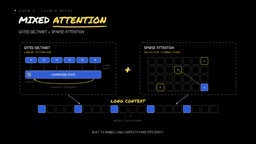
Alibaba did not disclose parameter counts or full architecture. But there is one clue: in August, they open-sourced a smaller model, Qwen 3.8 Flash Next, explicitly calling it an early preview of the architecture used in Qwen 4. It combined a linear attention design called Gated DeltaNet with sparse attention, aimed at handling long contexts more efficiently.
This is the family recipe, not the final dish. Max's exact configuration remains unknown.
Linear Attention is a modification of the standard self-attention mechanism. Standard attention's computational cost grows quadratically with sequence length (O(n²)), making it extremely expensive for processing ultra-long contexts. Linear attention restructures the attention computation into an accumulable kernel function form, reducing complexity to linear (O(n)), making million-token contexts feasible at inference time. The trade-off is that it typically struggles to precisely preserve direct relationships between arbitrary positions, with weaker expressive power than full attention.
Sparse Attention is another approach to reducing complexity: instead of computing all pairwise token relationships, each token only attends to a limited, structured set of neighbors (local windows, global nodes, or learnable sparse patterns). It can complement linear attention—the former preserves precise modeling of key positions, while the latter provides global linear efficiency. Qwen 4 is said to mix the two, which belongs to the same broad category of exploration in long-context efficiency as previous models like DeepSeekAd and MiniMax. However, the specific mixing ratios, layer-wise allocation, and division of labor among attention heads are not disclosed, so Max's actual capabilities cannot be inferred at the architectural level.
Open-Source Promise vs. Missing Weights
The question the open-source community keeps asking is: where are the downloadable models? Currently there are no Qwen 4 weights. The anticipated 27B version has not been released. Flash and Plus exist only as names on a slide.
Alibaba leadership has publicly committed to staying open-source. That commitment is genuine. But a commitment is not a release date. For developers, weights mean running the model on their own hardware, fine-tuning, and keeping it permanently. An API preview, no matter how good, cannot do any of that.
Pricing and Decision-Making Advice

The pricing approach is also unusual: payment through subscriptions and credit multipliers, with Coder's launch promotion reducing credit costs by 80%. There is no clear per-token pricing.
Synthesizing multiple sources, Qwen 4 Max Preview is a real and technically interesting release, but also an unfinished story. Early tests contradict each other, official numbers are missing, and the smaller models have yet to arrive. If you want to try it on real problems, you can act now. But making long-term production decisions based on incomplete benchmarks and vague pricing is gambling, not engineering.
The ultimate question may be: what actually makes a model better? Benchmark scores? Pretty demos? Or reliably solving your real problems, every single time?
One-line Summary
Alibaba releases Qwen 4 Max Preview, with official silence and contradictory independent test results.
Paragraph Summary
Alibaba released Qwen 4 Max Preview, a flagship preview rather than the full Qwen 4 series, supporting text, image, and video input with a 1 million token context, valid until November 25. No official benchmark scores were published, and independent evaluations diverge: ModelDial scored it 78.8, ranking 14th, with 90 for knowledge work but only 59 for code aesthetics; the GameFeel benchmark maintainer reported performance below older Qwen models. The article notes that different tests measure different dimensions, and with the mysterious CoDuck model updated daily, different testing times may not mean the same build. Technical clues point to a hybrid architecture of Gated DeltaNet and sparse attention, but Qwen 4 weights have not been released, and the 27B version is absent. The article suggests trying it but advises against making production decisions based on incomplete data.
Related articles

RePlan-VLA: Progress-Aware Replanning Breakthrough for Long-Horizon Robotic Manipulation
The RePlan-VLA framework converts VLA models' short-horizon capabilities into reliable long-horizon execution through progress-aware adaptive replanning, improving success rates by 21.9% and 10.4% on RoboCasa365 and CALVIN, and validating real-world deployment on a Franka Research 3 robot.

Geometric Bridge Flow Matching: A New Breakthrough in Blind Rigid Motion Correction
Geometric bridge flow matching enables blind rigid motion correction in head CBCT, achieving 37.1 dB PSNR and 0.27 mm RPE on simulated data in ~9.1 minutes, outperforming existing methods.

Google Releases Gemini 4 Hydrogen: 2.5x Faster Without Sacrificing Intelligence
Google releases the lightweight Gemini 4 Hydrogen: 2.5x faster task completion, AA Intelligence Index of 54 beating its flagship sibling, 7.3s single-step on Agent Arena faster than Claude and GPT rivals, four thinking levels with pay-as-you-need pricing, now available across AI Studio and more.