Qwen3 Max Tops the Agentic Index Leaderboard: A Deep Dive into Agent Capability Evaluation

Qwen3 Max tops the Agentic Index, marking China's LLM rise in the autonomous agent era.
Alibaba's Qwen3 Max has topped the Agentic Index leaderboard, which evaluates models on agent capabilities including tool use, multi-step reasoning, long context handling, and code execution. This reflects the broader rise of Chinese LLMs and signals a shift in AI competition from static knowledge benchmarks to real-world agentic task performance, with implications for developers building automated workflows and autonomous agent systems.
Alibaba's Qwen Tops the Agent Capability Leaderboard Again
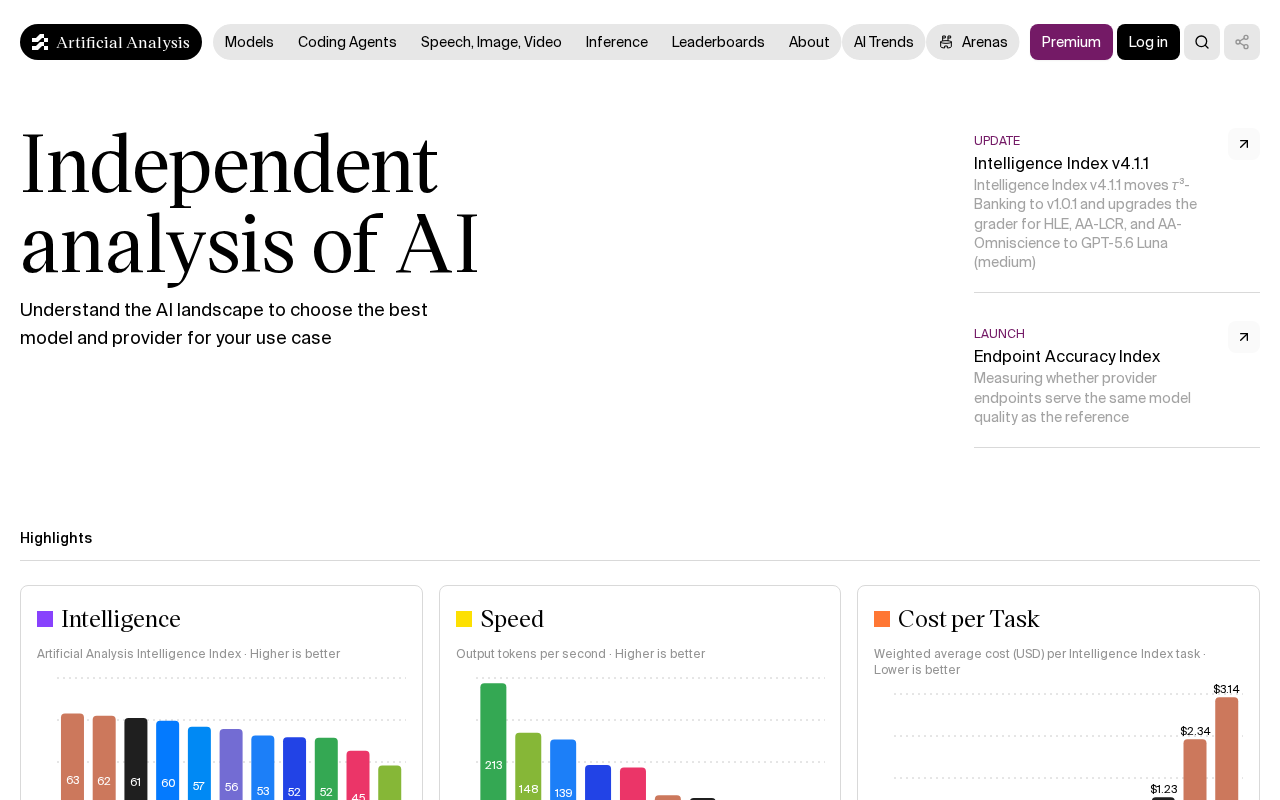
Recently, a discussion on Hacker News caught widespread attention in the AI community: Alibaba's latest flagship model, Qwen3 Max from the Tongyi Qianwen series, topped the Agentic Index evaluation, being rated as the best-performing model overall. The post quickly garnered 176 upvotes and over 70 comments, reflecting the developer community's keen interest in this result.
One notable detail: the core metric of this evaluation is "Agentic Capability," rather than traditional language understanding or knowledge-based Q&A benchmarks. This signals that the competitive focus for AI models is shifting from "being able to talk" to "being able to act" — whether a model can autonomously complete multi-step tasks, invoke tools, and perform long-chain reasoning is becoming the new yardstick for measuring LLM capabilities.
What Is the Agentic Index?
The Agentic Index is a comprehensive leaderboard specifically designed to evaluate a model's capabilities as an "Agent." Unlike benchmarks such as MMLU or GPQA that focus on static knowledge, it emphasizes model performance in real-world workflows. Its evaluation design draws from integration testing in software engineering — rather than testing individual capabilities in isolation, it places models in end-to-end task scenarios that require coordinating multiple abilities. For example, a typical task might require a model to first understand a user's natural language request, then formulate an execution plan, call multiple external APIs to retrieve data, reason over and integrate the results, and finally produce structured output. This evaluation approach complements specialized benchmarks like the Berkeley Function-Calling Leaderboard and SWE-bench, aiming for a holistic measure of full-pipeline collaborative capability.
Specifically, the Agentic Index evaluates the following core dimensions:
-
Tool Use: Whether the model can correctly understand and invoke external APIs, functions, or tools. The core of tool-use capability lies in the model's ability to map natural language instructions into structured function call formats (typically JSON Schema) and correctly populate parameters. Achieving this typically requires introducing large volumes of function-calling data pairs during training, enabling the model to learn when to call a tool, which tool to select, and how to extract correct parameter values from context. After OpenAI pioneered the Function Calling API in 2023, this paradigm quickly became an industry standard. The Qwen3 series further supports parallel tool calling and tool call chaining (where one tool's output serves as another tool's input), which is crucial for building complex automated workflows.
-
Multi-step Reasoning and Planning: Whether the model can decompose complex tasks into steps and formulate plans
-
Long Context Handling: Maintaining consistency and accuracy in long conversations or large-scale contexts
-
Code Execution and Debugging: The practical ability to write, run, and fix code
These capabilities are precisely the core elements needed for building automated workflows, AI assistants, and autonomous agent systems. Qwen3 Max topping this type of evaluation means it has demonstrated top-tier performance across these practical dimensions.
The Continued Rise of Chinese LLMs
From Catching Up to Running Alongside
Qwen3 Max's top ranking is not an isolated event but rather a microcosm of the overall rise of Chinese LLMs over the past year or two. From DeepSeekAd's breakthroughs in reasoning capabilities to the Qwen series' sustained leadership on multiple open-source leaderboards, Chinese teams are narrowing — and in some dimensions even surpassing — the gap with leading players like OpenAI, Anthropic, and Google.
It's worth noting that DeepSeek was incubated by the quantitative hedge fund High-Flyer. Its DeepSeek-V2 pioneered the MoE (Mixture of Experts) architecture that achieved performance close to top-tier dense models at extremely low inference costs, while DeepSeek-R1 reached levels comparable to OpenAI o1 in mathematical reasoning and coding. The Chinese LLM ecosystem also includes players like Zhipu AI's GLM series, Baichuan Intelligence, and Moonshot AI's Kimi. Qwen's unique advantage lies in its complete model scale matrix (from 0.5B to hundreds of billions of parameters) and its sustained commitment to open source, making it one of the most downloaded Chinese LLM families in the open-source community, with cumulative downloads on Hugging Face reaching tens of millions.
In the Hacker News discussion, many developers expressed recognition of this trend. Compared to closed models, the Qwen series' long-standing open-source strategy has earned significant developer trust — developers can deploy, fine-tune, and deeply customize these models locally, which is particularly important for enterprise applications and data-privacy-sensitive scenarios.
Key Positioning in the Agent Era
As AI applications evolve from "conversational assistants" to "autonomous agents," there's a widespread belief that we're entering the "Year One of Agents." 2024 has been widely labeled as such, driven by the maturation of agent architecture paradigms like ReAct (Reasoning + Acting), Plan-and-Execute, and Reflection. The ReAct framework allows models to alternate between reasoning and action, while the Plan-and-Execute pattern generates a global plan first and then executes step by step. The emergence of frameworks like LangChain, AutoGPT, and CrewAI has significantly lowered the development barrier for agent applications. In enterprise scenarios, agents are being applied to automated customer service, code review, data analysis pipelines, and multi-step business process automation (as an upgrade to traditional RPA). The stronger a model's agent capabilities, the higher its task success rate when serving as the "brain" in these frameworks, and the stronger its ability to self-correct after errors.
In this context, whoever leads in agent capabilities has the opportunity to secure a critical position in the next wave of applications. Qwen3 Max's performance on the Agentic Index precisely addresses this era's central question. For developers looking to build automated workflows, coding assistants, or complex task agents, a model that excels at tool calling and multi-step planning is far more valuable than one that is merely knowledgeable.
Rational Voices from the Community
A Cautious Attitude Toward Leaderboards
Despite the widespread attention, there were plenty of rational voices in the Hacker News community. Some commenters reminded others that rankings from a single leaderboard should be viewed with caution:
-
Limitations of Evaluation Methods: Any benchmark may deviate from actual use cases; being #1 on a leaderboard doesn't necessarily mean being the best choice for all scenarios
-
Data Contamination Risk: Data contamination is one of the most controversial issues in LLM evaluation. When a model's training data includes benchmark questions or answers, its score on that benchmark cannot truly reflect generalization ability. Academia has proposed various detection methods, including n-gram overlap detection and membership inference attacks, but for closed-source models' training data, outsiders often cannot fully verify. To address this, some evaluation organizations adopt strategies like dynamically updating question banks, using private test sets that have never been made public, or designing online evaluations that require real-time interaction. Since the Agentic Index involves real-time tool calling and dynamic environment interaction, it is theoretically harder to contaminate than pure text-based Q&A benchmarks, but the transparency and independence of evaluation methods still require ongoing attention.
-
Gaps Between Benchmarks and Real Experience: There is often a disconnect between leaderboard scores and developers' actual day-to-day usage experience
These discussions reflect the judgment of a mature technical community — leaderboards are valuable references, but never the sole standard. What truly tests a model is its performance when deployed in specific projects.
Multi-dimensional Considerations for Model Selection
For practical model selection, developers need to comprehensively consider multiple dimensions including cost, latency, context length, deployment flexibility, and ecosystem support. Qwen3 Max's top ranking adds a compelling option to the mix, but the final choice should still be based on empirical validation against specific business requirements.
Conclusion: Reshaping the LLM Competitive Landscape
Qwen3 Max topping the Agentic Index is both a testament to the Alibaba Tongyi Qianwen team's technical prowess and another signal of the multipolarization of the global LLM competitive landscape. As evaluation focus shifts from knowledge-based Q&A to agent capabilities, model competition has entered a new phase that is more closely aligned with real-world productivity.
For developers and enterprises, this means more diverse and competitive options are available. For the industry as a whole, the healthy competition among top models ultimately benefits all builders and users of AI applications. As agents gradually become the mainstream paradigm, this competition will only intensify.
Key Takeaways
Related articles

JobRunner MCP Server: AI Agents Can Now Fix Failed Java Jobs
JobRunner launches an open-source MCP server enabling AI agents to view cluster status, diagnose failures, and recover Java jobs—incident response from any cloud coding environment or existing agent.

MLAI Digital Launches 9 Security Agents: MCP Server Safeguards the Full Lifecycle of Agentic AI
MLAI Digital launches Security MCP Server with nine built-in specialized security agents covering vulnerability discovery, attack simulation, prompt injection detection, API and infrastructure assessment, and accelerated remediation—embedding security validation across the full Agentic AI lifecycle from development to production.

Running Isaac Lab on H100 GPUs: Exploring Better Approaches
Exploring optimization methods for running Isaac Lab on NVIDIA H100 GPUs, including MIG configuration, mixed precision, TensorRT acceleration, and community experience to improve robotics simulation and reinforcement learning efficiency.