R&D Is Forking: The Coming Battle Between Token-Abundant and Token-Starved Research
Compute access is splitting the research world in two — and academic institutions may be on the wrong side.
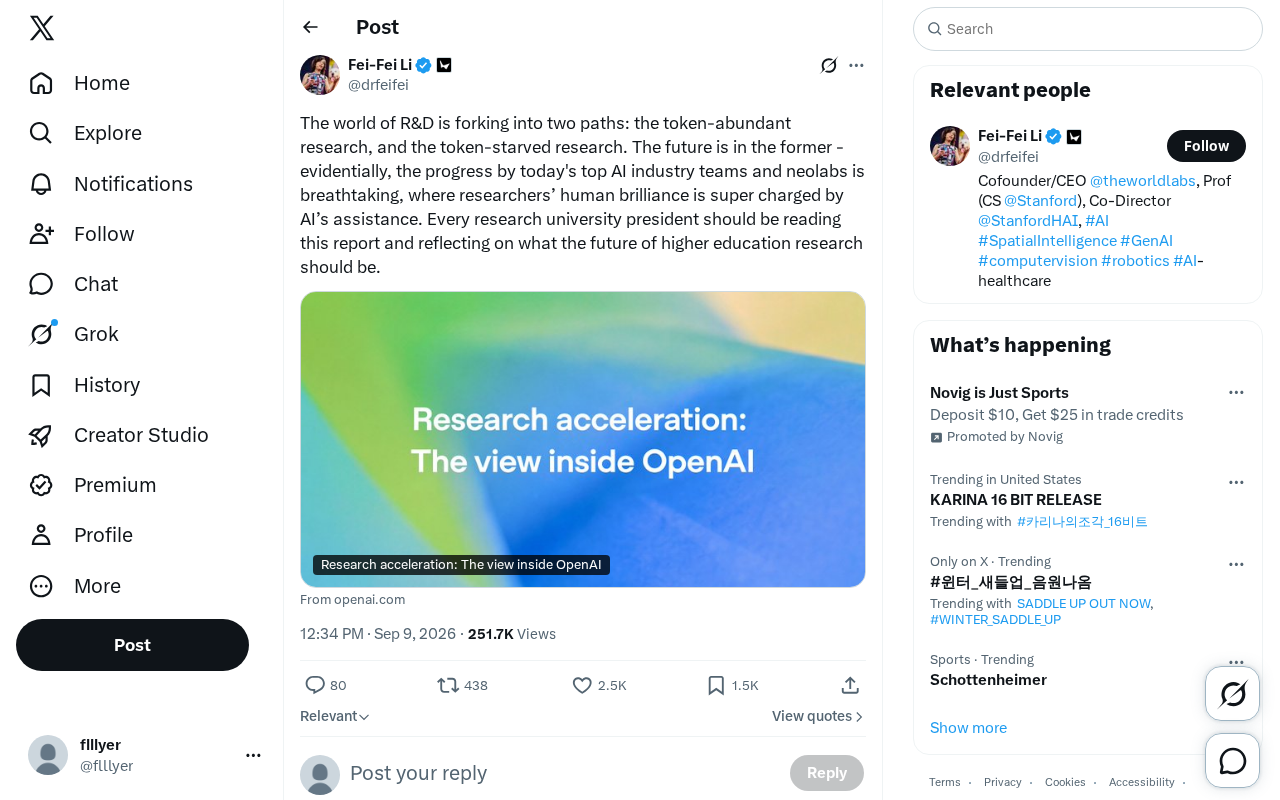
A viral tweet introduced the framework of "token-abundant" vs. "token-starved" research, arguing that compute access is becoming the defining competitive resource in R&D. Top AI labs and neolabs with near-unlimited compute budgets are advancing at exponential speed, while budget-constrained universities risk falling behind. The article transmits this warning while maintaining nuance: abundant compute doesn't guarantee breakthroughs, and deep human thinking remains irreplaceable. The key takeaway is that research universities must urgently rethink resource allocation — and that teams blending human insight with AI capability will lead the next era of discovery.
A Tweet That Got the Industry Thinking
A tech observer recently made a striking claim: the R&D world is forking into two fundamentally different paths — token-abundant research and token-starved research. "Token" here refers both to the compute resources that power large language models and, more broadly, to the AI-assisted capabilities a team can bring to bear.
This dichotomy sounds simple, but it cuts to the heart of a core shift in the scientific ecosystem: whoever can fully harness AI's compute and capabilities to amplify human researchers' intelligence will hold the upper hand in R&D efficiency going forward.
What "Token-Abundant" and "Token-Starved" Actually Mean
Token-abundant research describes teams with large compute budgets that can freely invoke top-tier AI models for experimentation, iteration, and exploration without restraint. These teams typically appear at leading AI companies and so-called "neolabs" (new-model research laboratories). Researchers' human insight gets "supercharged" by AI assistance, enabling them to accomplish in days what once took months or even years.
On the other side sits token-starved research — constrained by budget, compute, and tool accessibility, these researchers cannot lean on AI at scale to accelerate their work. The original tweet's author argues that, based on available evidence, the future belongs to the former. The progress being made by top AI teams and neolabs is described as "breathtaking," and the pace of that progress is itself the most compelling proof.
Compute as the New Means of Scientific Production
Underlying this fork is a deeper structural shift: compute is becoming the critical means of production in research. In the past, scientific competitiveness depended mainly on talent density, laboratory equipment, and funding. Today, the ability to continuously and cheaply access large-scale AI inference and training capacity has become a new variable that determines a team's research ceiling.
When a team can "splurge" on tokens to run massive parallel experiments, rapidly validate hypotheses, and automate literature reviews and code generation, its exploration space and iteration speed expand exponentially. Token-starved teams, by contrast, must budget every experiment carefully — a structural disadvantage from the start.
A Warning for Higher Education and Academic Research
Perhaps the most weighty line in the original tweet was a direct call to university leaders: "Every research university president should read this report and reflect on what the future of higher education research should look like."
This is, in effect, a wake-up call. Traditional academic institutions are often constrained by funding approval processes, limited compute procurement capacity, and organizational inertia. In an AI-driven R&D race, they risk becoming the "token-starved" party. When corporate labs can push the frontier with near-unlimited compute, academia's traditional leadership in basic research may erode — unless universities fundamentally rethink their resource allocation and research paradigms.
Possible Paths Forward for Academia
Higher education institutions are not without options. Potential directions include: forging compute partnerships with cloud providers and AI companies, forming cross-institutional compute-sharing coalitions, redesigning research workflows around AI, and incorporating AI-assisted research capability into evaluation frameworks. The core imperative is for academic institutions to acknowledge the reality that "compute equals competitiveness" — rather than continuing to allocate scarce resources in traditional ways.
Reasons for Caution
It's worth applying some balance to this argument. The original tweet is fundamentally a strongly opinionated commentary. The claim that "the future belongs to token-abundant research" is based primarily on observations of leading teams' progress rather than systematic analysis.
Abundant compute can certainly accelerate iteration, but scientific breakthroughs are not always proportional to compute. Many major discoveries have come from novel problem framing, cross-disciplinary insight, or long-term theoretical accumulation — precisely the things that can't simply be solved by "throwing tokens at them." The binary of "abundant" versus "starved" may also underestimate the potential for small, focused teams to achieve breakthroughs in specific niches through creativity and depth.
Furthermore, token abundance doesn't come with only upsides: unconstrained compute use can also encourage brute-force trial-and-error research, potentially diluting the value of deep human thinking rather than amplifying it.
Conclusion
Though brief, this tweet precisely captures a profound divergence in the scientific ecosystem of the AI era. Compute is reshaping the competitive landscape of R&D, and academic institutions and traditional research organizations have reached a moment where they must seriously reconsider their positioning. Whether or not "token abundance" truly represents the only future, as the author suggests, one thing seems clear: the teams that can forge effective collaboration between human intelligence and AI capabilities will have a decisive edge in the research race ahead.
Related articles

Atlas World Model Explained: How Next View Prediction Unifies Generation and Reconstruction
The Atlas world model uses Next View Prediction as its core to unify pixel-level generation and reconstruction, offering a new approach to spatial intelligence.
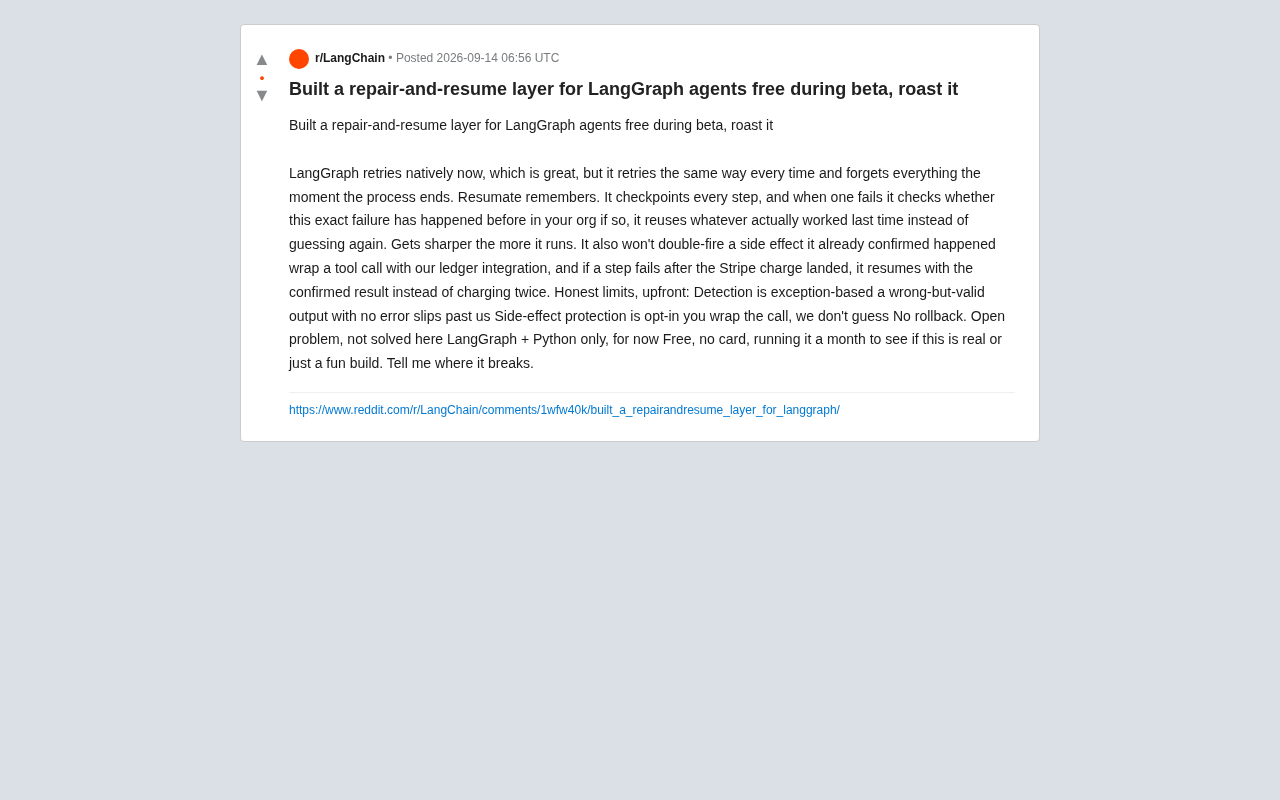
Resumate: A Deep Dive into the Repair-and-Resume Layer for LangGraph Agents
Resumate adds memory-aware checkpointing and idempotent side-effect protection to LangGraph agents, preventing issues like duplicate Stripe charges on retry.

Airbnb vs. BnB: Platform Brand Protection and the Trademark Battle
Airbnb's attempt to restrict use of the abbreviation "BnB" raises questions about trademark overreach, platform power, and the rights of independent hospitality operators.