R&D Racing Documentary Trailer Breakdown: Behind the Scenes of Top Team Technology

R&D racing documentary trailer reveals the behind-the-scenes technology story of top motorsport teams
A trailer for a racing R&D documentary titled "R&D: Part 1" has been released on YouTube, showcasing the development mindset of top racing teams under extreme competitive pressure. The documentary will provide an in-depth look at cutting-edge technologies used in modern motorsport including AI, CFD simulation, and digital twins, as well as how passion-driven engineers pursue every millisecond of improvement.
R&D Racing Documentary Trailer Released
Recently, a trailer titled "R&D: Part 1" was published on YouTube, featuring visually compelling footage and passionate narration that previews an upcoming documentary series focused on the behind-the-scenes world of motorsport research and development. This documentary will take viewers deep into the heart of racing R&D, exploring the technical stories behind speed.
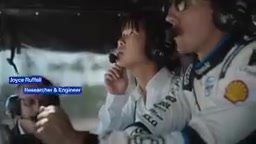
The Extreme Competitive Pressure Facing Top Teams
In the trailer, team members convey the high-pressure competitive atmosphere of racing R&D through short, powerful statements. "Everyone wants to take our spot" — this single line captures the brutal reality that top racing development teams face.

In motorsport, R&D is one of the core factors that determines victory or defeat. From aerodynamic design to powertrain optimization, from data analysis to real-time strategy adjustments, every technical detail can become a decisive advantage on track. Notably, the scale of R&D investment in modern top-tier motorsport approaches that of the aerospace industry. Taking F1 as an example, top teams' annual technical R&D budgets exceed $300 million (even higher before cost cap regulations), with over 1,000 engineers and technical staff. This extreme resource investment not only fuels a technological arms race on track but also drives extensive civilian technology transfer — carbon fiber composites, active suspension systems, and hybrid powertrain technology all originated from racing R&D before gradually entering production vehicles. This competitive dynamic where "everyone wants to take your spot" is precisely the driving force behind continuous breakthroughs in racing technology.
Passion-Driven Racing Technology Innovation
"I like that kind of pressure" — this line from the trailer reveals the mindset of top engineers and drivers when facing extreme challenges.

Even more noteworthy is another piece of narration: "For me, this is personal because I love motorsport." In the field of racing technology development, passion is often the key driving force behind breaking through bottlenecks. Whether it's algorithm engineers responsible for simulation or aerodynamics specialists, those who truly push the industry forward are often the ones who view their work as a mission.
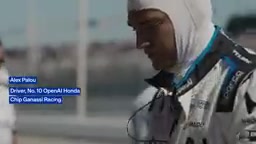
Cutting-Edge Technology Applications in Racing R&D
Modern motorsport has long transcended pure mechanical competition. In today's top-tier series like F1 and WEC, AI and machine learning are widely applied across multiple critical areas:
-
CFD (Computational Fluid Dynamics) Simulation: CFD uses numerical methods to solve Navier-Stokes equations, simulating airflow behavior over the car's surfaces, forming the foundation of modern racing aerodynamic development. Since the FIA imposes strict limitations on physical wind tunnel testing time, CFD simulation has become the core means for teams to work within these constraints. Top teams invest tens of millions of dollars annually in CFD computing clusters, with a single full-car simulation potentially requiring millions of CPU core-hours, efficiently screening optimal aerodynamic solutions before wind tunnel testing.
-
Data-Driven Race Strategy: Through massive amounts of data collected from hundreds of onboard sensors, teams optimize pit stop strategies and car setup in real time. A modern F1 car can generate over 1.5TB of telemetry data per lap, with factory-based engineers collaborating with trackside teams in real-time analysis via encrypted satellite links.
-
Digital Twin Technology: Digital Twin technology originated from NASA's spacecraft health management systems before being widely adopted by manufacturing. In racing, it's not merely a static 3D model but a dynamic virtual replica that synchronizes with the physical car's state in real time. By fusing sensor data, physics simulation models, and machine learning algorithms, engineers can rehearse the effects of different track conditions and weather changes on car performance in a virtual environment, compressing what traditionally took weeks of setup cycles into just hours and dramatically accelerating design iteration speed.
-
AI Predictive Maintenance: Machine learning algorithms are used to predict component fatigue and failure risk, reducing the probability of DNF (Did Not Finish) on race day. Through deep learning on historical failure data, systems can issue warnings dozens of laps before actual component failure, giving engineers critical decision-making windows.
This upcoming R&D documentary series promises to reveal the complete technology chain behind racing development, showing how engineers pursue every millisecond of improvement under extreme pressure.
Outlook for Future Documentary Content
"Today is going to be a tough race. We're here to win." Although the trailer is brief, it successfully creates an atmosphere of tension and anticipation. As the first part of the documentary series, it hints that subsequent content will delve deeply into the core technical details and team collaboration processes of racing R&D.
For viewers interested in racing technology and engineering innovation, this R&D documentary series is worth following closely. Judging from the production quality of the trailer, the full episodes will likely feature rare footage of wind tunnel testing, track data acquisition, chassis setup, and other technical processes. The value of such documentaries lies not only in satisfying racing fans' curiosity but also in showcasing the extreme boundaries of modern engineering technology to the public — after all, motorsport has always been one of humanity's most concentrated arenas for engineering brilliance.
Key Takeaways
- A documentary series focused on behind-the-scenes racing R&D, titled R&D: Part 1, is set to release
- The trailer showcases the R&D mindset of top racing teams under high-pressure competition
- Modern motorsport deeply integrates cutting-edge technologies including AI, CFD simulation, and digital twins
- Top teams invest hundreds of millions of dollars annually in R&D, with technological achievements widely benefiting civilian industries
- Passion and a sense of mission are the core driving forces behind technological breakthroughs
Related articles
 Tech Frontiers
MuJoCo: An Analysis of DeepMind's Open-Source General-Purpose Physics Simulator
An in-depth analysis of Google DeepMind's open-source physics simulator MuJoCo: high-performance C++ kernel, MJCF modeling format, contact solving principles, MJX GPU acceleration, and robot reinforcement learning use cases.
 Tech Frontiers
Claude API Quick Start: The Official Quickstarts Project Collection
Anthropic's official claude-quickstarts project collection helps developers quickly build deployable apps with the Claude API. Nearly 20k stars, Python-based, great for beginners and prototyping.
 Tech Frontiers
AI Agents Connecting Directly to APIs: Which Calls Can Be Safely Allowed?
AI agents can call any API, but the real challenge is deciding which calls can be safely allowed. This article analyzes allowance decisions from three dimensions—intent matching, least privilege, and controllable impact—and argues that the control layer should sit outside the agent, combined with audit traceability to build a trustworthy API call governance mechanism.