Reddit User Shares Free Fable Credits, Sparking Discussion
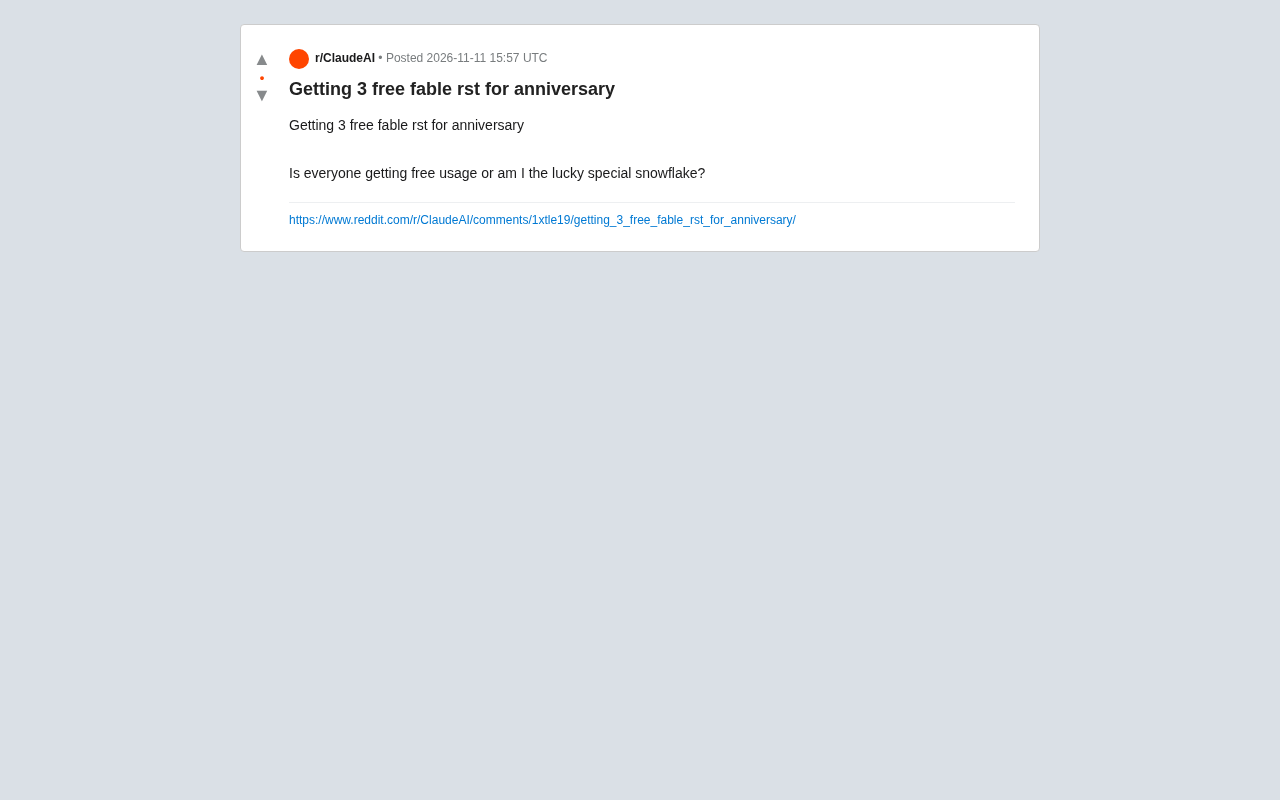
A Reddit user says they got 3 free Fable credits, sparking discussion about how free benefits work for AI products.
A Reddit post claims a user received 3 free Fable usage opportunities and asks whether this is a universal benefit or personal luck. The post does not specify the exact Fable product, campaign rules, or the user's region, so information is limited. The article analyzes three common operational explanations for free credits: a product anniversary or holiday campaign, targeted user compensation or gray testing, and account or regional differences. The emergence of community verification posts reflects users' need for transparency in product benefit rules and reminds AI product teams to explain scope and triggering conditions when issuing credits. Meanwhile, onlookers should be cautious about a single screenshot and treat it as personal experience sharing until officially confirmed.
The Confusion Behind a Single Post: Are Fable Free Credits a Universal Benefit or a Random Bonus?
A brief post recently appeared on Reddit in which the author said they had received 3 free Fable usage opportunities (written in the original as "3 free fable rst"), along with a screenshot, asking: "Did everyone get free credits, or am I just lucky?" The post itself contains limited information, but discussions like this about free credits for AI tools are not uncommon in the community—they touch on users' sensitivity to product pricing and operational strategy.
Judging from the screenshot, the author did see some kind of free-usage prompt in the interface, but the post does not specify which product Fable refers to, how the credits were triggered, or whether "anniversary" means a product anniversary or the user's personal milestone. The absence of these key details makes the post more of a community bulletin than a verifiable product announcement.
Where Do Free Credits Come From? Three Common Possibilities
Based on common operational tactics for AI products, users suddenly receiving free credits usually has one of the following explanations.
1. Product Anniversary or Holiday Campaign
The word "anniversary" in the original title suggests this may be related to an anniversary event. It is standard practice for AI tools to issue trial credits to users at milestone moments to boost activity and conversion. However, the post provides no campaign page or official explanation, so it cannot be confirmed as a formal, full-scale campaign.
Gray release is a common software release strategy: the product team first opens new features or rules to a small subset of users (usually randomly selected or filtered by specific criteria), observes performance and user feedback, and then decides whether to expand the scope. In AI products, gray releases are used not only for new features but also frequently to test new billing models, credit-issuance logic, or interface changes. Therefore, some users suddenly seeing free-credit prompts while others see no change is very likely because they happened to be placed in an experimental group. Typical characteristics of a gray release are: no public announcement, inconsistent features across users, and the same user possibly seeing different results at different times. This perfectly explains why the author's experience is difficult for others to reproduce.
2. Targeted User Compensation or Gray Testing
Some products issue targeted benefits to specific user groups (such as active users or users who previously paid and then churned), or they may be testing a new billing or usage flow. The author's self-deprecating remark "lucky special snowflake" precisely suggests that these credits may not be available to everyone but instead carry some randomness or targeting.
Targeted user compensation refers to the product side proactively issuing benefits to specific user groups to recover experience or incentivize behavior. Common triggers include: users who experienced service outages and received compensation, churned users whose paid subscription expired, long-term active users who never paid, or users who participated in beta feedback. Unlike universal campaigns, targeted compensation is usually delivered via in-app messages, email, or account balance, and the rules are not publicly disclosed. In the AI tool space, because inference costs are high, vendors prefer to use small amounts of free credits for precise win-back rather than distributing coupons at scale. The author calling themselves a "lucky special snowflake" fits exactly the "not for everyone" characteristic of targeted compensation.
3. Account or Regional Differences
Users in different regions or with different account statuses may see different interfaces and benefits. If the post does not state the region and account type, it is difficult for other users to reproduce the same experience.
Account or regional differences are especially common in AI products due to pricing strategy, compliance requirements, and infrastructure distribution. Users in different countries or regions may see different subscription prices, free credits, or even feature sets; account type (such as newly registered, education-email verified, or enterprise account) also affects benefits. In addition, some products dynamically adjust displayed content based on IP location or the region of the payment method. Therefore, even if two products have identical features, User A and User B may see completely different interfaces. This is also why a single screenshot cannot determine whether "3 free Fable" is a universal benefit—the author's region and account status were not disclosed, so naturally others cannot verify it.
What Community Feedback Reveals: Transparency Matters More Than Credits
The most valuable aspect of this post is not the "3 free" itself, but the uncertainty users feel about product rules that it exposes. When users cannot tell whether a benefit is universal or individual, verification posts spontaneously appear in the community. For AI product teams, this is a reminder that when issuing credits, also explaining the scope and triggering conditions can effectively reduce misunderstandings and repeated questions.
On the other hand, onlookers should also remain cautious. A single screenshot and one question are not enough to conclude that a product has a "hidden benefit" or "random issuance" mechanism. Before official confirmation, it is safer to treat such posts as personal experience sharing.
Summary
At present, public information about Fable free credits is limited to this Reddit post, and beyond the screenshot it lacks key details such as the product name, campaign rules, and the user's region. It is suitable as a sample for observing community dynamics, but it is not enough to support a definitive conclusion about any product's pricing strategy. If you also receive a similar prompt, it is worth first checking the in-product campaign description or official announcement before judging whether it is a collective benefit or a personal bonus.
Related articles
AlphaGenome 2 Released: Predicting Variant Effects by Cell Type
Google DeepMind releases AlphaGenome 2, a conditional DNA sequence model predicting regulatory activity and variant effects by cell type, open via AlphaGenome API for non-commercial research. This article examines the significance of conditional modeling, API distribution trade-offs, and validation challenges.
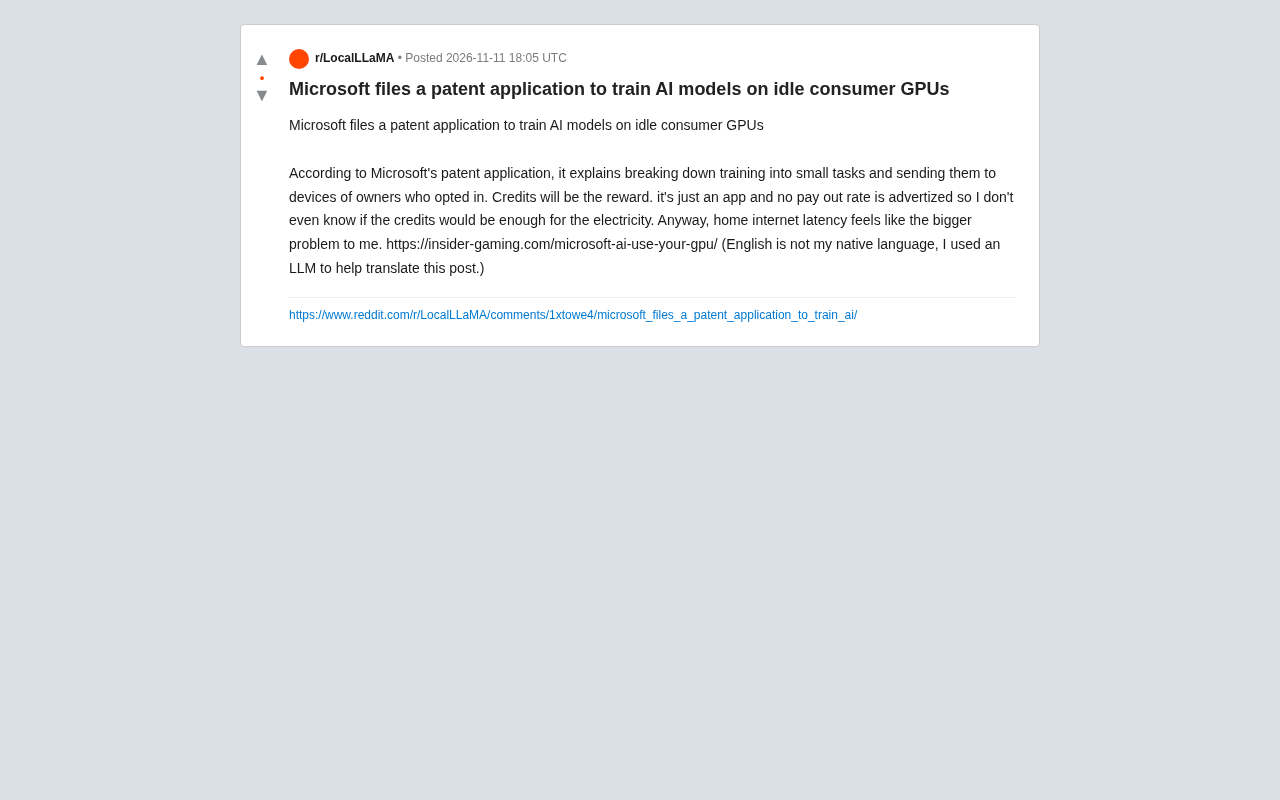
Microsoft Patent: Train AI on Your Idle GPU for Points—Is It Worth the Electricity Bill?
A Microsoft patent proposes splitting AI training tasks across users' idle GPUs with points as rewards. This article analyzes its incentive design, network latency bottlenecks, and differences from existing distributed training, exploring whether the model can be deployed.

Replit Wins Microsoft 2026 Partner of the Year Award: AI Coding Democratization Takes Another Step Forward
Replit wins Microsoft's 2026 Microsoft for Startups Partner of the Year award. This article interprets the signals behind Microsoft's recognition: how AI lowers the barrier to software development, and why enterprise-grade security and governance have become key to competition among AI coding platforms.