Republicans and the Far Right: From Musk's Gesture to the ICE Controversy
Recent controversies over far-right symbols involving Republican-associated figures and institutions show that the boundaries of political discourse are being gradually pushed back.
The article reviews a series of incidents around Trump's second term that evoke far-right associations: Musk's Inauguration Day gesture, a withdrawn nominee's admission of "Nazi tendencies," a Texas candidate's Nazi-march video, Fox News joking about the term "Nazi," and DHS ICE promotional materials accused of alluding to neo-Nazi books and the "Great Replacement" narrative. The author argues that while individual incidents can be excused as misunderstandings or jokes, the cumulative pattern shows that extreme symbols are increasingly common in mainstream political space, public sensitivity is declining, and the bottom line of political discourse is being pushed back through "jokes" and "misunderstandings."
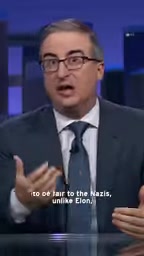
On the first day of Trump's second term, a gesture by Elon Musk drew widespread attention. The motion he made while thanking Trump supporters, accompanied by a mumbled utterance, immediately reminded many people of a Nazi salute. As the video commentator put it, almost every detail pointed in that direction—the only exception being Musk's taste in suits. This opening was not an isolated incident but a microcosm of a series of recent controversies: the distance between the Republican Party and far-right symbols is being repeatedly scrutinized.
A Dense Cluster of Controversies
Musk later posted on a social platform, calling the accusation that "everyone is Hitler" "so old." But critics were not convinced, because similar incidents kept occurring. A Trump nominee admitted in a group chat, before his nomination was withdrawn, that he "has Nazi tendencies from time to time"; a Texas congressional candidate posted a video showing a gun described as "Hitler's street sweeper" and goose-stepping with friends to a Nazi march.
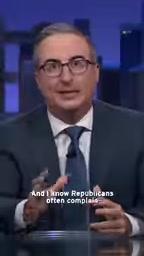
Together, these incidents give new context to the old complaint that "liberals always call Republicans Nazis." The video points out that Republicans often complain about this label, but the problem is that when far-right symbols appear repeatedly, the persuasiveness of that complaint is being undermined.
The "Everyone Is Hitler" accusation: This phrase originates from Godwin's Law in online debate, which holds that the longer a discussion goes on, the closer the probability approaches 1 that someone will compare the other side to Hitler. The law is often used to criticize excessive use of Nazi analogies, arguing that this trivializes serious historical crimes. However, critics point out that Godwin's Law was intended to remind people to avoid inappropriate analogies, not to provide immunity for far-right symbols that actually appear. When Musk and others respond with "so old," they are in fact borrowing this internet meme to avoid scrutiny of specific behavior. This rhetorical strategy turns a dispute over symbols into a question about the motives of critics, thereby blurring the focus of discussion.
Fox's "Joke" and the Boundaries of Discourse
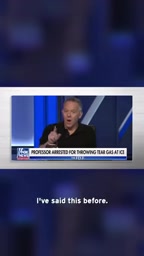
Last July, a Fox News panel tried to defuse the comparison between ICE and Nazis with humor. One commentator claimed that just as the "N-word" can be reclaimed by Black communities, "Nazi" can also be used jokingly—"What up, my Nazi?" The video's author described this exchange as "unwatchable from the moment they said 'the blacks,' and it only got worse from there."
This attempt to "desensitize" extreme symbols reflects a subtle shift in the right-wing media ecosystem: through humor and irony, analogies that were once untouchable are turned into content that can be discussed or even consumed. Critics argue that this precisely lowers public vigilance toward far-right symbols.
ICE and the "Third World" Narrative
The most substantive allegation in the video concerns promotional materials released by the Department of Homeland Security (DHS). An ICE recruitment ad with the caption "Which Way American Man" was said to clearly allude to the book Which Way Western Man, popular in neo-Nazi circles. Another Instagram post showed a beach image with the caption "America after 100 million deportations," adding "the peace of a nation no longer besieged by the Third World."
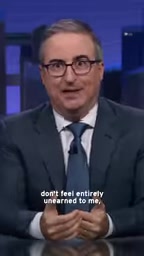
The wording of these materials overlaps heavily with the far-right "Great Replacement" narrative. The video's author acknowledges that those who posted them would probably insist, "I don't know what you're talking about," but the symbolism is hard to explain as coincidence. This also explains why the comparison between ICE and Nazis is "not entirely unfounded"—when official propaganda borrows extremist discourse, the analogy has a factual basis.
Why These Symbols Deserve Vigilance
Viewed individually, each incident can be explained as a misunderstanding, a joke, or a coincidence. But put together, a pattern emerges: from Musk's gesture to the candidate's goose-stepping video to the wording of official recruitment materials, far-right visual and linguistic symbols are becoming more common in mainstream political space.
This does not mean the Republican Party as a whole is equivalent to the far right; the video itself stresses that "they are not Nazis." What truly deserves attention is the shifting boundary—when extreme symbols are repeatedly used, joked about, and normalized, public sensitivity to them declines. And the bottom line of political discourse is often pushed back bit by bit through these "jokes" and "misunderstandings."
Desensitization and "dog whistle" politics: Desensitization refers to reducing an audience's vigilance and emotional response to extreme symbols through repetition, jokes, or irony, so that they gradually come to be seen as acceptable or harmless. This process often works in tandem with "dog whistle" politics—dog whistles are words or symbols that appear ordinary on the surface but convey hidden messages to a specific audience. For example, "Which Way American Man" in the ICE ad may mean nothing to the public unfamiliar with neo-Nazi books, but to those in the know it constitutes a clear call. The effectiveness of a dog whistle depends precisely on this dual interpretability: it can maintain "deniability" in mainstream spaces while confirming identity within extremist circles. Repeated dog-whistle symbols gradually broaden the boundaries of what can be discussed, allowing extremist discourse to seep from the margins into the mainstream.
Background Notes
Reclamation of the "N-word": The logic cited by the Fox commentator involves the phenomenon of "reclamation" discussed in linguistics—oppressed groups internalize and use a once-insulting term to defuse its harm, such as the transformation of the "N-word" within African American communities. However, this strategy usually requires that users be members of the group in question and is accompanied by complex social context. Comparing "Nazi" to a word that can be "reclaimed" ignores two key differences: first, the white commentators using "Nazi" are not members of the group victimized by that symbol; second, Nazi symbols are associated with systematic genocide, whose historical weight is far beyond that of ordinary insults. This analogy is therefore criticized as a bait-and-switch that in effect opens the door to desensitization.
The "Great Replacement" narrative: This conspiracy theory holds that the white population is being deliberately replaced by non-white immigrants, usually alleging that elites (such as Jews) are manipulating events behind the scenes. The narrative originated with French writer Renaud Camus and later spread widely in far-right circles in the United States, becoming associated with multiple violent incidents. Slogans such as "America after 100 million deportations" directly echo the core anxiety of the Great Replacement narrative—that white dominance is under threat—by emphasizing "Third World siege" and "deportation." The key to identifying this narrative lies in its linguistic features: depicting immigrants as invaders, emphasizing the "purity" and "siege" of demographic structure, and implying the existence of behind-the-scenes planners. When official materials use similar wording, even if the publishers deny it, the intertextuality of the symbols still sends a clear signal to a specific audience.
One-line Summary
Recent controversies over far-right symbols involving Republican-associated figures and institutions show that the boundaries of political discourse are being gradually pushed back.
Paragraph Summary
The article reviews a series of incidents around Trump's second term that evoke far-right associations: Musk's gesture on Inauguration Day, a withdrawn nominee's admission of "Nazi tendencies," a Texas candidate's video featuring a Nazi march, Fox News joking about the term "Nazi," and DHS ICE promotional materials accused of alluding to neo-Nazi books and the "Great Replacement" narrative. The author argues that while individual incidents can be excused as misunderstandings or jokes, the cumulative pattern shows that extreme symbols are increasingly common in mainstream political space, public sensitivity is declining, and the bottom line of political discourse is being pushed back through "jokes" and "misunderstandings."
Related articles

Claude 2026 Best Practices: Delete CLAUDE.md and Let Agents Manage Agents
Claude Code head Boris Cherny suggests regularly deleting CLAUDE.md and rebuilding instructions via ablation. This article breaks down five Claude best practices for 2026.

Why Did the US Keep Emperor Hirohito? The Strategic Game of Unlimited vs. Limited War
Strategic scholar Sarah Paine analyzes unlimited vs. limited war: unlimited war aims at regime change but is hard to execute due to 'dead ground' resistance; limited war is hard to define but easy to execute. The US retention of Emperor Hirohito exemplifies instrumental arrangements within unlimited war.
11-Year Veteran Engineer Live-Dissects: How Vibe Coding Tames Multi-Agent Systems
An 11-year AI lead live-demos orchestrating multiple coding agents via a master agent, building a reminder app from scratch and shipping to TestFlight in hours. Covers multi-agent workflows, prompt injection defense, model cost trade-offs, and evaluation practices.