Why Did the US Keep Emperor Hirohito? The Strategic Game of Unlimited vs. Limited War

Unlimited war is conceptually simple but hard to execute; limited war is vaguely defined but easy to operate; objective nature determines war direction.
Based on strategic scholar Sarah Paine's analysis and Sun Tzu's 'dead ground' concept, the article distinguishes unlimited war (clear regime change objective but hard to execute due to extraordinary resistance) from limited war (hard to define but easier to execute). Using the US retention of Emperor Hirohito as an example, it shows limited means can exist within unlimited war without changing the war's nature. This counterintuitive framework explains how objective nature determines war direction.
Understanding the Fundamental Difference in War Objectives Through the Concept of "Dead Ground"
Strategic scholar Sarah Paine cites the concept of "dead ground" (死地) from Sun Tzu's The Art of War: when an army can only survive by fighting to the death, soldiers will fight with desperate courage to the end. She combines this ancient wisdom with modern war objectives theory to propose a key distinction—the fundamental difference between unlimited war objectives and limited war objectives.
In her view, unlimited war is conceptually simple: the goal is regime change, and everyone can understand it. But execution is extremely difficult, because putting the opponent in "dead ground" will inspire a will to resist beyond imagination. She uses the Ukraine battlefield as an example, pointing out that Russia pushed Ukrainians into dead ground, but Ukrainians did not give up resistance as some observers expected—instead, they demonstrated astonishing resilience.
This insight reveals a frequently overlooked strategic paradox: seemingly more thorough unlimited objectives may instead create more tenacious enemies. According to Paine's analysis, unlimited objectives mean the defeated regime faces complete annihilation, and if accompanied by exterminatory intent against the population, civilians are also drawn in—in such situations, people often choose to fight to the death.
"Dead ground" comes from the "Nine Situations" chapter of Sun Tzu's The Art of War, a classic exposition by Sun Tzu on the relationship between battlefield terrain and soldier psychology. Sun Tzu divided combat regions into nine categories; "dead ground" refers to a desperate situation where "fighting swiftly means survival, not fighting swiftly means death"—that is, only by quickly and decisively fighting can one survive, otherwise certain destruction. Sun Tzu's core insight is that soldiers in desperate situations will unleash extraordinary fighting will, so wise generals sometimes deliberately "place troops in dead ground and then let them live" to inspire desperate determination. This concept has been widely extended in later generations, used both to describe tactical terrain choices and to analyze political and psychological mechanisms of desperate mobilization. Sarah Paine borrows this term, effectively elevating Sun Tzu's psychological insight from the tactical level to the strategic objectives level: when war objectives threaten the opponent's very existence, the opponent as a whole is placed in "dead ground," and their will to resist is systematically amplified.
The Execution Advantages and Conceptual Dilemmas of Limited War
In stark contrast to unlimited war, limited war is actually harder to grasp conceptually. Paine points out that there is often endless debate over what constitutes the "optimal limited objective," and this definitional ambiguity is itself troublesome. However, once objectives are clearly defined, limited war is actually much easier to execute—because the enemy may not consider giving up that objective to be anything unbearable.
This symmetrical structure of "difficult concept, easy execution" versus "easy concept, difficult execution" is seen by Paine as a powerful tool for analyzing war. She emphasizes that this framework is valuable precisely because it is counterintuitive. People instinctively believe that the more thorough and comprehensive the objective, the clearer the strategy; but in actual operation, the execution resistance brought by unlimited objectives often exceeds expectations.
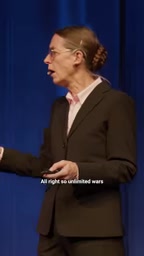
Another layer of meaning in limited war is: the defeated government will continue to exist. Paine says bluntly that whether you like it or not, you have to negotiate with it, "and it may come back later and cause trouble for you." This constitutes the fundamental divide between limited and unlimited war in post-war order arrangements.
Regime change in international relations and strategic studies usually refers to the political act of forcibly replacing a country's existing ruling group through external military intervention or internal subversion. It is related to but not equivalent to concepts like "nation-building" and "government change": regime change emphasizes the overall replacement of the ruling group, not policy adjustment or leadership change. Historically, regime change includes both forced transformation after full-scale invasion (such as the occupation and transformation of Germany and Japan after WWII) and limited military operations coordinated with internal opposition forces seizing power (such as multiple covert operations during the Cold War). Academic debate around regime change focuses on two points: first, externally imposed regime change often lacks local legitimacy and easily breeds long-term instability; second, the success of regime change highly depends on post-war order arrangements rather than mere military victory. Paine views regime change as the hallmark objective of "unlimited war" precisely because its logical endpoint is the complete disappearance of the old regime, not coexistence with it.
Keeping Emperor Hirohito: Limited Means Within Unlimited War
Sarah Paine uses the post-WWII American handling of Japanese Emperor Hirohito as a classic case for this theory. She states clearly: the US could have executed Hirohito at the end of WWII, but chose to keep him because he was useful to America.
Specifically, Hirohito would sign documents such as the constitution, enabling the US to implement its political reform plans, and the emperor's status provided legitimacy for these reforms. Here an intriguing layer emerges: the war against Japan itself was unlimited war—the goal was regime change, and after defeat Japan "had no choice"; but in the specific operations of post-war governance, the US adopted pragmatic means of retaining existing symbolic authority.
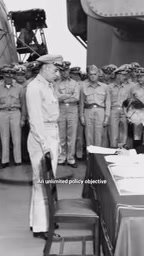
This case precisely illustrates that the difference between unlimited and limited war lies not in the intensity of means but in the fundamental arrangement of post-war political order. The endpoint of unlimited war is the non-existence of the old regime; limited war means coexistence with the old regime. The American war against Japan belonged to the former, but keeping Hirohito was an instrumental choice serving occupation reform objectives, not a downgrade of the war to limited war.
Emperor Hirohito's role in WWII and post-war handling is key background for understanding American occupation policy toward Japan. When Japan announced surrender in August 1945, there was fierce debate over whether to abolish the emperor system: some American policymakers advocated trying and even executing Hirohito as a war criminal, while others believed keeping the emperor would help stabilize occupation order and prevent Japanese social collapse. Ultimately, the US chose to retain the emperor system but strip it of divinity; Hirohito issued the Humanity Declaration in 1946, denying his own divinity. At the Tokyo Trials, Hirohito was not prosecuted, a decision that was controversial at the time. From a strategic operations perspective, keeping Hirohito enabled the US to use his symbolic authority to implement a series of transformation measures—dissolving the military, land reform, drafting a new constitution—avoiding comprehensive forced restructuring of Japanese society. This case is often used to illustrate: tension can exist between the political objectives of unlimited war (thorough transformation of the enemy state) and specific governance means (utilizing existing authority); the pragmatism of means does not automatically change the nature of war objectives.
Why This Framework Still Has Explanatory Power Today
Paine's analytical framework is noteworthy because it provides a thinking tool that transcends specific battle cases. Unlimited objectives are "conceptually simple but difficult to execute"; limited objectives are "conceptually difficult but easy to execute"—this counterintuitive symmetry can help observers more calmly evaluate strategic choices of various parties in real conflicts.
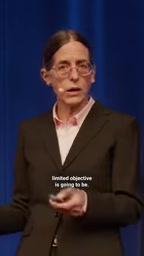
When a country declares it will thoroughly change the opponent's regime, it is actually pushing the other into dead ground, potentially transforming a failed state into a deadly adversary. Conversely, when war objectives are limited to a specific demand, the space for negotiation and compromise is actually greater, but the cost is the survival of the old adversary. Paine's conclusion is clear: understanding the distinction between limited and unlimited is "really helpful" for analyzing war—because beneath the surface of war, what truly determines the direction is the nature of the objectives.
This perspective also reminds people that the temptation of "thorough resolution" in strategic discussions often comes with underestimated costs, while seemingly incomplete limited arrangements may sometimes be more controllable choices.
One-line Summary
Unlimited war is conceptually simple but hard to execute; limited war is conceptually vague but easy to operate; the nature of objectives determines the direction of war.
Paragraph Summary
Based on the analysis of strategic scholar Sarah Paine and borrowing the "dead ground" concept from Sun Tzu's The Art of War, the article proposes a fundamental distinction between unlimited and limited war. Unlimited war has clear objectives—regime change—but is difficult to execute, because placing the opponent in dead ground inspires extraordinary will to resist, as seen in the Ukraine battlefield. Limited war objectives are hard to define, but once clarified are relatively easy to execute, because the opponent may be willing to give up that objective. The article uses the US retention of Emperor Hirohito after WWII as an example to show that limited means can be used within unlimited war, but the pragmatism of means does not change the nature of war objectives. This symmetrical framework of "easy concept, difficult execution" and "difficult concept, easy execution" counterintuitively reveals how the nature of objectives determines the direction of war.
Related articles
Diffusion Models: From Beginner to Expert — Theory Derivation and DiT Source Code in Practice
A zero-to-expert diffusion model learning path: master forward diffusion and reverse generation theory, work through DiT source code line by line, and explore paper innovations in acceleration and lightweighting.

Diffusion Models from Scratch: A Complete Derivation from Adding Noise to Denoising
A beginner-friendly guide to diffusion models: from GAN limitations to full derivations of forward noising and reverse denoising, why neural networks predict noise, plus UNet and code.
Diffusion Models from Zero: Principles, Tools, and Innovation Paths Explained
Based on a popular Bilibili tutorial, this guide maps a beginner-friendly diffusion model learning path: core theory trade-offs, hands-on DiT source code, and innovation in model acceleration and lightweight design.