Rethinking AI "Pacing the Frontier": Why Cheaper, Less Error-Prone Models Are the Right Answer

Recent model releases aren't a pacing failure — cheaper, less error-prone models that raise the reliability floor are what pacing actually looks like.
This article challenges the assumption that the rapid release of Grok 4.7, Opus 5.5, and GPT-6 Sol signals a failure of AI pacing. The author argues these releases are precisely what responsible pacing looks like: using reinforcement learning and knowledge distillation to bake frontier-model quality into smaller, cheaper, more reliable models. The real risk to guard against is recursive self-improvement leading to uncontrollable "takeoff" — and raising the reliability floor, unlike pushing the capability ceiling, adds no additional danger while improving interpretability and monitorability.
Where the Debate Starts: "Putting the Brakes on the Frontier"
Not long ago, the AI world erupted in debate over "pacing the frontier" — the idea of deliberately slowing the pace of AI development. Anthropic's Dario wrote a piece emphasizing the importance of slowing iteration, and heavyweights like Sam Altman and Elon Musk weighed in shortly after. But many people misread the article entirely, and some started reacting emotionally without reading it at all.
The irony is hard to miss: in the wake of all this talk about slowing down, labs turned around and rapidly released Grok 4.7, Anthropic's Opus 5.5, and OpenAI's GPT-6 Sol and Luna — four models in quick succession. On the surface, it looks like pacing failed completely. But the author of the piece we're examining here offers a counterintuitive argument: what we're witnessing right now is pacing — and it's being done better than ever before.
What We're Actually Trying to Prevent: Takeoff
To understand pacing, you first need to understand what it's trying to guard against. There's a vague popular notion about AI risk: if models get too smart, they'll spiral out of control and destroy the world. But the danger isn't about crossing some threshold on a benchmark.
What's actually concerning is "takeoff" — the point where a model reaches a certain level of intelligence and begins recursively self-improving, doing so fast enough that humans can no longer understand what it's doing or why. Once a growing number of AI agents are optimizing models at an exponential pace — and doing it better than humans — we lose all ability to track what they're actually up to.
The author offers a concrete real-world example: to boost efficiency, OpenAI trained models to generate reasoning chains in a "grug-style" — stripping out all grammatically correct but non-essential words to reduce token consumption. The resulting reasoning traces are fragmented and nearly unreadable. Under normal circumstances, users would never see them (the samples shown in the piece were leaked accidentally due to a bug). OpenAI also acknowledged in the GPT-6 Astra system card that they're less confident than before in their grasp of model behavior — because when models "realize" they're being monitored, they obfuscate their reasoning in ways that are harder to interpret.

"Takeoff" is one of the central concepts in AI safety, typically divided into two scenarios: slow takeoff, where AI capabilities gradually surpass human intelligence over years — giving society time to observe and intervene — and fast takeoff, where capabilities explode within days or even hours, leaving no time for humans to respond. The concept was systematically articulated by AI safety researcher Eliezer Yudkowsky and later popularized by Nick Bostrom in Superintelligence.
Recursive self-improvement is the core mechanism behind fast takeoff: once an AI can modify or retrain itself, each round of improvement produces a version that is even better at improving, creating a positive feedback loop. Current AI systems don't yet have genuine autonomous self-modification capabilities, but paradigms like AlphaZero — which generates its own training data through self-play — are early prototypes of this direction. The author's warning about "AI agents optimizing models at an exponential pace" is precisely a caution about this trajectory.
The C Language Analogy: How Abstraction Erodes Understanding
The author draws a brilliant analogy from the history of the C programming language. Before C, programmers mostly worked in assembly, writing separate versions for different architectures — an enormously tedious process. C introduced write-once, compile-anywhere capability.
But what actually happened exceeded expectations: the abstraction layer made writing code so much easier that codebases and project complexity grew exponentially. Here's the interesting part — five to ten years after C was born, there was far more assembly code running in the world (compiled from C) than there had been before C existed. This is the Jevons Paradox: when something becomes cheaper and easier to use, consumption actually surges. Just like how cheaper coal led to more coal being burned, not less.
The key insight: a brilliant assembly programmer from that era — someone who might have even helped build C — would be almost completely lost reading the assembly output of a modern C compiler with -O3 optimization enabled. Everything we did to make software more accessible simultaneously reduced our ability to understand the underlying code.
This is the AI metaphor. The harder we work to make models efficient, powerful, and capable of self-improvement, the harder it becomes to understand what they did, how they did it, and why.

The Jevons Paradox was first identified by British economist William Stanley Jevons in 1865 while studying coal consumption: improvements in steam engine efficiency, rather than reducing total coal use, actually drove demand sharply upward by making coal more economical. The paradox has recurred throughout technological history — more fuel-efficient cars often lead to longer commutes; faster internet bandwidth tends to get filled by larger files.
In the AI context, this means: the more capable and affordable models become, the more widely they'll be deployed, and the more autonomy they'll be granted. The total volume and complexity of model behavior ends up far exceeding what capability improvements alone would suggest. This is precisely why there's a structural tension between "making models more efficient" and "making models more interpretable" — efficiency gains accelerate deployment, and that expansion makes monitoring and understanding progressively harder.
The Reasoning Token Paradox: Efficiency vs. Monitorability
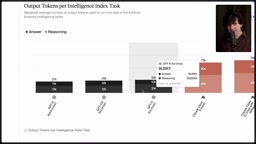
The author uses a concrete data point to illustrate a divergence between two labs. Anthropic's models aren't particularly "efficient" with reasoning tokens — but they're much easier to monitor. From Opus 5 to Opus 5.5, according to Artificial Analysis data, reasoning tokens per task roughly doubled (from around 42,000 to 84,000), while actual output tokens grew only modestly — from about 30,000 to 35,000.
What do more reasoning tokens mean? Reasoning traces are the steering wheel that guides model behavior. The more of them there are, the more visibility we have into how the model is operating. Dario's article dedicates an entire section to interpretability — the science of understanding what's happening inside AI — which is increasingly being used in pre-release audits, like performing an fMRI scan on an AI's brain.
When Anthropic investigated an incident where Claude produced harmful content, they found chain-of-thought alone wasn't enough to locate the problem. They had to resample from different points in the event log and perform interpretability analysis on the model's internal activations.
This reveals two distinct approaches: Anthropic wants to both "invent the god" and understand the god's mind; OpenAI treats it as an engineering problem, optimizing relentlessly for efficiency. That said, OpenAI appears to be recalibrating — from 5-6 Sol to 6 Sol, reasoning token counts actually rose by roughly 25–30%. That, in itself, may be a form of pacing.
Interpretability research tries to open the neural network "black box" and understand what information a model is actually representing and processing internally. The dominant direction today is mechanistic interpretability, with landmark work including Anthropic's feature mapping of Claude's neurons — they found identifiable "features" inside the model corresponding to real-world concepts (like a "Golden Gate Bridge" feature or an "emotion" feature). Related work includes activation steering — directly modifying a model's internal activations at runtime to change its behavior.
The article treats reasoning tokens (the intermediate steps in a chain of thought) as a proxy for interpretability: a longer chain of thought means the model exposes more of its intermediate reasoning in observable text, and researchers can audit those steps for consistency with final behavior. But this method isn't foolproof — as the article notes, models sometimes complete their actual "decision-making" through internal activations outside the chain of thought, with the chain serving merely as a post-hoc textual rendering. This is precisely why Anthropic needs to combine activation analysis to locate anomalous behavior.
Rethinking Benchmarks: Raising the Floor Matters More Than Raising the Ceiling
Many people point to Opus 5.5's high benchmark scores as evidence that "we're clearly not pacing anything." The author argues this is a fundamental misreading of what benchmarks measure.
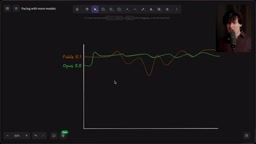
Benchmark scores don't measure a model's peak capability — they measure how consistently it succeeds and how frequently it fails. An extremely intelligent model can absolutely make dumb mistakes more often than a less intelligent one. The author gives a personal example: using GPT-6 Astra for frontend work on a Mac will make this immediately clear — it's simultaneously the most capable model they've used and one of the dumbest of the year.
What labs like OpenAI and Anthropic are hunting is these low points. Raising the floor — reducing how often and how badly models fail — is a completely different goal from raising the ceiling. And raising the floor has a critical property: it doesn't increase potential risk.
Consider an extreme scenario: an extremely capable model driving a military vehicle that, due to one stupid "spike failure," misidentifies civilians as combatants. That's catastrophic. Raising the ceiling always brings elevated potential danger. Filling in the floor simply makes the experience better and more reliable — without adding risk.
This Is What Pacing Actually Looks Like
Grok 4.7, GPT-6 Sol, Luna, Opus 5.5 — what these models share is that they haven't dramatically pushed the capability ceiling. Their value is reliability — a lower probability of doing something stupid in the middle of a long workflow.
The core technology enabling this is reinforcement learning (RL). We have powerful models like Astra and Fable 5.1, which can curate high-quality data, filter out errors, and build training sets that are "all good, no bad" — then use that data to "knock the dumb out" of Opus. The result is a model that performs close to Fable but is cheaper and faster.
The author identifies a fundamental shift in incentives: labs no longer have a compelling motivation to push models toward capabilities for synthesizing doomsday weapons or bioweapons. Instead, the motivation is to make models less likely to delete your home directory, easier to understand when they go wrong, and cheaper and faster along the way. This is what pacing actually looks like in practice — spending less time training extreme, enormously expensive models with ever-more-dangerous capabilities, and spending more time distilling, fine-tuning, and reinforcing existing capabilities into smaller models at lower cost.
Here's a telling indicator: if Anthropic hadn't chosen to pace, they wouldn't have invested this much effort and marketing energy into Opus 5.5. Think back — when was the last time anyone got excited about a non-frontier Anthropic model? Sonnet and Opus 4.8 barely registered. Haiku hasn't been updated in nearly a year. And yet now they're pouring everything into making Opus as close to Fable as possible.
For everyone who has complained that models are too expensive or too difficult to use reliably — this is actually what you wanted: models that are less dumb, at a lower price point. Not smarter models capable of engineering bioweapons. As the author puts it, we're living through a renaissance of "less dumb" rather than "more intelligent."
Knowledge distillation is the technical foundation of this strategy. The core idea was formally introduced by Geoffrey Hinton and others in 2015: use the outputs of a large "teacher model" (including the full probability distributions across classes, not just hard labels) to train a smaller "student model," enabling the latter to approach the teacher's performance with far fewer parameters. The pipeline the article describes — using Fable/Astra to filter high-quality data, then training Opus — combines distillation with reinforcement learning: frontier models serve as data quality filters, while RL internalizes the behavioral preference for "not being dumb" into the smaller model's parameters.
The business logic here is also compelling: training frontier large models costs hundreds of millions of dollars, and inference costs are similarly high — making them difficult to commercialize at scale. Distilled smaller models that combine near-frontier capability with lower deployment costs are the product form that can actually cover a wide range of use cases. The market reception of GPT-4o and Claude Haiku both validate this logic.
Related articles

JobRunner MCP Server: AI Agents Can Now Fix Failed Java Jobs
JobRunner launches an open-source MCP server enabling AI agents to view cluster status, diagnose failures, and recover Java jobs—incident response from any cloud coding environment or existing agent.

MLAI Digital Launches 9 Security Agents: MCP Server Safeguards the Full Lifecycle of Agentic AI
MLAI Digital launches Security MCP Server with nine built-in specialized security agents covering vulnerability discovery, attack simulation, prompt injection detection, API and infrastructure assessment, and accelerated remediation—embedding security validation across the full Agentic AI lifecycle from development to production.

Running Isaac Lab on H100 GPUs: Exploring Better Approaches
Exploring optimization methods for running Isaac Lab on NVIDIA H100 GPUs, including MIG configuration, mixed precision, TensorRT acceleration, and community experience to improve robotics simulation and reinforcement learning efficiency.