RGB Mini LED TV Hands-On: Breaking Down the Picture Quality on a 100-Inch Giant Screen

A 100-inch RGB Mini LED TV combining additive color mixing, 180Hz gaming, and 2.1.2 audio into a home entertainment hub.
This 100-inch flagship TV centers on RGB Mini LED backlighting, which uses independent red, green, and blue emitters for additive color mixing — delivering more accurate color reproduction and a wider gamut than traditional blue-light-filter-based Mini LED. Beyond picture quality, the built-in 2.1.2 channel speaker system tuned by DVLA offers bass performance that exceeds typical flat-panel expectations. On the gaming side, a native 180Hz refresh rate, AMD FreeSync Premium Pro, and a dedicated game toolbar clearly target PC gamers. The Obsidian panel combines deep blacks with ultra-low reflectivity for well-lit living rooms. The lineup spans 55 to 100 inches, making it worth watching whether the core technology holds up at smaller sizes.
RGB Mini LED Arrives: A 100-Inch Visual Spectacle
When a TV is large enough to ship with pre-installed carrying handles and requires a box cutter just to unpack, you know this is no ordinary living room device. The unit I got my hands on is the 100-inch flagship of an all-new product line, with RGB Mini LED backlighting as its headline feature. First impressions after unboxing were immediate and unmistakable — vivid colors, strong contrast, saturated hues. In short: "mini LED RGB baby."

The 100-inch version sits at the top of the lineup, but the series also spans 85, 75, 65, and 55 inches — meaning there's an option for different room sizes and budgets, not just for enthusiasts chasing the ultimate experience.
RGB Mini LED vs. Standard Mini LED: What's the Actual Difference?
This is the question many people have when they see the specs. Traditional Mini LED starts from a single blue light source and converts it into other colors through filtering — a process that fundamentally subtracts light rather than generating it.
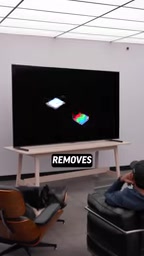
RGB Mini LED takes a completely different approach: it uses independent red, green, and blue emitters that combine additively to produce more accurate colors that are closer to what we see in the real world. This shift from subtractive filtering to additive color mixing is the fundamental reason the picture quality sees such a substantial improvement. For users who care about color accuracy and wide color gamut, this is an upgrade worth paying attention to.
From a physics standpoint, traditional Mini LED backlights rely on blue LEDs paired with quantum dots or phosphors to produce white light, which is then separated into red, green, and blue channels by a color filter array in front of the LCD panel. This filtering process absorbs a significant amount of light energy, causing brightness loss — and because different color filters have different efficiency rates, color deviation becomes a real risk. RGB Mini LED integrates red, green, and blue chips directly into the backlight layer, with each color produced by its corresponding wavelength chip without any filter conversion. This not only reduces wasted light energy but also allows for independent fine-grained control of all three channels. In theory, this enables coverage of a wider color gamut (such as the Rec. 2020 standard) while reducing the color shift risks introduced by filter losses. It's also worth noting that RGB Mini LED retains local dimming capability — each backlight zone can independently adjust the brightness of all three colors, resulting in smoother transitions between highlights and shadows.
Unified Audio and Video: 2.1.2 Channel Sound with DVLA Tuning
Beyond the picture, this TV puts serious effort into audio. It features a built-in 2.1.2 channel speaker system, tuned in partnership with DVLA. For an integrated flat-panel TV speaker setup, the low-frequency performance clearly exceeds typical expectations — in other words, right out of the box, you get a noticeably more grounded bass response than a standard TV, without necessarily needing to add an external sound system.
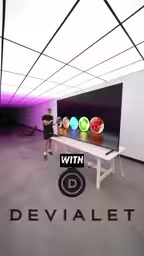
This integrated audio-video philosophy is increasingly becoming the standard for premium large-screen televisions, with the goal of delivering a reasonably complete viewing experience without requiring users to invest in a soundbar or full home theater setup.
Built for Gaming: 180Hz Refresh Rate and a Complete Gaming Ecosystem
Perhaps the most surprising aspect of this TV is its gaming credentials. It features a native 180Hz refresh rate paired with AI-assisted motion smoothing. On a screen this large, 180Hz is genuinely impressive — just imagine the visual impact of running high-frame-rate games on 100 inches of screen real estate.
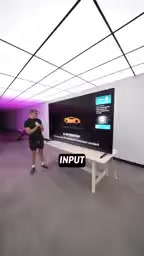
The gaming feature set is also comprehensive:
- High Sense Game Toolbar: Quick access to game-related settings adjustments
- AMD FreeSync Premium Pro: Variable refresh rate support with tear-free, low-latency performance
- AI Motion Smoothing: Further enhancement of overall motion fluidity
This configuration makes it clear the manufacturer intends for users to plug in a gaming PC and kick back on the sofa for a big-screen gaming session. The one thing that still needs real-world confirmation is the actual input lag figure — for competitive players, that number is the key ceiling on the overall experience.
AMD FreeSync Premium Pro is the top tier of the FreeSync certification family, requiring displays to support Low Framerate Compensation (LFC) within the variable refresh rate range — ensuring no screen tearing occurs when frame rates dip below the minimum sync threshold. It also carries additional certification requirements for color and brightness performance in HDR gaming content. For television products, earning this certification means PC gamers using AMD graphics cards can enable variable refresh rate natively without needing to manually cap their frame rates. By contrast, NVIDIA's G-Sync technology requires dedicated hardware modules, which typically appear in monitors rather than TVs — making FreeSync the more widely adopted standard in the large-screen TV ecosystem. In gaming scenarios, a 180Hz refresh rate is meaningful because even when a GPU can't sustain consistently high frame rates, variable refresh rate keeps the image smooth across mid-to-low frame rate ranges rather than forcing a fixed frame rate that causes stuttering.
Obsidian Panel: Deep Blacks and Anti-Reflective Performance
The other half of picture quality comes from the panel itself. This "Obsidian" panel excels at reproducing deep, rich blacks and features ultra-low reflectivity. The practical significance of the latter is straightforward: in living rooms with windows or competing light sources, a low-reflectivity panel effectively reduces ambient light interference, keeping the image looking good even in daytime viewing conditions.
Deep black performance combined with anti-reflective treatment essentially boosts perceived contrast from two directions simultaneously — one makes the dark areas darker, the other prevents external reflections from washing out the image.
Overall Impressions
This 100-inch RGB Mini LED television pushes picture quality, audio performance, and gaming experience to an impressively aggressive level: real-world color accuracy from additive color mixing, substantial bass from a 2.1.2 channel system, a 180Hz refresh rate with a complete gaming sync ecosystem, and an Obsidian panel that handles both deep blacks and anti-reflectivity. It feels more like a home entertainment hub than simply a "TV to watch shows on." As the product line extends down to 55 inches, the key question going forward is whether this core set of technologies can preserve its essential experience at more accessible price points.
Related articles

Understanding DeepSeek in 3 Minutes: The Rise from a Quant Hedge Fund to an Open-Source AI Leader
DeepSeek's history in 3 minutes: from High-Flyer Quant's compute build-up to V2's MLA inference cost cuts, V3's $5.576M training bill, R1's open-source global shock, and V4 with a $7B Series A.

Local Creative Writing Model Showdown: Fine-tuned Qwen3.8 27B Wins, DeepSeek v4.1 Underwhelms
Bilibili creator tests seven local creative writing models: Hemingway and HumanLike Chat based on Qwen3.8 27B perform best, DeepSeek v4.1 is plain, Dongfang Shuo ranks last with confused characters. Includes three test prompts, scores, and usage advice.

Liang Wenfeng's Three Big Bets: Why Did DeepSeek Open-Source Its 82% Gross Margin?
Why did DeepSeek open-source DeepInfer, its 82% gross margin inference framework, and then launch a hundred-billion funding round? An analysis of Liang Wenfeng's three big bets and the open-source strategy.