Rick Rubin on Jay-Z's Success: Creativity and Breaking the Rules

Rick Rubin reveals that greatness comes from breaking rules, obsessive commitment, and the courage to take creative risks.
Legendary producer Rick Rubin shares deep observations from collaborating with Jay-Z, Kanye, Eminem, and more. He describes how Jay-Z never writes lyrics — internalizing the entire creative process — and argues that these superstars are simply "ordinary people who made a decision." Rubin believes creativity isn't rare by nature but is gradually suppressed by education and social conditioning, and that true breakthroughs demand risk and the willingness to let old ways of living die. He also candidly reflects on his own battle with depression and panic attacks in his thirties, showing that reinvention often begins at rock bottom.
Legendary music producer Rick Rubin rarely opens up, but in a recent interview he shared candid observations from his collaborations with Jay-Z, Kanye, Eminem, and other top-tier artists. These insights are worth unpacking — not just for what they reveal about music production, but for the universal framework they offer on creativity, risk, and self-expression.
Jay-Z's Unique Creative Process
Rubin recalled that every other rapper he'd worked with spent significant time writing lyrics on paper — but he never once saw Jay-Z put pen to paper. When Rubin played the instrumental for the classic track 99 Problems, Jay-Z simply said: "Just keep it on loop."
Jay-Z sat in the back of the room, and you could hear him quietly humming and murmuring to himself. About twenty to thirty minutes later, he suddenly said "Got it" — then walked into another room and recorded the first verse.
"He probably recorded three takes, then came in to listen and said, 'Yeah, the second one's good,'" Rubin described. "The whole thing happened in his head."

This "no pen" approach reveals a deeply internalized artistic intuition — lyrics and melody taking shape simultaneously in the mind, with no need for paper drafts.
Jay-Z's "mental writing" method isn't unique to him — cognitive scientists refer to it as "internalized working memory composition." fMRI studies of freestyle rap have found that skilled rappers show significantly reduced activity in the prefrontal cortex (responsible for self-monitoring and internal censorship) during improvisation, while regions associated with automated language processing become highly active. This suggests elite creators can, in a sense, "bypass" their internal editor, allowing language and rhythm to flow directly from the subconscious. Jay-Z himself has mentioned in multiple interviews that he deliberately avoids writing lyrics in order to preserve the sense of urgency and emotional authenticity that comes with spontaneous expression — once words hit paper, they become a text to be "performed" rather than something flowing naturally from the present moment. This approach demands an extraordinarily high degree of internalized rhythm and thematic pre-construction, the product of both long practice and innate talent.
Why the World's Best Artists All Come to Rubin
Rubin's collaborator list is nothing short of extraordinary: Jay-Z, Kanye, Adele, Justin Timberlake, Mick Jagger, Red Hot Chili Peppers… When asked why all these people seek him out, his answer was surprisingly humble.
"Because I've been making things for forty years. I started with music as a hobby, and it took on a life of its own and became a career."
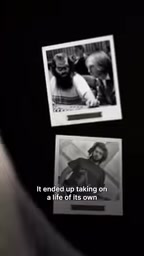
Even more striking was his take on that star-studded roster: "They're not special. I would say they're ordinary people who made a decision."
He pointed to Eminem as an example: Eminem is always writing because he wants to be the best version of himself he can possibly be. "He's almost insane about it — a pathological obsession." In Rubin's view, talent exists, but what truly separates the great from the good is that near-maniacal level of commitment and deliberate choice.
Rick Rubin's production style is unlike anyone else in the industry. He doesn't play instruments well, nor is he a technical mixing expert. His core value lies in serving as an "ideal listener" — someone who can sense the essence of a work and help artists rediscover their original vision. He calls this role "clearing": helping artists strip away the accumulated residue of commercial pressure, market expectations, and self-doubt to return to their most instinctive state of expression. His studio, Shangri-La (located in Malibu, California), is deliberately designed as an environment insulated from the music industry machine. This is why artists in creative slumps or career transitions so often turn to Rubin first — he's not there to help them "make a better album," but to help them rediscover who they are. It explains why transformative works like Adele's 30 and Red Hot Chili Peppers' Californication all came through his hands.
Creativity Is Something Life Beats Out of You
When asked whether some people are simply born more creative than others, Rubin offered a genuinely subversive answer:
"Creativity is something that gets beaten out of us over the course of our lives. We go to school, we're taught to follow rules. And those rules aren't there to help us — they're there to control us. We were never taught to be free, creative thinkers."
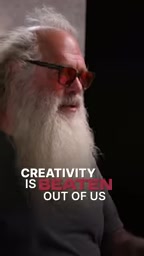
His advice: break free from those constraints and express yourself freely. This isn't empty motivational talk — it's a long-held observation about the nature of creative work. Everyone possesses creativity; it's simply been suppressed by conditioning.
Rubin's view resonates deeply with psychologist Mihaly Csikszentmihalyi's research on "flow," and echoes educator Ken Robinson's famous argument that "schools kill creativity." The core logic of standardized education is to reduce uncertainty and increase predictability — yet creativity thrives precisely in uncertainty and ambiguity. Neuroscience research also shows that children's brains exhibit exceptionally strong "divergent thinking" capacity in early development, a capacity that gradually shifts toward "convergent thinking" as social conditioning intensifies with age. What Rubin means by "breaking free" translates in practice to reactivating that internal permission to fail, to be absurd, to pursue "useless" experimentation — which is why so many artists describe their best creative states as feeling like "playing like a child."
Greatness Requires Risk — and Some Things Must Die
Rubin went further, arguing that creative breakthroughs are inseparable from risk: "All of the best things involve risk. It's only through risk that greatness reveals itself."
He reached for a striking image: "Something has to die. That way of living, that moment, that career path, that relationship — that's the thing that has to die."
This is a philosophy of self-reinvention: real transformation almost always requires us to let go of what's familiar — even comfortable — in order to make room for something new.
Restarting from Rock Bottom
The interview also touched on Rubin's own moments of vulnerability. In his early thirties, he went through a period of depression.
"It was a really difficult time. I felt like the rug had been pulled out from under me. I started having panic attacks, couldn't sleep. I was very sick — it felt like being shot by a poisoned arrow."
This candid admission echoes his ideas about "breaking rules" and things needing to "die" — creation and rebirth, it turns out, are so often born from the deepest valleys.
Closing Thoughts
On the surface, Rubin's reflections are about music production. But they sketch out an entire worldview on creativity: talent is not a scarce resource — what's truly scarce is the courage to break the rules and the obsessive commitment to show up fully. When he says the biggest stars are simply "ordinary people who made a decision," he's handing the power of creation back to anyone willing to take the risk of expressing themselves.
Related articles

DeepCell: One-Click AI Generation of Documents, Spreadsheets, and Slides
DeepCell tops Product Hunt with one-click generation of documents, spreadsheets, and slides, using the .deepcell format for linked updates, designed for System 2 tasks like modeling and sales reviews.

Doneas: 15-Minute Daily Accountability Calls That Keep Indie Developers From Procrastinating
Doneas is a daily accountability tool for indie developers: plan tasks on Monday, join a 15-minute call with five builders each day, and log deliveries on a public progress page. This article analyzes its core mechanics, effectiveness, and potential issues around retention and matching.

Fastlane 2.0: Fully Automated AI Ad Campaigns, From Creative to Optimization
Fastlane 2.0 is an AI ad automation tool: enter your website and it learns your brand, generates video and image ads, and runs and optimizes them on Meta, TikTok, Instagram, and YouTube.