Riemann Hypothesis AI Breakthrough: Humans and Claude Prove It Together

Mathematicians and Claude claim to have proven the Riemann Hypothesis, verified by an independent team, marking AI's shift from tool to thought partner.
The article explains the Riemann Hypothesis: uneven prime distribution, with the precise error bound equivalent to all nontrivial zeta zeros lying on the critical line Re=1/2. In November 2026, Levent Alpoge announced a proof developed with Anthropic's Claude, verified by an independent team. Alpoge credited the key ideas to AI, with humans handling framework and verification.
The Riemann Hypothesis is one of the most famous unsolved problems in mathematics, and a recent proof claim completed through collaboration between a human mathematician and AI has brought it back into the spotlight. This is not only a mathematical breakthrough but may also change the way we explore mathematics.
What Is the Riemann Hypothesis Actually Asking?
Prime numbers are numbers greater than 1 that are divisible only by 1 and themselves: 2, 3, 5, 7... Every integer greater than 1 can be obtained by multiplying primes together. But the distribution of primes along the number line is not uniform—sometimes they are dense, and sometimes long gaps appear.
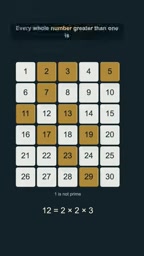
If you count primes along the number line, you get a step-shaped counting function: it rises by one step each time you encounter a prime. Mathematically, there is a smooth curve that can estimate this count. The question is: how far can the staircase deviate from the curve? The bound on this error is exactly what the Riemann Hypothesis aims to answer precisely.
From Primes to the Zeta Function: Riemann's Insight
In 1859, Bernhard Riemann connected this problem to the zeta function. The zeta function is a mathematical rule, and its special zeros can be plotted on the complex plane.
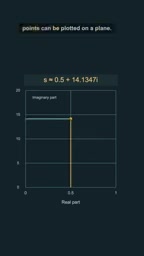
The Riemann Hypothesis asserts that all nontrivial zeros of the zeta function lie on the same vertical line—the line with real part 1/2. The positions of these zeros encode information about the primes, and their alignment gives a precise upper bound on the error in estimating the prime count.
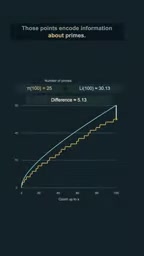
In other words, if you can prove that all zeros lie on this line, you have precisely grasped the pattern of prime distribution. But the difficulty is this: verifying trillions of zeros is not the same as proving. A proof must cover infinitely many zeros.
The Zeta Function and Analytic Continuation
The zeta function is initially defined by the series ζ(s) = 1 + 1/2^s + 1/3^s + …, which converges only when the real part of the complex variable s is greater than 1. Riemann's key contribution was to analytically continue this function to the entire complex plane (except for a simple pole at s = 1). After continuation, the zeta function has "trivial zeros" at the negative even integers, while the remaining zeros, the so-called "nontrivial zeros," all lie within the critical strip between 0 and 1. What the Riemann Hypothesis asserts is that all these nontrivial zeros lie on the critical line Re(s) = 1/2. It is precisely analytic continuation that makes "the locations of the zeros" a meaningful global problem and deeply links the zeta function to prime distribution through the Euler product formula.
The Explicit Formula: How Zeros Encode Primes
The core tool that enables the Riemann Hypothesis to constrain the error in prime counting is the explicit formula. It expresses the prime-counting function ψ(x) (the Chebyshev function) as a main term x minus a sum of oscillatory terms contributed by the nontrivial zeros ρ of the zeta function, in the form Σ x^ρ/ρ. Each zero contributes an oscillation with amplitude roughly x^(Re ρ); if all zeros have Re ρ = 1/2, then each oscillation has amplitude at most about √x, thereby giving an upper bound of O(√x log x) on the error in prime counting. Conversely, if there is a zero off the critical line, the error becomes larger. Thus "whether the zeros align on the 1/2 line" is directly translated into the arithmetic proposition "how regular the distribution of primes is."
How Does AI Participate in the Proof?
In November 2026, mathematician Levent Alpoge announced a proof developed in collaboration with Anthropic's Claude. He credited the substantive mathematical ideas to the AI, while an independent team verified the statement and logic and confirmed that the proof is correct.
According to the original video, Alpoge did not simply treat the AI as a computational tool but as a partner in developing new ideas. The AI proposed the key mathematical ideas, while the human mathematician was responsible for the overall framework and verification. This mode of collaboration is itself striking—a problem that resisted generations of people has shown a turning point through interaction between humans and AI.
Formal Verification and Independent Review
In modern mathematics, acceptance of a proof requires peer review, and in recent years proof assistants (such as Lean and Coq) have provided another safeguard: translating the proof into machine-checkable formal code, with the computer verifying each logical step line by line. The article mentions that "an independent team verified the statement and logic." Such verification usually includes two levels: first, human review of whether the proof idea holds; second, if it has been formalized, use of a proof assistant to confirm that every step of the derivation is free of gaps. It is worth noting that formal verification can only guarantee that the derivation "from axioms to conclusion" is correct; it does not automatically guarantee that the formalized "statement" is the Riemann Hypothesis as people understand it. Therefore, the accurate translation of the statement is itself part of the verification.
Why Does This Matter?
The impact of this breakthrough on daily life is not yet clear. But its significance lies in demonstrating the potential of AI in pure mathematical discovery. If this mode of collaboration can be repeated, it may change the way we conduct mathematical research and ultimately change what we can discover.
From a broader perspective, if the proof of the Riemann Hypothesis holds, it will automatically validate a large number of mathematical results that depend on it and may drive progress in cryptography, number theory, and related fields. But the more direct implication may be this: AI is no longer merely assisting with computation but is beginning to participate in proposing new ideas—this may be a signal of a paradigm shift in scientific research.
One-line Summary
Mathematicians and Claude claim to have proven the Riemann Hypothesis; an independent team verified it as correct, marking AI's shift from a computational tool to a thought partner.
Paragraph Summary
The article introduces the basic meaning of the Riemann Hypothesis: the distribution of primes is uneven, and the precise bound on the error in counting them is equivalent to all nontrivial zeros of the zeta function lying on the critical line with real part 1/2. In 1859, Riemann connected the prime problem to the zeta function, with the locations of the zeros encoding prime information. In November 2026, mathematician Levent Alpoge announced that, in collaboration with Anthropic's Claude, he had developed a proof of the conjecture, and an independent team verified the statement and logic and confirmed it correct. Alpoge credited the substantive mathematical ideas to the AI, while humans were responsible for the framework and verification. The article emphasizes that verifying finitely many zeros cannot replace a logical proof covering infinitely many zeros, and that if this collaborative model can be repeated, it may change the way and speed of mathematical discovery.
Related articles

From 0 to 1: Vibe Coding an AI Knowledge Base — A Practical Retrospective and Tech Stack Breakdown
A retrospective on building the AI knowledge base OilBook from scratch with Vibe Coding: Next.js+Neon stack, Oil Dev Skill workflow, Stripe paywall security, interview-style writing, AI-flavor control, and Vercel deployment.

GLM-5.4 Hands-On: Native Vision Meets a New Vibe Coding Workflow
Hands-on with Zhipu GLM-5.4: native vision tested across a 3D product demo, pure-code video generation, and remote-control Vibe Coding, compared with GPT-6.2 and Gemini Neon.

AI and Humans Claim to Prove the Riemann Hypothesis: Machine-Verified, Yet Nobody Can Understand It
Anthropic mathematician and AI Claude claim to prove the Riemann Hypothesis with 17 million lines of Lean code, machine-verified but unreadable by humans. This article analyzes the event, the zero proportion record from 41.6% to 67.2%, and the gap between machine verification and human understanding.