Risklytics: An Insurance Brokerage Platform Built for Frontier Tech Companies in AI, Nuclear Fusion, and Beyond

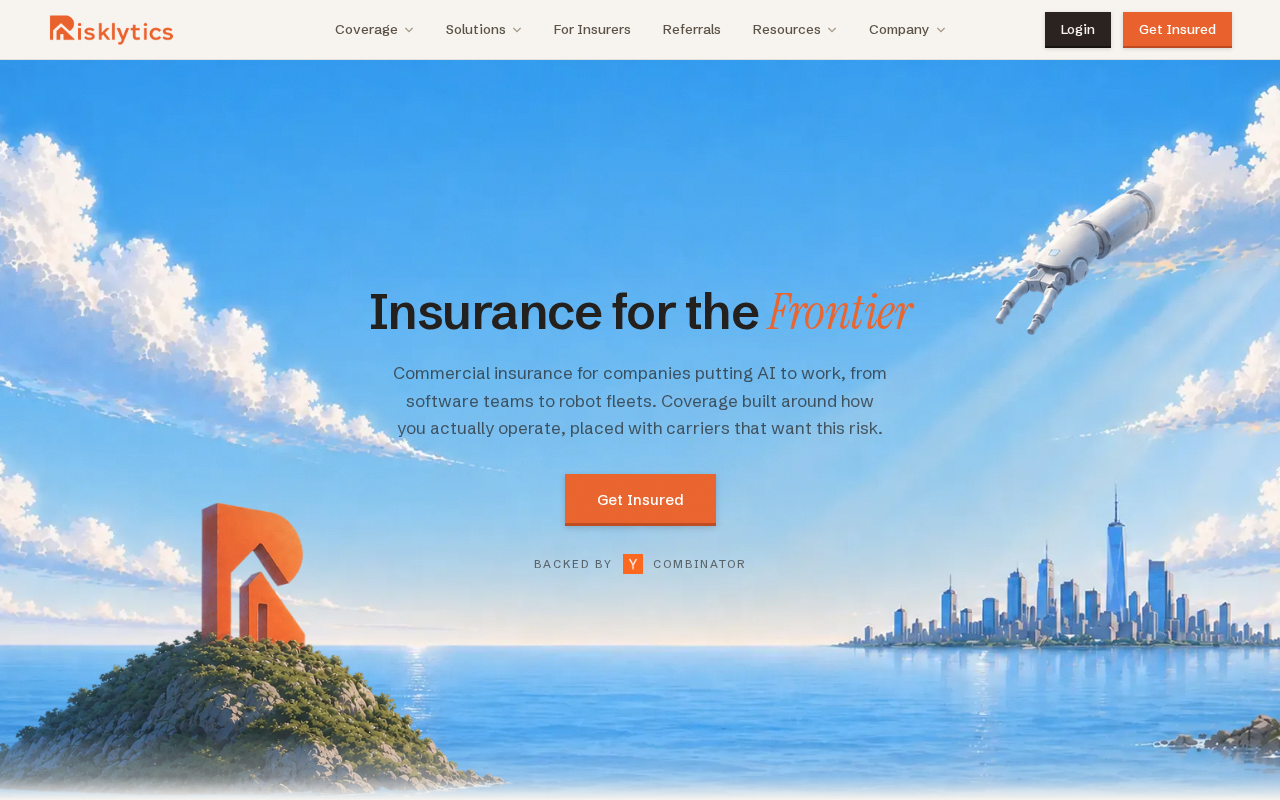
Risklytics is a YC-backed insurance brokerage bridging frontier tech companies with insurers who can cover novel risks.
Risklytics, a YC S26 startup, operates as an insurance brokerage specifically for frontier technology companies in AI, nuclear fusion, autonomous driving, and commercial space. By translating complex technical risks into language insurers can understand, it addresses the fundamental gap where traditional actuarial models fail due to lack of historical data. The company targets a high-barrier B2B vertical with significant growth potential as capital flows into frontier tech sectors.
When the Insurance Industry Meets Frontier Technology
Artificial intelligence, nuclear fusion, autonomous driving, commercial space, synthetic biology—these fields representing the cutting edge of human technology are reshaping industry landscapes at an unprecedented pace. Yet behind these rapidly advancing innovations, a frequently overlooked but critically important challenge has emerged: how do you insure businesses that are highly uncertain and lack historical data?
Recently, Risklytics, a YC S26 batch startup, launched its product on Hacker News—an insurance brokerage specifically designed for frontier technology companies. The post garnered 43 upvotes and 17 comments, attracting widespread attention from entrepreneurs and tech professionals alike.
Y Combinator (YC), the world's most influential startup accelerator, selects approximately 200-300 companies per batch. In recent years, YC has noticeably increased its focus on "hard tech support services"—investing not only in core technology companies but also in infrastructure businesses that serve them. This reflects a mature understanding: the commercialization of frontier technology requires a complete supporting ecosystem, including specialized legal services, compliance consulting, supply chain finance, and professional insurance services like those offered by Risklytics. YC's brand endorsement also opens up social networks of frontier tech founders for companies like these.
Why Traditional Insurance Struggles to Cover Frontier Tech
The pricing logic of the traditional insurance industry is heavily dependent on historical data and actuarial models. For an industry with decades of accumulated data (such as automotive or real estate), insurers can relatively accurately assess risk and set premiums. But frontier tech companies are the exact opposite: they're doing things no one has ever done before, with no precedents to follow and risk models that are nearly impossible to build.
Traditional actuarial models are built on the "law of large numbers"—deriving future risk probabilities by observing the historical frequency and loss distribution of large numbers of similar events. For example, the U.S. auto insurance industry has accumulated over a century of accident data, enabling precise differentiated pricing by age, gender, region, and vehicle type. But frontier tech breaks this paradigm: there are no more than a few dozen commercial nuclear fusion companies worldwide, accident patterns caused by autonomous driving are fundamentally different from traditional traffic accidents, and AI system failure modes are infinitely varied. This "thin data" or even "zero data" environment renders traditional actuarial methods completely ineffective.
This creates an awkward situation—either insurers refuse to underwrite, quote astronomical premiums, or fill policy terms with exclusions for emerging risks. For a nuclear fusion startup or an autonomous driving company, simply finding an insurer willing to understand and cover their business is itself a formidable challenge.
Risklytics' Core Positioning and Solution
As an insurance brokerage, Risklytics doesn't directly underwrite risk. Instead, it serves as a bridge between tech companies and the insurance market. Its core value lies in deeply understanding the unique risk profiles of frontier technologies and "translating" these complex technical risks into language that insurers can understand and price.
The Unique Value of the Brokerage Model
Insurance brokers and insurance companies play fundamentally different roles. Brokers represent the interests of the client (the insured), helping clients find the most suitable underwriters in the market, negotiate terms, and optimize premiums. In the insurance industry value chain, brokers are fundamentally different from insurance agents—agents represent insurance companies selling products, while brokers legally represent the insured's interests. The world's largest insurance brokerages, such as Marsh McLennan, Aon, and Willis Towers Watson, each generate over ten billion dollars in annual revenue, creating value for clients through professional risk assessment capabilities and extensive underwriter networks. In commercial insurance, especially for complex risks, the broker's role is crucial—it's estimated that approximately 80% of global commercial insurance is placed through brokerage channels.
For frontier tech companies, the value of such specialized intermediaries is particularly pronounced:
- Professional translation of technical risks: Converting novel risks like AI model failures, fusion device malfunctions, and autonomous driving accidents into terms the insurance market can assess.
- Connecting with suitable underwriters: Not all insurers are willing or capable of underwriting frontier risks; finding matched underwriters requires industry resources and professional judgment.
- Terms negotiation and customization: In areas lacking standardized products, customized negotiation of policy terms is essential.
Typical Risk Types Covered
For frontier tech companies, the risks that need coverage often far exceed those of ordinary enterprises:
-
Directors & Officers Liability Insurance (D&O): High-valuation, high-profile tech companies face elevated litigation risks for their management teams. D&O insurance protects company directors and officers from personal litigation losses, which is particularly critical for frontier tech companies—the enormous uncertainty in their technological prospects means investors who suffer losses may sue management for reasons like "insufficient disclosure." During IPOs, M&A, and other capital transactions, D&O insurance is almost a prerequisite. In recent years, with the emergence of new legal risks such as ESG litigation and AI ethics disputes, D&O premiums for tech companies have continued to climb, with premium increases in some high-risk areas once exceeding 300%.
-
Product Liability Insurance: When new technology products malfunction, they can trigger massive claims.
-
Technology Errors & Omissions (Tech E&O): Addressing professional liability for software defects, AI decision errors, and similar issues.
-
Cyber Insurance: Covering losses from data breaches and system attacks.
-
Specialized Industry Risks: Highly specialized areas such as space launch insurance and nuclear facility liability insurance. Space insurance is one of the few insurance sub-sectors that has established a mature framework for handling "low-frequency, high-severity" risks, providing a reference model for Risklytics' approach. The global space insurance market has annual premiums of approximately $500-700 million, primarily underwritten by specialty markets such as Lloyd's of London. Space insurance pricing relies heavily on engineering assessment rather than traditional actuarial methods—underwriters deeply analyze rocket design reliability, launch records, mission complexity, and other technical parameters. This "engineering-driven pricing" methodology is likely the paradigm Risklytics needs to draw from when assessing risks in nuclear fusion, autonomous driving, and similar fields.
Why the Frontier Tech Insurance Market Deserves Attention
Capitalization Drives Explosive Insurance Demand
As massive capital flows into AI, fusion, space, and other fields, these companies are required to provide adequate insurance coverage during fundraising, contracting, and IPO processes. Investors, partners, and regulators all need to see that risks have been properly transferred. Without appropriate insurance, deals often hit roadblocks. In other words, insurance isn't just about "buying peace of mind"—it's essential infrastructure for the commercial operations of frontier tech companies.
The Pricing Challenge and Opportunity Amid Data Scarcity
From a technical standpoint, the biggest challenge Risklytics faces is also its greatest opportunity: how to assess risk in the absence of historical data. This requires combining expert technical judgment, analogical reasoning, scenario modeling, and other methods. Whoever can first build deep understanding and assessment capabilities for frontier technology risks will establish a moat in this emerging market.
A High-Barrier B2B Vertical Market
Insurtech over the past several years has mainly focused on digitizing consumer insurance—more convenient purchasing processes and more personalized pricing. Risklytics has chosen a far more "hardcore" B2B vertical: serving enterprise clients with the most cutting-edge technology and the most difficult-to-assess risks. While this market isn't as large as consumer insurance, it features high average deal sizes, deep professional barriers, and relatively less competition.
The Insurtech wave began around 2015, represented by consumer-facing companies like Lemonade and Root Insurance, which primarily improved user experience through digitized purchasing flows, AI pricing, and instant claims processing. However, many companies in this wave performed poorly after going public, exposing the limitations of simply optimizing experience without possessing differentiated underwriting capabilities. By contrast, B2B vertical insurtechs—such as Shepherd (serving the construction industry) and Kettle (serving climate risk)—have gradually gained capital market recognition in recent years because they've built genuine risk assessment barriers in specific domains. Risklytics' positioning continues this trend but targets the higher-technical-threshold frontier tech sector.
Challenges Facing Risklytics
As an early-stage startup, Risklytics faces several practical challenges. First is dependence on underwriting capacity—as a brokerage, it needs insurers behind it willing to underwrite frontier risks, and such underwriters are inherently scarce. Second is building a specialized team—people who understand both frontier technology and insurance actuarial science and policy terms are exceptionally rare.
Additionally, the high volatility inherent in frontier technology means risk assessments may be wildly off, and should a large-scale claims event occur, it would test the sustainability of the entire business model. This is precisely why few players have been willing to go deep in this space for so long.
Conclusion
The emergence of Risklytics reflects a trend that is becoming increasingly apparent: as frontier technology moves from the lab to commercialization, the supporting service ecosystem around these technologies is gradually being established. Insurance, as a core tool for risk management, is an indispensable part of this ecosystem.
For entrepreneurs in AI, fusion, space, and other fields, understanding and managing their business risks is just as important as refining their core technology. And for the industry as a whole, companies like Risklytics that focus on niche pain points are a signal of the innovation ecosystem's growing maturity. Whether it can truly build the capability to assess frontier technology risks and leverage sufficient underwriting resources will be the key determinant of its success or failure.
Related articles

Hands-On Review of an Open-Source Multi-Agent Business Simulation Project
Hands-on review of a Bilibili creator's open-source multi-agent sandbox business project: architecture, memory, HITL, evaluation, and LLM vs rule-engine results.
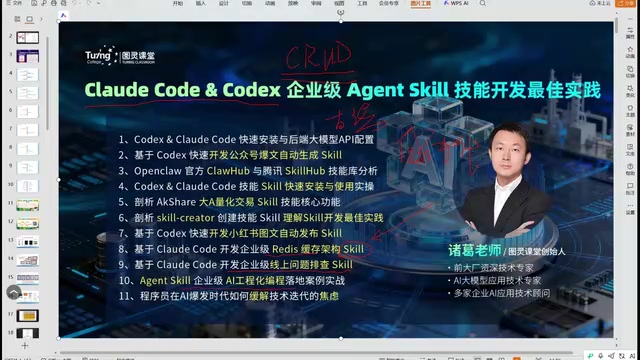
AI Engineering in Practice: The Complete Workflow of Claude Code and Agent Skill Development
A Bilibili hands-on course analyzes AI engineering: using Claude Code, Codex, and WorkBuddy to develop enterprise-grade Agent Skills, covering WeChat article drafts, quantitative analysis, and automated Xiaohongshu posting, while explaining the paradigm shift of Skill-driven development and tool selection.

LangChain for Beginners: A Practical Guide to Structured Output and Agents
Starting from zero with LangChain: clarify the difference between low-code platforms and large model application development, covering structured output, tool calling, Agent practice, and multi-tenant RAG enterprise deployment—ideal for engineers with development experience looking to transition into AI application development.