Robert Greene: Unlocking the Sublime to Enrich Everyday Experience

Greene and Huberman discuss the sublime: reawakening senses dulled by modern life through self-remembering, handwriting, and dropping defenses.
Robert Greene and neuroscientist Huberman explore 'the sublime'—glimpsing beyond consciousness's comfort zone, mixing pain and pleasure. They discuss Gurdjieff's self-remembering, neuroplasticity from handwriting and meditation, social media's hijacking of experience, time perception shifts, love as vulnerable rebellion, and practical ways to reawaken the senses.
What Is the Sublime: A Forgotten Psychological Space
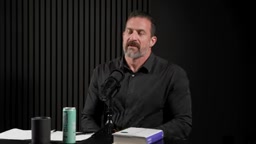
On the Huberman Lab podcast, bestselling author Robert Greene and neuroscientist Andrew Huberman engaged in a deep conversation about "the sublime." Greene likens consciousness to a circle—our thoughts, emotions, and perceptions of reality circulate within this bounded loop, and over time, everything becomes familiar, flat, and repetitive. The sublime, he says, is those "doorways" leading to the unknown beyond the circle.
"The Latin root of the word 'sublime' means 'above the threshold,'" Greene explains. "You approach it, and through it you glimpse that something else exists—something outside your everyday experience, and it shakes you." This experience mixes pain and pleasure: pain from stepping out of your comfort zone, pleasure from the shock of novelty and strangeness.
Greene believes that in childhood this circle was once large—the world was fresh, strange, and everything sparked imagination. But as we age, the circle shrinks, imagination goes unused, and everything becomes "dead." His new book attempts to reactivate our experience of life from the very roots of consciousness.

Loss and Reconstruction: Why We Forget What We Truly Love
In Mastery, Greene proposed that everyone's childhood contains a specific event or moment that hints at the direction they should explore in life. But many readers told him they didn't know what their life's mission was. Greene had to think deeply about this problem.
His conclusion: people don't lack those spark moments—they've "lost the deep connection to childhood experience." Parental expectations, teachers' judgments, societal conditioning about career paths—all these external voices intervene and override the inner "voice of impulse." Greene compares the process of recovering one's calling to archaeology: "We keep digging, searching for fossilized information in childhood."
His concrete method: ask not only "What do you love?" but also "What do you hate?" and "What frustrates you?" Greene himself never lasted 11 months in any job because he detested working for others and office politics. "Knowing I couldn't work for anyone else, the only way out was writing books—the only profession without a boss."
Neuroplasticity and Self-Remembering: A Drug-Free Path to the Sublime
Greene wrote his book after a stroke. He couldn't travel, couldn't undertake the adventures he'd once planned, couldn't even type—only write by hand. One book took seven years, filling over a hundred notebooks. But it was precisely this limitation that forced him to discover the sublime in the everyday.
Huberman adds key evidence from neuroscience: the visual system has a "habituation" mechanism—when the eye is fixed and unable to make tiny saccadic movements, perception of an object fades or even distorts. This shows that our perception is not a stable mapping of "reality" but an active construction by the brain.
Greene introduces the "self-remembering" exercise of the mystic teacher Gurdjieff: focus deeply on what's before you and tell yourself, "I will remember this moment." Gurdjieff's disciple Ouspensky practiced for months and found that walking down the street, houses seemed to come alive, everything became intense and vivid. He then realized: for most of his previous life, he had actually been "asleep."
"This practice can literally change your neural circuitry," Greene says. "No drugs needed. Meditation can achieve similar effects—science has proven that meditation changes the brain's physical connections."

Neuroplasticity refers to the brain's ability to continually reshape its neural connections based on experience, learning, and training. The traditional view held that brain structure was largely fixed after adulthood, but decades of research have overturned this: synaptic connections can strengthen or weaken, gray matter volume can change, and even adult brains can produce new neurons (neurogenesis). The meditation, self-remembering, and even handwriting that Huberman and Greene discuss are all, in essence, harnessing neuroplasticity—repeated attention training strengthens the prefrontal cortex's regulation of the default mode network (the brain regions active during mind-wandering and rumination), making it easier to stay in present-moment perception. This also explains why "the sublime" is not a gifted privilege but a perceptual mode that can be reopened through deliberate practice.
Gurdjieff (G. I. Gurdjieff, 1866–1949) was an Armenian mystic who founded the "Fourth Way" system, emphasizing that humans live in a mechanical "sleep" state in daily life and must awaken through conscious effort. His core disciple Ouspensky (P. D. Ouspensky) systematically introduced this system to the West and documented the perceptual shifts brought about by self-remembering practice. Gurdjieff's system intersects with later mindfulness meditation and transpersonal psychology; its emphasis on "divided attention"—simultaneously aware of the external object and oneself—is precisely the deeper meaning of Greene's "I will remember this moment": not mere observation, but including the observer within consciousness itself.
Experience vs. Reporting: How Social Media Steals Your Present
The most socially critical part of the conversation concerns the separation of "experience" and "reporting experience." Huberman notes that people now consider how to share something while doing it—everyone at concerts is filming, hikers constantly think about posting to social media.
Greene is unequivocal: "If you're immersed in the social media world, you cannot touch the sublime." He distinguishes two modes: being "inside the experience" versus "outside the experience." "Like a news anchor standing in a storm reporting—they're experiencing the storm, but they're actually experiencing 'reporting the storm.'"
Huberman shares his own analogy: in lab science, observation under the microscope is an adventure, while publishing papers and giving talks uses a completely different brain circuit. "I never thought about papers while doing research. Those are two entirely different neural circuits."
Greene mentions that he chose handwriting over dictation for this book partly because of the ancient neural connection between hand and brain. "When you write by hand, your thinking must slow down; you must focus deeply." Huberman adds neuroscientific evidence: the hand representation area in the brain is nested within language areas—which explains why Italians gesture so much when speaking, and why restricting gestures makes expression harder.
Default Mode Network (DMN) is a set of brain regions highly active during rest, mind-wandering, recalling the past, or imagining the future, including the medial prefrontal cortex, posterior cingulate cortex, and angular gyrus. It often antagonizes task-positive networks for "experiencing the present" (such as the dorsal attention network). When people constantly think "how to share this" or "what will others think," the DMN is overactivated, and present sensory input is overridden by narrative self-referential thinking. What Huberman calls "two entirely different neural circuits" corresponds at the neuroscientific level to the switching between these two network modes. A major effect of meditation training is weakening the DMN's default dominance, making it easier to enter direct sensory experience.
Time Perception: From River to Shore
Greene offers an insight about time experience: in childhood, time is "inside you"—you are in the river, feeling the flow; in adulthood, you stand on the shore, watching time pass. The fast pace of social media fragments attention into countless pieces, locking us into a single mode of time perception.
He cites Nabokov's Speak, Memory: Nabokov lost everything—his homeland, father, mother, brother, photographs, and mementos—but he retained the childhood experience of time flowing within him and tried to reconstruct it in adult consciousness.
Huberman shares a more moving observation: a week before his graduate advisor died of cancer, her perceived "frame rate" and "resolution" changed dramatically—she began noticing the smallest things, the flutter of her daughter's curls as she entered the room, as if in her final moments she was extracting years of experiential density. Greene responds: in near-death experience research, the brain's constructs (time, self, vision) begin to dissolve, and many report a kind of ecstatic liberation.
"Our sense of time is not so logical and rational," Greene says. "You can change your perception of time by changing how you think and experience life."
The "frame rate" of time perception is not a strict neuroscientific term but an analogy for subjective time experience. Psychological research finds that in states of novelty, danger, or intense focus, subjective time seems to "slow down," partly because attentional resources are heavily allocated to sensory details, memory encoding is denser, and in retrospect that period feels "longer." Conversely, habituation and repetition compress memory, and time seems to accelerate. The increased "resolution" of Huberman's advisor's attention near death is precisely the attention system's over-sampling of details in extreme circumstances—suggesting that the quality of time experience depends on how attention is allocated, not on the clock's ticks.
The Sublime of Love: Dropping Defenses as Rebellion
Greene dedicates a chapter to "the sublime of love," exploring an experience of love that transcends the ego. He deconstructs the metaphor of "falling in love": falling implies fear—you drop your defenses, vulnerable as an animal exposing its belly. And it is precisely this vulnerability that invites another person to fall with you.
"People never experience this kind of love because they won't be vulnerable," Greene says. "And modern culture—social media, cynicism, the worship of 'cool'—actively prevents you from being vulnerable." He believes that in an age of narcissism and defensiveness, choosing to love someone completely is itself an act of rebellion.
Huberman notes that even weddings have become events to livestream to the world, while a couple who chose a completely private wedding seems precious by contrast. Greene likens this social pressure to "inner demons"—friends and culture constantly instill doubt, making you feel that loving someone deeply is "uncool."
Science and Spirituality: The Modern Return of the Sublime
At the end of the conversation, Greene discusses the decline of religion and spirituality. He points out that awareness of death is a uniquely human burden—"If I'm going to die, why write books?"—and religion provided an anchor for this fear for thousands of years. After the 18th-century Enlightenment, the rise of science, and the Industrial Revolution, that experience of "the sacred embedded in everything" gradually disappeared.
But Greene is not pessimistic. He believes scientific discovery itself has a profound spiritual dimension: "Studying how the human brain works, the expansion of the universe, the Big Bang—these are transcendent experiences. That we humans can reveal the laws of the universe is itself sublime."
He cites Pasolini's The Gospel According to St. Matthew (made by a gay Marxist and atheist) as an example: a nonbeliever deeply moved by Christ's philosophy of love. "How could a philosophy that so emphasizes love be distorted into a tool of division, hatred, and marginalization?"
Greene attributes this to humans dragging the transcendent back into the human realm and distorting it. "We need to regain that experience of feeling part of something larger than our individual lives. Not necessarily a return to organized religion, but this feeling is a key component of experience."
Practical Paths: How to Reawaken the Senses
Greene emphasizes that the sublime is not an elite privilege but a basic human need, like food, clothing, and shelter. He cites the story of the Russian explorer and Nanai hunter Dersu Uzala: Dersu could read the sky, predict weather, and "converse" with tigers, while modern people's senses atrophy in town life. "Our intelligence is built on our senses. If you only see the same things, the mind shrinks."
The concrete practices are not complicated: lock your phone in a drawer; go to the desert, the mountains, the sea, and let the environment "dwell" in you; sit in your own backyard, as Greene did while writing, and gaze again at those "quasi-miracles"; write by hand instead of typing; meditate daily; truly enter the flow of notes when listening to music, rather than recording it.
"Our senses are waiting to be awakened," Greene says. "They are not dead; they are waiting."
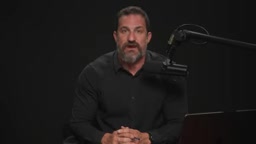
Huberman finally asks: after completing this book that took seven years, what's next? Greene laughs and says he's nearly seventy, has had a stroke, and can't handle such a long project again. But he reveals two directions: a short book about "the invisible"—forces that shape our lives but can't be directly seen—and a novel about the psychological origins of the tech world. "Nonfiction can't enter those people's minds, but a novel can."
One-line Summary
Greene and Huberman discuss the sublime: reawakening senses dulled by modern life through self-remembering, handwriting, and dropping defenses.
Paragraph Summary
Robert Greene and neuroscientist Huberman explore "the sublime" on the podcast—an experience of glimpsing beyond the comfort zone of consciousness, mixing pain and pleasure. Greene argues that childhood's large circle of consciousness is compressed by external voices and social conditioning in adulthood, disconnecting us from our inner calling and sensory experience. The conversation covers Gurdjieff's "self-remembering" exercise, the neuroplastic mechanisms of handwriting and meditation, and critiques social media for separating "experience" from "reporting experience" and hijacking the present. Greene also proposes a shift in time perception from "river" to "shore," and the rebellious meaning of love as a "falling" that drops defenses in contemporary culture. Finally, they discuss the spiritual dimension of scientific discovery and offer concrete practices: turning off phones, going into nature, handwriting, and meditation.
Related articles

AI Tools Quietly Altering Settings: Postman Silently Installs Plugin, Codex Sharing Option Auto-Resets
AI Daily reports: Postman silently installs a Mac plugin and self-approves startup hooks, logged as auto-existing upgrade; Hacker News developers say Codex data-sharing opt-out flips back. Plus Simon Willison's raw float weight experiment with QEN 3.8-27B.

AI Learns to Rewrite AI: MIT's "Weightspace Programming" Redraws the Path to Recursive Self-Improvement
MIT team proposes weightspace programming: GPT-6 Astra reads and edits AI model weights directly. Math scores jump several-fold, hand-written networks beat trained models. Eight experiments analyzed, plus Anthropic's same-day warning and the real boundaries of recursive self-improvement.

Running Qwen 3.8 on a Laptop to Read Raw Weights: 46 Minutes Per Answer
Simon Willison reproduced weight space programming with Qwen 3.8 27B on a laptop: a 17GB model file, 46 minutes per answer, 43,506 reasoning tokens, Pong over an hour, Freeway failed. Suited for interpretability researchers.