RomM: The Open-Source Self-Hosted ROM Manager for Retro Game Collections

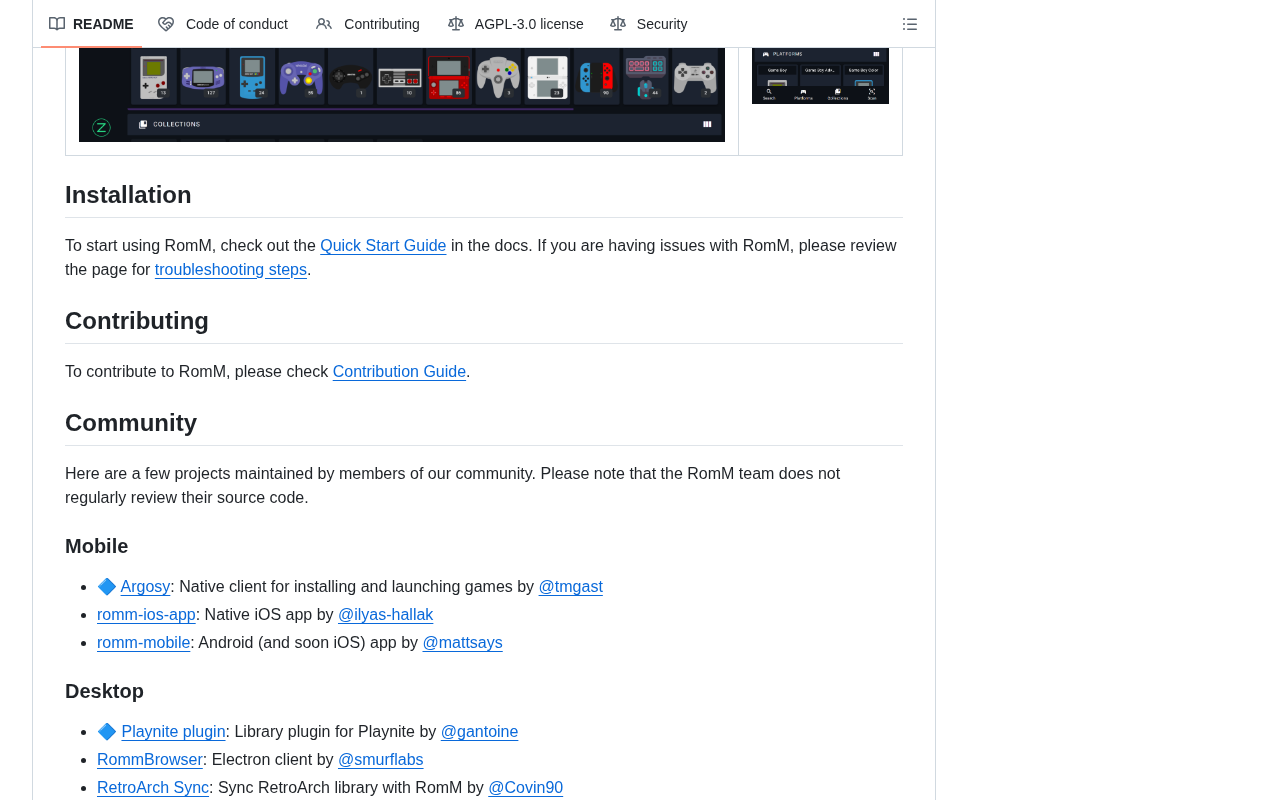
RomM is a self-hosted, open-source ROM manager that turns your retro game collection into a polished media library.
RomM is an open-source, self-hosted ROM manager built with Python that automatically fetches game metadata and cover art from IGDB, MobyGames, and ScreenScraper, supports in-browser gameplay via EmulatorJS, and deploys easily with Docker Compose. It's the ideal solution for retro game collectors and homelab enthusiasts who want full control over their game libraries.
What Is RomM
For fans of retro gaming and emulation, managing hundreds or even thousands of ROM files has always been a headache. Messy filenames, missing cover art, and untraceable metadata turn what should be a joyful collecting experience into a chore. RomM (ROM Manager) is an open-source project built specifically to solve these problems.
What is a ROM? In gaming, a ROM (Read-Only Memory) refers to a digital image extracted from a game cartridge or disc. Since the late 1990s, an entire ROM archiving culture has developed within the gaming community. Two key standards organizations sit at the heart of this ecosystem: No-Intro focuses on verifying and archiving cartridge-based games, using hash values like CRC32, MD5, and SHA-1 to create a unique digital fingerprint for each title, ensuring the ROM is in a "clean, unmodified" original state. Redump specializes in disc-based games (CD, DVD, BD), precisely reproducing the original disc's data structure through accurate read parameters. Both standards directly influence how RomM identifies files — the system confirms game versions through filename conventions and hash matching, then pulls the corresponding metadata. As original hardware ages and fails, ROM preservation is widely regarded as an important form of digital cultural heritage, which is the cultural foundation behind the broad appeal of management tools like RomM.
RomM is described as a "beautiful, powerful, self-hostable ROM manager and game player." Built with Python, it has earned over 10,354 stars on GitHub with 498 forks, reflecting strong and growing community momentum.
In short, RomM transforms your scattered game collection into a visual media library similar to Netflix or Plex — except instead of movies, it's filled with the classic games that defined your childhood.
Key Features
Automated Metadata Fetching
RomM's most popular feature is its ability to automatically match ROM files with complete game information. It integrates with authoritative game databases including IGDB, MobyGames, and ScreenScraper to automatically retrieve cover art, release years, developer descriptions, and more. You no longer need to manually sort through messy filenames — the system identifies and beautifies your entire game library automatically.
The Game Metadata Database Ecosystem: IGDB (Internet Game Database) is one of the most authoritative game databases available today. Acquired by Amazon's Twitch in 2019, it offers a structured metadata API covering hundreds of thousands of titles, with industry-leading data quality and breadth. MobyGames, founded in 1999, is one of the oldest game databases, renowned for its detailed platform compatibility records and user-contributed content — particularly comprehensive for early PC games. ScreenScraper is designed specifically for the emulator community, excelling at identifying multi-language versions and regional ROM variants (e.g., differences between Japanese, European, and North American releases). Its database directly integrates with No-Intro/Redump hash standards, enabling precise ROM version matching via file checksums. Together, these three form a complementary metadata ecosystem for RomM — IGDB provides authoritative information on modern games, MobyGames adds historical depth, and ScreenScraper ensures accurate regional version identification, significantly improving overall recognition accuracy.
Play Games Directly in the Browser
Thanks to the built-in EmulatorJS integration, RomM supports running games directly in your browser — no local emulator installation required. Major platforms are supported, including Nintendo NES, SNES, GB/GBA, Sega consoles, and Sony PS1. Just open the page and start playing, with save and load state support included. This "open and play" experience makes your game collection truly accessible at any moment.
How EmulatorJS Works: EmulatorJS is built on the RetroArch emulator framework. RetroArch uses a "Core" plugin architecture where each core corresponds to a standalone emulator engine — for example, the Nestopia core handles NES emulation, mGBA handles GBA, and PCSX ReARMed handles PS1. The Emscripten toolchain compiles these C/C++ emulator cores into WebAssembly bytecode, allowing them to run safely inside a browser sandbox. WebAssembly is a low-level binary format with near-native performance, achieving 60–80% of native code execution speed in modern browsers. Safari, Chrome, and Firefox all offer full support, making real-time emulation of fifth-generation consoles (PS1, N64) a reality in the browser. Compared to traditional local emulators, the browser-based approach requires no software installation and natively supports cross-platform access — Windows, macOS, and Android devices all work with a single browser. The trade-off is that performance-intensive platforms (such as PS2 and GameCube) remain out of reach for now, as they exceed WebAssembly's current performance ceiling.
Broad Platform and Format Support
RomM is compatible with a vast range of gaming platforms and file formats, intelligently recognizing the ROM structures of different consoles. Whether your collection spans multiple generations of home consoles, handhelds, or arcade games, RomM handles categorization and archiving with ease.
The Core Value of Self-Hosting
As a self-hosted application, RomM gives users complete control over their data. You can deploy it on a home server, NAS, or cloud VPS, set it up quickly via Docker, and keep your game library and save files entirely on your own hardware.
Compared to relying on third-party cloud services, self-hosting offers several clear advantages:
- Data privacy: Your game collection and save records are entirely yours, with no third-party involvement.
- Zero subscription cost: Deploy once, use indefinitely — no monthly fees or membership tiers.
- Access from anywhere: Phone, tablet, or PC — as long as you can reach your server, your library is always available.
For tech enthusiasts who enjoy tinkering with a home lab setup, RomM is a worthy addition to your self-hosted stack alongside Jellyfin and Plex.
Homelab and the Self-Hosting Ecosystem: A Homelab refers to a personal server environment built at home by tech enthusiasts, typically running self-hosted applications like NAS, media servers, and smart home controllers. Jellyfin is a fully open-source, free media streaming service, while Plex is a mainstream media management platform with commercial licensing — both are benchmark projects in the self-hosting community. The self-hosting ecosystem has seen explosive growth in recent years, driven by the widespread adoption of Docker containerization. Docker packages applications and all their dependencies into standalone images, eliminating environment configuration headaches and enabling even non-expert users to deploy complex multi-service applications in minutes. The Reddit community r/selfhosted has over 500,000 subscribers, home NAS operating systems like TrueNAS and Unraid continue to gain popularity, and graphical Docker management tools like Portainer have made container operations far more intuitive. RomM is a prime example of a project riding this wave — purpose-built for the game collection vertical.
Technical Architecture and Docker Deployment
RomM uses a decoupled frontend/backend architecture: the backend is written in Python and handles metadata management, database interaction, and file scanning, while the frontend provides a clean, responsive Web interface. The official recommended deployment method is Docker Compose — users simply prepare their ROM file directory, write a straightforward configuration file, and launch the service with a single command.
Docker Compose Deployment Model: Docker Compose is Docker's official multi-container orchestration tool, using YAML-format configuration files to define the relationships between services, networks, and volumes. A standard RomM deployment typically includes three cooperating containers: the RomM main application container handles the Web interface and business logic, the MariaDB database container persists game metadata and user configuration, and an optional Redis cache container accelerates frequent queries. Data persistence is achieved through Docker Volume mounts — the ROM file directory and database files are mapped to specific paths on the host machine, ensuring data is fully preserved even if containers are destroyed and rebuilt. Compared to running individual
docker runcommands, Compose requires maintaining only a singledocker-compose.ymlfile to start, stop, and upgrade services — making it the de facto standard for deploying multi-service self-hosted applications. For users of graphical tools like Portainer, the entire deployment process can be completed entirely within a Web interface.
During setup, you can configure database connections, API keys for each metadata source, and game file mount paths. Thanks to active community maintenance, the official documentation is fairly comprehensive, and even newcomers to self-hosting can typically get up and running in a reasonable amount of time.
Who Is RomM For?
RomM is primarily aimed at the following types of users:
- Retro game collectors: Players with large ROM libraries who want a modern way to manage and showcase their collections.
- Homelab enthusiasts: Tech-savvy users who enjoy deploying self-hosted services on their own servers.
- Nostalgia seekers: Casual players who want to revisit classic games without the hassle of configuring local emulators.
It's worth noting that the legal status of ROMs varies significantly by country and region. In the United States, the Digital Millennium Copyright Act (DMCA) generally prohibits unauthorized ROM distribution, though personal use for backing up games you own remains a legal gray area. Companies like Nintendo and Sony have repeatedly pursued legal action against ROM distribution sites. Some games are only obtainable as ROMs due to discontinued hardware, unclear copyright ownership, or closed commercial re-release channels — this is the fundamental source of ongoing tension between ROM preservation culture and copyright law. RomM as a management tool does not involve ROM distribution. Users are responsible for ensuring they have legal rights to the ROMs they use and for understanding the applicable laws in their jurisdiction.
Conclusion
As the open-source self-hosting ecosystem continues to flourish, RomM has carved out a distinctive niche in game collection management through its polished interface, powerful automated metadata handling, and in-browser gameplay capabilities. It brings together the authoritative database ecosystem of IGDB, MobyGames, and ScreenScraper; EmulatorJS WebAssembly emulation technology compiled via Emscripten from RetroArch cores; and the convenience of Docker Compose deployment — all in one package. Its rapidly climbing star count is a testament to the broad recognition it has earned from the community.
If you have a pile of classic ROMs with nowhere to call home, give RomM a shot — it might just breathe new life into your retro game collection.
Related articles

The Truth Behind Codex 'Build a Website in 5 Minutes': AI Isn't Creating Sites—It's Helping You Copy Them
Exposing the truth behind viral Codex 5-minute website videos: creators aren't building original sites with AI—they're copying shared prompts or scraping others' work. Learn AI coding tools' real limits.

Getting Started with AI Agent Development: A Complete Guide from Concept to Practice
A comprehensive guide to AI Agent architecture and development, covering automated marketing, intelligent customer service, and investment analysis scenarios with single and multi-agent collaboration.

The Truth Behind Codex 'Build a Website in 5 Minutes': AI Isn't Creating Sites — It's Helping You Copy Them
Exposing the truth behind viral Codex 5-minute website videos: creators aren't building original sites with AI — they're copying shared prompts or scraping others' work.