ROS2 for Beginners: The Essential Framework for Robot Development

A beginner's guide to ROS2 — the essential SDK framework powering modern intelligent robot development.
This article introduces ROS2 from the ground up, covering the rise of intelligent robots and Embodied AI, what ROS actually is (an SDK, not a traditional OS), the key architectural differences between ROS1 and ROS2 (including DDS-based decentralized communication), and how to choose the right version for stable development.
The Age of Intelligent Robots Is Here
From robots dancing gracefully on the Spring Festival Gala stage, to autonomous vacuum cleaners mapping your living room, to service robots delivering meals at hotels — intelligent robots are rapidly weaving their way into every corner of our lives. This is no longer the stuff of science fiction; it's the reality unfolding around us.
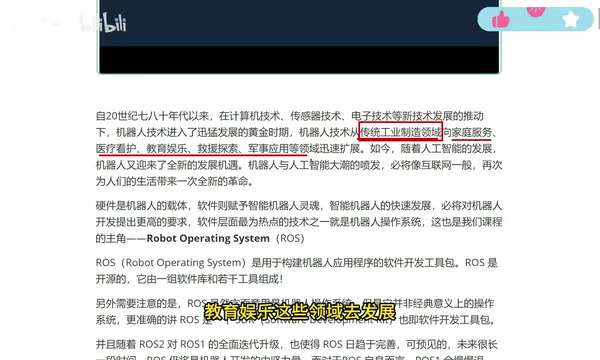
Since the 1970s and 80s, driven by advances in computing, sensors, and electronics, robotics has entered a golden era of explosive growth. Applications have expanded far beyond traditional industrial manufacturing into home services, healthcare, education and entertainment, search and rescue, and military uses.
The key to this transformation? Robots are starting to "think." The mechanical arms in traditional factories — like those on automotive assembly lines — can only execute pre-programmed instructions; they aren't truly "intelligent." Today's robotic vacuum cleaners, by contrast, first explore a room to build a map, then plan a cleaning route and actively avoid obstacles — demonstrating basic environmental awareness and autonomous decision-making.
Artificial Intelligence Gives Robots a Soul
With the explosive rise of artificial intelligence, robots are entering a new era of possibility. Technologies like ChatGPT, DeepSeek, and ERNIE Bot are all branches of AI — and they're precisely what can "give robots a brain."
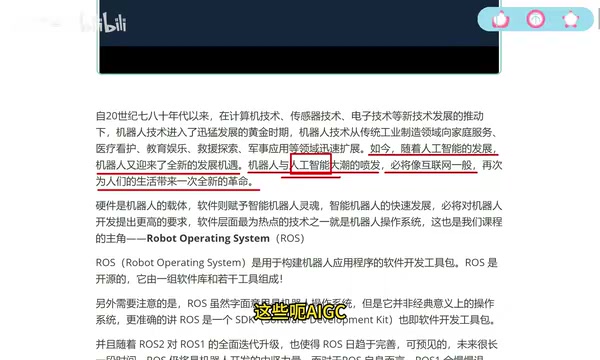
The fusion of AIGC (AI Generated Content) technology with robotics has spawned an emerging concept: Embodied AI. Embodied AI emphasizes that an intelligent agent shouldn't just process information in the digital world — it should also interact with and learn from the physical environment through a real body. Once large language models are integrated into robots, they can understand natural language instructions, plan tasks, and even interpret complex scenes through vision-language models. Google's RT-2, Tesla's Optimus, and China's Unitree Robotics are all prime examples of this trend. Embodied AI is widely regarded as the next major breakthrough in AI after large language models.
In short, the deep integration of robotics and AI is poised to transform human life as profoundly as the mobile internet did — just as mobile payments completely changed how we shop, the age of intelligent robots is set to unleash an entirely new technological wave.
ROS: The Core Engine of Robot Software Development
If hardware is the body of a robot, then software is what gives it a soul. On the software side, one of the most in-demand technologies today is the Robot Operating System — ROS.
ROS was originally co-developed by Stanford University's Artificial Intelligence Laboratory and Willow Garage in 2007, with an official open-source release in 2010. Its core motivation was to solve the long-standing "reinventing the wheel" problem in robotics research — every team was independently building the same fundamental modules for navigation, perception, and communication, wasting enormous research resources. By providing a unified message-passing mechanism and modular architecture, ROS allows developers worldwide to share and reuse code, dramatically accelerating the pace of robotics innovation.
What Exactly Is ROS
There's a very common misconception worth clearing up right away: despite being called a "Robot Operating System," ROS is not an operating system in the traditional sense.
The operating systems we're familiar with include Android, iOS, and HarmonyOS on mobile, and Windows, Linux, and macOS on the desktop — these are classic operating systems that manage computer hardware resources and provide the lowest-level runtime environment for applications. An SDK (Software Development Kit), on the other hand, is a collection of APIs, libraries, tools, and documentation built on top of an operating system, designed to help developers efficiently build applications in a specific domain. ROS runs on top of Linux (typically Ubuntu), does not manage hardware resources itself, and instead provides robot-specific tools like node communication, hardware abstraction, and data visualization — which is exactly why it should be classified as an SDK rather than an OS. ROS is more accurately described as an SDK (Software Development Kit).
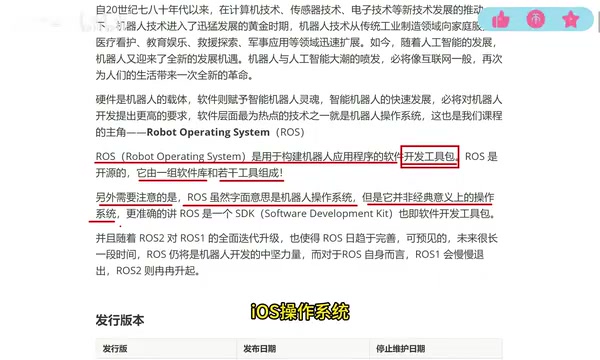
More specifically, ROS is a development toolkit purpose-built for constructing robot applications, with the following core characteristics:
- Open source and free: Maintained and evolved by a global community
- Modular design: Composed of a set of software libraries and tools
- Rich ecosystem: Provides a large number of reusable robot development components
Understanding this point is crucial: learning ROS means mastering a technical framework for developing robot software — not learning a system like Windows.
ROS1 vs. ROS2: The Transition Between Generations
Over years of evolution, ROS has developed into two major versions: ROS1 and ROS2.
ROS1 is gradually being replaced by ROS2. This doesn't mean ROS1 has disappeared, but the entire ecosystem is making a steady transition to ROS2. ROS2 is not a simple upgrade of ROS1 — it is a complete architectural overhaul. ROS1's communication system relies on a centralized "Master node" to coordinate everything; if the Master crashes, the entire system goes down, which is unacceptable in industrial or safety-critical scenarios. ROS2 adopts DDS (Data Distribution Service) as its underlying communication middleware, achieving decentralized peer-to-peer communication while significantly improving real-time performance, security, and cross-platform support — making it genuinely ready for industrial-grade deployment. As a result, ROS2 represents a significant leap over ROS1 in architectural design, communication mechanisms, and real-time capabilities, and more and more developers and new projects are moving to ROS2.
The direction is crystal clear: ROS1 will gradually fade into history, while ROS2 will continue to rise. This is the fundamental reason this tutorial series focuses on ROS2.
Why Version Selection Matters
The first version of ROS2 was released back in 2017, and new versions have been released almost every year since. ROS2 version names follow an interesting alphabetical pattern, with codenames using "adjective + turtle species" combinations (because the turtle is ROS's mascot) — such as Humble Hawksbill, Iron Irwini, and Jazzy Jalisco. Each version has a corresponding end-of-life date, which determines which versions are still actively supported.

Version management matters because different versions are not directly compatible with each other. A classic example:
- Running a project written for an older version in a newer environment will typically fail to launch
- The solution is either to switch environment versions or modify the configuration for compatibility
- Fortunately, many online resources provide compatibility migration guides you can reference
In practice, identifying which version your project depends on and keeping your environment consistent is the first step to avoiding headaches.
Stable Releases vs. the Rolling Development Version
Among all the versions, there is one special entry: Rolling (the rolling development version). Released in June 2020, it has no fixed end-of-life date and continuously receives updates.
Think of Rolling as an "early access" release, while all other versions with defined maintenance windows are "stable releases." It's also worth noting that among stable releases, there are regular versions (with roughly a 1-year support window) and LTS versions (Long-Term Support), which provide up to 5 years of maintenance. For engineering projects, choosing an LTS version means longer access to security patches and bug fixes without the need for frequent migrations — making it the preferred strategy for production environments. For developers who prioritize stability:
- Stable releases are the first choice: Mature features, reliable performance, fully suitable for learning from beginner to advanced levels
- Approach Rolling with caution: Suitable for users who want to try the latest features; not recommended for beginners
For those just getting started, choosing a stable version within its support window — with LTS versions preferred — is the safest and most practical approach.
Summary and Looking Ahead
Through this section, we've established a foundational understanding of ROS2:
- The age of intelligent robots has arrived — the convergence of AI and robotics has given rise to Embodied AI, a direction that represents a major trend;
- ROS is essentially an SDK (Software Development Kit) that runs on top of Linux, not a traditional operating system;
- ROS2 is the future mainstream direction — its DDS-based decentralized architecture is a fundamental improvement over ROS1 and is well worth investing your learning energy in;
- Version compatibility is critical — in real development, keep your environment consistent and prioritize LTS stable releases.
With these foundational concepts in place, the next step is to move into hands-on practice — setting up your ROS2 development environment and officially beginning your robotics development journey. For developers looking to seize the opportunities of the intelligent robotics era and build a broader career, getting started with ROS2 is undoubtedly the right place to begin.
Key Takeaways
Related articles
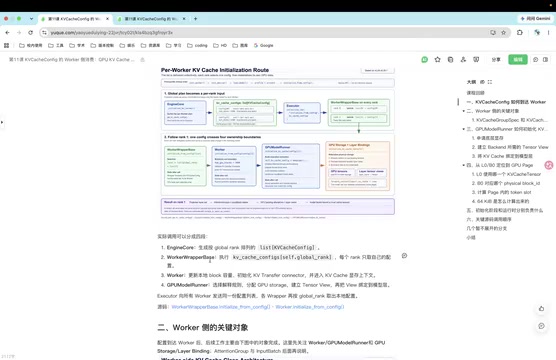
Deep Dive into vLLM Worker-Side GPU KV Cache Initialization
Deep dive into vLLM's Worker-side KV Cache GPU memory allocation, covering the full pipeline from KVCacheConfig generation to physical memory binding via ModelRunner.
Zepto Builds AI Customer Service with MLflow: An Evaluation-Driven Practice Guide
Deep dive into how Zepto built an evaluation-driven AI customer service system using MLflow and Databricks, achieving 60% faster responses and 40% less manual handling. From technical architecture to practical insights.
Iran Captures U.S. Underwater Drone in Strait of Hormuz: A Comprehensive Analysis
Iran announces capture of U.S. Navy underwater drone in Strait of Hormuz. In-depth analysis of the incident, strategic value of UUVs, U.S.-Iran geopolitical competition, and implications for global energy security and military dynamics.