RTX 5090 Scalped for $9,000 in the US? Flying to Taipei to Buy One Might Actually Be Cheaper
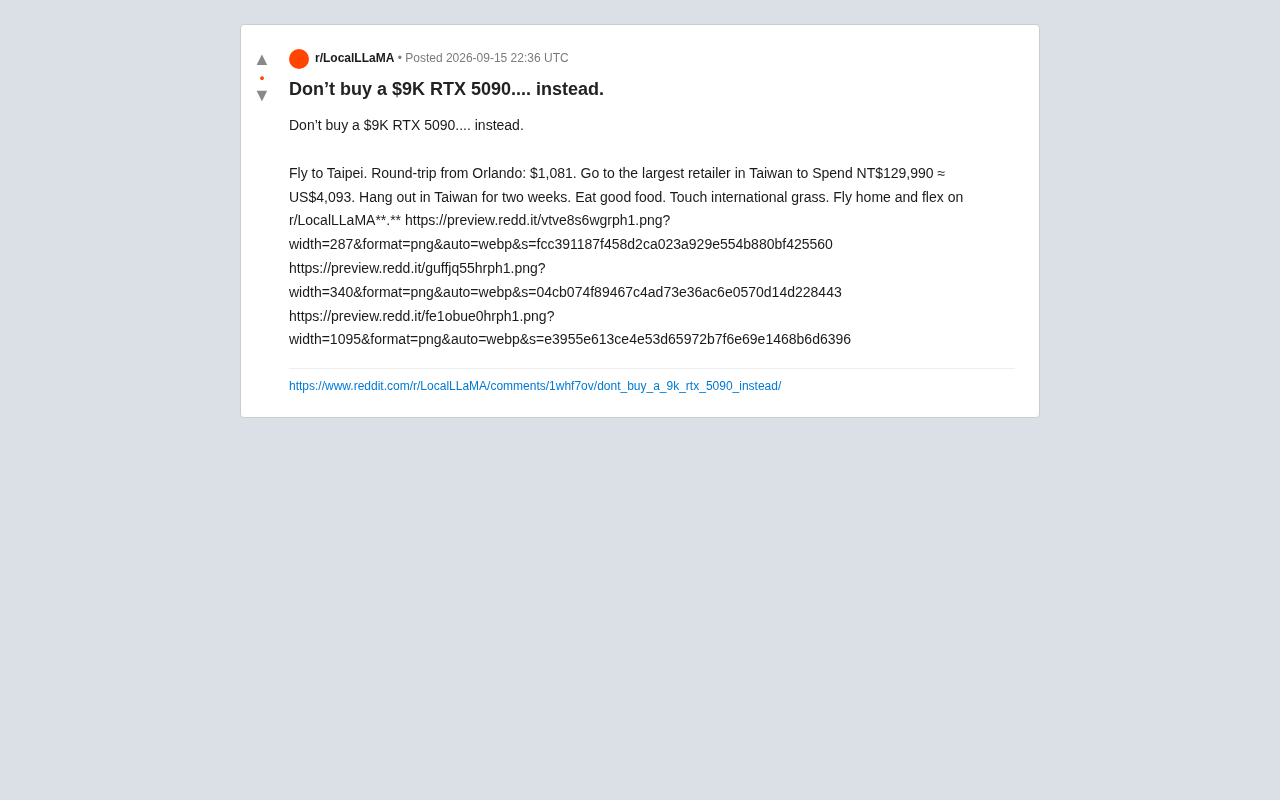
RTX 5090 hits $9,000 on US secondary market; a Reddit post shows flying to Taipei to buy one is genuinely cheaper.
A viral LocalLLaMA post showed that buying an RTX 5090 in Taiwan and flying back with it (~$5,174 total) beats paying $9,000 to US scalpers. The gap reflects real supply chain dynamics: Taiwan sits at the heart of NVIDIA's manufacturing network, keeping local retail prices around $4,000, while US demand from gamers, AI enthusiasts, and compute hoarders has pushed prices over 2x MSRP. The card's 32GB VRAM makes it essential for running large local LLMs, though the post's cross-border arbitrage scheme comes with hidden costs like warranty restrictions and customs duties.
A GPU That Sparked a Pricing Farce
A post recently appeared in Reddit's LocalLLaMA community with a headline that got straight to the point: "Don't spend $9,000 on an RTX 5090 — try a different approach." The user's "alternative plan"? Fly to Taipei.
The math laid out in the post was surprisingly specific: a round-trip flight from Orlando to Taipei runs about $1,081; once in Taiwan, you pick up the same card at the country's largest retailer for NT$129,990 (roughly $4,093); throw in two weeks of travel, good food, a little "international grass-touching," and you fly home with the GPU in hand — ready to flex about it in the comments.
All in, the flight plus the card comes to around $5,174. Even adding two weeks of food and lodging, that's still well below the $9,000 scalper price the card is fetching in the US. It reads like a joke, but it hits on a very real pain point in today's high-end GPU market: the regional price gap has grown wide enough to cover the cost of a transpacific trip.
The Market Logic Behind the Price Gap
As NVIDIA's flagship consumer GPU for AI inference and local large model deployment, the RTX 5090's 32GB of VRAM and raw compute power make it the most coveted piece of hardware in the local LLM crowd — which is exactly who hangs out in LocalLLaMA. When a single piece of hardware is being targeted simultaneously by gamers, AI enthusiasts, and compute hoarders, a supply-demand imbalance is almost inevitable.
The $9,000 transactions seen in the US are clearly the result of scalpers and secondary market speculation, not official pricing. Taiwan, on the other hand, sits at the heart of the semiconductor supply chain — close to NVIDIA's manufacturing and distribution network — so official channels have relatively stable supply, keeping retail prices in a reasonable $4,000-plus range. The phenomenon of "prices being more normal the closer you are to the source" is nothing new in the semiconductor industry.
The post is a joke, but it uses an extreme scenario to surface something real: when local premiums exceed 100%, cross-border arbitrage actually makes economic sense.
The regional price gap has structural roots in how semiconductor products are made and distributed. NVIDIA outsources wafer fabrication to TSMC, then local Taiwanese assembly and board partners — ASUS, Gigabyte, MSI — build the finished cards. The physical starting point of the entire supply chain is Taiwan, so the Taiwanese market tends to receive relatively prioritized early allocation, with fewer intermediary layers and less markup. By contrast, cards shipped to the US pass through more hands, and on the demand side, the AI compute boom — combined with scalpers using bots to snatch up stock and resell at a premium — routinely pushes retail prices to two times the MSRP or more. This "closer to the source, closer to normal pricing" dynamic has played out repeatedly in past GPU shortage cycles, including the mining boom of 2020–2022.
What This Joke Reveals About the Local AI Hardware Boom
The reason this post resonated so strongly in LocalLLaMA comes down to what that community represents: the rapid rise of on-device LLM deployment. More and more developers and AI enthusiasts are moving away from cloud API calls and toward running open-source models on their own machines — for data privacy, control, and long-term cost savings.
That hunger for VRAM and compute has put cards like the RTX 5090 on a pedestal. VRAM capacity often matters more than raw compute when it comes to determining what size model you can load, which is why the 5090's 32GB has the community so worked up — worked up enough, apparently, to consider international travel.
That said, the post's proposal comes with real-world caveats: cross-border purchases involve regional warranty restrictions, voltage compatibility issues, customs declarations and duties, and potential limits on how many units you can bring back. When you factor in all the hidden costs and risks, the savings may not be as clean as the math suggests.
Why VRAM sets the ceiling on model size During inference, an LLM needs its full set of model weights loaded into GPU memory. A 7B-parameter model stored in FP16 precision requires roughly 14GB of VRAM; a 13B model needs around 26GB. If VRAM runs out, the model gets offloaded to system RAM or storage, causing inference speeds to drop by one or two orders of magnitude — essentially unusable. Quantization techniques like Q4 in the GGUF format compress each parameter from 16 bits down to 4, letting the same VRAM run a much larger model at the cost of some accuracy. The RTX 5090's 32GB means you can load a ~14B parameter model at full precision without quantization, or run a 70B-class model after Q4 quantization — which is the core reason it's so attractive to the local deployment crowd.
The Real Problem Behind the Absurdity
Jokes aside, this episode reflects a genuinely serious supply-demand tension in high-end AI hardware. When consumer GPUs take on the role of productivity tools, their prices are no longer set by the gaming market alone — they're caught up in the far larger wave of AI compute demand.
For everyday users, chasing a hyped flagship card may be less rational than selecting hardware based on actual model requirements. Many quantized open-source models run perfectly well on 24GB or even lower-VRAM cards. The hardware arms race makes it easy to lose sight of the fact that the real bottleneck usually isn't whether you have the best card — it's whether you're using what you have efficiently.
What this whole "fly to Taipei for a GPU" discussion ultimately leaves us with might be a simple reminder: in an era when AI hardware prices are being driven into the stratosphere, staying clear-headed about cost is more important than chasing the hype.
Related articles
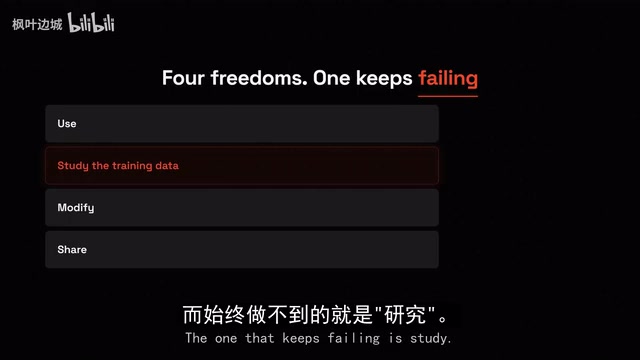
The Truth About Open-Source AI: You Got the Cake, Not the Recipe
Open-source AI exposed: what you download is weights (the cake), not training data or code (the recipe). A deep dive into open weights vs. true open source, Meta/Alibaba/DeepSeek business strategies, and how US/China/EU governments are redrawing the boundaries of openness.
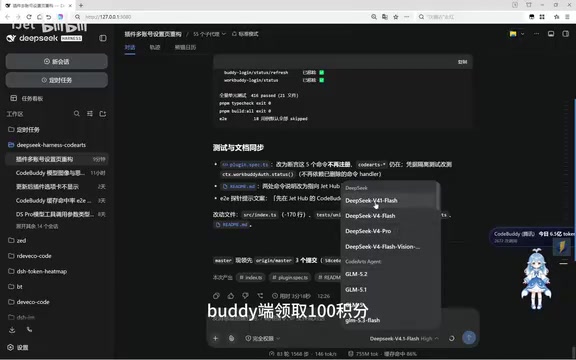
Free DeepSeek V4.1 Flash via DSH: Bulk Point Collection & International WorkBuddy Tested
DSH project update tested: WorkBuddy now offers 100 points per claim, rate limits raised beyond 80M tokens with faster resets, and international WorkBuddy supports free Hunyuan 4 and DeepSeek V4.1 Flash.

Capsule: Pack Web Apps and Data into a Single SQLite File
Capsule is a Rust/Tauri 2.0 tool that packs HTML web apps and data into a single SQLite file — privacy-first, local storage, portable sharing, with AI support.