RugOne Xsnap 7 Pro Review: Is a Rugged Phone with a Detachable Camera Worth It?
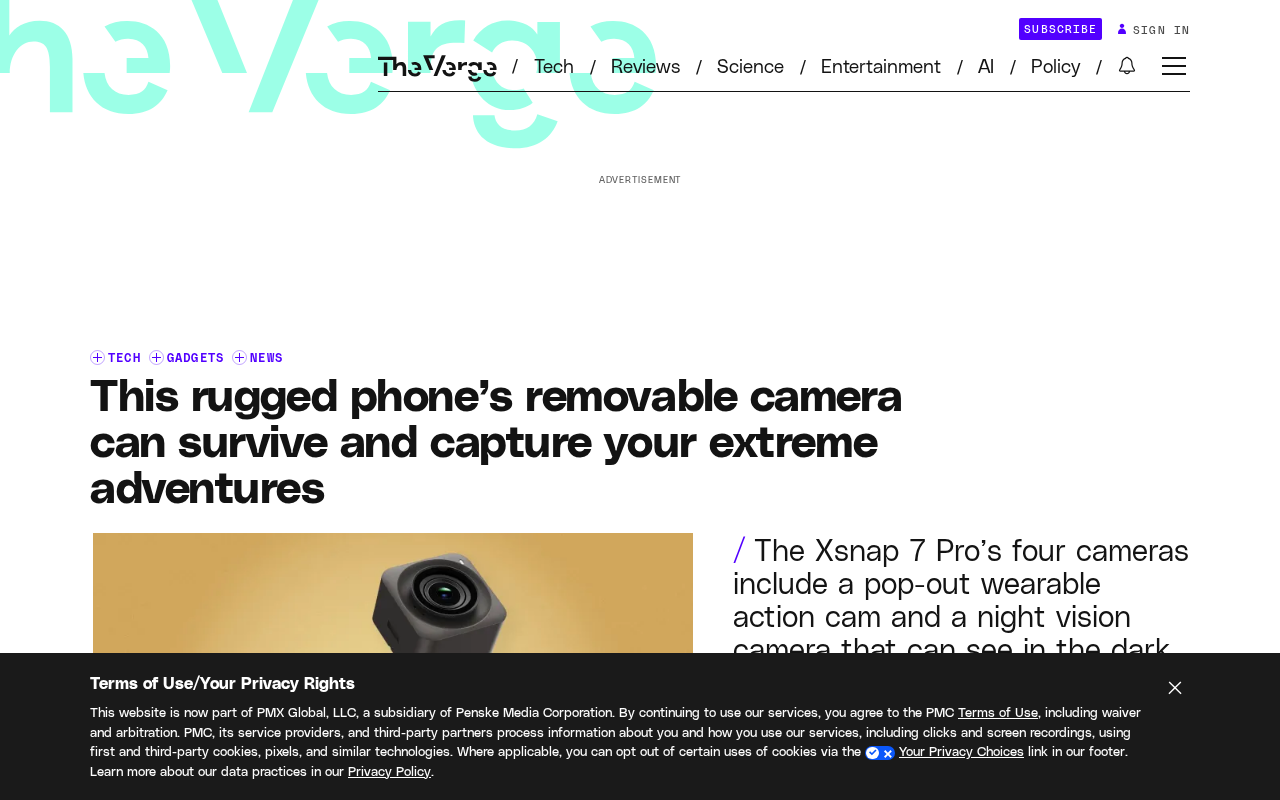
RugOne Xsnap 7 Pro combines IP68/IP69K rugged protection with a unique detachable camera module.
The RugOne Xsnap 7 Pro introduces a bold innovation to the homogenized rugged phone market: a detachable camera module that can be mounted independently for POV shooting. With dual IP68 and IP69K certifications, it targets outdoor enthusiasts seeking both durability and flexible imaging capabilities in one device.
A New Approach to Rugged Phones: Detach the Camera
The rugged phone market has always centered on core selling points like drop resistance, waterproofing, and exceptional durability, primarily serving extreme use cases such as outdoor exploration and construction sites.
Rugged Phone Market Background
Rugged phones (three-proof phones) are hardened mobile devices with waterproof, dustproof, and shockproof capabilities. This category originated from industrial communication needs in the early 2000s, first introduced by Japanese manufacturers Kyocera and Casio for industries like construction and logistics. With the rise of outdoor sports, brands like CAT, AGM, and Blackview expanded the market to consumers. However, constrained by reinforced structures and protective materials, rugged phones have long faced technical bottlenecks including bulky bodies, lagging camera modules, and compromised chipset performance. This has led product innovation to focus mainly on parameter races like battery capacity (commonly 6000-10000mAh) and drop height (MIL-STD-810G military standard certification), making it difficult to achieve generational breakthroughs in user experience.
However, this category has long suffered from severe homogenization, with products struggling to differentiate themselves. RugOne's latest Xsnap 7 Pro attempts to break this stalemate with a bold design—one of its three rear cameras can be detached from the body and used independently.
Historical Attempts at Modular Phones
Detachable modules are not an entirely new concept. Google's Project Ara prototype in 2016, Motorola's Moto Z series (expanding camera/speaker/projector capabilities through magnetic Moto Mods), and LG G5's "Magic Slot" all attempted modular designs, but none sustained due to high costs, ecosystem fragmentation, and interface standardization difficulties. Unlike these universal platforms, Xsnap 7 Pro's modularity focuses on a single scenario—physically separating the phone's main control from the image sensor, essentially internalizing the POV shooting capability of action cameras like GoPro as a phone subsystem. This "vertical modularity" sidesteps ecosystem construction challenges but also inherits modular design's inherent challenges: mechanical durability of interfaces, data transmission bandwidth (4K 60fps requires approximately 400Mbps), and independent power management for separated modules.
The logic behind this design is straightforward: in truly extreme environments, the phone body may not always reach the optimal shooting position. By separating the camera module from the body, users can mount it on helmets, bicycle handlebars, drones, or even diving brackets to achieve POV (point-of-view) shooting or remote framing, while the phone body stays safely in a pocket or backpack. This approach somewhat blurs the line between rugged phones and action cameras (like GoPro).
Military-Grade Protection: IP68 and IP69K Dual Certification
Xsnap 7 Pro doesn't compromise on protection specifications, achieving both IP68 and IP69K certifications. This combination of protection ratings is uncommon in phone products and deserves detailed explanation.
IP Protection Rating System Explained
IP (Ingress Protection) ratings are defined by the International Electrotechnical Commission (IEC) standard IEC 60529, using two digits to indicate a device's protection against solids and liquids. The first digit (0-6) represents dust protection level, with 6 being the highest indicating complete sealing; the second digit (0-9) represents water protection level, with 8 representing continuous immersion (typically 1.5 meters deep for 30 minutes), and 9 specifically indicating resistance to high-temperature, high-pressure water jets (80°C, 100bar pressure). The "K" in IP69K originates from German standard DIN 40050-9, specifically targeting industrial equipment that must withstand steam cleaning. In consumer electronics, the iPhone 15 Pro is rated IP68 (6 meters for 30 minutes), while phones meeting both IP68+IP69K are extremely rare, requiring multiple sealing designs at all openings including USB ports, SIM card slots, and speaker grilles.
IP68 Protection Capability Explained
IP68 is a relatively common high-level protection standard in current consumer electronics. The "6" represents complete dust protection, with dust unable to enter the device; the "8" represents continuous immersion beyond 1 meter depth. According to RugOne's official specifications, Xsnap 7 Pro can withstand complete water immersion for up to 30 minutes. Whether it's stream crossing, wading, or outdoor work in heavy rain, this specification provides ample safety margin.
Why IP69K Matters
IP69K is a more industrially-oriented standard, typically appearing in equipment requiring high-pressure, high-temperature water jet cleaning, such as food processing machinery and engineering vehicles. It means the device can withstand direct impact from high-temperature, high-pressure water jets. For a phone, having both IP68 and IP69K means it can not only withstand static underwater immersion but also endure dynamic washing from powerful water jets—something most mainstream flagship phones cannot achieve.
Reference Significance of Military Standards
Besides IP ratings, MIL-STD-810, commonly referenced by rugged phones, is an environmental engineering considerations standard established by the U.S. Department of Defense, covering up to 29 test methods including low pressure (high altitude), thermal cycling, temperature shock, solar radiation, rain, humidity, salt fog, sand and dust, vibration, and shock. Note that this standard is not a "pass/fail" certification but rather a collection of test methods—manufacturers can select specific items to test and claim "MIL-STD-810H compliance." Therefore, actual protection capability requires reviewing specific test reports. If RugOne simultaneously meets IP69K and MIL-STD-810 drop testing (typically Method 516: free fall from 1.5 meters on 26 faces and 26 edges onto concrete surface), it will exceed mainstream flagships in protection specifications.
Practical Significance and Challenges of the Detachable Camera
The detachable camera is RugOne Xsnap 7 Pro's most core differentiating feature, but this design also brings dual tests in engineering implementation and user experience.
Advantages of Modular Shooting
From a practical perspective, the modular camera grants tremendous shooting flexibility. Users are no longer limited by the phone's physical form and grip angle, and can position the lens atop a rock climber's head, on a mountain bike frame, or even on underwater mounting brackets.
Action Camera Market Competitive Landscape
The action camera market is dominated by GoPro (approximately 60% market share in 2023), whose Hero series established the product paradigm of miniaturization, ultra-wide angle, strong stabilization, and POV perspective. Chinese brands DJI (Osmo Action) and Insta360 compete through differentiation with gimbal stabilization and 360-degree panoramas. This market, valued at approximately $3 billion, has a user base highly overlapping with outdoor/extreme sports enthusiasts—precisely the target demographic for rugged phones. Xsnap 7 Pro attempts to reduce users' burden of carrying two devices through the "phone + detachable camera" integrated form factor, but also faces questions about professional compromise: standalone action cameras typically feature larger image sensors (such as GoPro Hero 12's 1/1.9-inch sensor), stronger stabilization algorithms (HyperSmooth), and more comprehensive accessory ecosystems (waterproof housings, gimbals, various mounting brackets).
This design allows one phone to simultaneously serve the dual roles of communication terminal and action camera, theoretically reducing the amount of equipment needed for outdoor trips.
Potential Issues to Watch
However, challenges are equally significant:
- Sealing Reliability: The detachable interface itself is the weakest link in the waterproof and dustproof system. How to maintain IP68/IP69K-level sealing while allowing repeated insertion and removal is quite a thorny engineering challenge.
- Connection and Battery Life: The separated camera module requires independent power supply and wireless data transmission. Whether image quality, transmission latency, and battery life can meet the demands of serious content creation still requires actual testing to answer.
- Portability and Loss Risk: The independent small module is easier to lose in outdoor environments, and the additional carrying and management burden is a practical factor users need to consider.
Differentiation Exploration in the Rugged Phone Market
The emergence of Xsnap 7 Pro reflects rugged phone manufacturers' urgent need to find breakthroughs in niche markets. Traditional rugged phone product strategies often focus on stacking large-capacity batteries, thickening bodies, and adding physical buttons, lacking innovation in imaging creativity. By introducing modular concepts to this category, RugOne is essentially responding to the growing core demands of outdoor content creators—they need both a reliable communication tool that can withstand drops and immersion, and the flexible shooting capabilities they desire.
From an industry-wide perspective, while such innovations target relatively niche audiences, they could inject new product language into the rugged phone category. If the stability and image quality of the detachable camera can withstand the test of real extreme scenarios, it may carve out a unique survival space between ordinary flagship phones and professional action cameras.
Concept-Led, Experience Awaits Verification
Overall, RugOne Xsnap 7 Pro brings a refreshing product concept to the homogenized rugged phone market with its IP68 + IP69K dual protection certification and unique detachable camera module design. It precisely targets the vertical audience of outdoor exploration and extreme sports enthusiasts, merging phone durability with camera flexibility in a single device.
Of course, the sealing reliability, image quality, connection stability, and daily use convenience of the detachable module ultimately require detailed actual testing to provide answers. As a product with forward-thinking concepts, Xsnap 7 Pro's exploration direction deserves recognition, but whether it can truly "survive and document" in extreme environments still requires time and users' collective verification.
Related articles

Tesla Cybercab Mass Production: How a Car Without a Steering Wheel Is Rewriting the Business Logic of Transportation
Tesla's Cybercab is a two-seat robotaxi with no steering wheel or pedals, marking Tesla's shift from automaker to mobility platform. A deep dive into the business logic, tech challenges, and risks.

Why Startup ARR Is Becoming Fragile in the AI Era — And How to Fight Back
AI is making startup ARR fragile as procurement cycles shorten and tech moats erode. Learn why ARR stability is declining and strategies to build durable revenue.
The Root Cause of AI Deceptive Behavior: Misalignment Risks in Reinforcement Learning and Solutions
Deep dive into the technical roots of AI deception: how RL reward mechanisms catalyze misalignment, why stronger models increase risk, and how institutions like LawZero are solving AI alignment from the training paradigm level.