Run a full-size LLM on 12GB of VRAM? Five Open-Source Projects That Bring AI Back to Your Local Machine
Five open-source projects with over 250,000 stars bring local LLMs, Agent teams, and creation tools back to your own machine.
The article rounds up five open-source AI projects recommended by a Bilibili creator, totaling over 250,000 stars, all advocating that data never leaves your machine and privacy comes first. Strayta (~45.5K stars, MIT) lets users run LLMs locally without hassle and provides local backends for coding assistants like Claude Code and Codex via OpenAI/Anthropic-compatible interfaces, deploying full-size DeepSeek with just 12GB of VRAM. OpenMouseBot (~25K stars, Apache) embeds a multi-Agent team in the chat sidebar, with each Bot having a cloud computer and 500+ connectable apps, and key actions requiring human approval. Voice Studio (~113K stars, AGPL) is a local 11Labs supporting 646 languages, voice cloning, and dubbing alignment. Diagram Design (~68K stars, MIT) unifies Agent-generated diagram styles as a skill pack. Mesh Avatar Studio (~2,400 stars, MIT) turns an illustration into a drivable virtual streamer in four steps.
Cloud AI services are getting more powerful—and more expensive. For many developers and creators, bringing AI capabilities back to their own computers has become a real need. A Bilibili creator recently rounded up five related open-source projects totaling over 250,000 stars, spanning local LLM runtime environments, AI bot teams, voice studios, diagram skill packs, and turning illustrations into virtual streamers—covering scenarios from coding assistants to content creation to virtual avatars. What these projects share: your data never leaves your machine, privacy comes first, and most use permissive open-source licenses.
Running LLMs Locally: Strayta Gives Coding Assistants a Local Brain
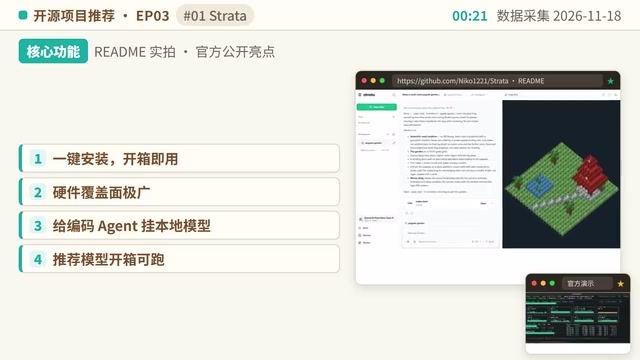
The first project is Strayta, with about 45,500 stars under the MIT license. It tackles the most direct problem: letting users run LLMs on their own computers without wrestling with the environment. Download the installer, pick a model, and start chatting. GPU support is broad, with official guides covering everything from Nvidia and AMD cards to Apple silicon.
More notable is its API compatibility. Through OpenAI- and Anthropic-compatible interfaces, Strayta Connect can attach a local model to coding assistants like Claude Code and Codex. That means developers can give their coding assistants a local brain while keeping privacy first. For teams handling sensitive code or reluctant to send data to the cloud, this path is highly practical. According to the creator, just 12GB of VRAM is enough to deploy a full-size DeepSeekAd—a lower bar than you might expect.
OpenAI/Anthropic-compatible interfaces means the request format, authentication, and response structure match the official APIs. Many coding assistants (like Claude Code and Codex-style tools) only recognize these two API protocols internally. As long as the local service masquerades as the same interface at base_url, the tool sends requests to the local machine, while model inference actually happens on your local GPU. This is the key to Strayta Connect "attaching a local brain": no need to modify the assistant's source code—just change an environment variable or config item to switch backends. The trade-off is that local models usually lag behind cloud flagship models in capability, context length, and tool-calling reliability.
OpenMouseBot: Pack an AI Bot Team into Your Chat App
The second project is OpenMouseBot, with about 25,000 stars under the Apache license, dubbed the open-source Grok Bot. Its idea is to pack an entire AI bot team into your chat app's sidebar. Each contact is a real Agent running your local Claude Codex command line—no separate account needed.
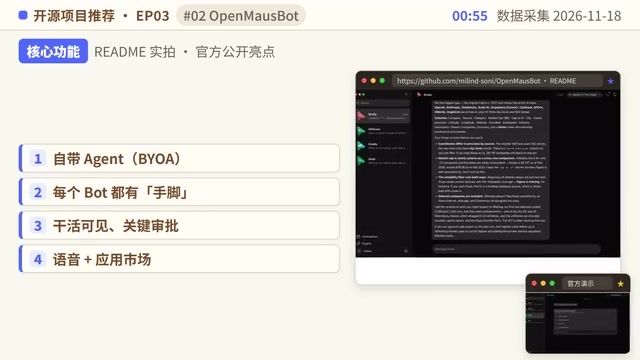
Each Bot also has its own cloud computer and over 500 connectable apps. The whole process is visible, and key actions trigger approval cards—it only continues once you nod. This design combines automation with human review, suited to those who want to form an AI employee squad using existing subscriptions and outsource the busywork. Compared with fully black-box Agent solutions, the visualization and approval mechanism reduce the risk of losing control.
Agent here refers to an AI program that can autonomously plan steps, call tools, read and write files, and continuously execute multi-turn tasks—not just Q&A chat. What distinguishes it from an ordinary chatbot is that it has "hands and feet": it can run command lines, access cloud computers, and connect to external apps. In multi-Agent collaboration, each Agent usually has its own role and context, with a scheduling layer assigning tasks. Precisely because Agents can actually modify systems and data, human confirmation mechanisms like approval cards become necessary—they intercept irreversible or high-risk actions and hand them to a human for judgment before proceeding.
Voice Studio: A Fully Local Voice Studio
The third project, Voice Studio, has the most stars this time—about 113,000 under the AGPL license—positioned as a fully local, open-source alternative to 11Labs. It supports 646 languages, and voice cloning needs only a reference audio clip to speak in a familiar voice.
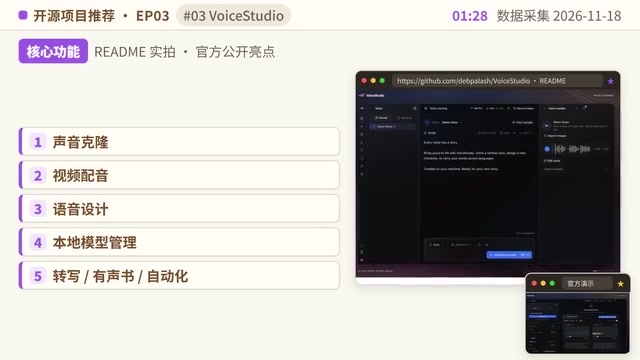
Functionally, it covers video dubbing, automatic duration alignment of translated audio to the original, voice design (generating voices directly from text descriptions), plus dictation transcription, audiobooks, and dozens of selectable engines—all running locally, no account required. For creators making podcasts, audiobooks, or multilingual videos, this is essentially an all-in-one toolbox. The AGPL license has some restrictions on closed-source commercial distribution, so check compliance requirements before use.
AGPL (GNU Affero General Public License) is a strengthened version of the GPL. Beyond requiring source disclosure when distributing software, it specifically stipulates that if users interact with a modified program over a network, the source code must also be provided to them. For a project like Voice Studio that could be packaged as an online service, this means offering it as a closed-source SaaS would trigger open-source obligations. By contrast, MIT and Apache 2.0 allow closed-source commercial use, retaining only a few conditions like copyright notices—hence the note in the article about differences in "commercial friendliness."
Diagram Design: Equipping Coding Agents with a Diagram Skill Pack
The fourth project, Diagram Design, has about 68,000 stars under the MIT license. It targets the long-standing problem that AI-generated diagrams are ugly: once installed, Claude Code and Codex draw architecture and flow diagrams in a consistent, editorial-grade style—thin lines, no shadows, a four-pixel grid, with accent color reserved for only the two most critical spots.
It offers 50 diagram types with light, dark, and fully editable variants, and can even redraw Mermaid and Draw.io diagrams in the same style. For podcasters and technical writers, install once and keep using it. The project's value lies in distilling design standards into skills that Agents can call, rather than relying on prompt luck every time.
Mesh Avatar Studio: Turn an Illustration into a Virtual Streamer
The fifth project, Mesh Avatar Studio, has about 2,400 stars under the MIT license. It turns a single illustration into a 2D virtual avatar that stands, blinks, speaks, and turns its head.
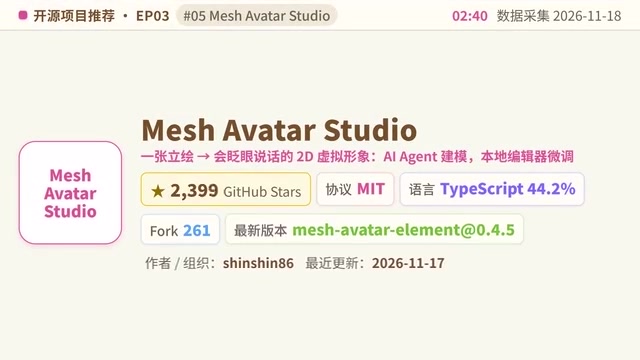
The workflow has four steps: feed the image to Claude Code or Codex to automatically split layers, build the skeleton, and review poses; fine-tune by dragging in a local editor; debug lip sync; finally drive it with the web-based Live2D (referred to as LiveEar in the original) via camera and voice, with a green-screen view for direct OBS streaming. Artists who want to become virtual streamers or add motion to their own characters should give it a try. The star count is modest, but the direction is clear and suited to niche scenarios.
Live2D is a technique that splits 2D illustrations into parts and uses mesh deformation to achieve natural motion, rather than simple frame-by-frame animation. Creation involves splitting the character into layers like hair, eyes, and body, binding bones and deformation parameters, then setting up action logic for blinking, lip sync, and breathing. At runtime, the camera captures the face and the microphone captures voice to drive parameter changes. The "automatic layer splitting and skeleton building" mentioned above is exactly about handing the most time-consuming manual rigging to a coding Agent, while the green-screen view makes it easy to key out the background in OBS and stream directly.
How to Choose Among the Five Projects
A quick recap: Strayta runs LLMs locally, OpenMouseBot assembles an AI squad, Voice Studio handles voice, Diagram Design handles diagrams, and Mesh Avatar Studio handles virtual avatars. All five repo addresses are in the original video description.
Looking at the trend, these projects all point in one direction: AI tools are evolving from cloud subscriptions toward localization, composability, and privacy first. LLM runtimes are lowering the hardware bar, Agent frameworks emphasize visualization and approval, and creation tools pursue out-of-the-box, all-in-one experiences. The licenses are mainly MIT and Apache, which are highly commercial-friendly; Voice Studio's AGPL requires extra attention. For users who want to control their own AI workflow, this combination is worth trying one by one.
One-line Summary
Five open-source projects with over 250,000 stars bring local LLMs, Agent teams, and creation tools back to your own machine.
Paragraph Summary
The article rounds up five open-source AI projects recommended by a Bilibili creator, totaling over 250,000 stars, all advocating that data never leaves your machine and privacy comes first. Strayta (~45.5K stars, MIT) lets users run LLMs locally without hassle and provides local backends for coding assistants like Claude Code and Codex via OpenAI/Anthropic-compatible interfaces, deploying full-size DeepSeek with just 12GB of VRAM. OpenMouseBot (~25K stars, Apache) embeds a multi-Agent team in the chat sidebar, with each Bot having a cloud computer and 500+ connectable apps, and key actions requiring human approval. Voice Studio (~113K stars, AGPL) is a local 11Labs supporting 646 languages, voice cloning, and dubbing alignment. Diagram Design (~68K stars, MIT) unifies Agent-generated diagram styles as a skill pack. Mesh Avatar Studio (~2,400 stars, MIT) turns an illustration into a drivable virtual streamer in four steps.
Related articles
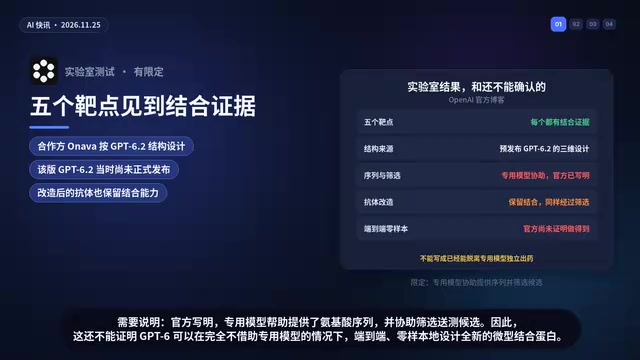
GPT-6 Designs Proteins, Claude Creations Become Apps with One Click, DeepMind Releases New Benchmark
OpenAI says GPT-6 can design protein 3D structures, Anthropic lets Claude creations install as desktop apps, DeepMind's HIP benchmark tests stability on simple questions, Google Workspace opens agent MCP interfaces.
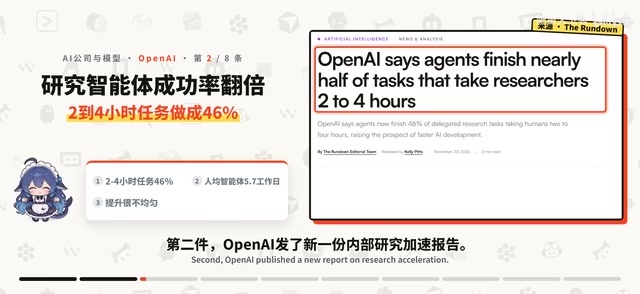
OpenAI Weekly Roundup: GPT-6.2 Rolls Out to ChatGPT, GPT-6 Designs Proteins
OpenAI's week: GPT-6.2 rolls out to ChatGPT, GPT-6 claims independent protein design, agent research share surges, perplexity proposed as a shared metric, and internal safety concerns surface.

Is the Crypto Industry About to "Turn Blue"? The Truth Behind Tech and Politics' Shifting Allegiances
Vergecast discusses whether the crypto industry will shift from the right to the Democrats, revealing the pragmatic nature of tech's politics and the costs of a crypto pivot.