Run Offline LLMs on Your Phone: Open-Source AI Agent Supports MCP and Autonomous Tasks

An open-source Android app combines offline local models with an autonomous Agent, supporting MCP protocol for remote PC and GitHub control.
This article introduces an autonomous AI Agent app running on Android devices, whose core selling point is the combination of "autonomy" and "offline." It includes an offline model library, automatically selects models based on phone RAM and processor, and enables GPU acceleration, switching to local models when disconnected. The app fully supports the MCP protocol, can connect to GitHub MCP servers and local PC tools, enabling cross-device operations such as mobile repository management, remotely opening Notepad, and playing YouTube songs. The Agent also uses files like soul.md, memory.md, and user.md for editable memory and persona settings, and can autonomously generate projects such as websites and games and save them locally. It also supports Telegram remote control, cron jobs, and image generation. The project is fully open source with a low installation barrier, but actual stability and security still need user verification.
One Phone, One Autonomous AI Agent
If you're still using separate AI apps for image generation, Q&A, and coding, it might be time to rethink: put all these capabilities into an Agent that can execute tasks autonomously, and let it run offline. According to a project demo shared on a YouTube channel, the author built an autonomous AI Agent running on an Android device, integrating offline models, MCP server connections, remote control, and project generation capabilities.
The core selling point of this Agent is the combination of "autonomy" and "offline." It can not only call cloud models to complete complex tasks when connected, but also switch to local models to continue working when disconnected. The author emphasizes that the app automatically detects the phone model and processor and enables GPU acceleration, so even a modest Acer tablet can run these offline models—though token generation speed will be slower.
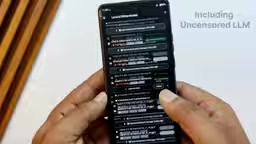
The app includes a rich offline model library. Users can choose a suitable model based on phone RAM and processor performance, with one-click download and one-click loading; GPU acceleration is handled automatically by the system. Switching between chat mode and Agent mode is also seamless.
MCP Protocol Bridges Phone and PC: From GitHub Queries to Opening Notepad
What truly sets this project apart from other AI apps is its full support for MCP (Model Context Protocol) servers. MCP is an open protocol that allows AI models to securely connect to external tools and data sources. In the demo, the author connected a GitHub MCP server and local PC tools.
In Agent mode, the author first asked "What is Reverse Engineering Anything GitHub?" and the Agent searched online and returned an accurate project description. Next, he asked the Agent to list the repositories with the most stars in his GitHub account. After the message was sent, the Agent immediately called the MCP tool, fetched the data, and returned the complete list. This means users can perform operations on GitHub repositories directly from their phone without opening a browser or computer.
A more intuitive demo came from local PC control. The author sent "Open Notepad on my PC," and Notepad instantly opened on the computer; then he sent "Play the song Closer on YouTube," and the Agent called the MCP tool, opened Chrome, and played the song.
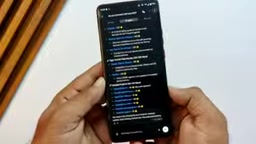
This cross-device control capability, combined with Telegram bridging, allows users to remotely control the Agent on their phone just like using Agents such as OpenClawAd or Hermes. The setup is not complicated: save the bot token to complete Telegram configuration, and the Agent's capabilities can be customized as needed.
MCP (Model Context Protocol) is an open-source protocol standard proposed by Anthropic in late 2024, aimed at establishing a unified connection between AI models and external tools and data sources. It uses a client-server architecture: the model side acts as the client initiating requests, while various tools (such as GitHub, local file systems, databases) are encapsulated as MCP servers that expose their functionality through standardized interfaces. Compared with traditional function calling, MCP's advantage lies in protocol-level decoupling—as long as a tool implements an MCP server, any Agent that supports the protocol can call it directly, without writing separate adapter code for each tool. This makes Agent capability expansion modular, and explains why this app can simultaneously connect to remote GitHub and local PC tools.
Self-Evolving Files and Persona Settings
The author specifically mentions a design he likes: the Agent's self-evolution feature. Similar to Hermes Agent, it maintains files such as soul.md, memory.md, and user.md, which users can even edit manually. In this way, different personas can be assigned to the Agent to suit different use cases.
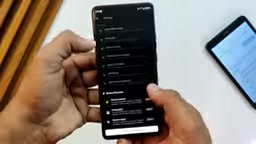
This "files as memory" approach makes the Agent's behavior auditable and adjustable, rather than black-box memory management. For users who want to deeply customize Agent behavior, this is far more flexible than closed apps.
Files such as soul.md, memory.md, and user.md are part of the "files as memory" paradigm that has become popular in Agent design in recent years. Among them, soul.md usually defines the Agent's core persona, behavioral guidelines, and tone style; memory.md records the long-term memory and experience the Agent accumulates during interactions; and user.md stores the user profile, preferences, and historical context. Unlike embedding memory in vector databases or model parameters, the advantage of this plain-text file approach is complete transparency: users can directly read, edit, and even version-control these files to precisely adjust Agent behavior. This pattern has been widely adopted in open-source Agent projects (such as OpenClaw and Hermes), making the Agent's "persona" and "memory" portable, auditable assets rather than a black box.
Generate Websites and Games with One Sentence
Project generation in Agent mode is another highlight. The author demonstrated the process of asking the Agent to create a website and save it to the Downloads folder: switch to Agent mode, describe the requirements, and the Agent autonomously completes the entire project, ultimately generating an HTML file in the Downloads directory that opens as a complete website. The author admits the result is not perfect because the prompt was very simple, but you can continue to have the Agent refine or modify it. If a GitHub MCP server is connected, the project can also be pushed directly to GitHub.
At the beginning of the video, the author also mentions that the game he is playing was generated by this Agent, and that it also built an e-commerce website for him. These cases show that once an Agent has tool-calling and file-system access capabilities, a phone can become a lightweight development environment.
Image Generation and Task Scheduling
For image generation, the app supports generating images in any style and in unlimited quantities. The author shows several images generated by the app and candidly admits that the quality is not flagship or top-tier, which is a downside. But its advantage is that it can generate "any type of image" with no filtering restrictions.
Task scheduling is an easily overlooked but very practical feature: the Agent can set reminders and cron jobs, supporting manual creation, editing, and deletion, or it can manage them autonomously.
cron jobs originate from the classic task scheduling mechanism in Unix/Linux systems, defining execution times through five fields: "minute hour day month weekday." For example, "0 9 * * *" means execution at 9 AM every day. In Agent scenarios, cron has been extended into a capability that lets the Agent autonomously manage periodic tasks: users can describe in natural language "summarize my GitHub notifications once a day," and the Agent converts it into a cron expression and registers it with the system scheduler. Unlike simple reminder features, cron tasks can trigger complete Agent workflows (such as calling MCP tools and generating files), giving the phone-based Agent continuous background execution capability—a key step toward an "autonomous digital assistant."
Open Source and Installation
The project is fully open source, with code hosted in the author's repository and installation packages available in the releases section. After installation, the first launch requires selecting a provider for Agent mode; the author recommends choosing free options such as Gemini, NVIDIA NIM, or Ollama. Local and offline models are configured in settings and can be used offline after one-click loading. The author also encourages students to use this project as a foundation for their graduation projects.
In terms of the tech stack, this project combines ideas from Gemini, Midjourney, Cloud MCP, local LLMs, OpenClaw-style Agents, and other tools. It does not invent every capability from scratch but integrates existing open-source components and protocols into a mobile container, lowering the barrier for ordinary users to access autonomous Agents.
Note that the above information comes from a single video source. The project's actual stability, compatibility across different device models, and the security of MCP servers still need to be verified by users themselves. At the end of the video, the author mentions that he is building a larger project based on "Reverse Engineering Anything GitHub," which is worth following.
Related articles

Gemini 4 Argon Hands-On: AI Builds Board Games, Constructs Temples, and Trains Robots Autonomously
Gemini 4 Argon hands-on roundup: AI autonomously builds a desk racetrack and temple in Blender, writes a ray tracing engine, trains a humanoid robot to sink 7 shots, plus API pricing and developer access.

The Magic Octagonal Coin: Why Only 9% of People Can Predict Its Flip?
Only 9% of people can correctly predict the Magic Octagon coin flip. This article explains its spatial rotation mechanism, common cognitive pitfalls, and a new hypothesis based on Relevance Theory, exploring the limits of human spatial reasoning.

Sam Altman: AI Is Entering the Era of Scientific Discovery — Math Breakthroughs Will Replicate in Biology and Energy
Sam Altman says AI is entering the era of scientific discovery — math breakthroughs will replicate in biology, materials science, and energy to help develop new drugs and energy sources.