Running DeepSeek V4.1 Flash Locally on Mac Studio: How Far Can Local LLMs Really Go?
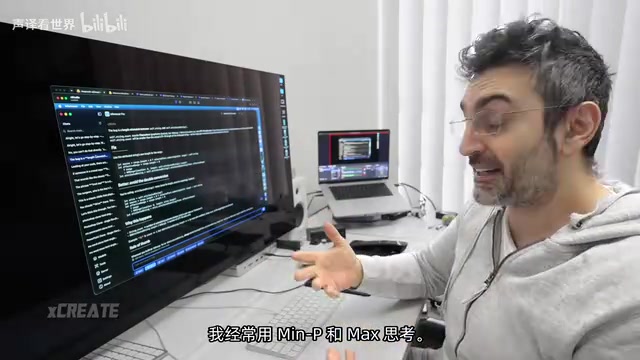
DeepSeek V4.1 Flash local benchmark: top-tier coding ability, but speed is the real bottleneck.
A creator ran a 24-hour stress test of quantized DeepSeek V4.1 Flash on an M3 Ultra Mac Studio with 512GB RAM. The ~55B parameter model introduces N-gram lookup tables and asymmetric activation, scoring 74 on Deep SWE — the first open-weight MIT-licensed model to do so, surpassing Opus 5.0 and GLM 5.3. Testing covered math reasoning, UI generation, and 3D game worlds. With thinking off, it quickly generates app mockups; complex 3D scenes and photo-realistic faces require thinking mode. At ~13 tokens/second locally, the tester used custom "thinking budgets" (1K–20K tokens) to balance quality and speed. Conclusion: impressive capability ceiling, but real bottlenecks remain before it becomes plug-and-play local AGI.
A 24-Hour Local Stress Test
The arrival of DeepSeek V4.1 Flash has prompted many developers to take a fresh look at what's possible with locally deployed large language models. One content creator ran an extended stress test on a Mac Studio with an M3 Ultra chip and 512GB of RAM, putting a quantized version of the model through its paces across math reasoning, logical common sense, productivity app generation, and even 3D game world building.
Worth noting upfront: the version tested prioritizes quality over speed — the model slightly exceeds 512GB, so roughly 90% of the weights had to be repacked and recompressed. This means the results reflect both the model's capability ceiling and the real-world constraints of running it locally — namely, it's slow.
According to the tester, DeepSeek V4.1 Flash has approximately 55 billion parameters and introduces a new architectural design. He considers this update closer to version 4.5 or even 5.0 rather than a minor revision. The original 1.5TB V4 Pro version has reportedly been retired in favor of this Flash release.
Architectural Simplification and the N-gram Mechanism
One of the most talked-about changes in this update is the introduction of an N-gram mechanism. The tester describes it essentially as a lookup table — when the model encounters content it has processed before, it can retrieve the result directly rather than regenerating it, improving efficiency.
Also noteworthy is the shift in activated parameters: only 8 billion parameters are activated during the prefill phase, while 16 billion are activated during decoding. This asymmetric approach to dynamic parameter activation raised an interesting question for the tester — does it affect output determinism? That's something that would require further experimentation to fully understand.
He also mentioned that the old compression absorber engine — which most existing implementations had gotten wrong — has been simplified in this version, retaining only CSA2. In his view, this simplification actually yields better results.
N-gram mechanisms have a long history in language modeling. Traditional N-gram models predict the next word by tracking the co-occurrence frequency of N consecutive words (or tokens), and were the dominant NLP approach before the deep learning era. Introducing an N-gram lookup table into a modern LLM is essentially a variant of Speculative Decoding — for frequently seen phrases or fixed collocations, the model can skip a full neural network forward pass and retrieve results from cache, reducing inference cost for those segments to near zero. This design is especially effective for code, template text, and repetitive documents, which contain many reusable fragments. The asymmetric design — 8B parameters in prefill and 16B in decode — follows the same logic: prefill is primarily about "understanding the input" and demands less parameter capacity, while decoding generates tokens one by one and requires stronger reasoning, hence more parameters. This kind of dynamic sparse activation is one of the core advantages of MoE (Mixture of Experts) architectures.
Benchmarks: Dominant Open-Source Performance
Based on the benchmark data presented, DeepSeek V4.1 Flash outperforms Opus 5.0 and GLM 5.3 across multiple evaluations. On a three-shot math problem, the base V4 improved from 56 points into the high range; Opus 5.0 scored 74, GLM scored 67, and V4.1 Flash also hit 74 — outright crushing V4 Pro's 62 points, which explains why the Pro version was retired.
Most impressive is its performance on Deep SWE (a software engineering coding benchmark). The tester emphasized this is the first open-weight model he's seen score 74 on Deep SWE, and it's under the MIT license. If the benchmarks hold up, it may be the best open-source coding model released to date.
He also offered a rational caveat: all tests run in loop frameworks involving temperature parameters, so the reliability of results depends on whether control conditions are consistent. Fortunately, the team ran the same methodology on the old V4 as well, so at least a comparable baseline exists.
Deep SWE (Software Engineering Benchmark) evaluates LLMs on real-world software engineering tasks sourced from actual GitHub issues. The model must autonomously locate bugs, generate patches, and verify them against unit tests — all within the context of a real code repository. Unlike simple code completion tasks, SWE-bench requires cross-file comprehension, debugging reasoning, and practical engineering skills, making it widely regarded as one of the most realistic coding evaluations available. A score of 74 means the model can produce test-passing patches for roughly 74% of real software bug-fixing tasks — a significant engineering achievement for a locally deployable open-weight model, and a key reason the tester calls it "the best open-source coding model to date." The MIT license means it can be freely used in commercial products without royalties, which is especially important for enterprise-level local deployment.
Temperature: The Nature of AI "Randomness"
During testing, the tester took the opportunity to explain the concept of temperature. Token generation is fundamentally the tokenizer's probabilistic prediction over candidate words. At temperature zero, the model consistently selects the highest-probability token; as temperature increases, the random number generator becomes more likely to pick low-probability or even poor tokens from a vast pool of candidates.
This partly explains why online chat versions and local versions behave differently. When testing a WinRT subscription question, the tester found that turning off thinking mode locally produced the correct answer — "subscription is a product Kind, not a Type" — while the online version misspelled it due to temperature settings. He half-jokingly noted that online services deliberately retain randomness to make AI feel more human and less like a cold database.
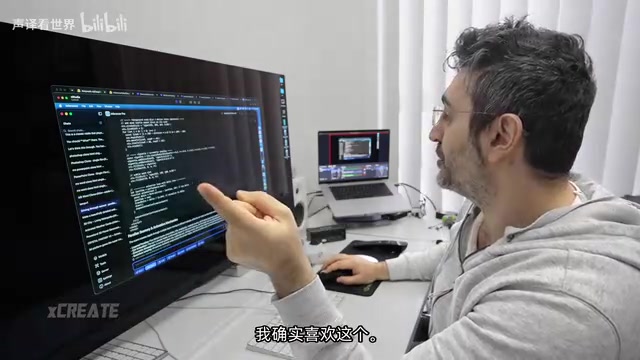
The Thinking Mode Trade-off and the "Thinking Limit" Technique
V4.1 Flash supports fully disabling thinking mode, which contrasts with GLM 5.3 — which cannot turn off thinking and requires medium-to-high reasoning to answer certain questions correctly. To keep things usable given the slow local inference speed, the tester developed a "thinking limit" technique.
The model has built-in thinking levels ranging from off to low, high, and ultra-high, with the chat template essentially setting a pre-value from 0 to 100 (75 being ultra-high). His approach involves customizing the thinking limit — for example, under "medium max thinking," only allocating the model a budget of 1,000 tokens for reasoning. This preserves the quality boost from inference while avoiding the agonizing wait of 50,000-token reasoning chains.
He specifically flagged the "reasoning leak" problem — the model may continue reasoning outside the thinking tag after exiting it, so careful control over when to exit is required. In a nuclear explosion generation comparison, a 1,000-token budget produced only a small fountain effect, while increasing to 10,000 or even 20,000 tokens yielded a noticeably more complete mushroom cloud — results he felt even surpassed the online version running full maximum thinking.
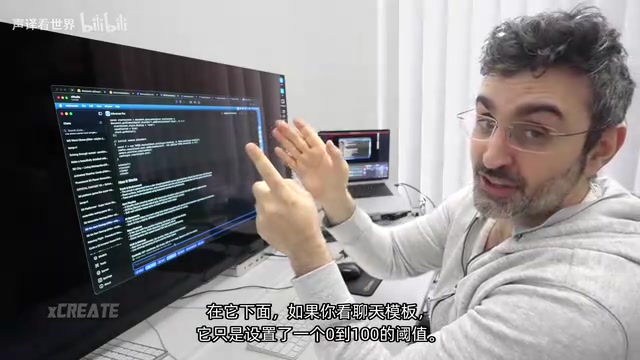
Reasoning leak is a common pitfall in deploying Chain-of-Thought models. Models that support thinking mode typically use special tags (e.g.,
<think>...</think>) to delineate the reasoning process from the final output. In practice, however, models sometimes continue outputting intermediate reasoning steps implicitly after the closing tag, polluting the final answer with "thought residue" — wasting token budget and potentially breaking downstream parsing. The thinking budget concept imposes a hard cap on the number of reasoning tokens: by constraining how many tokens the model can generate inside the thinking tag — via prompt or sampling parameters — you can find a controllable trade-off between reasoning quality and speed. This technique is especially valuable in slow local inference scenarios. While cloud-based services can run full chain-of-thought with hundreds of billions of parameters, local inference at ~13 tokens/second means a complete "ultra-high thinking" pass could take tens of minutes. Budget limiting is the key engineering tool that keeps models interactively usable on consumer hardware.
Productivity and 3D Generation: Where the Limits Are
In the app generation segment, the model produced rough but recognizable Photoshop, PowerPoint, and Word-style interfaces using around 4,000 tokens with thinking mode off — the tester was genuinely impressed by the floating window UI aesthetics. Canvas animations, a flight simulator, motorcycle racing, and a zombie FPS game all came out fairly well.
But the weaknesses were equally apparent. The 3D city generation lacked details like airports and train stations, and vehicles exhibited lateral movement bugs; the GTA-style scene crashed outright; photo-realistic faces with thinking mode off produced rough results, requiring maximum thinking mode to generate anything refined. The tester acknowledged that for more complex prompts, thinking mode off simply isn't up to the task — the model's true capabilities only emerge when thinking is enabled.

Has Local AGI Actually Arrived?
Taken together, DeepSeek V4.1 Flash demonstrates impressive coding and generation capabilities when run locally in quantized form. Its MIT license combined with a top-tier Deep SWE score makes it an extremely compelling open-source coding model.
But claims of "local AGI" deserve some skepticism. At roughly 13 tokens per second locally, high-quality generation depends on thinking mode — which is painfully slow. Turning off thinking is faster but frequently stumbles on logical reasoning and complex 3D scenarios. What a cloud supercomputer can accomplish in 146 seconds with full thinking mode can only be approximated locally through engineering workarounds like thinking limits.
In other words, the model's capability ceiling is genuinely exciting — but extracting that performance on consumer hardware without degradation still runs into clear speed and resource bottlenecks. For developers willing to dig into quantization and thinking mode tuning, this is a powerful tool worth serious exploration. But "plug-and-play local AGI for everyone" is still a considerable engineering distance away.
Related articles
Letting AI Build AI Tools: A 7-Day, 31-Commit Bootstrapping Post-Mortem
An engineer ran a fully autonomous AI-builds-AI pipeline for 7 days, 31 commits, with a 1-in-6 success rate. This post-mortem covers 5 failure types, 11 structural rules, and how every mistake became a permanent immunity gate.
Building an AI-Powered E-Commerce Business from Scratch: A Real-World Account of Multi-Agent Architecture for Print-on-Demand
A blogger builds a print-on-demand e-commerce company from scratch using AI agents — documenting specialized Agent profiles, GPT-5.6 vs Claude Fable multi-model orchestration, and reusable skill accumulation.

AI Agent Earns $10K in One Week: 3 Key Upgrades Explained
A blogger shares how he earned $10K in a week with an AI Agent — not by adding more skills, but through verification, approval gates, and subagents to raise trust and enable true automation.