Running Full iOS 16.5 Firmware on Android Devices: Technical Demo or Marketing Gimmick?

A Hacker News post claims Android can run full iOS 16.5 firmware; technical analysis suggests it is more likely a web interface simulation.
A Hacker News post claiming full iOS 16.5 firmware can run on Android devices received 315 upvotes and 120 comments, sparking heated discussion. From a technical perspective, truly running iOS firmware would require overcoming Apple's signature verification, Secure Enclave interaction, and hardware binding, making it nearly impossible on non-Apple hardware. Given clues such as the project name containing "web" and being hosted on Vercel, the more reasonable judgment is that the project simulates the iOS interface and some interactions via web technologies rather than executing firmware. The article notes a possible gap between the title's wording and actual capabilities, advises users to verify personally, acknowledges the educational value of such projects for understanding mobile OS interactions, and warns against marketing-style exaggeration.
A "cross-system" experiment that sparked heated discussion
Recently, a Hacker News post titled "Run full iOS 16.5 firmware on Android Devices" received 315 upvotes and 120 comments, drawing considerable attention. The post points to a website called hackios-web.vercel.app, which claims it can run the full iOS 16.5 firmware on Android devices.
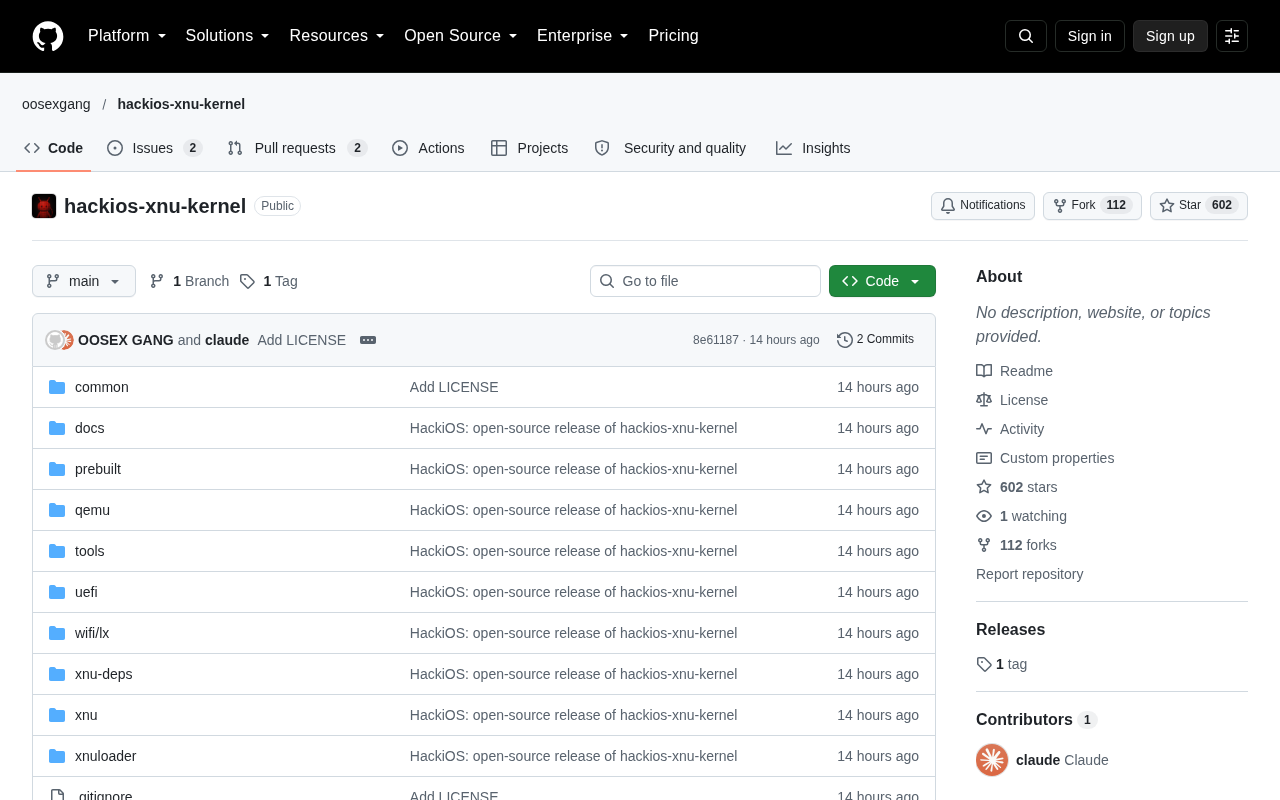
From a technical standpoint, this claim alone is eye-catching—iOS and Android are two operating systems with completely different architectures, kernels, and security models. "Running full iOS firmware" on Android hardware means crossing a huge technical divide. For this reason, the community's first reaction was generally skepticism: is this some kind of virtualization/emulation solution, or merely a web-level interface simulation?
Technical feasibility analysis: the boundary between virtualization, emulation, and interface imitation
How hard it is to truly run iOS firmware
iOS firmware is deeply tied to Apple's A-series chips, including proprietary boot chains, Secure Enclave interactions, and signature verification mechanisms. To run full iOS firmware on non-Apple hardware, you would theoretically need full hardware virtualization support and would have to bypass Apple's signature verification—the latter is extremely challenging both legally and technically.
Secure Enclave is a separate coprocessor integrated into the SoC since Apple's A7 chip. It runs its own microkernel (sepOS) and handles sensitive information such as fingerprint and Face ID data and device encryption keys. It communicates with the main processor through a dedicated mailbox mechanism and has its own independent boot ROM and signature verification process. Even if the main system is fully compromised, it cannot directly read the keys stored inside the Secure Enclave. This means that on non-Apple hardware, not only is this physical module missing, but the entire supporting encryption key system is missing as well—even if one managed to load the iOS kernel, the steps involving key management and secure boot would fail immediately. This is a hard barrier that pure software emulation cannot overcome.
The Boot Chain is the series of trusted stages an iOS device goes through from power-on to system startup, including Boot ROM, iBoot, and the kernel cache in sequence, with each stage verifying the Apple signature of the next image. The root public key in the Boot ROM is burned into the chip and cannot be changed, forming the root of trust. Any firmware not signed by Apple cannot pass verification, and the device will stop in recovery mode. This mechanism determines that running iOS firmware on non-Apple hardware requires either fully emulating the entire boot chain and forging signature verification (technically infeasible because the private key is missing) or completely bypassing the boot process—and the latter means it is not "running iOS firmware" at all.
More likely implementation path
Considering the "web" in the project name and the fact that it is hosted on Vercel, a more reasonable inference is that the project uses web technologies to simulate the iOS 16.5 interface and some interactions, rather than actually executing iOS firmware. Such "web-based iOS" projects are not uncommon in the open-source community and are usually used for UI research, educational demonstrations, or front-end technology showcases.
One additional note: the original material provided only a link and community discussion data, without specific technical documentation for the project. Therefore, judgments about its implementation principles can only be inferred from its naming and hosting method, and uncertainty remains.
Web front-end simulation of the iOS interface is commonly done by recreating iOS visual elements and transition animations with HTML/CSS/JavaScript—for example, imitating the status bar, Control Center, and Settings app layout, and using CSS animations to simulate page pushes, modal pop-ups, and other interaction effects. Such projects usually do not involve any system calls or instruction execution; they are essentially high-fidelity UI prototypes rendered in a browser. Some projects use Web Components or front-end frameworks to organize component structures so as to reproduce the appearance of multiple system apps. Because the runtime environment is the browser sandbox, it cannot access underlying hardware or execute ARM instructions, which is completely different at the technical level from "firmware running."
Community reaction: excitement and skepticism coexist
According to Hacker News data, the post received 315 points and 120 comments, showing that it successfully aroused the curiosity of the technical community. Judging from the传播 effect of the title, the phrase "full iOS 16.5 firmware" is highly impactful and easily brings to mind a true system-level port.
However, high attention also means high scrutiny. In technical communities like Hacker News, users tend to quickly break down a project's actual capabilities and distinguish the essential difference between "interface simulation" and "firmware running." Such discussion itself is also a stress test for the project team: if the actual capabilities do not match the title, community feedback is usually quite direct.
Because the specific contents of the comment section are unavailable, this article cannot present detailed viewpoints from the community discussion; this point needs further verification after additional information is available.
The value and risks of such projects
Value: an experimental platform that lowers the barrier to understanding
Regardless of the implementation method, such projects have some educational value for ordinary users in understanding mobile operating system interfaces and interaction logic. If the project does involve virtualization or emulation technology, its engineering approach is also worth developers' reference.
Risk: the gap between the title and the substance
The biggest problem lies in the accuracy of the wording. "Running full firmware" and "simulating the interface" are technical achievements of completely different orders of magnitude. If the former were true, it would be a major breakthrough; the latter is closer to a front-end demo. For users, maintaining caution and personally verifying the project's actual functions is more important than trusting the title.
Conclusion
This hot Hacker News post reflects the technical community's continued interest in cross-system experiments, and it also reminds us to maintain technical rationality when facing exaggerated titles. Before more detailed project documentation and community verification are available, it is a safer judgment to regard the project as a technical demo worth watching rather than an already achieved system-level port.
Related articles

Workbuddy for Absolute Beginners: How a Desktop AI Agent Fits Into Real Workflows
A beginner's guide to the Workbuddy desktop AI agent: installation, claiming credits, file management, and building automated workflows—compared with CodeX for fit and cost, helping professionals shift from AI question-askers to AI managers.

OpenAI's New Agent Stack: Computer Use, Decisions API, and Ultra-Fast Workflows
OpenAI Dev Day unveiled a new agent stack: Computer Use outperforms humans, Decisions API delivers ultra-low-latency classification via Luna, Agents API opens the same Computer Use capabilities, and GPT-6.1 Sol costs only one-seventh of Astra. Core updates, benchmark data, and developer insights.

Liang Wenfeng Open-Sources DeepInfo Inference Framework, Takes On U.S. Ban
DeepSeek open-sources its DeepInfo inference framework after its models, featuring GPU/CPU cross-pipelining, small-model prediction with large-model verification, and full Huawei Ascend and NVIDIA chip support—facing the U.S. federal ban head-on. This article analyzes its significance for AI deployment and open-source strategy.