Russia's Plague Lab Scare: The Real Threat Isn't the Outbreak Itself

Russia's plague lab incident exposes a deeper crisis: rapid global lab expansion with dangerously inadequate oversight.
A death near a plague research facility in Siberia has drawn public attention to laboratory safety. As a single incident, the direct threat is manageable — the site is remote, plague has limited transmissibility, and it responds well to antibiotics. But the deeper concern experts raise is structural: since COVID-19, the number of high-security labs worldwide has surged, with many new facilities built in countries lacking relevant experience, while no unified international oversight body exists and national standards vary widely. The solution isn't to ban dangerous pathogen research — which is essential for vaccine and treatment development — but to close the institutional gap by establishing cross-border audit mechanisms and unified safety standards before the next crisis arrives.
A woman died near a Russian government laboratory that researches plague, and the news quickly sparked urgent questions: What exactly happened there? Should ordinary people be worried? The answer may be more unsettling than the incident itself — the real danger isn't this isolated Siberian lab, but the severe regulatory lag behind the global proliferation of high-risk pathogen research facilities.
Is the Risk Being Overstated?
The laboratory is located in Siberia, where scientists are genuinely researching plague — a disease that killed millions in the Middle Ages and remains one of the most fear-laden words in the public imagination. Combined with Russia's long history of dangerous biological research and the ongoing controversy over whether COVID-19 may have originated from a lab accident, it's natural to wonder: is the next pandemic quietly brewing?

In practical terms, there's no need for immediate panic. The facility is extremely remote and isolated from densely populated areas; plague is far less transmissible than COVID-19; and crucially, when caught early, plague is fully treatable with antibiotics. In other words, as a single incident, it's unlikely to spiral into a global catastrophe.

Plague is caused by Yersinia pestis and historically manifested in three forms: bubonic, pneumonic, and septicemic. The 14th-century Black Death killed roughly one-third of Europe's population. Today, plague spreads mainly through infected flea bites; pneumonic plague can spread person-to-person via respiratory droplets, but far less efficiently than COVID-19. Aminoglycoside antibiotics such as streptomycin and gentamicin are highly effective against plague — WHO data indicates that when administered within 24 hours of symptom onset, the case fatality rate drops from an untreated range of 30%–100% to below 5%–10%. Russia has legitimate reasons to study plague: parts of Siberia remain natural reservoirs where Yersinia pestis persists in rodent populations, making surveillance and vaccine research genuinely relevant to local public health.
The Real Alarm: Lab Expansion Without Regulatory Parity
The reason experts are watching this incident so closely goes far deeper than a single lab accident. Since the COVID-19 pandemic, countries around the world have been accelerating the construction of high-security laboratories capable of handling extremely dangerous pathogens. This is an understandable defensive response — faced with unknown pandemic threats, nations want the capacity to study and respond to them.
The problem is that the growth in laboratory numbers has not been matched by a corresponding upgrade in regulatory frameworks. There is currently no unified international body responsible for auditing or inspecting these facilities, and oversight standards vary enormously from country to country. More troubling still, many of the newest labs are being built in countries that have never previously hosted such facilities — places that may lack the institutional experience and accumulated safety culture needed to operate them responsibly.
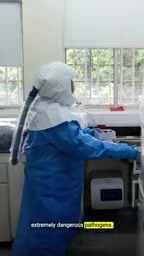
Looking at it from another angle: the number of weak links in global biosecurity is growing. A poorly managed lab poses risks that don't stop at national borders — if a pathogen accidentally escapes, it won't respect sovereignty. The fragmentation of oversight means that systemic risk keeps accumulating with no one coordinating the full picture.
High-security laboratories are typically classified by Biosafety Level (BSL), with BSL-4 being the highest tier, reserved for lethal pathogens with no approved vaccines or treatments, such as Ebola and Marburg viruses. In the early 2000s, there were roughly 20 BSL-4 labs worldwide; by the mid-2020s, that number had climbed to more than 60, spread across over 40 countries. Notably, even well-managed facilities have had incidents: the US CDC accidentally sent live anthrax to an ordinary lab in 2014, and the University of Texas Medical Branch at Galveston experienced multiple safety protocol violations in 2019. These cases demonstrate that lab accidents are not exclusive to countries with "weaker oversight" — they are a systemic probability issue that scales with the number of institutions involved.
The Goal Isn't to Stop Research — It's to Close the Governance Gap
To be clear, concern about laboratory safety is not the same as opposition to dangerous pathogen research. On the contrary, this kind of research is irreplaceable for developing vaccines in advance, creating treatment options, and preparing for future outbreaks. Banning such research is neither realistic nor wise — it would directly undermine humanity's ability to respond to the next pandemic.

The real question that needs answering is a different one: as more and more countries begin handling these dangerous pathogens, have we built sufficient safeguards to ensure that one accident doesn't become the next pandemic? The Russian incident deserves attention not because it is itself so dangerous, but because it acts as a mirror — reflecting the vast, unfilled gap in global biosecurity governance.
At the international level, the Biological Weapons Convention (BWC, in force since 1975) is the primary multilateral framework for biosecurity, but it lacks any mandatory verification mechanism — efforts to negotiate a verification protocol collapsed in 2001 following US opposition. The WHO has published a laboratory biosafety manual, but it is purely advisory and carries no legal force. Compared to the nuclear safety domain, where the IAEA holds independent inspection authority, biosecurity has no equivalent international body. This institutional vacuum means that whether a newly built BSL-4 lab in any given country is actually safe depends largely on that country's self-reporting and voluntary compliance — with no effective external verification.
A Rational Perspective for the General Public
For ordinary people, the significance of this story isn't to generate fear — it's to understand where the real risk actually comes from. The direct threat from any single incident is limited. But when high-risk laboratories multiply globally while unified oversight remains absent, the cumulative probabilistic risk is the genuine long-term danger.
Biosecurity is fundamentally a global public governance challenge. It calls for cross-border auditing mechanisms, unified safety standards, and capacity assessments paired with experience-sharing for newly established labs. Proactively closing these gaps before the next crisis hits is far more valuable than asking "what exactly happened?" after the fact.
Related articles

Understanding DeepSeek in 3 Minutes: The Rise from a Quant Hedge Fund to an Open-Source AI Leader
DeepSeek's history in 3 minutes: from High-Flyer Quant's compute build-up to V2's MLA inference cost cuts, V3's $5.576M training bill, R1's open-source global shock, and V4 with a $7B Series A.

Local Creative Writing Model Showdown: Fine-tuned Qwen3.8 27B Wins, DeepSeek v4.1 Underwhelms
Bilibili creator tests seven local creative writing models: Hemingway and HumanLike Chat based on Qwen3.8 27B perform best, DeepSeek v4.1 is plain, Dongfang Shuo ranks last with confused characters. Includes three test prompts, scores, and usage advice.

Liang Wenfeng's Three Big Bets: Why Did DeepSeek Open-Source Its 82% Gross Margin?
Why did DeepSeek open-source DeepInfer, its 82% gross margin inference framework, and then launch a hundred-billion funding round? An analysis of Liang Wenfeng's three big bets and the open-source strategy.