Russian Handwritten Math Dataset: 50 Free Sample Problems and a $45,000 Commercial Version

A Russian handwritten math dataset is on Hugging Face with a free 50-problem sample; the full 1,740-problem version costs $45,000.
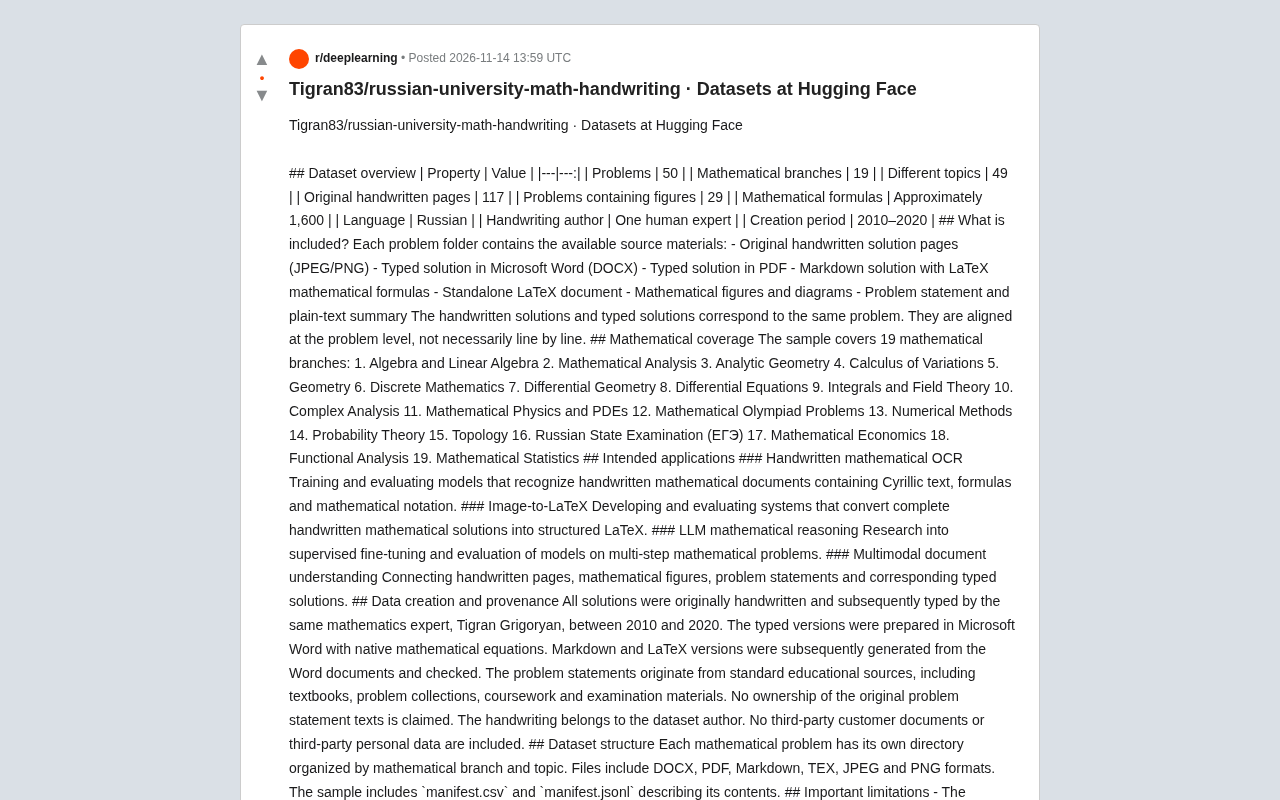
A dataset called Tigran83/russian-university-math-handwriting has appeared on Hugging Face, focusing on recognition and reasoning of Russian handwritten math documents. The free sample contains 50 problems covering 19 branches, 49 topics, and 117 handwritten pages, with handwritten images and Word/PDF/Markdown/LaTeX support. The full commercial version contains 1,740 problems, 3,450 handwritten solution pages, 50,603 formulas, and 927 figures, priced at $45,000 with branch-by-branch purchasing. Target applications include handwritten math OCR, image-to-LaTeX, LLM math reasoning fine-tuning, and multimodal document understanding. The data is Russian-only, handwritten and typed versions are aligned by problem rather than line by line, problem texts come from third-party educational materials, and commercial use requires attention to copyright boundaries.
As AI models race to conquer mathematical reasoning, high-quality training data is often scarcer than model architecture. A dataset called Tigran83/russian-university-math-handwriting has appeared on Hugging Face, specifically targeting the recognition and reasoning of Russian handwritten mathematical documents. It offers a free evaluation sample of 50 problems while selling a complete commercial version containing 1,740 problems, priced at $45,000.
Dataset Overview: A Small but Focused Evaluation Sample
According to the dataset page, the free sample contains 50 math problems covering 19 branches of mathematics and 49 distinct topics, totaling 117 pages of original handwritten pages, of which 29 problems include figures, with roughly 1,600 mathematical formulas in total. All handwritten content comes from a single human expert, created between 2010 and 2020, in Russian.
Each problem's folder contains supporting materials in multiple formats: original handwritten solution pages (JPEG/PNG), typed Microsoft Word solutions (DOCX), PDFs, Markdown documents with LaTeX formulas, standalone LaTeX documents, as well as math figures and plain-text summaries of problem statements. The handwritten and typed versions are aligned by problem, not required to correspond line by line—this design is friendly enough for training image-to-text mapping, but it also means fine-grained line-level alignment tasks require additional processing.
Image-to-Text Mapping and Line-Level Alignment: Image-to-text mapping refers to a model learning to convert the visual content of an entire handwritten page into the corresponding text sequence, typically supervised at the page or problem level without requiring pixel-level or line-level one-to-one correspondence. Line-level alignment requires each line in the handwritten image to precisely match each line in the transcribed text, commonly used for layout analysis, line segmentation, and fine-grained OCR evaluation. This dataset pairs by problem rather than line by line, meaning it is suitable for training whole-page-to-text generative models, but if used for line detection or reading-order recovery tasks, line-level annotations must be generated additionally through layout analysis or forced alignment algorithms.
Breadth Covering 19 Branches of Mathematics
The sample's mathematical coverage is quite broad, ranging from algebra, linear algebra, mathematical analysis, and analytic geometry, to variational calculus, differential geometry, differential equations, complex analysis, mathematical physics and partial differential equations, and further to topology, functional analysis, numerical methods, probability theory, and mathematical statistics. It also includes discrete mathematics, integration and field theory, mathematical olympiad problems, the Russian Unified State Exam (ЕГЭ), and mathematical economics.
This breadth is valuable for evaluating a model's generalization ability—the model cannot get by merely relying on common symbol patterns from calculus or linear algebra; it must genuinely handle the less common notation and expression conventions found in topology or functional analysis.
Four Target Application Scenarios
The dataset page explicitly lists four directions. Handwritten math OCR is the foremost use: training and evaluating models capable of recognizing handwritten documents containing Cyrillic text, formulas, and mathematical notation. Second is image-to-LaTeX conversion, requiring systems to convert complete handwritten solutions into structured LaTeX code. Third is LLM mathematical reasoning, usable for supervised fine-tuning of models and evaluation on multi-step math problems. Fourth is multimodal document understanding, connecting handwritten pages, math figures, problem statements, and their corresponding typed solutions.
These four scenarios point to the same pain point: existing OCR and multimodal models often perform unreliably when handling handwritten mathematical content in non-Latin character systems. Russian handwriting combined with mixed mathematical symbols poses a double challenge to recognition pipelines.
Recognition Challenges of Mixed Cyrillic Letters and Mathematical Symbols: Cyrillic and Latin letters share many visually similar but differently encoded characters (such as the Russian "А" and the Latin "A"), which OCR models easily confuse. Mathematical symbols, meanwhile, contain extensive structured two-dimensional layouts (fractions, superscripts and subscripts, radicals, matrices), whose recognition depends not only on character classification but also on layout structure and grammatical relationships. When the two are mixed, models must simultaneously handle character set expansion, font style differences, and formula structure parsing, causing existing OCR pipelines—predominantly Latin-character-based—to drop in accuracy on Russian handwritten mathematical documents.
Data Sources and Copyright Boundaries
All solutions were originally handwritten, then typed up by the same mathematical expert, Tigran Grigoryan, between 2010 and 2020. The typed versions were made using Microsoft Word's native equation editor, and the Markdown and LaTeX versions were generated from the Word documents and verified. Problem statements come from standard educational sources, including textbooks, problem collections, coursework, and exam materials; the dataset author does not claim ownership of the original problem texts. The handwritten content belongs to the author himself and contains no third-party client documents or third-party personal data.
Microsoft Word Native Equation Editor and LaTeX Conversion: Word's native equation editor (OMML) stores formulas using linear formats and structured markup, which differs from LaTeX's syntax system. Generating Markdown and LaTeX versions from DOCX typically requires OMML-to-LaTeX conversion tools or manual verification; during conversion, symbol mapping errors, lost superscripts/subscripts, or distorted fraction structures may occur. The dataset author states that the conversions were verified, but users should still be aware that subtle differences may exist between format versions, especially in complex formulas or custom notation.
Limitations to Note
The dataset page candidly lists several limitations. The data is Russian-only; handwritten and typed versions are paired by problem rather than line by line; the resolution and handwriting style of handwritten pages may be inconsistent; the sample is for evaluation and research only and may not be redistributed; some problem statements originate from third-party educational materials. These limitations mean that directly using it as training data for commercial products carries compliance risks, especially since copyright ownership of the original problem texts does not rest with the dataset author.
Differences Between the Free Sample and Commercial Version
The free repository provides only the 50-problem evaluation sample, governed by the terms of SAMPLE_LICENSE.md, and does not permit unrestricted redistribution or use for commercial training. The complete commercial dataset contains 1,740 math problems, 3,450 pages of handwritten solutions, 50,603 mathematical formulas, and 927 math figures, covering 19 branches and 127 topics, with a data size of approximately 2.2GB, in formats including DOCX, PDF, Markdown, LaTeX, JPEG, and PNG.
The complete dataset is priced at $45,000, and individual math branches can also be purchased separately. The commercial license is a non-exclusive AI training and evaluation authorization, permitting commercial model deployment and release of trained model weights, but not redistribution of the raw data. For research labs or OCR development teams needing Russian handwritten math data, this is a choice that requires weighing costs: the sample is sufficient for feasibility validation, but actual large-scale training requires payment.
The dataset author, Tigran Grigoryan, is from Armenia and offers this dataset as an individual entrepreneur. He welcomes contact from AI companies, OCR developers, research labs, and universities regarding commercial licensing, larger data volumes, or custom subsets.
One-line Summary
A Russian handwritten math dataset is listed on Hugging Face with a free 50-problem evaluation sample and a full version of 1,740 problems for $45,000.
Paragraph Summary
A dataset called Tigran83/russian-university-math-handwriting has appeared on Hugging Face, focusing on recognition and reasoning of Russian handwritten mathematical documents. The free sample contains 50 problems covering 19 math branches, 49 topics, and 117 handwritten pages, providing handwritten images and supporting formats including Word, PDF, Markdown, and LaTeX. The complete commercial version contains 1,740 problems, 3,450 pages of handwritten solutions, 50,603 formulas, and 927 figures, priced at $45,000, with branch-by-branch purchasing available. Target applications include handwritten math OCR, image-to-LaTeX, LLM math reasoning fine-tuning, and multimodal document understanding. The data is Russian-only, handwritten and typed versions are aligned by problem rather than line by line, problem texts come from third-party educational materials, and commercial use requires attention to copyright boundaries.
Related articles
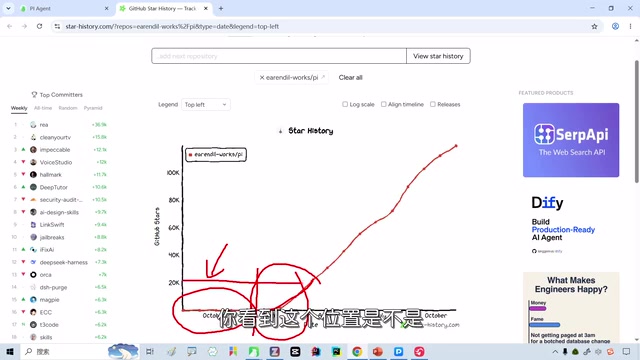
Why Pi Agent Doesn't Compete on Features: A Minimalist Kernel and Extensible Design Explained
Why does Pi Agent gain high attention with fewer features? This article analyzes its minimalist kernel and extensible design philosophy, exploring how MCP, Skills, and custom plugins give developers autonomy and enable long-term project memory.
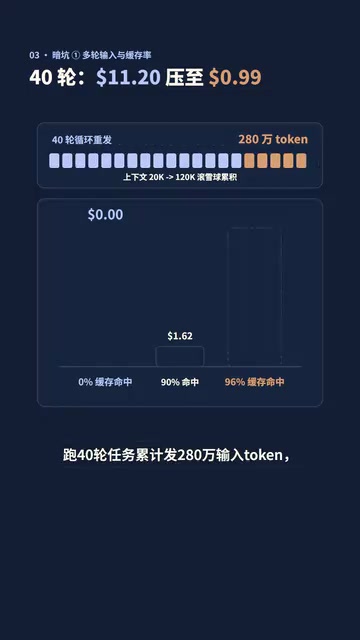
Claude Code Cost-Saving Guide: Four Hidden Pitfalls and Three-Layer Cost Optimization
Claude Code bills still soaring after Opus 5.5? This article breaks down four money-leaking pitfalls from official cost manuals: cache cliffs, runaway sub-agents, High-tier premiums, and inefficient output, plus a three-layer ledger optimization plan with measured cost data.
Olares One Review: Hands-On with a Local AI Server — Is $5,000 Worth It?
Olares One personal AI server review: RTX 5090 + 96GB RAM, phone-app-guided setup, browser desktop, running Ollama local LLMs, ComfyUI image generation, and the Hermes AI assistant. At $5,000, it suits heavy AI users and privacy-focused data sovereignty seekers.