Rustuna Released: Rewriting Optuna in Rust for Performance and Security Gains
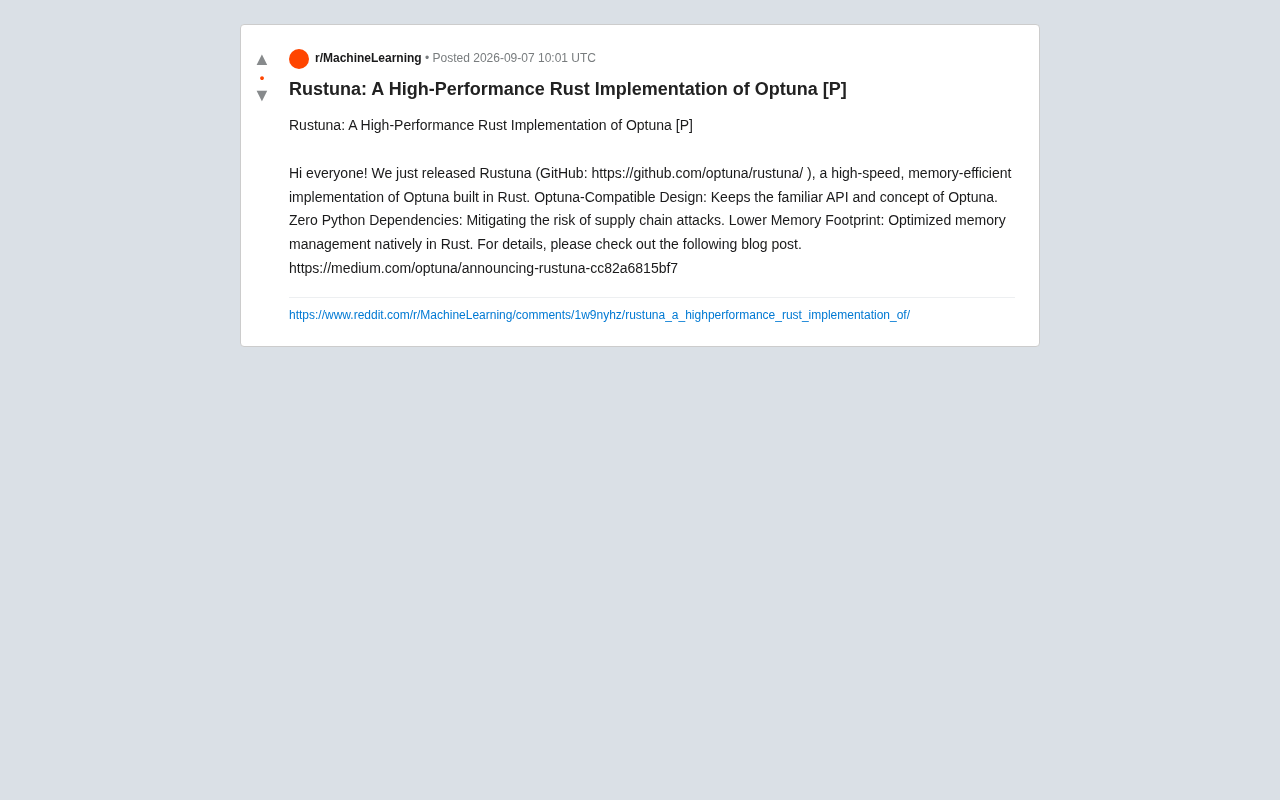
Rustuna: Rust-powered hyperparameter optimization with full Optuna compatibility and enhanced security
Rustuna is a Rust reimplementation of the popular Optuna hyperparameter optimization framework. It maintains complete API compatibility while eliminating Python dependencies to strengthen supply chain security. Leveraging Rust's memory safety and performance characteristics, Rustuna delivers improved execution speed and reduced memory footprint for ML workloads.
Rustuna: The Rust Revolution in Hyperparameter Optimization
The Optuna team recently announced the official release of Rustuna, a Rust implementation of the renowned hyperparameter optimization framework Optuna. This project aims to provide machine learning researchers and engineers with a more efficient and secure hyperparameter tuning tool by leveraging Rust's performance advantages and memory safety features.
Background on the Optuna Framework
Optuna is a hyperparameter optimization framework open-sourced by Japan's Preferred Networks in 2018, which quickly became one of the most popular AutoML tools in the machine learning field. Hyperparameter optimization refers to the process of automatically searching for the best configuration parameters of machine learning models, such as learning rate, batch size, number of network layers, etc. Unlike parameters learned during model training, hyperparameters must be set before training, and their selection directly affects model performance.
Optuna's core innovation lies in its "Define-by-Run" API design, which allows users to dynamically define the search space in code rather than declaring all parameters upfront. It implements multiple advanced optimization algorithms, including TPE (Tree-structured Parzen Estimator), CMA-ES, and Grid Search, and significantly improves search efficiency through a pruning mechanism that terminates unpromising trials early. As of 2024, Optuna has garnered over 10,000 stars on GitHub and is widely used in both academic research and industrial production environments.
As an important development in the open-source community, Rustuna's release marks a trend toward lower-level, higher-performance evolution in the machine learning toolchain. This initiative is not merely a technology stack migration, but a deep exploration of the balance between performance, security, and maintainability in modern software engineering practices.
Core Features: Dual Guarantees of Compatibility and Performance
Backward-Compatible API Design
Rustuna's most notable feature is maintaining fully compatible API design with the original Optuna. Users familiar with Optuna can seamlessly migrate to Rustuna without learning new concepts and interfaces. This design philosophy reflects the development team's emphasis on user experience—technology upgrades should not become usage barriers.
For teams already using Optuna in production environments, the compatibility design greatly reduces migration costs. Existing hyperparameter search scripts and optimization workflows can be directly reused, simply by replacing the underlying implementation to enjoy Rust's performance improvements.
Zero Python Dependencies Security Strategy
Rustuna adopts a zero Python dependencies architecture design, a decision directly addressing supply chain security issues. In recent years, the Python ecosystem has frequently experienced security incidents involving malicious injection of dependency packages, from typosquatting attacks to dependency confusion vulnerabilities—these risks pose substantial threats to enterprise-grade applications.
Supply Chain Security Threats Explained
Software supply chain attacks refer to attack methods where attackers affect downstream users by infiltrating dependency packages, showing an upward trend in recent years. The Python ecosystem has become a primary attack target due to its openness and popularity.
Typosquatting is the most common attack technique, where attackers register malicious packages with names similar to popular packages (such as writing 'requests' as 'request'), exploiting developers' spelling errors for propagation. In the 2022 ctx package incident, attackers hijacked a package with hundreds of millions of downloads, stealing sensitive information like AWS keys.
Dependency Confusion attacks exploit vulnerabilities in package manager resolution mechanisms. When enterprises use both private and public sources simultaneously, attackers can publish malicious packages with the same name but higher versions on public sources, causing build systems to incorrectly download them. In 2021, security researcher Alex Birsan successfully infiltrated the internal systems of 35 tech giants including Apple and Microsoft using this method.
Although PyPI continues to strengthen security measures, defense remains challenging due to the ecosystem's complexity (a project may indirectly depend on hundreds of packages) and relatively low-automation review mechanisms. Using languages like Rust with simpler dependency trees and stricter compile-time checks can fundamentally reduce the attack surface.
By building entirely in Rust, Rustuna significantly simplifies the dependency tree, reducing potential attack surfaces. While Rust's package manager Cargo and the crates.io ecosystem also face security challenges, its static type system and memory safety guarantees provide an additional protective layer at the language level.
Native Memory Efficiency Optimization
Rust Language Features Analysis
Rust is a systems programming language whose development Mozilla initiated in 2010, with version 1.0 released in 2015. Its core design goal is to provide C/C++ level performance while guaranteeing memory safety and thread safety at compile time through an innovative Ownership System.
The core of the ownership system includes three rules: each value has a unique owner, the value is freed when the owner leaves scope, and safe reference passing is achieved through the Borrowing mechanism. This allows Rust to avoid common memory errors such as null pointer dereferencing, data races, and memory leaks without relying on garbage collection.
Rust's Zero-Cost Abstractions philosophy means that high-level abstractions don't incur runtime overhead—the compiler optimizes them into equivalent low-level code. Combined with a powerful type system and pattern matching, Rust provides the expressiveness of modern programming languages while maintaining near-C language performance. In recent years, Rust has experienced rapid growth in systems software, WebAssembly, embedded development, and cloud infrastructure, and has been voted the "most loved programming language" in Stack Overflow developer surveys for multiple consecutive years.
Rust's ownership system and zero-cost abstractions give Rustuna natural advantages in memory management. Compared to Python's garbage collection mechanism, Rust determines memory allocation and deallocation timing at compile time, avoiding runtime performance overhead and unpredictable memory spikes.
This is particularly critical for scenarios requiring large-scale hyperparameter searches. When running hundreds of trials simultaneously, lower memory footprint means being able to parallelize more optimization tasks under the same hardware conditions, directly translating to faster experimental iteration speeds.
Technical Implementation and Performance Expectations
Hyperparameter Optimization Algorithm Principles
The core challenge of hyperparameter optimization is finding optimal solutions in high-dimensional, non-convex, computationally expensive black-box functions. Common algorithms include:
TPE (Tree-structured Parzen Estimator) is a Bayesian optimization-based method that constructs two probability models representing parameter distributions corresponding to "good results" and "bad results," then maximizes their ratio to select the next trial point. Compared to traditional Gaussian processes, TPE better handles high-dimensional and conditional parameter spaces.
CMA-ES (Covariance Matrix Adaptation Evolution Strategy) is representative of the evolution strategy family, maintaining a multivariate normal distribution to represent the search distribution, adjusting the mean and covariance matrix based on excellent individuals each iteration. It's particularly suitable for continuous parameter optimization and has strong robustness to noise.
The pruning mechanism is an important innovation of Optuna. The Median Pruning algorithm terminates trials that are significantly worse than average by comparing a current trial's intermediate results with the median performance of historical trials at the same step. This is especially important in deep learning scenarios, where training one epoch may take hours, and early stopping can save significant computational resources.
Multi-objective Optimization is used to simultaneously optimize multiple conflicting metrics (such as accuracy and inference latency), returning a Pareto optimal solution set. Optuna implements classic multi-objective evolutionary algorithms like NSGA-II, allowing users to make trade-offs between precision and efficiency.
From the project's GitHub repository, it's clear that Rustuna is not a simple language port, but has been deeply optimized for the Rust ecosystem. Rust's concurrency model and async runtime provide an ideal execution environment for naturally parallel tasks like hyperparameter search.
The official blog post mentions performance improvements primarily in two dimensions: first, the execution speed of individual trials—machine code compiled by Rust executes significantly more efficiently than the Python interpreter; second, reduced memory footprint, which is especially critical in long-running optimization tasks.
While comprehensive benchmark data has not yet been fully published, based on experience from similar projects, Rust implementations typically deliver 2 to 10x performance improvements, with specific values depending on workload characteristics and the optimization level of the original Python code.
Implications for the Machine Learning Tool Ecosystem
Rustuna's release is an important milestone in the wave of Rust adoption in machine learning toolchains. From the data processing framework Polars to the model inference engine Candle, and now to the hyperparameter optimization tool Rustuna, an increasing number of ML infrastructure projects are choosing to rebuild core components in Rust.
Rust ML Ecosystem Development
Rust's application in the machine learning field has accelerated significantly since 2020, forming an increasingly complete toolchain ecosystem.
Polars is a DataFrame library written in Rust that comprehensively surpasses Pandas in data processing speed, improving memory efficiency by 3-5x, particularly suitable for processing GB-scale datasets. It utilizes the Apache Arrow memory format and parallel query execution engine, providing lazy evaluation and query optimization capabilities.
Candle is a Rust deep learning framework developed by Hugging Face, with design goals of being lightweight and easy to deploy. Unlike PyTorch, Candle focuses on model inference scenarios. Compiled binaries can run independently without a Python environment and are only tens of MB in size, making them very suitable for edge devices and serverless deployments.
burn is another ambitious Rust deep learning framework supporting multiple backends (CPU, CUDA, WebGPU), emphasizing type safety and composability. Through Rust's type system, burn can detect common errors like tensor dimension mismatches at compile time.
Additionally, projects like tokenizers (Hugging Face's tokenization library) and ort (Rust bindings for ONNX Runtime) are also widely used in production environments. These tools together form a complete Rust ML toolchain from data processing and model training to inference deployment. While maturity doesn't yet match the Python ecosystem, they have shown clear advantages in specific scenarios.
This trend reflects the industry's continuously rising requirements for performance and security. As model scale and data volume grow, Python's performance bottlenecks become increasingly prominent, while Rust, with its system-level programming capabilities and modern language features, has become a popular choice for building high-performance ML infrastructure.
For developers, Rustuna also provides an excellent case study for learning Rust's application in the ML domain. By studying its source code, one can understand how to implement complex optimization algorithms in Rust and how to fully leverage the performance advantages of lower-level languages while maintaining API friendliness.
Future Outlook and Community Participation
As a newly released project, Rustuna is still in its early stages, and community feedback and contributions will be key to its maturation. For ML practitioners with Rust development experience, this is a great opportunity to participate in an open-source project and combine knowledge from both fields.
The project's long-term development will depend on several core factors: feature completeness compared to Python Optuna, performance in real workloads, completeness of documentation and examples, and depth of integration with the existing ML ecosystem.
From a more macro perspective, Rustuna's release embodies the practice of the principle "using the right tool for the right problem." It demonstrates that the open-source community is willing to invest resources to genuinely address pain points at the performance and security levels, rather than merely staying with existing solutions. This evolution in engineering culture will ultimately benefit the entire machine learning community.
Related articles
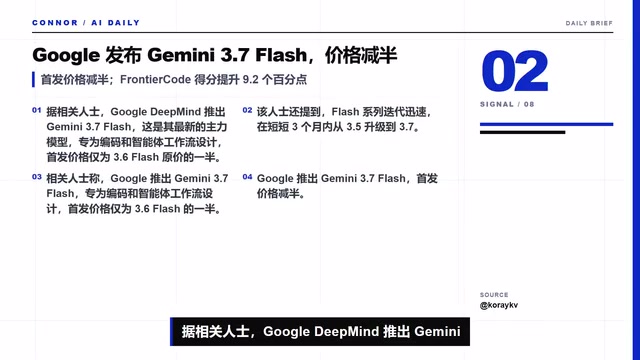
AI Daily: The Speed War and Cost War Are in Full Swing
OpenAI GPT 5.6 UltraFast mode delivers 14x faster inference, Gemini 3.7 Flash slashes prices while boosting performance, MOE architecture gains traction, HBF storage breakthrough—AI industry competition shifts from model capability to speed and cost efficiency dual-front battle.
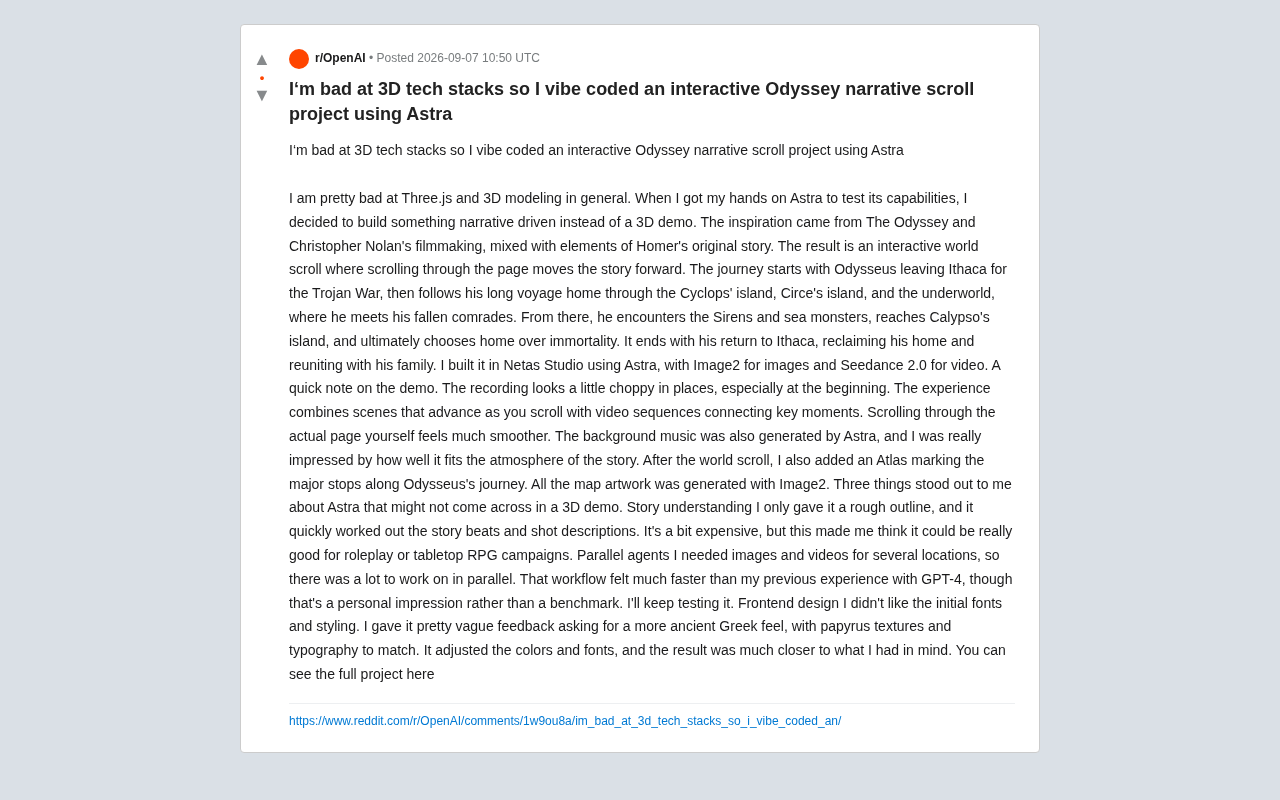
AI-Assisted Creative Production: Building an Interactive Odyssey Narrative Scroll with Astra
A developer with weak 3D skills used Astra AI to create an interactive Odyssey narrative scroll. Learn how AI tools lower technical barriers through story comprehension, parallel workflows, and design iteration.

Internet Archive Fundraising Crisis: Server Operations Challenge Behind 800 Billion Archived Web Pages
The Internet Archive faces server operations funding pressure with 800 billion archived pages. Analysis of Wayback Machine cost challenges, nonprofit digital preservation survival crisis, and sustainable development paths.