SageMaker HyperPod: Isolation and Fairness in Cross-Team GPU Cluster Sharing

SageMaker HyperPod enables secure multi-team GPU cluster sharing via auth, isolation, governance, and cost attribution.
As demand for GPUs in large model training and inference surges, sharing a single GPU cluster across multiple teams has become a key strategy for cost efficiency. Amazon SageMaker HyperPod offers an EKS-based multi-tenant reference architecture that combines AWS IAM Identity Center for unified authentication, SageMaker Domain and Kubernetes namespaces for dual-layer workload isolation, HyperPod Task Governance for fair compute allocation, and namespace-level cost attribution with chargeback. Together, these four components address the core challenges of security isolation, resource fairness, and cost transparency in shared GPU clusters.
The demand for GPU resources in large model training and inference keeps growing, and it's increasingly common for multiple internal teams to compete for the same pool of expensive accelerators. How to let a single GPU cluster be safely shared across teams — while ensuring fair resource allocation and traceable costs — has become an unavoidable challenge for many AI platform engineering teams. Amazon SageMaker HyperPod offers a reference architecture that combines identity authentication, namespace isolation, task governance, and cost allocation to address the core pain points of a multi-tenant compute pool.

Why You Need a Shared GPU Cluster Architecture
GPUs are the scarcest and most expensive resource in today's AI infrastructure. Deploying separate clusters for each team means low utilization, wasted idle compute, and multiplied operational overhead. The more practical approach is to build a single large cluster that multiple teams can use on demand.
But sharing introduces three unavoidable problems: first, security isolation — different teams' workloads and data must not be accessible to one another; second, resource fairness — no single team should be able to monopolize compute and leave others waiting; third, cost attribution — finance needs to know exactly how much each team consumed and how much they should be charged. The SageMaker HyperPod reference architecture is designed specifically around these three concerns.
The Four Core Components of the Architecture
The entire solution is built on an Amazon SageMaker HyperPod EKS (Elastic Kubernetes Service) cluster, delivering multi-team sharing through four layers of capability.
Identity Authentication: AWS IAM Identity Center
The architecture uses AWS IAM Identity Center as the unified authentication entry point. All team members log in through centralized identity management, and permission boundaries are established from there. This eliminates the security risks of managing credentials in a fragmented way and lays the foundation for downstream isolation and auditing.
AWS IAM Identity Center (formerly AWS Single Sign-On) is AWS's centralized identity and access management service, supporting integration with existing enterprise identity providers (IdPs) such as Okta, Azure AD, or Microsoft Active Directory. Users sign in once to gain access to multiple AWS accounts and applications without needing separate credentials for each service. In the context of a multi-team GPU cluster, IAM Identity Center's key value is its ability to precisely bind "people" (engineer identities) to "permissions" (the scope of AWS resources they can operate), ensuring that members of Team A cannot view or interact with Team B's namespaces, datasets, or training jobs. This is the prerequisite for the entire isolation mechanism to work — without a trustworthy identity layer, downstream resource isolation and cost attribution have no foundation.
Isolation: SageMaker Domain + Kubernetes Namespaces
Isolation operates at two levels. Each team has its own SageMaker Domain to delineate working environments and development resources. At the underlying Kubernetes layer, per-team namespaces enforce logical isolation of workloads. This dual-layer isolation ensures teams don't interfere with each other while still sharing the same physical cluster's compute pool.
Fairness: HyperPod Task Governance
Resource fairness is the most failure-prone aspect of a shared cluster. The architecture introduces HyperPod Task Governance to manage compute allocation, ensuring each team receives its entitled GPU quota according to predefined policies and preventing any individual team from consuming resources unchecked and causing queue backlogs for others. This is especially critical in mixed workload scenarios where training and inference jobs run side by side.
HyperPod Task Governance is a scheduling governance layer introduced by SageMaker HyperPod for multi-team resource contention scenarios. It adds policy-aware capabilities on top of the native Kubernetes scheduler, allowing each team to be configured with GPU quota ceilings, priority weights, and preemption rules. When cluster-wide resources are plentiful, teams can burst beyond their quotas; when resources become scarce, the governance layer arbitrates according to preset policies to prevent high-priority or first-submitted jobs from continuously dominating resources. This complements Kubernetes native mechanisms like
ResourceQuotaandLimitRange— the latter can only enforce static resource caps, while Task Governance enables more dynamic and granular scheduling intervention, which matters greatly when training jobs routinely occupy dozens of GPUs for hours at a time.
Cost Allocation: Namespace-Level Cost Attribution
The architecture supports cost allocation at the namespace level, enabling cross-team chargeback. In other words, finance can precisely attribute GPU spend to specific teams, making shared cluster costs fully transparent — and providing an economic lever to encourage responsible resource usage.
Kubernetes Namespaces serve as "cost centers" in cloud cost management. By tagging each team's namespace with consistent AWS Resource Tags, the setup integrates with AWS Cost Explorer or third-party FinOps tools (such as Kubecost) to break down and attribute EC2/GPU instance usage time, network traffic, and storage costs to specific namespaces. Chargeback is a common internal billing model in enterprise IT: the platform team centrally procures and operates the cluster, then "bills" business teams or deducts from their budgets based on actual usage, creating a pay-for-what-you-use incentive. Compared to simple Showback (which only displays usage without actual cost transfer), Chargeback applies stronger constraints on teams' resource-saving behavior and effectively reduces inefficient GPU occupancy.
Who Is This Solution For
For enterprises building internal AI platforms that need to support multiple R&D teams, this reference architecture offers a practical, implementable path. It packages identity, isolation, fairness, and cost into a single HyperPod cluster on EKS, preserving the flexibility of the Kubernetes ecosystem while leveraging SageMaker's managed capabilities to reduce operational burden.
Particularly now, when GPU supply is constrained and budgets demand fine-grained management, being able to "pool expensive accelerators, allocate on demand, and bill by usage" is far more efficient than having every team hoard their own cards. Platform engineering teams can use this design as a reference and adapt it to their organizational structure and compliance requirements.
Summary
SageMaker HyperPod's multi-team shared reference architecture is essentially the migration of the mature "multi-tenancy" concept from enterprise cloud environments into the GPU compute management domain. IAM Identity Center handles authentication; SageMaker Domain and Kubernetes namespaces handle isolation; Task Governance handles fairness; and namespace-level cost attribution handles finance. These four pieces together form a secure, fair, and measurable shared compute foundation. For organizations looking to improve GPU utilization without sacrificing security or cost control, this is an engineering blueprint worth studying.
Related articles

NeurIPS SAC Ticket Transfer Policy Sparks Debate: What's Behind the Change
NeurIPS SAC ticket transfer policy sparks debate in the Reddit ML community. We break down the controversy, likely reasons behind the change, and practical advice for researchers navigating top conference ticketing.
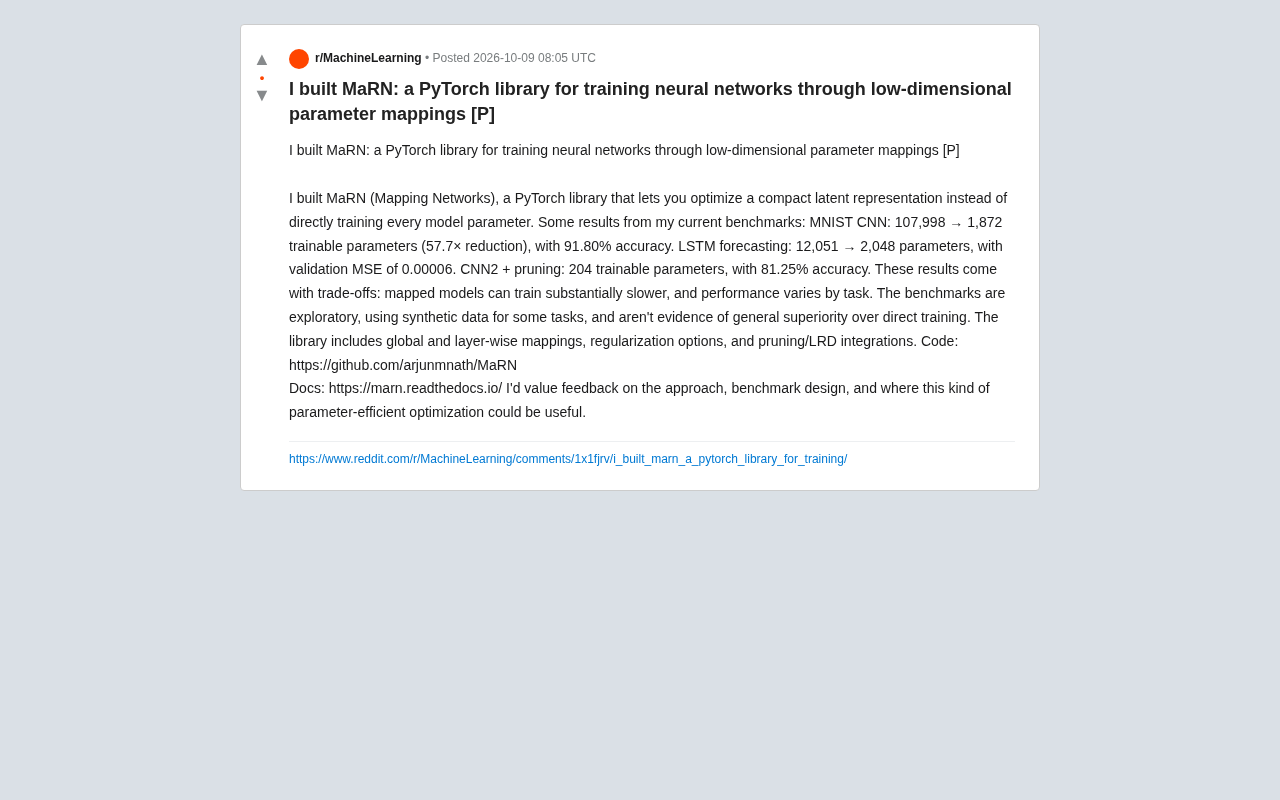
MaRN Open Source: A PyTorch Library for Training Neural Networks with Low-Dimensional Parameter Mapping
MaRN is an open-source PyTorch library that trains neural networks via low-dimensional parameter mapping, achieving 57.7x compression on MNIST CNN while maintaining 91.8% accuracy.

Samsung's Quarterly Operating Profit Expected to Surge 780%: The Memory Logic Behind the AI Boom
Samsung's operating profit expected to surge 780% YoY, driven by AI demand for high-bandwidth memory. We trace how AI hardware demand flows from DGX Spark up to memory manufacturers' bottom lines.