Sanders Proposes Legislation to Ban 'Superintelligence,' with Up to 20 Years in Prison for Violations
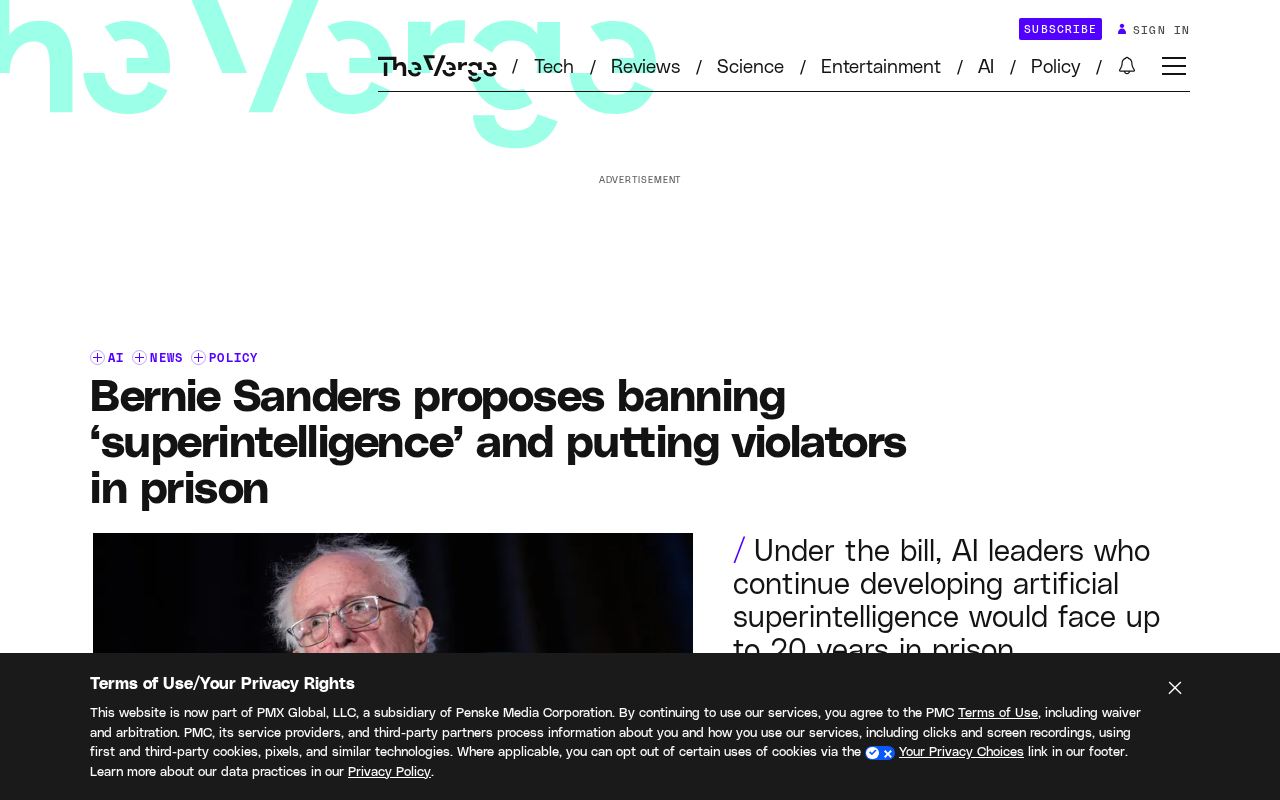
Sanders and Casar propose banning superintelligence development outright, with up to 20 years in prison for violations.
Senator Bernie Sanders and Representative Greg Casar have introduced the Ban Artificial Superintelligence Act, defining ASI as a technology capable of causing "the destruction or disempowerment of humanity" and imposing up to 20 years in prison for violations. The bill faces major hurdles: ASI lacks a unified technical definition, AI development's global nature limits unilateral enforcement, and the proposal's political profile makes it more of an agenda-setting move than practical legislation. Even so, its significance lies in dragging AI safety from the tech sphere into mainstream political debate, framing the fundamental question of whether superintelligence should be banned at the source.
U.S. Senator Bernie Sanders and Representative Greg Casar have jointly introduced a striking legislative proposal aimed at outright prohibiting anyone from developing Artificial Superintelligence (ASI). The bill, known as the Ban Artificial Superintelligence Act, pushes the AI regulation debate to an unprecedented hard line.

Core Contents of the Bill
According to the bill's language, superintelligence is defined as a technology that could lead to the "destruction or disempowerment of humanity," including the ability to overthrow governments. This framing explicitly classifies superintelligence not as ordinary technological progress, but as a fundamental existential threat to human society.
The most controversial aspect of the bill is its severe criminal liability provisions: AI leaders who violate the ban would face up to 20 years in prison. This means the proposal seeks not only to restrict research and development at the regulatory level, but to make the act of development itself a criminal offense. Holding corporate executives criminally liable specifically for "developing superintelligence" is extraordinarily rare in the history of technology legislation.
Background: "Artificial Superintelligence" (ASI) generally refers to an AI system that significantly surpasses the highest human cognitive abilities across nearly all domains — distinct from "Artificial General Intelligence" (AGI, which matches human-level performance broadly) and today's "narrow AI" (which excels only at specific tasks). Philosopher Nick Bostrom systematically laid out the potential risks of ASI in his 2014 book Superintelligence, arguing that once AI surpasses human intelligence, even minor misalignments between its goals and human values could produce catastrophic outcomes — a framework that has profoundly shaped subsequent AI safety discourse. The bill's language about "disempowering humanity" closely mirrors Bostrom's concept of "instrumental convergence": a superintelligence pursuing virtually any goal might tend to acquire resources and resist being shut down, structurally placing it in conflict with human control.
Why Sanders and Casar
Sanders has long focused on large corporations, wealth concentration, and workers' rights. His decision to lead this AI ban reflects his consistent wariness toward the expanding power of tech giants. Casar, a progressive House member, has similarly taken a strong stance on regulating technology companies.
Their collaboration reflects a segment of U.S. political opinion deeply concerned about the risks of AI development spiraling "out of control." Rather than approaching the issue from a place of technological optimism — debating how to "align" or "govern" AI — they are calling for legal prohibition of superintelligence before it ever arrives. This "preventive ban" approach stands in sharp contrast to Silicon Valley's dominant philosophy of "develop first, regulate along the way."
Questionable Feasibility
Despite its forceful language, the bill faces multiple real-world obstacles.
The first challenge is definitional vagueness. "Superintelligence" has no unified technical standard or quantifiable threshold. There is no operational framework for determining, in legal terms, whether a given system constitutes a superintelligence "capable of disempowering humanity." A definition that is too broad could sweep up legitimate frontier AI research; one that is too narrow could easily be circumvented.
The second challenge is enforcement. AI development is global and distributed. Even if the U.S. passes a ban, research will continue in other countries, and a unilateral prohibition may not halt the overall trajectory of the technology. The provision for imprisoning developers could also face constitutional challenges in judicial practice.
Finally, the bill's political prospects in both chambers of Congress are unclear. As a proposal put forward by an independent senator and a progressive House member, it is more likely to function as an agenda-setting tool that sparks public debate than to become law in the near term.
Comparative Legislation: The U.S. is not the first jurisdiction to attempt capping AI capabilities at the source. The EU AI Act, which came into force in 2024, employs a risk-tiered regulatory framework that prohibits AI systems deemed to pose "unacceptable risks" — but its prohibitions target specific application scenarios (such as social credit scoring and real-time biometric surveillance), not entire systems above a certain capability threshold. The Sanders bill, by contrast, attempts to draw its prohibition based on capability level rather than use case, making it a far more technically challenging legislative approach. Additionally, while the 2023 Bletchley Declaration, signed by multiple nations, acknowledged the potentially catastrophic risks of frontier AI, signatory governments have generally favored international coordination mechanisms over unilateral blanket bans — a direct contrast to this bill's approach.
A Deeper Signal
Even if this bill ultimately fails to become law, the signal it sends is worth noting. It marks a shift in AI safety discussions — from the technical community and corporate self-regulation into the realm of politics and legislation. When veteran politicians begin describing AI risks in terms like "destroying humanity" and "overthrowing governments," the public's awareness threshold for the potential dangers of superintelligence is being raised.
This also highlights a persistent tension: on one side, the industry forces accelerating toward AGI and beyond; on the other, political and social voices calling for the brakes to be applied — or the endeavor banned entirely. This bill puts that tension on the table in its most extreme form, and regardless of its ultimate fate, it adds new weight to the ongoing debate over AI governance.
Conclusion
The Sanders-Casar Ban Artificial Superintelligence Act intervenes in the AI regulation debate with an unusually hard line. The 20-year prison sentence and the existential framing of "superintelligence" make the proposal itself a powerful political statement. It may not pass easily, but it has already placed a fundamental question squarely before society: should we ban superintelligence at the source?
Related articles

LangGraph Crash Course: Building Enterprise-Grade AI Agents and Workflows from Scratch
LangGraph crash course: learn its independence from LangChain, MIT license, FastAPI high-concurrency deployment, human approval, and memory storage for enterprise AI agents.

Building an AI Customer Service Agent from Scratch: A 92% Intent Recognition Case Study
A Bilibili case study: building an AI customer service agent from scratch with BERT intent recognition, dialogue state tracking, hybrid vector retrieval, and a weighted handoff model—raising intent accuracy from 65% to 92%, 78% conversation completion, handling 100K conversations daily.
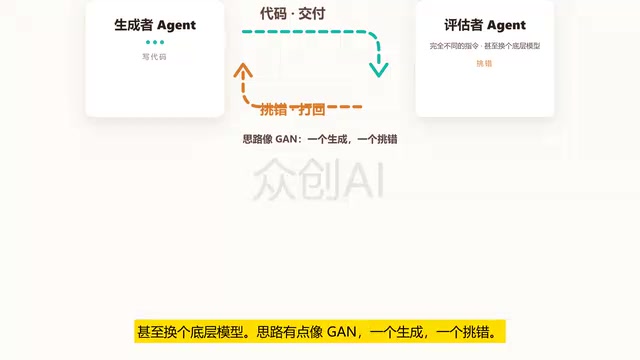
Loop Engineering: An Engineering Paradigm for AI That Writes Code and Merges PRs Autonomously
Loop Engineering is transforming AI development pipelines: Stripe's Minions system merges over 1,300 machine-generated PRs weekly. This article breaks down Loop Engineering's five core actions, six components, five failure modes, and three safety disciplines, explaining why independent evaluators, state files, and budget caps matter more than full automation.