Saydi Real-Time AI Voice Translation Tool Review: At Just 1% the Cost of Human Translators, Is It Practical for Business?

Saydi is an AI tool offering business-grade real-time voice translation at 1% the cost of human translators
Saydi is a real-time voice translation tool built for business scenarios, targeting deal-closing, event management, and meeting facilitation. It claims to deliver near-professional interpreter quality at just 1% the cost of human translation. By entering through the vertical business translation track, it differentiates itself from general tools like Google Translate and has gained 445 followers on Product Hunt. Its market success hinges on whether translation quality can truly meet the professional demands of business scenarios.
What Is Saydi? A Real-Time Voice Translation Tool Built for Business
Saydi is a real-time voice translation tool designed specifically for personal and business scenarios, helping users overcome language barriers for tasks like business negotiations, event management, and meeting facilitation. Its core value proposition is straightforward—delivering voice translation quality approaching professional interpreter levels at just 1% the cost of human translation.
The product has already attracted 445 followers on Product Hunt with 2 product launches completed, reflecting growing market interest in vertical AI translation tools.
Breaking Down Saydi's Core Features
Real-Time Voice Translation: As Natural as Simultaneous Interpretation
Saydi's core capability is real-time AI voice translation. Unlike traditional text translation tools, it focuses on voice scenarios, completing translation output while conversations are still in progress. Users don't need to pause and wait for translation results—they can conduct cross-language communication as naturally as using simultaneous interpretation.
It's worth understanding that simultaneous interpretation is the most challenging form in the interpreting field, requiring interpreters to complete translation output with an extremely short delay (typically 2-4 seconds) while listening to the source language. This ability requires years of professional training, and interpreters usually need to rotate every 20-30 minutes to avoid cognitive fatigue. AI real-time voice translation systems simulate this process at a technical level through the pipeline collaboration of three modules: Automatic Speech Recognition (ASR), Neural Machine Translation (NMT), and Text-to-Speech (TTS). The challenge lies in striking a balance between low latency and high accuracy.
This experience is particularly important for fast-paced business meetings—no one wants to repeatedly wait for translations at the negotiating table.
Deep Coverage of Three Major Business Scenarios
From a product positioning perspective, Saydi clearly targets three high-frequency business scenarios:
- Close deals: Helps sales professionals communicate directly with clients who speak different languages, reducing communication breakdowns caused by translation delays
- Run events: Supports real-time translation needs for multilingual events, lowering the organizational barrier for international conferences
- Lead meetings: Makes daily collaboration in multinational teams smoother and more efficient
This business-focused strategy creates clear differentiation from general-purpose tools like Google Translate.
Saydi's Market Competitiveness: Balancing Cost and Quality
How Significant Is the Cost Advantage?
Saydi claims its cost is just 1% of human translation. Let's do the math: professional simultaneous interpreters typically charge between 3,000-15,000 RMB per day, with rare language pairs costing even more. If an AI tool can deliver similar results for just a few dozen RMB, the appeal for small and medium-sized businesses is obvious.
Of course, the premise of "1% cost" is that translation quality is actually usable—otherwise, the money saved could turn into even greater losses from miscommunication.
Can Translation Quality Meet Business-Grade Requirements?
The product emphasizes that its translations carry the "nuance that human translation provides," which is precisely the most challenging aspect to crack in AI translation. Business translation involves more than vocabulary conversion—it also includes:
- Contextual understanding: The same word can mean completely different things in different business contexts
- Cultural adaptation: Certain expressions need adjustment in cross-cultural communication
- Tone calibration: The intensity of wording in negotiations directly affects the direction of partnerships
Nuance in business contexts is particularly complex. In negotiation scenarios, for example, "We can consider your proposal" in English can signify genuine interest or a polite rejection depending on tone. Japanese business language with its honorific system (敬語) directly impacts relationship building. Traditional neural machine translation models tend to distort such pragmatic information because high-quality parallel corpora for business scenarios are relatively scarce in training data. This is precisely where vertical products have an advantage—through fine-tuning on business-specific corpora, translation accuracy in specific scenarios can be significantly improved.
Whether Saydi can truly deliver on this promise will be the key factor determining its market performance.
Industry Trends in AI Voice Translation
Real-time voice translation is one of the most commercially valuable directions for AI application deployment today. The current leap in AI voice translation capabilities fundamentally stems from breakthroughs in the Transformer architecture and large-scale pre-trained models. OpenAI's Whisper model, released in 2022, was trained on 680,000 hours of multilingual speech data and reduced speech recognition error rates to near-human levels. Meanwhile, translation engines based on large language models like GPT-4 have achieved qualitative improvements in contextual understanding and idiom processing compared to traditional Statistical Machine Translation (SMT). Meta's SeamlessM4T has further achieved end-to-end speech-to-speech translation across nearly 100 languages, marking a new technical phase for the field.
Tech giants like Meta, Google, and OpenAI are all investing heavily in voice translation, while Saydi has chosen to enter through the vertical business translation track—a smart strategy. The current AI voice translation market shows a clear two-tier structure: at the top are general translation platforms like Google Translate, DeepL, and Microsoft Translator, dominating the mass market through massive data and infrastructure advantages; at the bottom are specialized tools deeply optimized for vertical scenarios. The core logic of vertical strategy is this: general models pursue breadth of coverage, while professional scenarios demand depth—specific industry terminology systems, expression conventions, and cultural norms often require specialized data and product design to handle effectively. This is why even in a translation market dominated by tech giants, vertical products still maintain differentiated survival space.
For enterprises that frequently need cross-language business communication, tools like these have the potential to reduce international business communication costs by an order of magnitude.
Usage Recommendations and Considerations
If you're considering using Saydi or similar AI voice translation tools, here are several points worth noting:
- Test in low-risk scenarios first: Try it in internal meetings first, and only use it for client negotiations after confirming translation quality
- Pay attention to specialized terminology: In terminology-dense industry conversations, AI translation accuracy still requires human review
- Use as a supplement, not a replacement: In major business negotiations, AI translation can serve as an assistive tool, but professional interpreters are still recommended for critical moments
Conclusion: Is Saydi Worth Your Attention?
Saydi represents a clear trend of AI translation tools moving from general-purpose to vertical scenarios. By focusing on business communication scenarios and providing real-time voice translation services at extremely low cost, it has the potential to become infrastructure-level tooling for cross-border business collaboration.
For small and medium-sized businesses with limited budgets but cross-language communication needs, Saydi offers a worthwhile option to explore. However, whether it can ultimately establish a firm foothold in business scenarios depends on whether its translation quality can truly meet the dual requirements of professionalism and accuracy.
Key Takeaways
- Saydi provides real-time AI voice translation at just 1% the cost of human translators
- The product focuses on business scenarios: closing deals, running events, and leading meetings
- Emphasizes translation quality with human-level contextual nuance
- Has gained 445 followers on Product Hunt with 2 product launches completed
- The vertical business translation approach creates differentiated competition against general translation tools
Related articles
 Product Reviews
The Programmer's Desk Setup Guide: Building a Workspace That Feels Like Home
Discover how programmers build productive, comfortable workspaces. From multi-monitor setups to ergonomic design, explore the desk philosophy that drives focus and flow.
 Product Reviews
Qoder vs Cursor Real-World Comparison: Which $20/Month AI IDE Is Better?
Hands-on comparison of Qoder vs Cursor AI IDEs: Agent autonomy, human interaction count, and architecture decisions. Qoder needed only 2 interactions vs Cursor's 8.
 Product Reviews
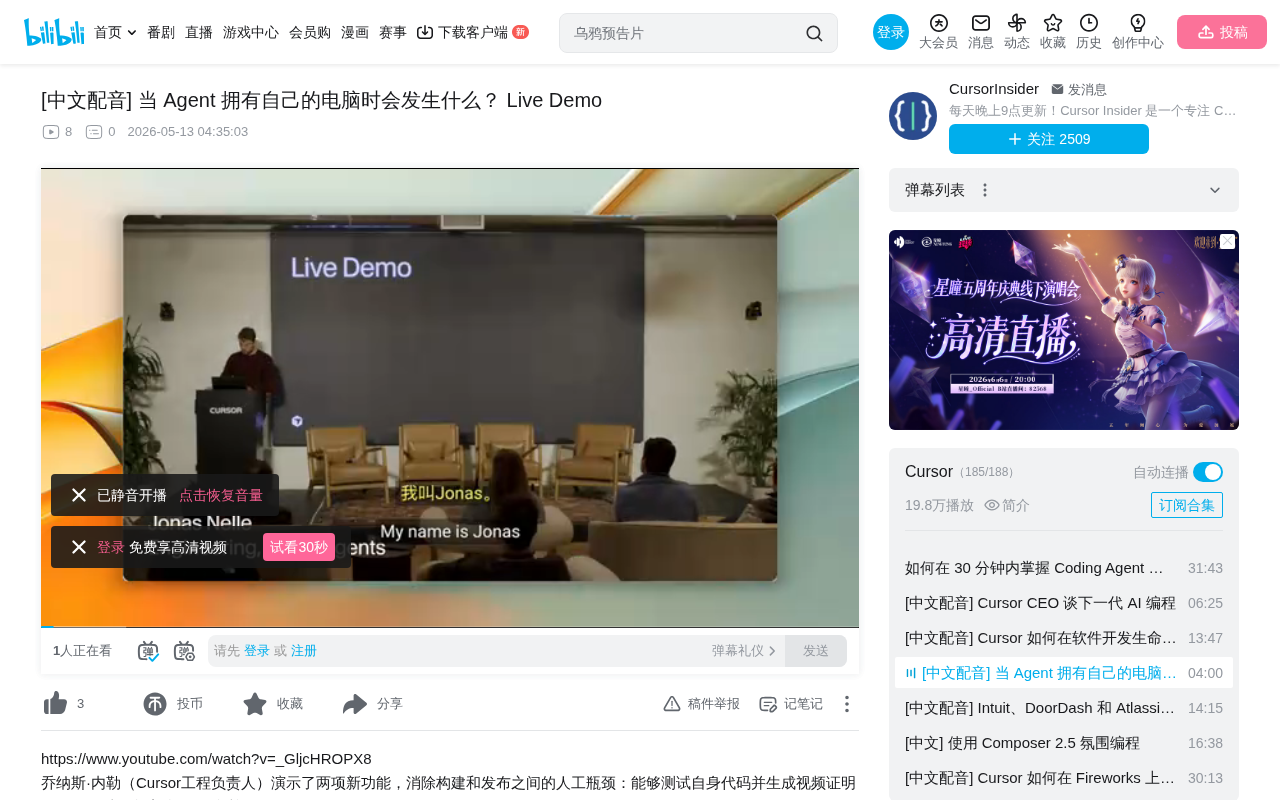
Cursor Cloud Agent Demo: Eliminating Bottlenecks Across the Entire Software Development Lifecycle
Deep analysis of Cursor's Cloud Agent demo showing how cloud VMs, automated test artifacts, and a full-chain control plane systematically eliminate human bottlenecks across the software development lifecycle.