Scriptly: AI Voice-Following iOS Teleprompter That Eliminates Pace-Chasing
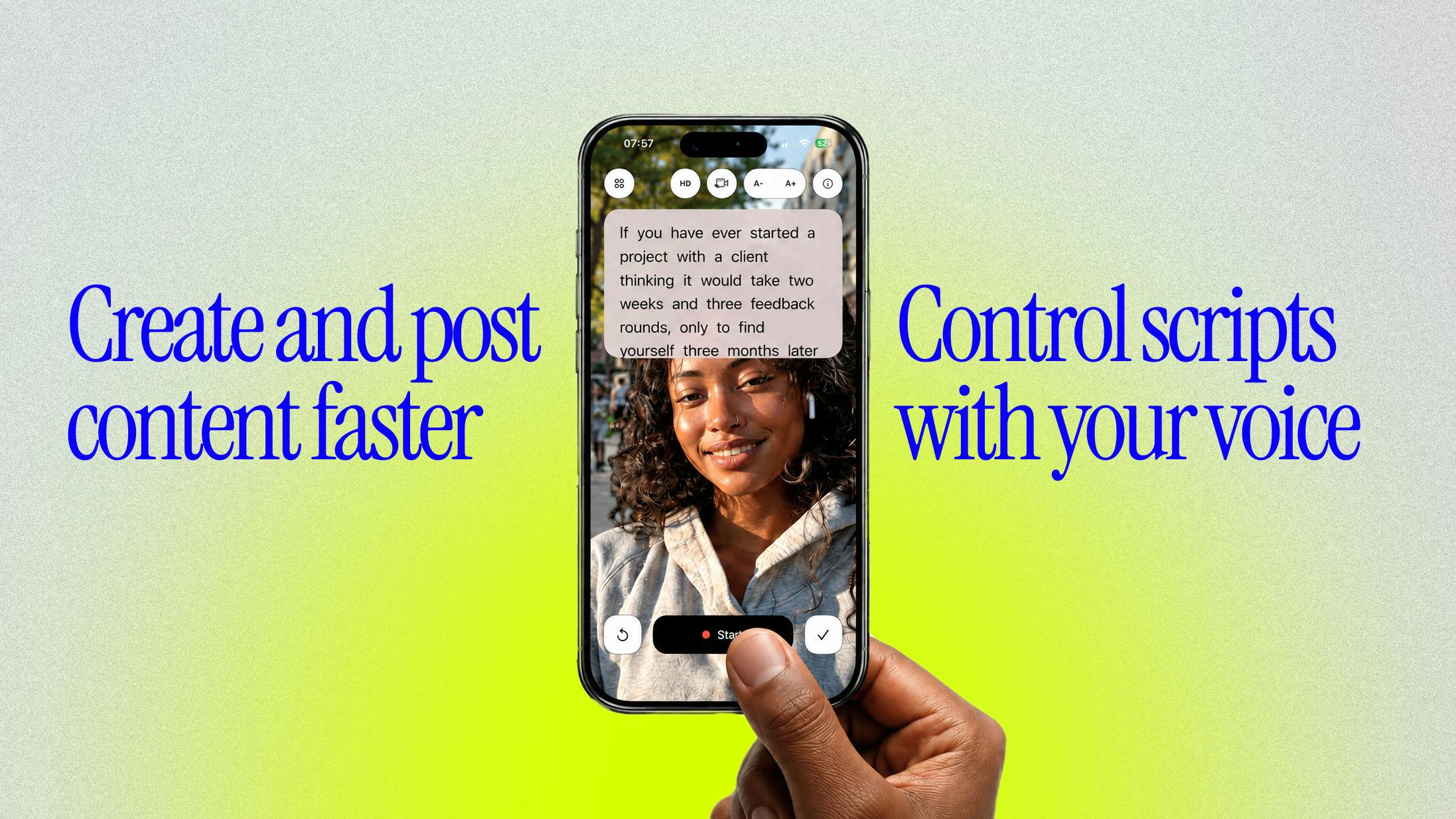
AI-powered iOS teleprompter that adapts to your voice, eliminating the pace-chasing struggle
Scriptly is an iOS teleprompter that uses AI voice recognition to automatically scroll scripts matching your speaking rhythm. Unlike traditional teleprompters with fixed speed or manual control, it listens in real-time and adapts to your natural pauses and pace changes. With local storage for privacy and integrated write-organize-record workflow, it streamlines content creation from script to video.
Why Traditional Teleprompters Always Make You "Chase the Pace"
For content creators, podcast hosts, educators, and corporate trainers, teleprompters are nothing new. Teleprompters first emerged in the 1950s television news industry, initially using mechanical rollers to move paper scripts. In the digital age, teleprompters evolved into displays paired with specialized software. Traditional digital teleprompters typically use three control methods: fixed-speed auto-scrolling, manual foot pedal control, or remote adjustment by a dedicated operator following the speaker's rhythm.
But all these methods face a common pain point: scrolling speed struggles to match speaking rhythm. Fixed speed cannot adapt to a speaker's natural pauses and pace variations; manual control requires speakers to split their attention operating the device; and human operation not only increases costs but also demands rapport between operator and speaker. Either the scrolling is too fast, forcing rushed delivery and stiff tone, or too slow, creating awkward pauses. These pain points are especially acute for individual creators and small teams—who often lack professional support yet need high-quality video output.
Scriptly, which recently launched on Product Hunt with 119 votes and ranked #3, was born precisely to solve this core problem. Product Hunt is one of the world's most influential tech product discovery platforms, using a daily leaderboard system where products rank by "upvote" count. Achieving high ranking means the product has gained significant recognition among early users, offering multiple benefits for startup products: tech media attention, high-quality user feedback collection, and product-market fit validation.
Scriptly's positioning is crystal clear—an iOS voice-controlled teleprompter. It emphasizes an integrated "write, organize, record" experience, enabling creators to effortlessly complete the entire workflow from script preparation to video recording. The app is currently available for download via TestFlight public beta.
Scriptly Core Feature: AI Real-Time Voice-Following Scrolling
Scriptly's most breakthrough feature is real-time voice-following scrolling. Unlike traditional teleprompters that rely on fixed speed or manual control, Scriptly listens to your voice in real-time and intelligently scrolls the script text to follow your reading progress automatically.
What does this mean? When you slow down, pause to think, or improvise an off-script line, the teleprompter won't "lose track" but patiently waits for you to return to the script. This interaction logic fundamentally changes the relationship between creator and teleprompter—you no longer chase the screen; the screen adapts to you.
AI Technology Behind Voice Recognition
The app is simultaneously categorized under both "Productivity Tools" and "Artificial Intelligence," which is no coincidence. Achieving precise voice-following requires reliable real-time speech recognition and text alignment technology.
This technology involves three key components: First is Continuous Speech Recognition, which must convert audio streams into text in real-time, requiring extremely low latency (typically <200ms) for smooth experience. Second is text alignment algorithms, where the system must fuzzy-match recognized words with the preset script, tolerating user mistakes, pauses, and improvisation—typically using dynamic programming algorithms or attention mechanism-based neural network models. Finally, scrolling control strategy must smoothly adjust displayed content based on matched position, avoiding abrupt jumps.
Such technology was historically limited by recognition latency and accuracy. In recent years, performance improvements in on-device speech recognition engines like Apple's Speech framework and Google's Speech-to-Text API have made these mobile applications possible. On-device processing advantages include low latency, no network requirement, and privacy protection, but demand higher device computing power, typically requiring A12 Bionic chip or newer processor support. Scriptly's emergence is, in some sense, a microcosm of AI voice technology moving into consumer-grade applications.
Privacy First: Local Storage for Scripts and Videos
In an era of increasing data privacy awareness, Scriptly specifically emphasizes local storage privacy design. User scripts and recorded video content are stored locally on the device rather than uploaded to cloud servers.
For creators frequently handling sensitive content, this is especially important. Whether corporate internal training materials, unreleased product launch scripts, or personal creative drafts, local storage means higher data security and stronger privacy control.
In a landscape where AI applications typically depend on cloud processing, this choice offers significant advantages. Traditional cloud speech recognition services require uploading audio to remote servers for processing, creating threefold risks: data may be intercepted during transmission, cloud storage faces leak risks, and service providers may access user data for model training. Implementation of regulations like the EU's General Data Protection Regulation (GDPR) and California Consumer Privacy Act (CCPA) has made enterprises increasingly focused on data compliance. On-device processing completely avoids these issues—all speech recognition and text matching occur on the device, with data never leaving the user's device.
Interestingly, local processing typically means voice recognition occurs on-device, which both protects privacy and reduces network dependency—users can use teleprompter features normally even without Wi-Fi. Apple has strongly promoted on-device machine learning (Core ML framework) since iOS 13, with dedicated Neural Engine hardware efficiently running voice models, making usage scenarios possible in network-free environments like airplanes and basements—particularly valuable for outdoor filming and live presentations.
Write, Manage, Record: Integrated Creative Workflow
Scriptly is not just an isolated teleprompter tool but provides a complete creative loop:
- Write: Draft scripts directly within the app, eliminating app-switching
- Organize: Categorize and manage scripts for easy reuse and retrieval
- Record: Built-in professional teleprompter and recording tools for one-touch video capture
This "write-manage-record" integrated design significantly reduces tool-switching costs for creators. Previously you might need to write in notes, read from a teleprompter app, then record with a camera app—now Scriptly consolidates everything into a single interface. For video creators who frequently appear on camera, the efficiency gain is substantial.
Is Scriptly Worth Trying: Strengths and Limitations
Scriptly is a典型 "small niche, real need" product. Rather than attempting to become a comprehensive video editing platform, it focuses on the specific, high-frequency pain point of "voice-following teleprompter" and delivers differentiation.
Scriptly's Three Key Strengths:
- Voice-driven interaction innovation—making iOS teleprompters truly adapt to human speaking rhythm
- Privacy-first local design—addressing user data security concerns
- Integrated workflow—reducing tool-switching costs for content creators
Limitations to Consider:
- As a public beta product, voice recognition performance in complex accents, noisy environments, or multilingual scenarios remains to be validated. TestFlight is Apple's official iOS app testing platform, allowing developers to distribute apps to up to 10,000 external testers. For innovative apps like Scriptly, the public beta phase is crucial: voice recognition performance varies dramatically across different accents, speaking speeds, and ambient noise—only large-scale real-user testing can optimize the model
- Currently iOS-only; Android users cannot access it yet. This is also related to TestFlight's technical limitation of supporting only iOS/iPadOS
If you frequently speak on camera and are tired of "chasing the pace" with traditional teleprompters, try this voice-controlled teleprompter on TestFlight. It may represent the evolution of this classic tool in the AI era.
Related articles
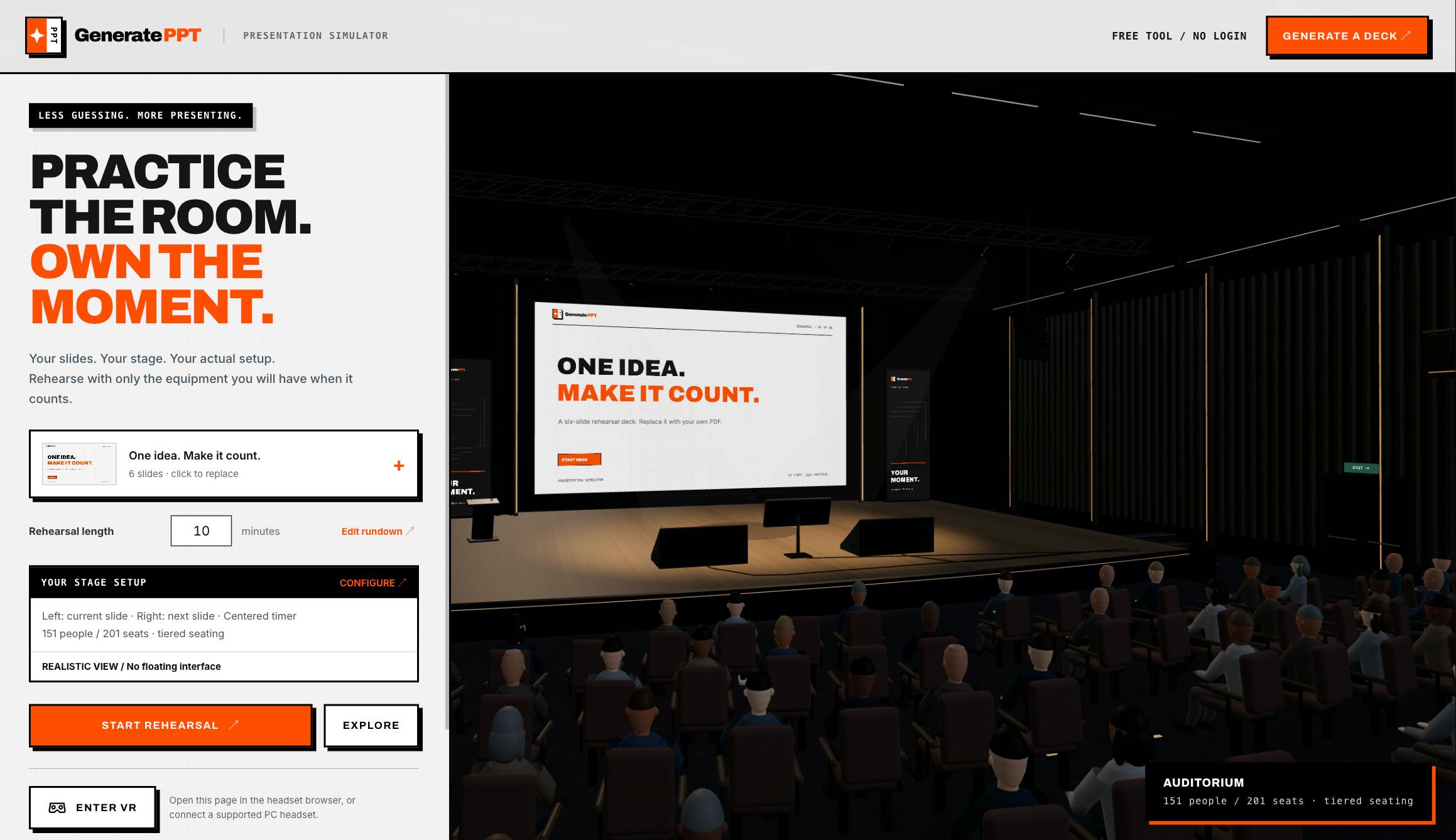
VR Public Speaking Simulator: Practice Your Presentation Skills Right in Your Browser
Public Speaking VR Simulator is a WebXR-based speech practice tool supporting both browsers and VR headsets. Upload slides and rehearse on configurable virtual stages to effectively reduce speaking anxiety.
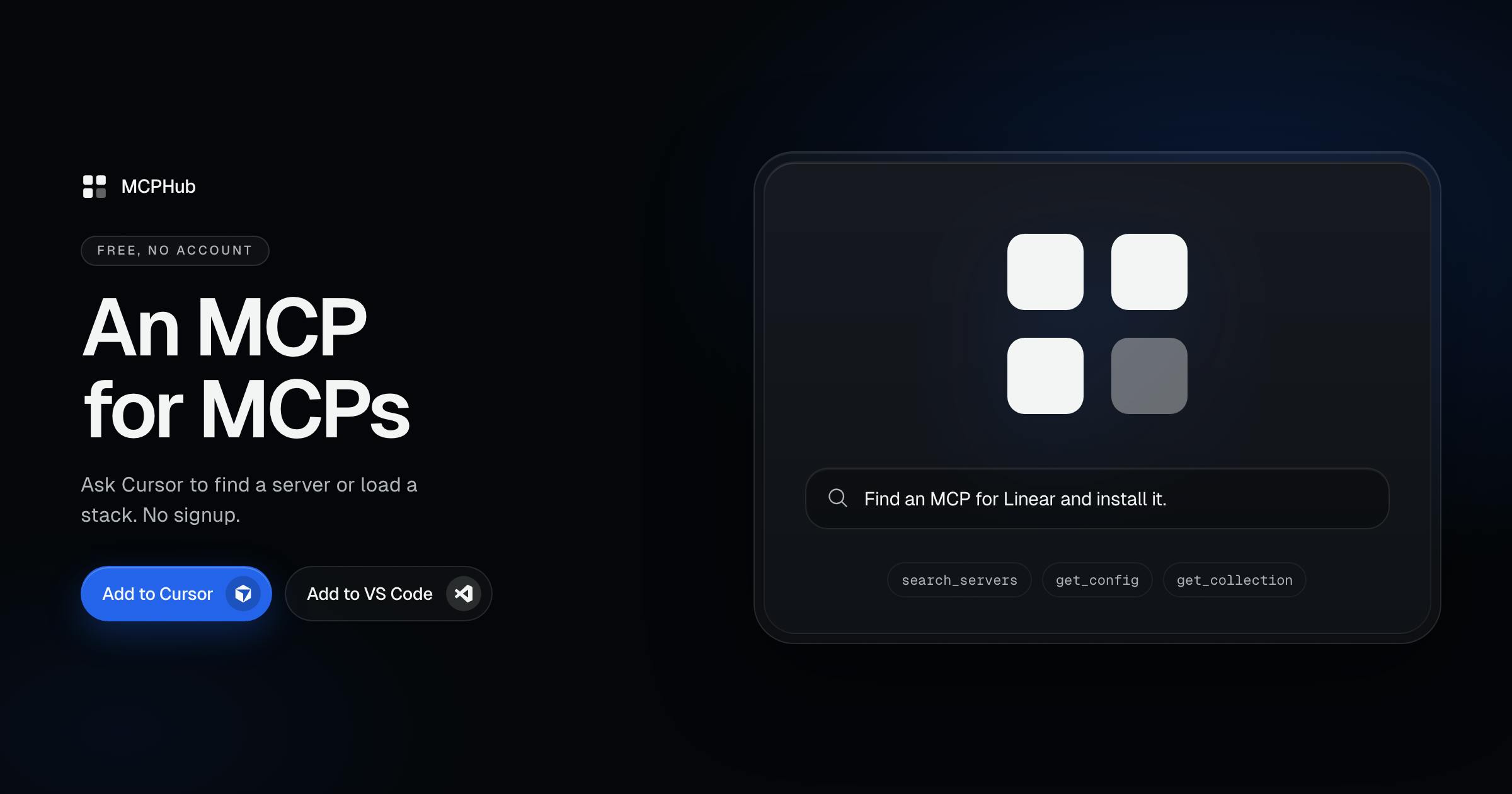
MCPHub: The AI-Native Launchpad That Uses One MCP to Discover All MCP Servers
MCPHub is an AI-native MCP server discovery tool indexing ~4,000 servers with one-click Cursor, Claude, and VS Code integration for search, config, and stacks.
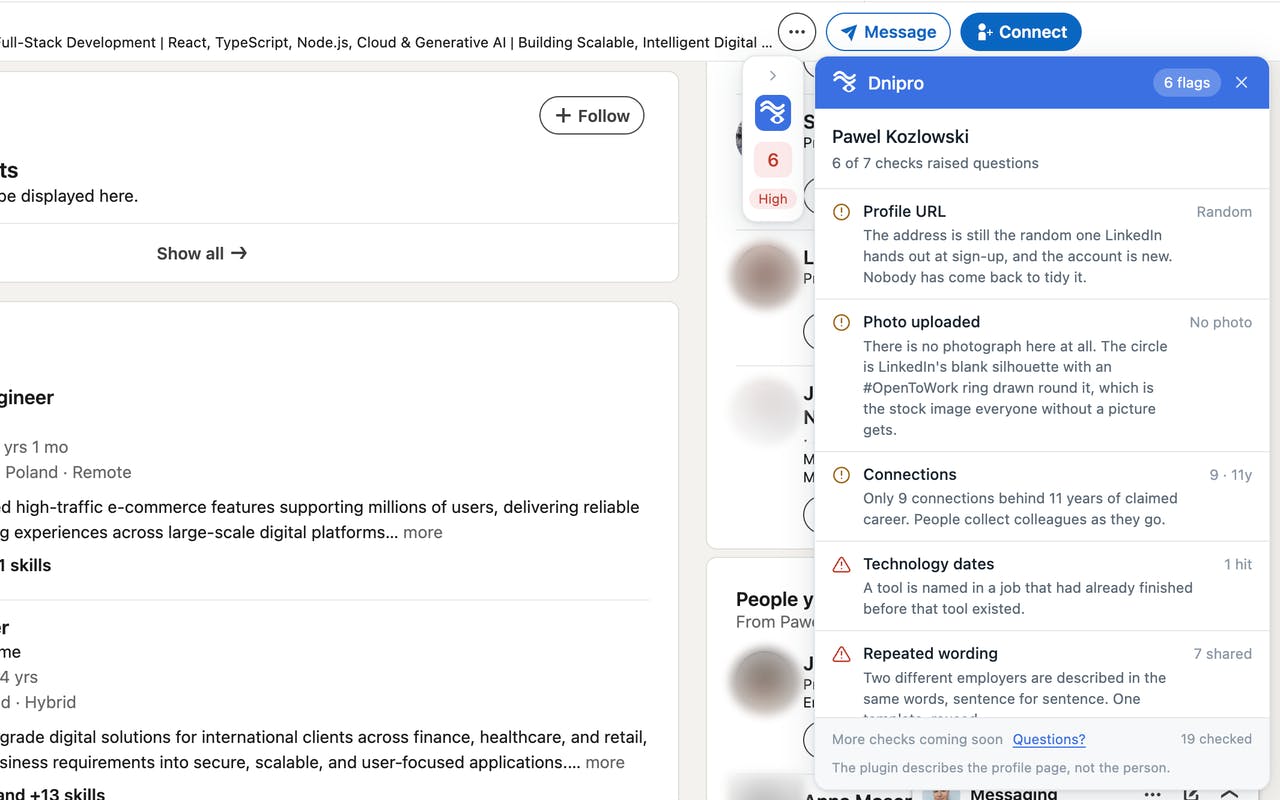
Dnipro: A Chrome Extension That Detects Fake LinkedIn Accounts with One Click
Dnipro is a free, open-source Chrome extension that quickly identifies fake LinkedIn accounts using seven detection mechanisms. Ideal for HR screening and business verification.