Sean Carroll Interview: Explaining the Biggest Ideas in the Universe
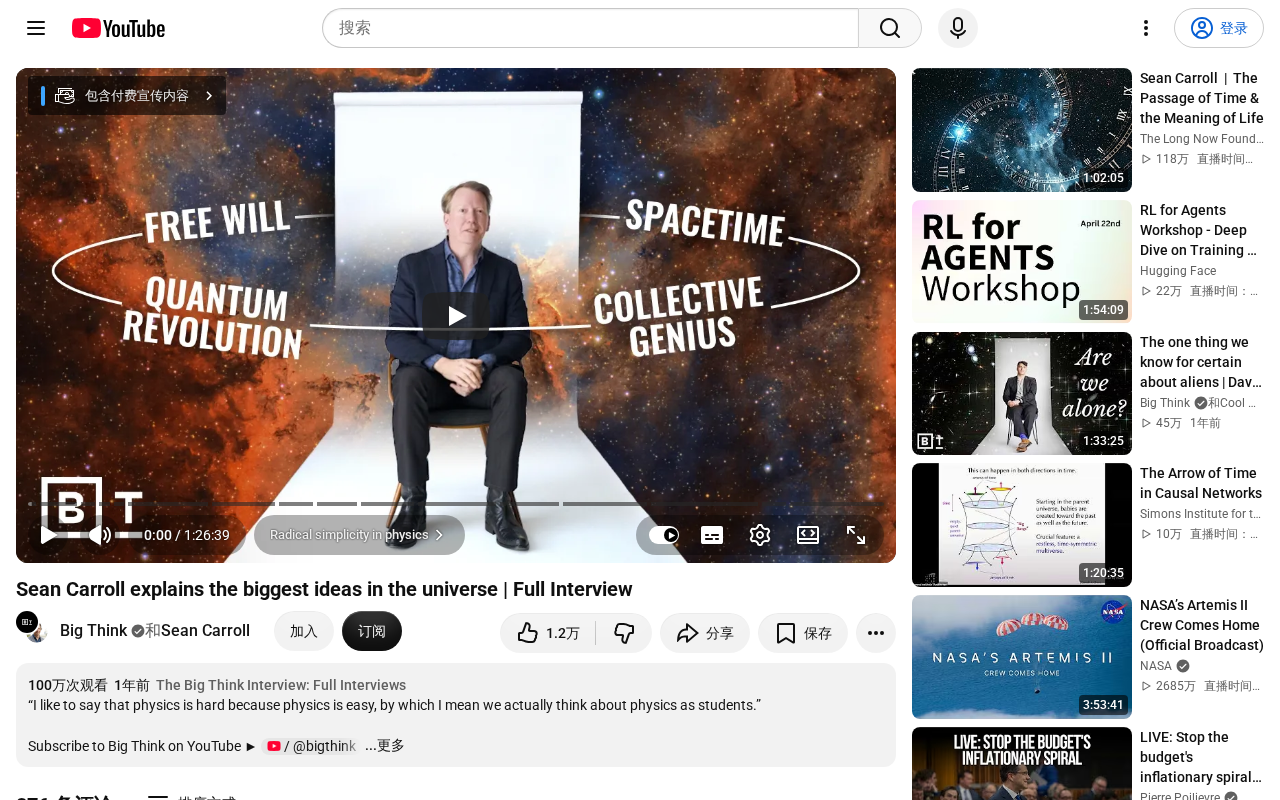
A background guide to Sean Carroll's interview on time, quantum mechanics, and the biggest ideas in physics.
Using a Hacker News link to a Sean Carroll interview as its starting point, this article provides background context on Carroll's work since the original source lacked detailed content. Carroll is a theoretical physicist specializing in cosmology and quantum foundations, and a prominent science communicator. His key positions include explaining the arrow of time through the universe's low-entropy initial conditions, and championing the Many-Worlds Interpretation as the cleanest reading of quantum mechanics. The article argues that Carroll's rare combination of research depth and public communication skill makes his long-form interviews a valuable resource for anyone seeking to understand the real logic behind physical concepts.
About This Interview
A link appeared on Hacker News sharing a physics explainer — a full interview with theoretical physicist and science communicator Sean Carroll titled Sean Carroll Explains the Biggest Ideas in the Universe. The post has generated limited discussion so far (8 upvotes, 1 comment), but Carroll's standing in physics communication makes content like this worth paying attention to.
It's worth noting upfront: the original source material only includes a title and attribution — no detailed summary or breakdown of the interview's arguments. This article therefore draws on Carroll's publicly known work to provide background context on the themes such an interview would likely cover, rather than a point-by-point recap of what was actually said.
Who Is Sean Carroll
Sean Carroll is a theoretical physicist whose research spans cosmology, the foundations of quantum mechanics, and the arrow of time in physics. Beyond academia, he's perhaps better known as a science writer and podcast host, having spent years translating complex physical concepts into forms accessible to non-specialist audiences.
His project The Biggest Ideas in the Universe — the source of this interview's title — is a systematic attempt to explain the core concepts of modern physics, from spacetime, energy, and fields to entropy and quantum entanglement, while staying as close as possible to the actual mathematical structure of these ideas rather than oversimplifying them.
Core Topics the Interview Likely Covers
Within the framework of "the biggest ideas in the universe," interviews of this kind tend to touch on a few key themes:
The Direction of Time and Entropy
Why time flows in only one direction is one of Carroll's longstanding research and writing focuses. He approaches the "arrow of time" through the lens of the second law of thermodynamics and the universe's low-entropy initial conditions, arguing that time's directionality is rooted in cosmological boundary conditions rather than in the fundamental laws of physics themselves.
Interpretations of Quantum Mechanics
Carroll is an outspoken advocate of the Many-Worlds Interpretation of quantum mechanics. In his view, it represents the most direct and assumption-minimal reading of the Schrödinger equation. This position tends to generate discussion in science communication contexts and is frequently a focal point in interviews.
Cosmology and Fundamental Physics
From dark matter and dark energy to the origin and evolution of the universe, cosmology runs as a throughline across Carroll's work. He has a talent for situating these frontier, abstract topics within a coherent physical narrative.
Why This Kind of Content Is Worth Your Time
In an environment of fragmented information, content that explains foundational physics in a way that is both rigorous and readable is genuinely rare. Carroll's value lies in the combination of first-hand research depth and a sustained willingness to do the hard work of public explanation — a pairing that's relatively uncommon in physics.
For readers who want to go beyond headline-level science popularization and actually understand the internal logic of physical concepts, long-form interviews like this offer a more complete thread of reasoning to follow.
Takeaway
Given the limited information in the original source material, this article is more of an introductory overview of Sean Carroll's work than a detailed breakdown of the interview itself. For the full picture, watching the original interview video directly is the best approach. For readers interested in foundational concepts in physics, the nature of time, and interpretations of quantum mechanics, Carroll's science communication work is a worthwhile investment of time.
Related articles
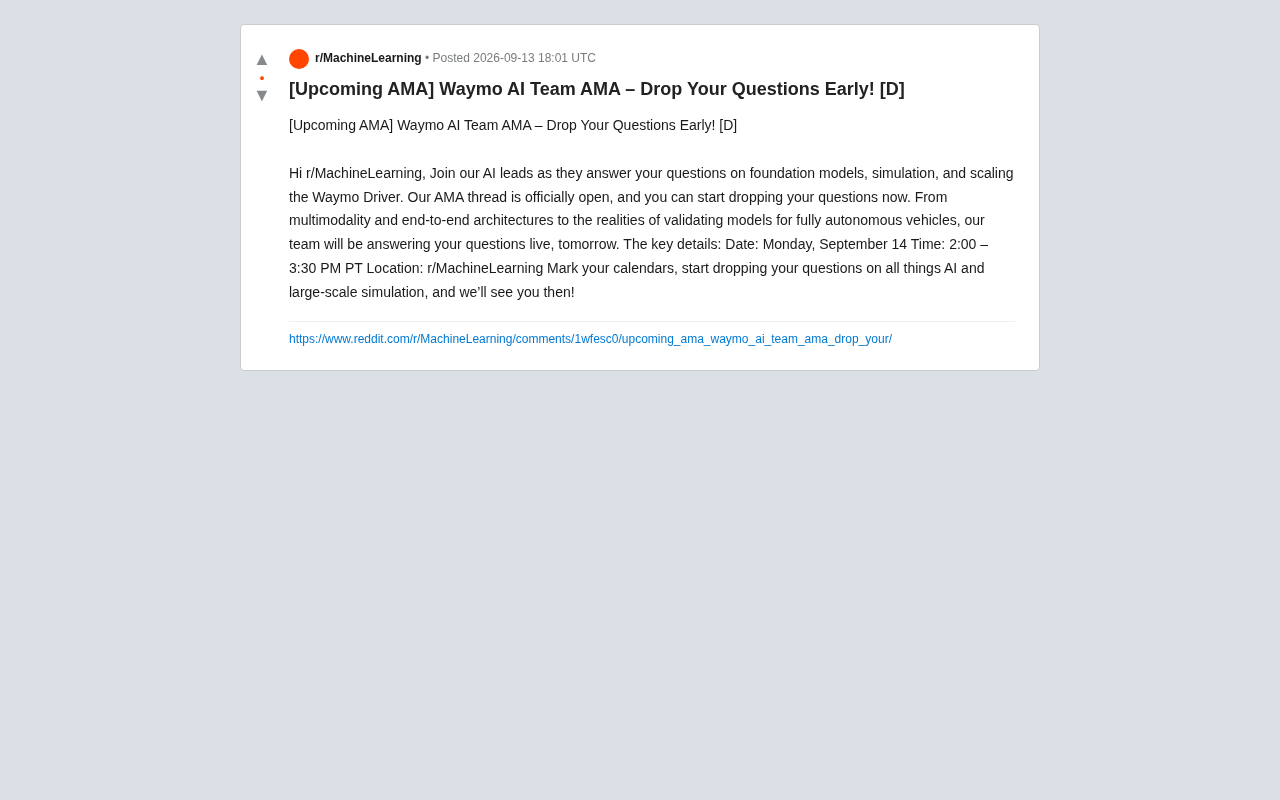
Waymo AI Team to Host AMA: Focusing on Foundation Models and Autonomous Driving Simulation
Waymo's AI technical leads are hosting an AMA on Reddit's r/MachineLearning, covering foundation models, large-scale simulation, multimodality, and end-to-end autonomous driving architectures.

Docket: Building Per-Commit Evidence Trails for AI Agent-Generated Code
Docket builds per-commit evidence trails for AI agent-generated code, making every AI commit traceable, auditable, and verifiable — a pragmatic step in AI coding governance.
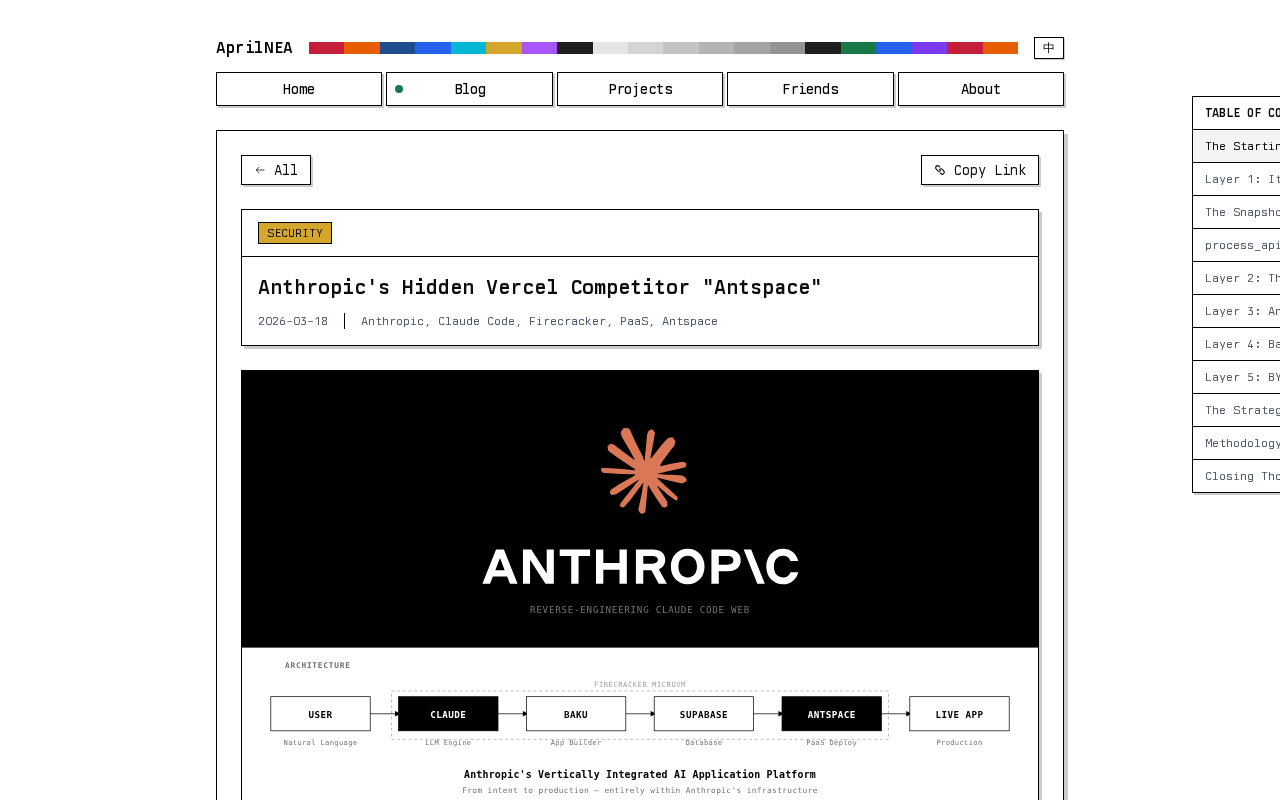
Reverse-Engineering Claude Web's Sandbox: Uncovering Anthropic's Hidden MicroVM
A reverse-engineering analysis of Claude Web's code sandbox reveals Anthropic's likely MicroVM architecture and internal "Antspace" environment, with insights for AI product security.