Self-Built Agent Environment Tested: Why Terra Falls Short of DeepSeek in Video Editing

Developer livestreams self-built agent environment SICA, tests multi-model video editing—DeepSeek unexpectedly wins.
A developer who has livestreamed AI-assisted coding for 25 days built his own agent environment SICA (connecting to multiple AI subscriptions) plus SICA Studio, a code-based AI video editor, due to Codex instability and quota limits. Comparing 6.1 Terra, DeepSeek B4.1, and Gemini 3.8 Flash on the same video editing prompt, DeepSeek won on creativity and token efficiency, Terra was fast but lacked aesthetics, and Gemini was unstable. He recommends Opus 5.5 for video editing despite high cost, DeepSeek for budget, and is evaluating the Gentle AI framework for agent workflows.
A developer who has been livestreaming "Vibecodeando" (AI-assisted coding) for 25 consecutive days recently focused on a key question: when Claude's Codex service keeps having problems, can a self-built agent environment really step in? In this stream, he not only showcased SICA (his self-built agent environment) and SICA Studio (an AI video editor) that he's developing, but also ran a multi-model video editing comparison test—with somewhat surprising results.
Why Build Your Own Agent Environment?
The streamer admitted he was initially a heavy Codex user, but Codex has become increasingly unstable—"it just froze, and I didn't even notice, almost let it keep running and it did nothing." He mentioned that Codex's web experience is poorly optimized, and usage limits are becoming increasingly unfriendly. By contrast, he values the model's own capabilities more: "For video editing and server-side system development, I need a super-smart model like Opus."
But the problem is that Claude has lower usage quotas, while Codex—though slightly inferior as a model—recently offered substantial usage allowances. This trade-off led him to build his own environment that can connect to subscriptions from multiple providers (Claude, Codex, Cursor, OpenCode, AntiGravity, Hermes, etc.), enabling flexible routing across different models. He named the project SICA and emphasized it's similar to tools like Orca, Monocode, and Xeron, but better tailored to his needs.

An agent environment refers to the entire runtime system built around a large model, including the model access layer, tool calling (function calling), context and memory management, permission control, and the interaction interface. Simply calling a model API only completes single-turn Q&A, whereas an agent environment lets the model autonomously plan tasks, call external tools (such as the file system, code executor, browser), and iterate on execution. There are usually three core motivations for building your own agent environment: first, escaping the stability and quota limitations of a single vendor; second, flexibly routing between multiple models to balance cost and capability; third, customizing workflows and UI. Open or semi-open solutions like Orca and Monocode already exist, but they differ in their range of model provider support and interaction paradigms, and developers often need to do secondary development based on their own needs.
SICA Studio: Design Philosophy of an AI Video Editor
SICA Studio is another product the streamer is polishing, with its core positioning being editing video with natural language and code. It doesn't generate video with AI; instead, it creates video animations, subtitles, sound effects, and music through code such as React, JavaScript, and JSX.
He mentioned that he previously used Remotion to edit videos, but the results were unstable: "People always forget what I want, Remotion was still in development at the time and performed terribly." So he built SICA Studio on top of Diffusion Studio (a JSX-based timeline project), combining the strengths of Remotion and Hyperframe.
SICA Studio's goal is to let users create their own "skills" (Skill) for each platform (YouTube, Reels, TikTok, etc.), containing that platform's editing style, subtitle style, sound effect library, and so on. Users simply load a skill, and the AI automatically edits in a consistent style.
He also demonstrated SICA Recorder, a companion screen recording tool that can record screen, camera, and microphone, and generate footage with layer information, making it easy to separately adjust camera position, zoom, etc. in the editor.
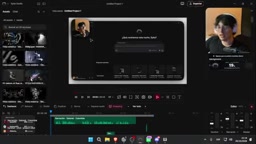
Remotion is a React-based programmatic video generation framework where developers describe visuals with React components, and the framework renders frame by frame and composites the video—suitable for data-driven or highly customized videos. JSX timeline abstracts the video timeline into a declarative code structure, where edit points, layers, and animations can all be expressed in code, facilitating version control and AI generation. Projects like Diffusion Studio and Hyperframe are based on this approach, differing in their rendering pipelines, timeline models, and support for elements like audio and subtitles. The advantage of such approaches is that video projects can be diffed, reused, and automated like code; the disadvantage is a steep learning curve and unfriendliness to non-programmers—which is exactly why SICA Studio tries to lower the barrier with "Skill" encapsulation.
Multi-Model Video Editing Test: Terra vs DeepSeek vs Gemini
To verify how different models perform on video editing tasks, the streamer designed a comparison experiment: using the same prompt, he had 6.1 Terra (Max mode), DeepSeekAd B4.1 (via OpenCode), and Gemini 3.8 Flash (via AntiGravity) each generate a video animation.
Terra's Performance: Fast but Lacking Creativity
Terra responded quickly in Max mode, but the generated results were disappointing. The streamer commented: "Terra performs poorly on video editing—not that its editing ability is lacking, but it seems to have no taste, no creativity." He further explained that Terra has no problem completing basic tasks, but appears mediocre in animation design that requires aesthetics and creativity.
DeepSeek Unexpectedly Wins
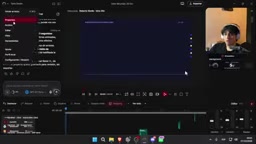
By contrast, DeepSeek B4.1's performance was a pleasant surprise. Although it didn't offer an "effort level" option, the generated video was clearly superior to Terra's in creativity and completeness. The streamer said outright: "DeepSeek definitely is better." He also noticed that DeepSeek consumed fewer tokens, making it more efficient.
Gemini's Performance Is Unstable
Gemini 3.8 Flash's first test produced "very bad" results, and the streamer suspected connection issues or prompt problems. He later retested with a different reference video, and the results improved, but were still inferior to DeepSeek. He noted that Gemini in High mode consumed a similar number of tokens to DeepSeek, but with worse results.
Community Interaction and Tool Recommendations
Many viewers asked questions during the stream. When asked how to choose a model, the streamer suggested: if you're mainly doing video editing, Opus 5.5 is currently the strongest choice, but extremely costly; if budget is limited, DeepSeek B4.1 stands out for value. He also mentioned that Codex will soon launch a CapCut plugin, which may improve the video editing experience.
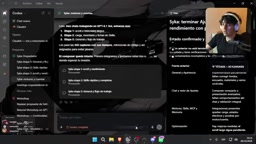
For viewers wanting to learn AI coding, he recommended tools like Hyperframe and Remotion, and revealed he's evaluating Gentle AI (an open-source agent framework) and considering integrating it into SICA. Gentle AI provides mechanisms such as persistent memory (engram), proportional work (ODD), and code-associated review (RDD) that can optimize agent workflows.
Challenges and Future of Self-Built Environments
Building your own agent environment is no easy task. The streamer mentioned he needs to handle model access, permission management, UI adaptation, and more. For example, AntiGravity frequently fails to connect when integrating Gemini, and OpenCode requires extra configuration to use DeepSeek. But he believes this flexibility is worth the investment, especially when commercial API services are unstable.
Currently, SICA is still in its early stages, but he plans to gradually open it up to the community. For developers wanting to try, he suggests starting with a simple toolchain—such as Whisper for speech transcription and Groq for fast inference—then gradually integrating more complex models.
"Vibecodeando is a lifestyle," the streamer said at the end. For him, building his own environment is not just a technical challenge, but a rethinking of AI workflows.
Gentle AI is an open-source framework for agent workflows, and several of its mechanisms are worth understanding: persistent memory (engram) lets agents retain key information across sessions, avoiding rebuilding context from scratch for every task; proportional work (ODD) refers to dynamically allocating reasoning budget and steps based on task complexity, rather than a fixed process; code-associated review (RDD) automatically associates relevant files and dependencies for review after the agent produces code, reducing errors introduced by hallucination. Such frameworks address the pain points of agents "forgetting" and "going out of control" in long tasks, and complement the multi-model scheduling of self-built environments. By comparison, Whisper handles speech-to-text and Groq provides low-latency inference; both are often called by agents as foundational toolchain components.
One-line Summary
A developer livestreams his self-built agent environment SICA and tests multi-model video editing, with DeepSeek unexpectedly winning.
Paragraph Summary
A developer who has livestreamed AI-assisted coding for 25 consecutive days decided to build his own agent environment SICA—capable of connecting to multiple AI subscriptions—due to Codex's instability and limited quotas, along with a companion code-based AI video editor, SICA Studio. In the stream, he compared 6.1 Terra, DeepSeek B4.1, and Gemini 3.8 Flash on video editing with the same prompt, finding that DeepSeek won on creativity and token efficiency, Terra was fast but lacked aesthetics, and Gemini was unstable. He recommends Opus 5.5 as the top choice for video editing despite its high cost, with DeepSeek as the budget option, and revealed he's evaluating the Gentle AI framework to optimize agent workflows, believing the flexibility of a self-built environment is worth the investment.
Related articles

Anthropic's IPO Crisis: Why $16.8B in Revenue Can't Buy a High Valuation
Anthropic posted $16.8B in Q3 revenue with 85% gross margin yet faces a cut to its IPO valuation. A deep dive into halved growth, the token price war, circular financing, and the clash between safety ideals and capital reality.

Anthropic Races Toward the Largest IPO in History: Can a $100 Billion Raise Ignite the AI Investment Boom?
Anthropic may file its prospectus as early as October 23, aiming to raise up to $100 billion at a valuation of up to $2 trillion, potentially the largest IPO ever. Q3 revenue hit $16.8 billion, up nearly 50% quarter over quarter, with adjusted profitability, but slowing growth has led some investors to cut valuation to $1.5 trillion. The IPO is a key test of whether the AI investment boom can continue.

Bessemer Partner on Anthropic IPO: The Public's First Direct Investment in AI Software
Bessemer partner Byron Theta on the Anthropic IPO: why it's called the moment everyone's been waiting for, the $650M four-round investment, the LP liquidity bind, and expectations of a 2027 IPO wave—plus open-source model pricing pressure, existential risk disclosures, and what the founders' 50.1% voting structure means for ordinary investors.