Self-Driving Codebases: The Next Frontier of AI Programming?
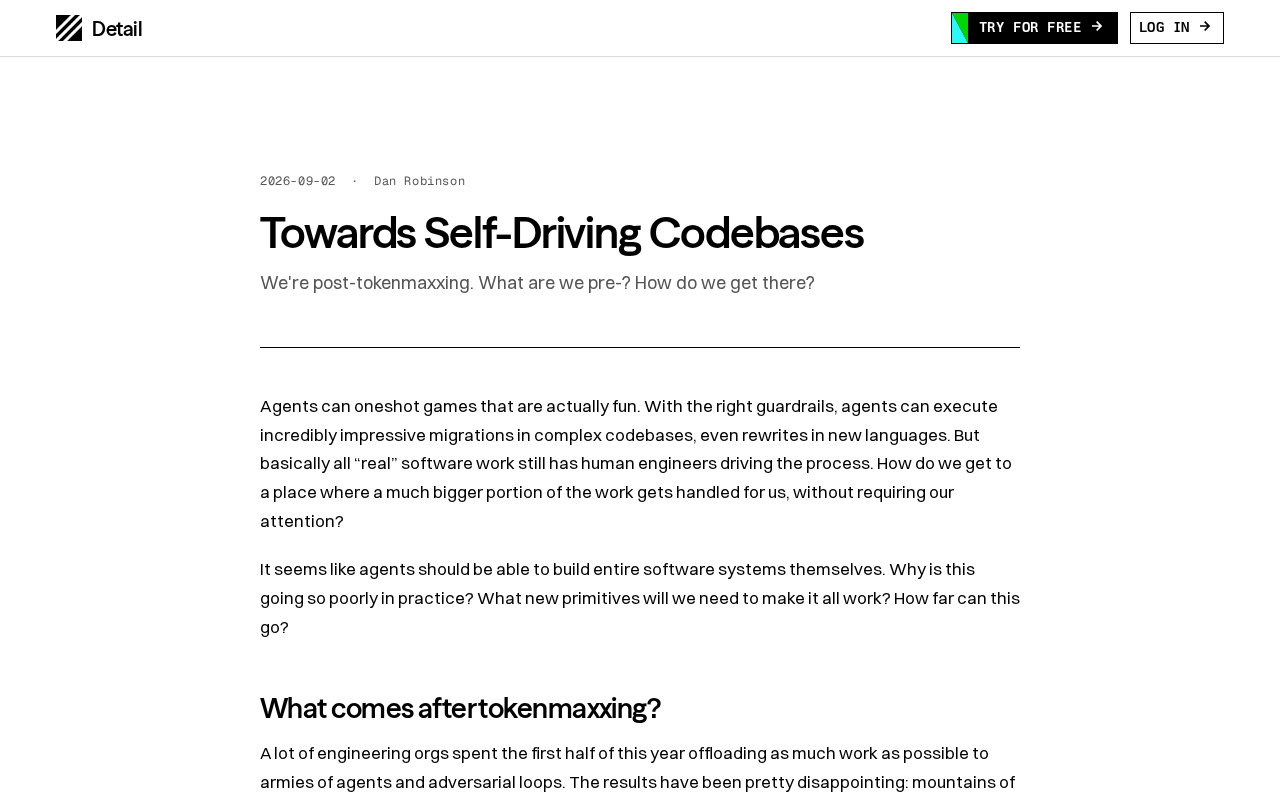
Self-Driving Codebases maps autonomous vehicle levels onto AI programming, from co-pilot tools to fully autonomous code maintenance.
"Self-Driving Codebases" is a forward-looking framework that applies autonomous vehicle leveling to software engineering, envisioning codebases that evolve from passive assets into dynamic systems capable of autonomously sensing needs, fixing bugs, and shipping features. The key shift: AI moves from developer co-pilot to central executor, with humans becoming supervisors and goal-setters. Driving forces include persistently high software maintenance costs and the maturing of LLMs and Agent frameworks. Major obstacles remain — reliability guarantees, accountability, and the vast tacit knowledge embedded in real codebases. The practical path forward is gradual, level-by-level automation, starting with low-risk tasks like dependency upgrades and test generation, rather than a leap to full autonomy.
From Code Completion to Self-Driving Codebases
Software development is undergoing a profound paradigm shift. Over the past few years, the evolution of AI coding assistants has followed a clear trajectory: from early syntax highlighting and autocomplete, to GitHub Copilot-style line-by-line suggestions, to today's intelligent agents capable of understanding context across files. The concept of "Self-Driving Codebases" attempts to describe the endpoint of this curve — a software system capable of self-maintenance, self-repair, and self-evolution.
This concept borrows from the leveled framework used in autonomous vehicles. Just as cars evolve from L0 (no automation) to L5 (full self-driving), the degree of codebase automation can be mapped similarly: from developers manually writing every line of code, to AI-assisted suggestions, to AI independently completing specific tasks, and ultimately to a system that operates autonomously with minimal human intervention.
What Is a "Self-Driving Codebase"?
At its core, a self-driving codebase is about giving the codebase a degree of autonomy. Rather than being a passive asset that waits for developers to make changes, it becomes a dynamic system capable of proactively sensing needs, identifying problems, and taking action.
Concretely, such a codebase might be able to: automatically detect and fix bugs, identifying root causes and submitting patches when tests fail; independently implement feature modules based on new business requirements; continuously refactor aging code to maintain quality; automatically update dependencies and resolve compatibility conflicts; and even proactively roll back or apply hot fixes when production anomalies are detected.
This represents a fundamental departure from today's mainstream AI coding tools. Tools like Copilot and Cursor remain "developer-centric" — AI is the co-pilot, while humans always hold the wheel. The self-driving codebase envisions an "AI-centric" model, where the human role shifts from executor to supervisor and goal-setter.
Why This Direction Deserves Attention
Software maintenance costs have long been a heavy burden on the industry. Research consistently shows that the majority of costs across a software's lifecycle come not from initial development, but from subsequent maintenance, fixes, and evolution. If AI can take over this repetitive and draining work, engineering teams can focus their energy on higher-value activities like architecture design and product innovation.
As large language models rapidly improve at code understanding and generation, and as Agent frameworks mature, the technical foundation for "self-driving" codebases is gradually falling into place. A new wave of AI coding agents has already demonstrated end-to-end task completion: reading issues, understanding the codebase, writing changes, running tests, and submitting PRs. These are the early prototypes of self-driving codebases.
Agent frameworks are the core technical foundation underpinning this vision and deserve a closer look. Unlike traditional "single-call" large language models, Agent frameworks give AI a "perceive–plan–act–feedback" loop. Specifically, a code agent can call tools (such as file read/write, terminal execution, and test runners), maintain state and memory across multi-step tasks, and dynamically adjust its strategy based on intermediate results. Leading implementations today include OpenAI's Function Calling mechanism, Anthropic's Claude tool use, and open-source orchestration frameworks like LangChain, AutoGen, and LlamaIndex. It is precisely this ability to "operate in real environments and learn from feedback" that upgrades AI from a pure text-generation tool to an autonomous executor capable of completing engineering tasks end-to-end — and what makes self-driving codebases technically feasible rather than merely conceptual.
Real-World Challenges and Skepticism
As appealing as the vision is, the road to full automation is riddled with obstacles. The foremost challenge is reliability. Code is unforgiving in ways that natural language is not — a subtle logic error can crash a system or introduce a security vulnerability. Allowing AI to modify production code without human oversight demands extremely high correctness guarantees and robust rollback mechanisms.
Next is the question of trust and accountability. When AI-authored code autonomously committed to production causes an incident, how is responsibility assigned? Are enterprises willing to hand control of their core systems to a "black box"? This is not just a technical question — it touches on the restructuring of organizational processes and legal liability.
Furthermore, the complexity of a codebase often far exceeds what any single issue can capture. Real systems are filled with implicit conventions, historical baggage, and cross-team dependencies — "knowledge outside the context window" that current AI cannot fully grasp. Just as autonomous vehicles perform well on structured highways but struggle in complex urban environments, self-driving codebases may remain stuck in a middle state — "usable in specific scenarios, unreliable in all scenarios" — for a long time to come.
The problems of "implicit conventions" and "historical baggage" have specific names in software engineering. The former corresponds to Tacit Knowledge — design decisions and trade-offs that were never written down in comments or documentation. The latter is commonly referred to as Technical Debt. Current large language models primarily understand system semantics through code itself and natural language comments, but a vast amount of critical context lives in engineers' heads, old Slack messages, design review notes, and unwritten verbal agreements. This closely mirrors the challenge autonomous vehicles face on "unstructured roads": no matter how rich the training data, it can never cover the infinite edge cases found in real-world systems. This is also why researchers broadly agree that improving AI's ability to handle long contexts and cross-repository dependencies is one of the key bottlenecks on the path to practical self-driving codebases.
Gradual Leveled Evolution, Not an Overnight Leap
A more pragmatic view is that self-driving codebases won't materialize overnight — they will advance incrementally along an automation ladder. The industry currently sits roughly between "L2 and L3": AI can independently complete tasks within well-defined constraints, but humans still review every merge.
A foreseeable near-term path looks like this: start with low-risk, high-repetition scenarios such as dependency upgrades, test completion, documentation generation, and code formatting; then gradually expand to bounded feature development and bug fixes; and finally, in mature engineering systems equipped with comprehensive automated testing, monitoring, and rollback infrastructure, achieve higher levels of autonomy.
For developers, this implies a shift in where skills matter most. Tomorrow's engineers may look more like "codebase operators" — focused on setting goals, reviewing decisions, and maintaining constraint boundaries, while delegating large volumes of implementation details to AI agents. This is both an opportunity and a call for practitioners to proactively adapt to new modes of collaboration.
Conclusion
"Self-Driving Codebases" is an imaginative framework that provides a clear coordinate system for the long-term evolution of AI in programming. It reminds us that AI's transformation of software development goes far beyond "writing code faster" — it may reshape the entire paradigm of how software is maintained and evolved.
That said, as the scale of discussion this topic has sparked on Hacker News suggests, it remains largely in the realm of forward-looking exploration, with considerable distance still to cover before large-scale production deployment. The real value may lie not in chasing the ultimate goal of full automation, but in the concrete productivity gains unlocked at each level of automation along the way.
Related articles
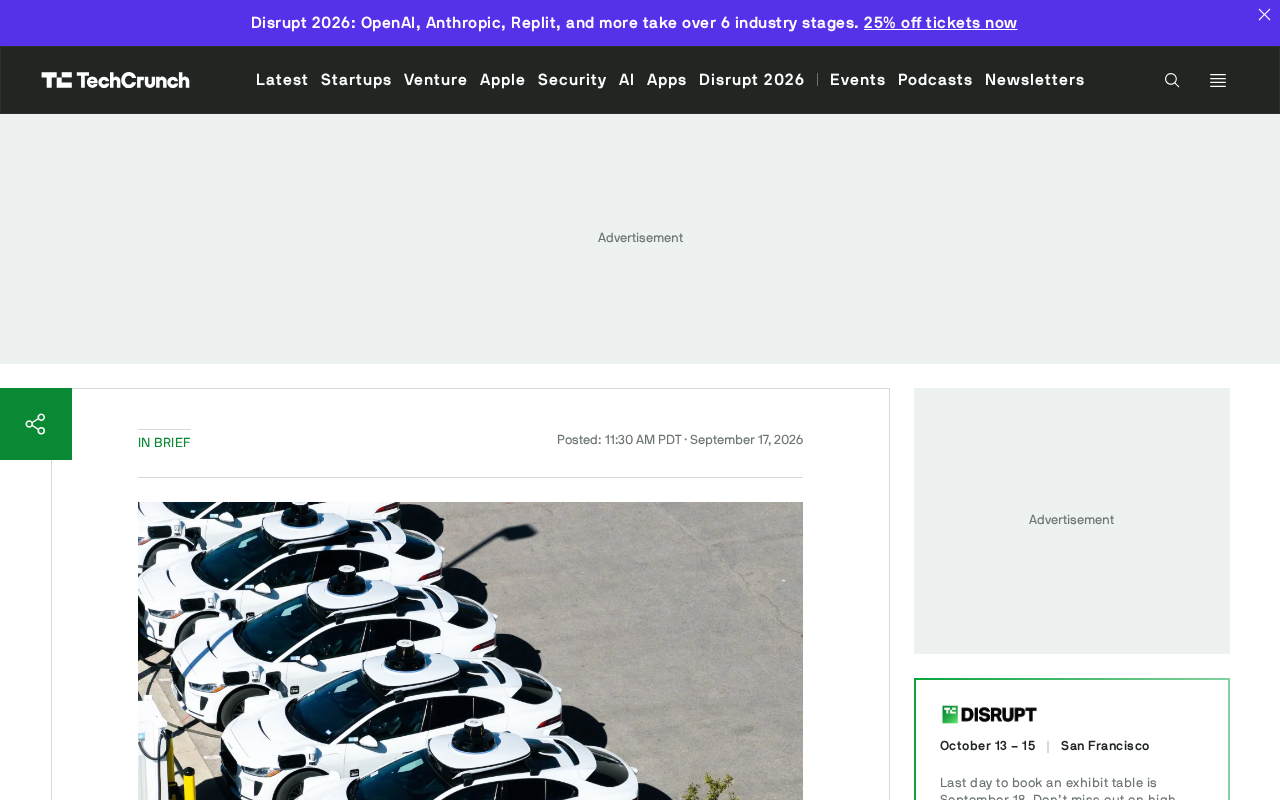
Waymo Restarts San Antonio Operations: Back on the Road Five Months After Flood Incident
Waymo resumes San Antonio Robotaxi service ~5 months after a vehicle was swept away in flooding. A look at what happened, why it took so long, and what it means for AV safety in extreme weather.
What Is AIOps? How AI Is Reshaping IT Operations
AIOps applies AI and machine learning to IT operations for anomaly detection, alert noise reduction, and root cause analysis — shifting teams from reactive to proactive.

CCC Sends Its Invitation: 40C3 Hacker Congress Themed "Model Citizens"
CCC announces its 40th Chaos Communication Congress (40C3) under the theme "Model Citizens," inviting hackers worldwide to examine surveillance and algorithmic governance.