Sellio: A Shared Inbox That Unifies Omnichannel Customer Support with AI Agents
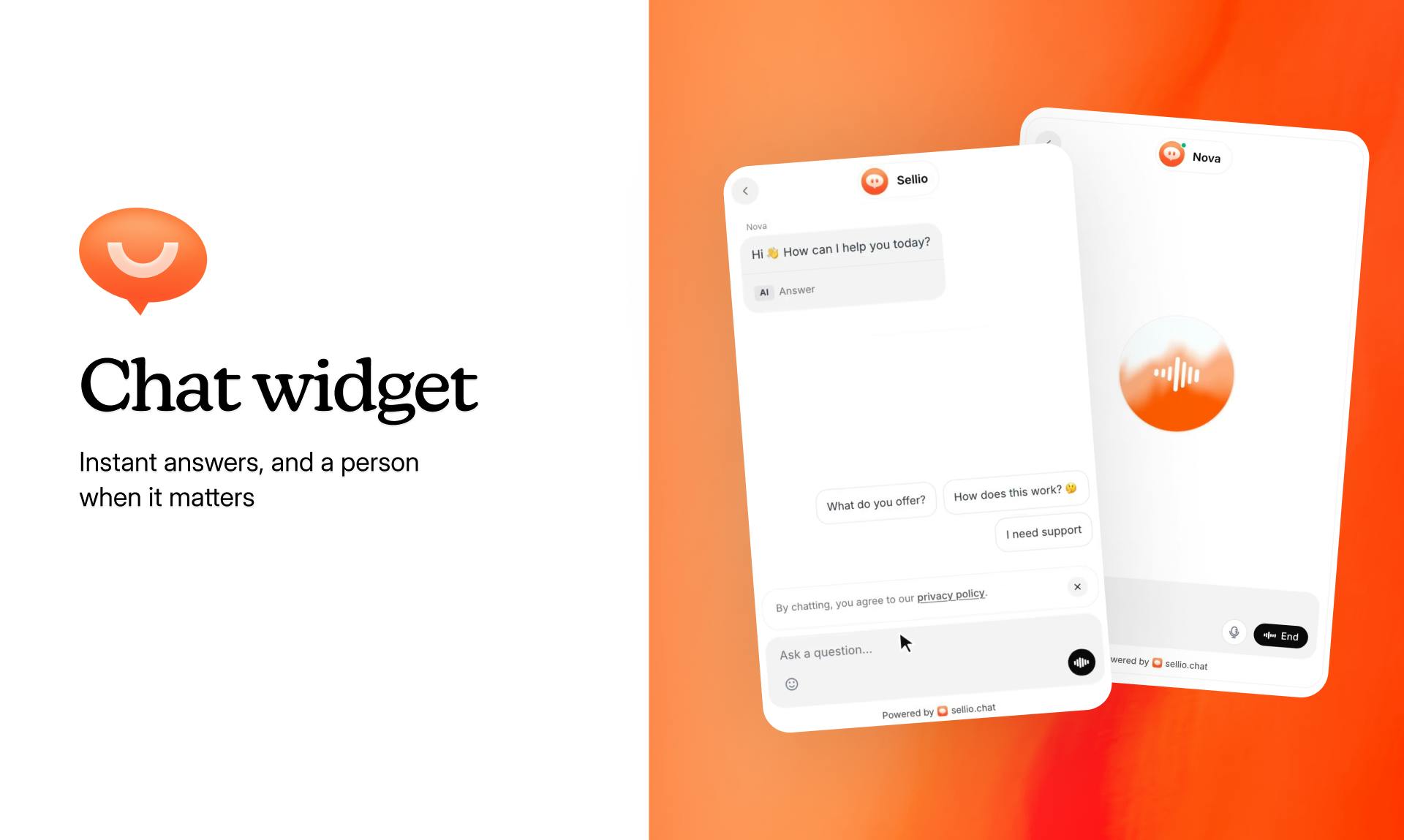
Sellio brings all major social and email channels into one shared inbox, with AI agents trained on your own company docs.
Sellio is a newly launched omnichannel customer support tool on Product Hunt that consolidates live chat, WhatsApp, Instagram, Telegram, and email into a single shared inbox, eliminating the friction of switching between multiple platforms. Its AI agent is trained on the company's own documents — FAQs, help center content, and product descriptions — using techniques like RAG to reduce hallucinations and keep automated responses aligned with actual company policies. The product also includes built-in ticketing and analytics, making it more than a message aggregator. It primarily targets small and mid-sized e-commerce brands and DTC businesses managing multiple social channels. It ranked 16th on Product Hunt with 64 upvotes on launch day; API compliance details and pricing specifics are still pending further validation.
One Inbox, Every Support Channel
Fragmented customer service has long been a pain point for small and mid-sized teams: someone asks a question in a group chat, others are waiting on WhatsApp, Instagram DMs keep piling up, and email runs on an entirely separate system. Support agents constantly switch between tools, making it nearly impossible to maintain fast response times or consistent service quality.
Sellio, a product that recently launched on Product Hunt, takes a clear-cut approach to this problem — consolidating live chat, WhatsApp, Instagram, Telegram, and email into a single shared inbox, with AI agent-powered automated responses built right in. Created by Khalid Nouri, the product launched to 64 upvotes, 5 comments, and ranked 16th on its launch day, categorized under Messaging, Analytics, and Artificial Intelligence.
The Core of the AI Agent: Trained on Your Own Docs
One of Sellio's most noteworthy features is that its AI agent isn't a generic chatbot — it's "trained on your docs," meaning it learns from the company's own knowledge base, help documentation, and product descriptions.
This design aligns with the mainstream approach to customer service automation today: using techniques like Retrieval-Augmented Generation (RAG) to anchor the model's responses to real company materials rather than generating answers from thin air. In a support context, accuracy matters far more than fluency — a bot that fabricates a price or makes up a return policy will directly damage brand trust. Grounding the AI agent in company documents is a pragmatic way to reduce hallucinations and improve practical reliability.
For small teams, this means there's no need to build Q&A logic from scratch. Simply feed the system your existing FAQs and documentation, and you get an automated response layer capable of handling common questions — freeing up your human agents for complex inquiries that genuinely require personal attention.
What is RAG? Retrieval-Augmented Generation (RAG) is currently the most widely adopted knowledge-alignment approach in enterprise AI applications. When a user asks a question, the system first retrieves the most relevant passages from a pre-indexed document library, then passes those passages as context to a large language model to generate the response. This ensures the model's output is always grounded in real sources rather than relying on generalized knowledge memorized during training. Compared to direct fine-tuning, RAG's key advantage is that the knowledge base can be updated at any time — just re-index the documents, no model retraining required. This makes it especially well-suited to e-commerce environments where product descriptions and pricing policies change frequently. "Hallucination" — where a model generates confidently stated but factually incorrect or fabricated content — is an inherent risk in large language models. In customer service, a bot that invents a nonexistent promotion or cites the wrong refund timeline creates far more cleanup work than a human simply answering the question. By forcing the model to cite real sources, RAG is one of the most effective and cost-efficient engineering-level mitigations for hallucination currently available.
Tickets and Analytics: From "Receiving Messages" to "Managing Workflows"
Beyond multi-channel aggregation and AI responses, Sellio also offers ticket management and analytics. These features elevate it from a simple "message aggregator" to a full-fledged customer service management tool.
The ticketing system transforms scattered conversations into trackable, assignable, closeable tasks, ensuring no customer inquiry falls through the cracks. Analytics provide data on response times, volume handled, and channel distribution — helping teams measure service quality and optimize staffing. Given that Sellio lists Analytics as one of its core categories, data capabilities are clearly positioned as a selling point on par with message handling.
Positioning and Competition: Differentiating in a Crowded Market
AI-powered customer support is far from an untapped space. Intercom, Zendesk, Crisp, and a wave of newer AI support tools are all competing for the same market. Sellio's entry point is the combination of omnichannel coverage, AI agents, and lightweight deployment — particularly targeting small and mid-sized e-commerce brands and early-stage startups with limited budgets that still manage customer interactions across multiple social platforms.
Treating WhatsApp, Instagram, and Telegram as first-class channels in a shared inbox is a clear differentiator from traditional ticketing systems, which tend to center on email and web chat while offering weaker social channel support. For DTC (direct-to-consumer) sellers whose customers prefer communicating on social platforms, this kind of channel coverage has real practical appeal.
A note on API compliance: The WhatsApp Business API and Instagram Messaging API are both tightly controlled official interfaces — not something any tool can freely access. The WhatsApp Business API requires applying through a Meta-certified Business Solution Provider (BSP) and comes with rules such as message template review requirements and a 24-hour conversation window restriction. Instagram's messaging API similarly requires apps to pass Meta's permissions review and places explicit limits on automated reply frequency and content. This is why compliance is worth calling out explicitly — many tools on the market simulate WhatsApp connectivity through unofficial means, which may work in the short term but carries real risks of account bans and data security issues. For teams planning to rely on these channels long-term, confirming that a vendor holds official API partnership credentials is a prerequisite that shouldn't be overlooked.
Questions Worth Watching
As a newly launched product, Sellio's publicly available information is still fairly limited. Several key dimensions remain to be verified: how the AI agent handles non-standard or emotionally charged inquiries; the stability and compliance of multi-channel account integrations (especially given WhatsApp's and Instagram's official API policies); and whether the pricing is genuinely accessible for small teams.
A first-day score of 64 upvotes is a respectable but modest debut — it suggests the product concept resonates, but building a durable position in a crowded market will require a lot more real-world validation. For teams actively exploring omnichannel AI support solutions, Sellio is worth adding to the shortlist for a trial run. That said, it's advisable to run a small-scale test against your own document quality and channel requirements before committing to a full migration.
Related articles
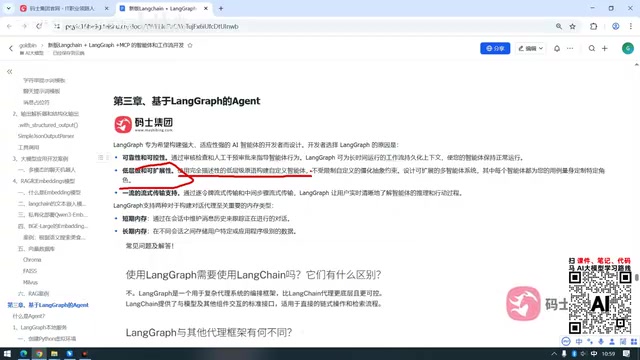
LangGraph Crash Course: Building Enterprise-Grade AI Agents and Workflows from Scratch
LangGraph crash course: learn its independence from LangChain, MIT license, FastAPI high-concurrency deployment, human approval, and memory storage for enterprise AI agents.
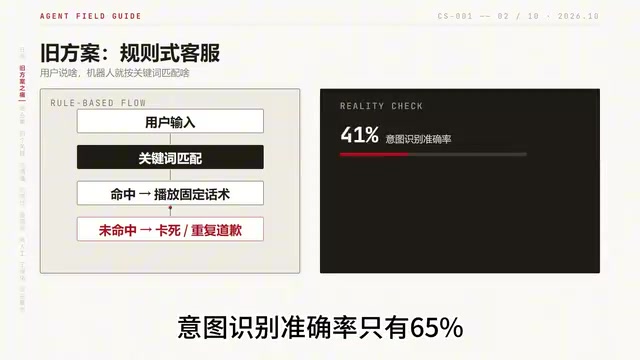
Building an AI Customer Service Agent from Scratch: A 92% Intent Recognition Case Study
A Bilibili case study: building an AI customer service agent from scratch with BERT intent recognition, dialogue state tracking, hybrid vector retrieval, and a weighted handoff model—raising intent accuracy from 65% to 92%, 78% conversation completion, handling 100K conversations daily.
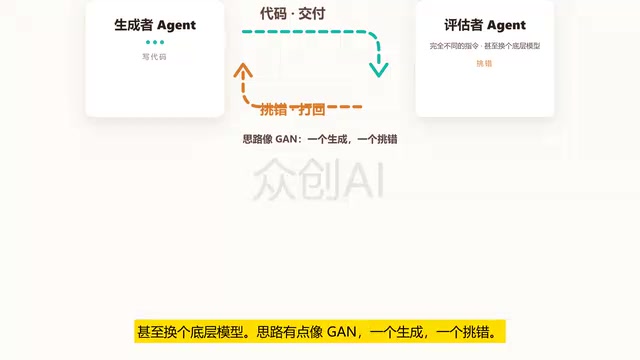
Loop Engineering: An Engineering Paradigm for AI That Writes Code and Merges PRs Autonomously
Loop Engineering is transforming AI development pipelines: Stripe's Minions system merges over 1,300 machine-generated PRs weekly. This article breaks down Loop Engineering's five core actions, six components, five failure modes, and three safety disciplines, explaining why independent evaluators, state files, and budget caps matter more than full automation.