Sendly Review: The First AI-Native SMS Platform with 5-Minute Integration

Sendly is an AI-native SMS platform designed for AI Agents, featuring 5-minute quick integration.
Sendly positions itself as the first "AI-native" SMS platform, designed specifically for AI Agents and developers to bridge AI applications with SMS communication. Compared to traditional SMS providers like Twilio, Sendly emphasizes deep optimization for AI Agent workflows, minimal integration (5 minutes to get started), and natural compatibility with mainstream Agent frameworks, filling the SMS communication gap in the AI infrastructure "output layer."
What Is Sendly? An Overview of the AI-Native SMS Platform
Sendly is a native SMS platform designed specifically for AI Agents and developers, claiming to enable applications to send text messages within 5 minutes. As the first "AI-native" SMS platform, Sendly aims to bridge the gap between AI applications and traditional communication channels.
The product is currently live on Product Hunt, categorized under "Messaging apps" and "AI Infrastructure Tools," and has already attracted 47 followers.
Why Do AI Agents Need SMS Capabilities?
The Irreplaceable Value of SMS as a Communication Channel
SMS (Short Message Service) is a text messaging standard based on cellular networks. Born in 1992, it remains one of the most widely covered communication protocols globally. According to industry research data, SMS has an average open rate of 98%, compared to approximately 20% for email and about 7% for app push notifications. More critically, about 90% of text messages are read within 3 minutes of receipt. This immediacy and high reach rate make SMS the preferred communication channel for AI Agents executing time-sensitive tasks.
Despite the proliferation of instant messaging apps, SMS remains one of the most reliable ways to reach users. Text messages require no additional app installation, cover virtually all mobile phone users, and have open rates far exceeding email and push notifications. For AI Agents, the ability to proactively communicate with users via SMS means:
- Proactive Notification: AI Agents can notify users via text message after completing tasks
- Verification & Confirmation: Obtain user confirmation via SMS before executing critical operations
- Multi-Channel Reach: When users are offline, SMS becomes the last resort for reaching them
A Critical Piece of the AI Agent Infrastructure Puzzle
AI Agents are intelligent systems capable of autonomously perceiving their environment, making plans, and executing multi-step tasks. Unlike traditional single-turn Q&A AI, Agents need to invoke external tools, manage state memory, and interact with real-world systems. This has spawned a massive "AI infrastructure" ecosystem spanning vector databases (such as Pinecone, Weaviate), workflow orchestration (such as LangChain, LlamaIndex), function-calling frameworks, and other specialized segments.
The current development of AI Agent infrastructure exhibits a clear imbalance: "mature input layer, weak output layer." On the input side, vector databases, RAG frameworks, and multimodal perception tools are quite mature. At the orchestration layer, frameworks like LangChain, LlamaIndex, and CrewAI provide rich workflow management capabilities. However, at the output layer—how Agents deliver execution results to real-world users—current solutions remain fragmented: email delivery relies on SendGrid/Mailgun, voice calls rely on Twilio Voice, while SMS—the most widely covered communication channel—lacks purpose-built tools optimized for Agents. This gap is precisely the market entry point for emerging products like Sendly, and it signals that "Agent output layer infrastructure" will become an important direction in AI toolchain development in 2025.
From LLM invocation, tool usage, and memory management to external communication, each link requires a dedicated solution. Sendly targets the SMS portion of the "external communication" link—a relatively underserved niche within the entire Agent output layer ecosystem.
Sendly's Product Positioning & Core Technical Features
The "AI-Native" Design Philosophy
The "AI Native" design philosophy is a product design approach that has emerged over the past two years alongside the explosion of LLM applications. Its core principle is that API data structures, calling methods, and error-handling mechanisms are designed from the ground up with LLM and Agent usage patterns in mind. This manifests in: support for Function Calling format tool descriptions, compatibility with OpenAI tool specifications or MCP (Model Context Protocol), and providing semantic operation interfaces rather than low-level telecom parameter configurations.
It's worth noting that MCP (Model Context Protocol) is an open standard protocol proposed by Anthropic in late 2024, designed to unify interactions between LLMs and external tools and data sources. Its core concept is similar to USB interface standardization—whether it's a database, API service, or communication tool, as long as it implements the MCP protocol, it can be directly invoked by any MCP-supporting AI model without writing custom adapter code for each tool. The emergence of this protocol marks an important turning point from "fragmented integration" to "standardized interconnection" in the AI tool ecosystem, and provides important context for why AI-native tools like Sendly emphasize protocol compatibility.
Sendly emphasizes that it is an "AI native" platform, meaning its API design and integration approach considered AI Agent use cases from the start, rather than simply wrapping a traditional SMS API with an additional layer—the latter often requires developers to manually write extensive prompts to teach Agents how to correctly use the API. Integration with mainstream AI Agent frameworks (such as LangChain, AutoGPT, etc.) becomes much more natural and convenient.
5-Minute Quick Integration Experience
Rapid integration is one of Sendly's core selling points. Traditional SMS services (like Twilio), while feature-rich, have relatively complex configuration processes: first you need to purchase or port phone numbers (including different types such as long codes, short codes, and toll-free numbers), then complete A2P 10DLC (Application-to-Person 10-Digit Long Code) brand registration and campaign review.
A2P 10DLC is an enterprise SMS compliance registration system jointly implemented by the three major U.S. carriers (AT&T, Verizon, T-Mobile) in 2021. Its core logic is: all commercial text messages sent via 10-digit long codes must complete brand entity registration and specific campaign purpose declaration on the TCR (The Campaign Registry) platform, and can only obtain normal sending throughput quotas after approval. Messages sent from unregistered numbers are heavily rate-limited or even filtered and blocked by carriers. This system has effectively curbed spam messaging, but also sets significant compliance barriers for newcomers—the registration cycle typically takes 2-6 weeks and requires business licenses, EIN tax IDs, and other documentation. For AI application developers looking to launch quickly, this process is often the biggest time cost.
Sendly dramatically simplifies this process, significantly lowering the barrier to entry for developers. For those who simply need to quickly add notification capabilities to their AI Agents, this difference is particularly significant. Additionally, traditional platforms require handling webhook configuration, error retry logic, and other technical details, while Sendly internalizes all this complexity.
Sendly vs Twilio: Market Competition & Differentiation Analysis
Core Differences from Traditional SMS Providers
Twilio, founded in 2008, is currently the world's largest communication API platform, with a market cap that once exceeded $60 billion, and its SMS service is extremely comprehensive. The market also includes mature communication API platforms like Vonage and MessageBird. Sendly's differentiated competitive advantages lie in:
- AI Scenario Focus: Deep optimization for AI Agent workflows, rather than being a general-purpose communication platform
- Minimal Integration Process: Dramatically reduced onboarding complexity—5 minutes to get started, bypassing the tedious compliance registration processes of traditional platforms
- Developer-Friendly: Designed around the usage habits of the new generation of AI application developers, with API interfaces that naturally align with Agent frameworks
Potential Challenges Facing Sendly
SMS services are not purely software businesses—they involve complex telecom carrier ecosystems behind the scenes. In the U.S. market, A2P SMS must comply with CTIA (Cellular Telecommunications and Internet Association) industry standards and register brands and campaigns through TCR (The Campaign Registry). In Europe, GDPR imposes strict consent mechanism requirements for SMS marketing. For emerging SMS platforms, these compliance requirements mean they must establish direct connections with carriers or partner through aggregators, while also assuming anti-spam review responsibilities.
In terms of infrastructure approach, emerging SMS platforms typically face two choices: one is establishing Direct Connect with carriers for optimal delivery quality and pricing, but this requires significant capital investment and lengthy business negotiations; the other is the telecom aggregator model, leveraging intermediaries like Bandwidth, Syniverse, or Sinch.
Related articles
 Product Reviews
The Programmer's Desk Setup Guide: Building a Workspace That Feels Like Home
Discover how programmers build productive, comfortable workspaces. From multi-monitor setups to ergonomic design, explore the desk philosophy that drives focus and flow.
 Product Reviews
Qoder vs Cursor Real-World Comparison: Which $20/Month AI IDE Is Better?
Hands-on comparison of Qoder vs Cursor AI IDEs: Agent autonomy, human interaction count, and architecture decisions. Qoder needed only 2 interactions vs Cursor's 8.
 Product Reviews
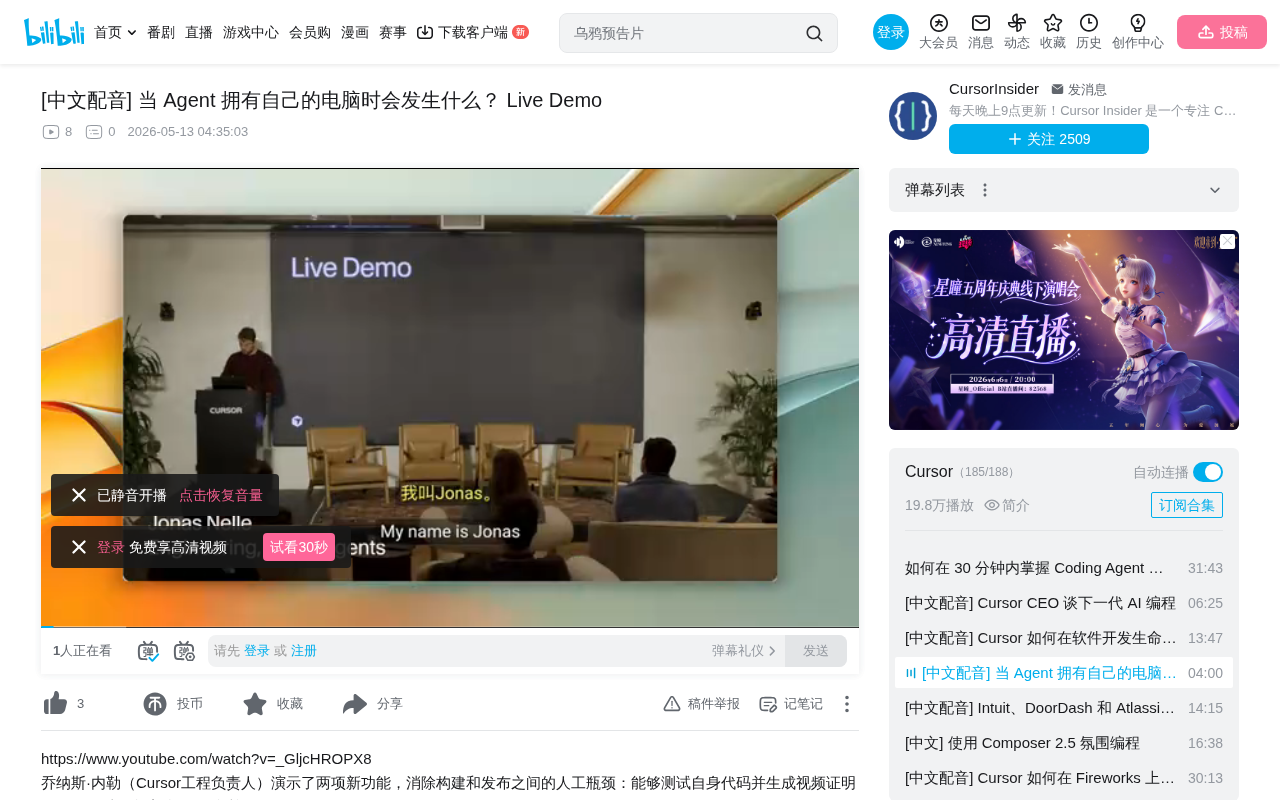
Cursor Cloud Agent Demo: Eliminating Bottlenecks Across the Entire Software Development Lifecycle
Deep analysis of Cursor's Cloud Agent demo showing how cloud VMs, automated test artifacts, and a full-chain control plane systematically eliminate human bottlenecks across the software development lifecycle.