Sendoff: Say "send it" to AI and Your Email Goes Out to Your Subscriber List Automatically

Sendoff triggers email sends with a single sentence, offering technical creators a self-hosted open-source solution.
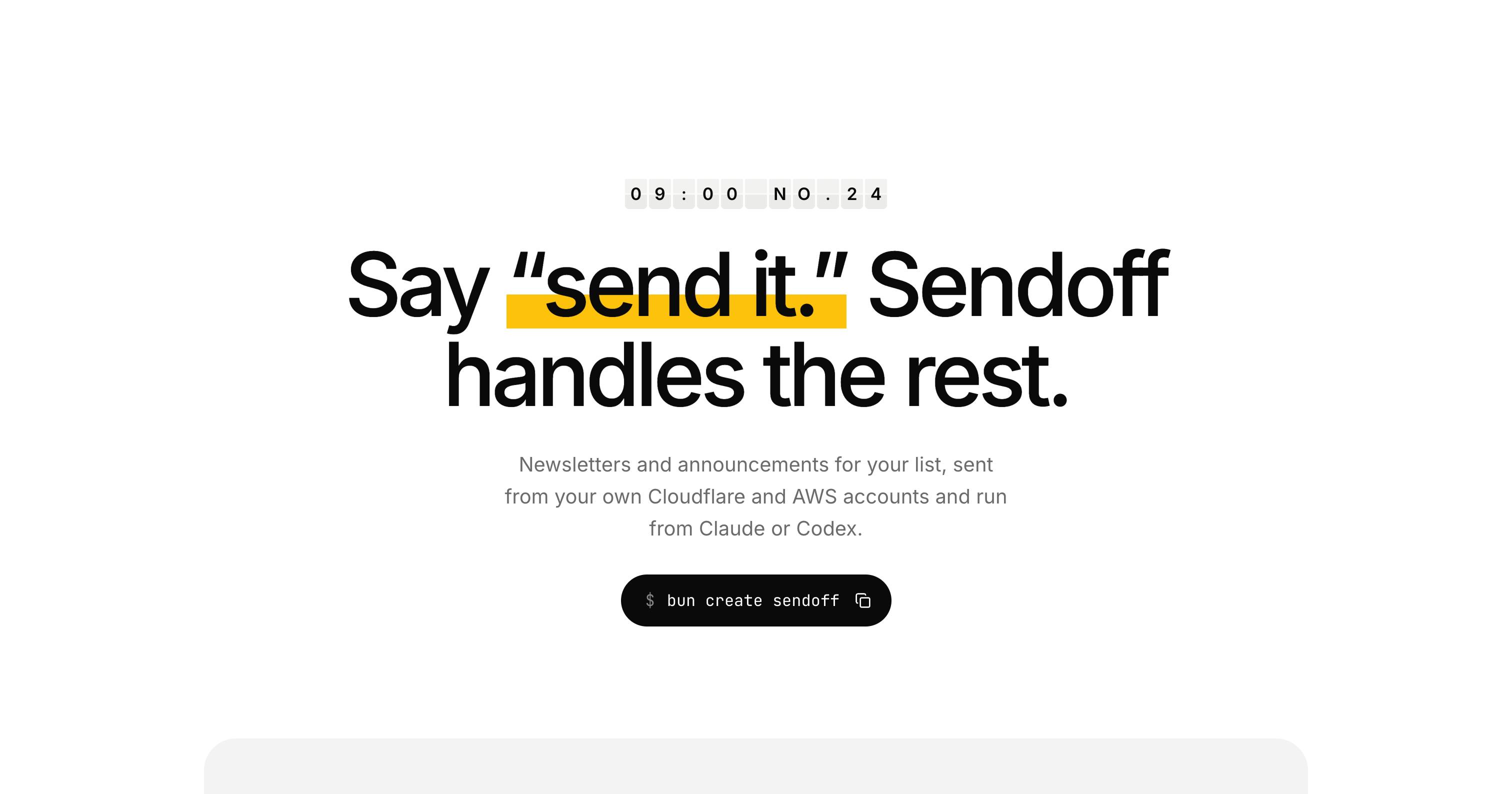
Sendoff is an open-source email sending tool on Product Hunt. Its core selling point: say "send it." in a Claude or Codex conversation to send a generated newsletter, product notification, or announcement straight to your subscriber list, compressing writing and sending into one interface. It is fully self-hosted, runs in your own Cloudflare and AWS accounts, sends via Amazon SES, and keeps subscriber data and sending records on your own infrastructure. Built by independent developer Hayden Bleasel, it suits technical users who need to audit code and customize sending logic. But community traction is limited (69 upvotes on Product Hunt, ranked 17th), so maturity and long-term maintenance remain to be seen, and it isn't for users who need a visual editor and deliverability analytics.
The barrier to email marketing is being redefined by AI tools. A new open-source tool called Sendoff has appeared on Product Hunt, and its core idea is simple: say "send it." in a Claude or Codex conversation, and your email newsletter, product launch announcement, or update is automatically sent to your subscriber list.
An Email Workflow Triggered by a Single Sentence
Sendoff's selling point is compressing "writing the email" and "sending the email" into the same conversational interface. In the traditional workflow, you finish the content in a writing tool, export or copy it to an email service platform, configure the recipient list, and then hit send — involving at least two or three systems. Sendoff skips that step: content is generated in Claude or Codex, and once confirmed, the send action is triggered directly.
This design targets high-frequency but lightweight email scenarios: product update announcements from indie developers, weekly reports from small teams, newsletters from individual creators. These needs usually don't justify building complex marketing automation pipelines, but they do require a reliable sending channel.
Self-Hosted Architecture: Data Stays in Your Own Cloud Account
Sendoff makes a noteworthy architectural choice — it is fully self-hosted. It runs in your own Cloudflare and AWS accounts, and emails are sent through Amazon SES. According to its Product Hunt page, this model means subscriber data, email content, and sending records all reside on your own infrastructure rather than in a third-party SaaS platform's database.
For teams that care about data sovereignty, this matters in practice. An email list is often one of the most core assets for creators and product teams, and handing it to an external platform means migration costs and privacy concerns. Sendoff returns control to the user, at the cost of having to configure cloud services yourself — which reflects its positioning for technical users rather than complete beginners.
Amazon SES (Simple Email Service) is a bulk email sending service provided by AWS, billed by volume at a unit price far lower than most email marketing SaaS platforms. However, users must complete domain verification, configure SPF/DKIM/DMARC records, and request to move out of sandbox mode to lift restrictions on recipient count and sending rate. SES itself does not provide subscriber management, unsubscribe links, template editing, or other marketing features, so self-hosted tools typically have to implement this peripheral logic themselves. In addition, SES monitors bounce and complaint rates against thresholds, and exceeding them can trigger a sending pause — meaning users of self-hosted solutions must maintain list quality themselves. Understanding this is key to judging where the real operational costs of a tool like Sendoff lie.
A Dual Positioning of Open Source and Ecosystem Integration
Sendoff is classified as an open-source project, with code hosted on GitHub and built by independent developer Hayden Bleasel. The open-source nature combined with the self-hosted architecture makes it naturally suited to users who want to audit code and customize sending logic as needed.
Its integration with Claude and Codex is what sets it apart from traditional email tools. AI coding assistants are extending from "writing code" to "executing actions," and Sendoff can be seen as an attempt to bring this trend into the email space: AI doesn't just help you draft copy; it becomes the entry point for triggering business processes.
The tool use mechanism in Claude and Codex is the technical prerequisite that enables Sendoff to "trigger sending with a single sentence." These AI assistants support calling external functions or MCP (Model Context Protocol) services within a conversation; the model decides based on natural language intent whether to trigger a registered tool and passes parameters to that tool for execution. In other words, Sendoff doesn't let the model send email directly — it registers a send action with the assistant, and the model determines that it should be invoked when the user says "send it." This mechanism defines the boundaries of reliability: incorrect intent recognition, missing parameters, or improper permission configuration can all cause sending failures, so in practice human confirmation of the recipient list and content is usually still needed rather than fully unattended operation.
A Measured View: Who It's For, and Who It Isn't
For context, Sendoff currently has 69 upvotes and 1 comment on Product Hunt, ranking 17th. Community discussion is not yet high, and its maturity and long-term maintenance remain to be seen.
It is better suited to developers and small teams that already have some cloud service configuration capability and whose email volume is not large. If you need a visual editor, detailed deliverability analytics dashboards, or customer support, traditional email marketing platforms remain the safer choice. Self-hosting means you bear the operational responsibility, and SES quotas and configuration are yours to manage.
In one sentence: Sendoff has turned the idea of "say one sentence and the email goes out" into a usable open-source solution. Its value isn't in replacing mature email platforms, but in offering technical creators a shorter, more autonomous path.
Deliverability refers to the proportion of emails that successfully land in the inbox rather than the spam folder, and is a core metric for measuring the quality of an email channel. It is affected by sender domain reputation, authentication records (SPF/DKIM/DMARC), content characteristics, and recipient engagement rates. Sending at high volume from a new domain or new IP can easily be throttled or blocked by major mailbox providers due to insufficient reputation, so it typically requires gradually ramping up volume to "warm" the domain reputation. Traditional email marketing platforms productize this process and provide analytics dashboards, while self-hosted solutions place the responsibility on the user. This is also the technical basis for the judgment in this article that "users who need detailed deliverability analytics dashboards should choose traditional platforms."
One-line Summary
Sendoff triggers email sending with a single sentence, serving technical creators through a self-hosted open-source solution.
Paragraph Summary
Sendoff is an open-source email sending tool that appeared on Product Hunt. Its core selling point is that users can say "send it." in a Claude or Codex conversation to send an already-generated newsletter, product notification, or announcement directly to their subscriber list, compressing writing and sending into the same interface. It uses a fully self-hosted architecture, running in the user's own Cloudflare and AWS accounts, with emails sent via Amazon SES, and subscriber data and sending records remain on their own infrastructure. The project was built by independent developer Hayden Bleasel and is suited to technical users who need to audit code and customize sending logic. However, its community traction is limited — only 69 upvotes on Product Hunt and a ranking of 17th — so its maturity and long-term maintenance remain to be seen, and it is not suitable for users who need a visual editor and deliverability analytics.
Related articles
 Tech Frontiers
MuJoCo: An Analysis of DeepMind's Open-Source General-Purpose Physics Simulator
An in-depth analysis of Google DeepMind's open-source physics simulator MuJoCo: high-performance C++ kernel, MJCF modeling format, contact solving principles, MJX GPU acceleration, and robot reinforcement learning use cases.
 Tech Frontiers
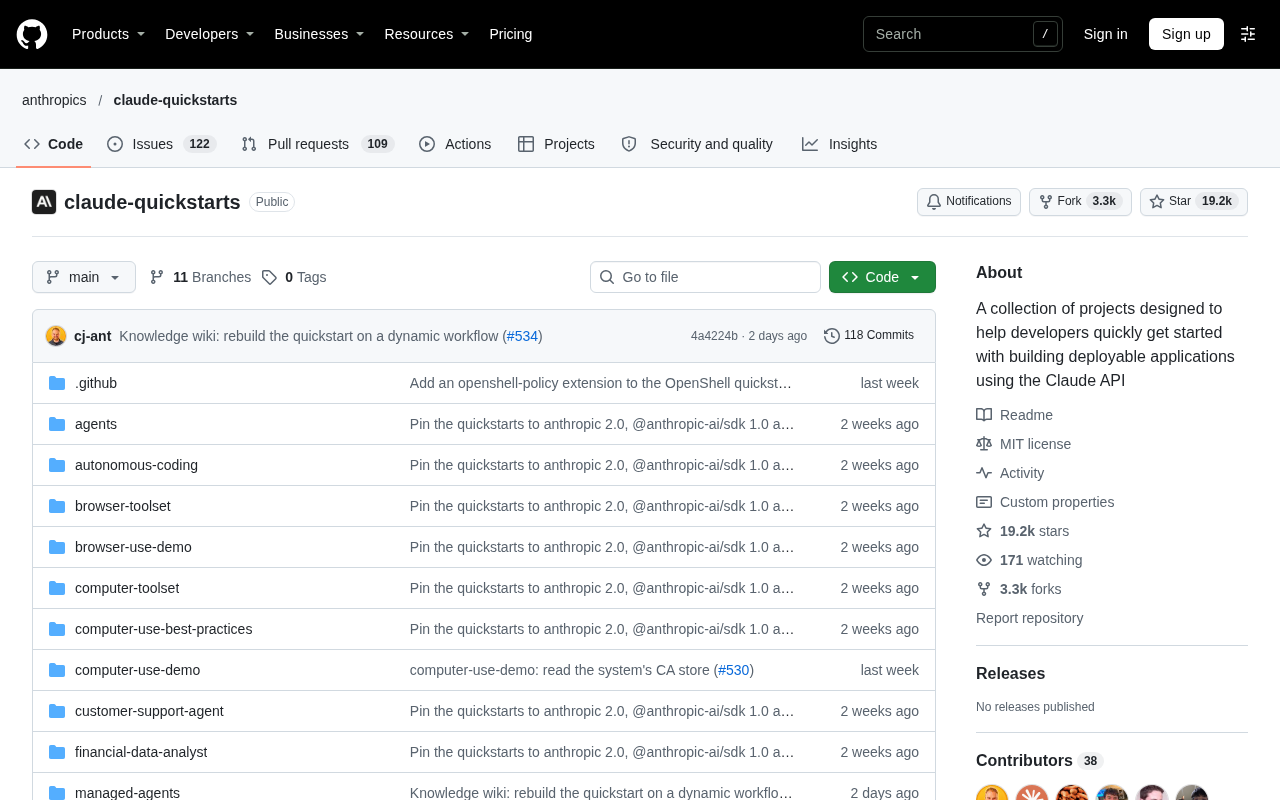
Claude API Quick Start: The Official Quickstarts Project Collection
Anthropic's official claude-quickstarts project collection helps developers quickly build deployable apps with the Claude API. Nearly 20k stars, Python-based, great for beginners and prototyping.
 Tech Frontiers
AI Agents Connecting Directly to APIs: Which Calls Can Be Safely Allowed?
AI agents can call any API, but the real challenge is deciding which calls can be safely allowed. This article analyzes allowance decisions from three dimensions—intent matching, least privilege, and controllable impact—and argues that the control layer should sit outside the agent, combined with audit traceability to build a trustworthy API call governance mechanism.