Sequoia Shuts Down Its Scouts Program: The End of an Era and a Reflection on the VC Model

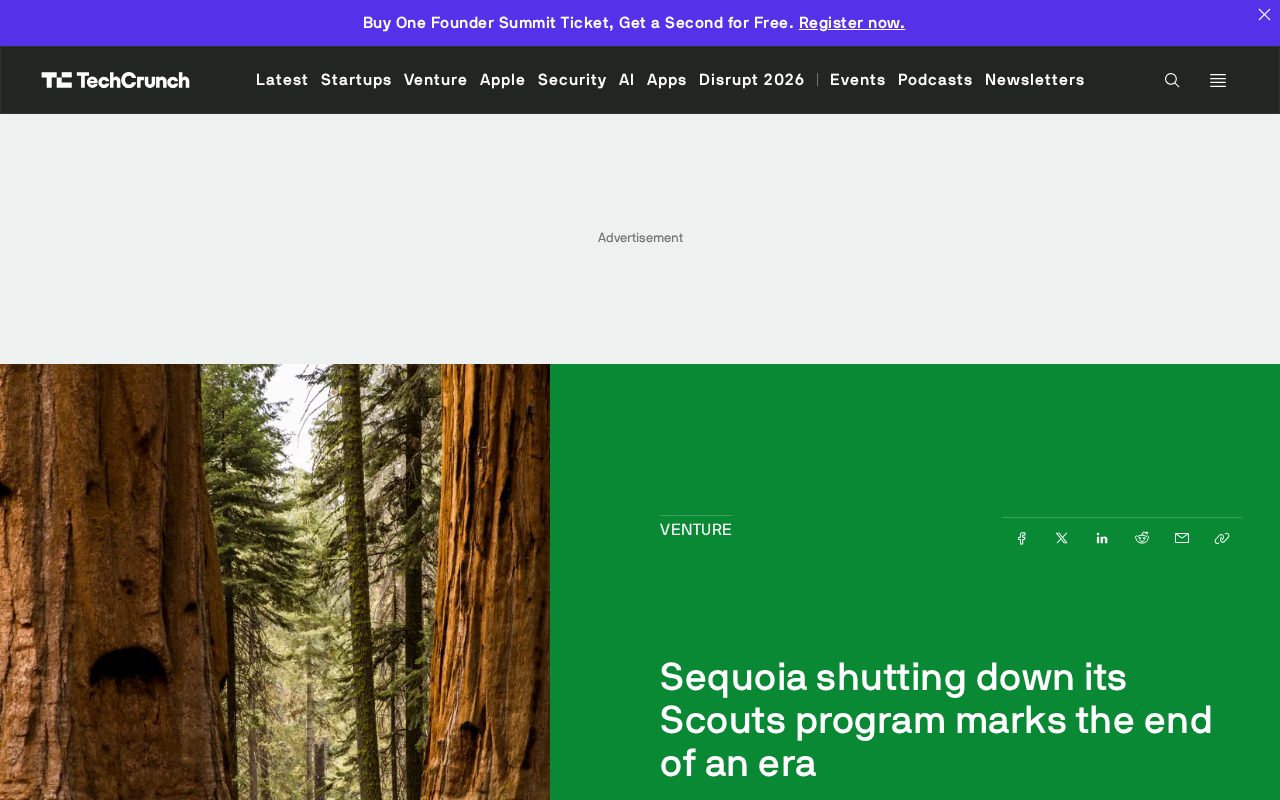
Sequoia shuts down its Scouts program, signaling that the scouts model it pioneered has reached its limit and that early-stage VC is recalibrating how it sources deals.
Sequoia Capital's shutdown of its Scouts program means this top-tier VC has personally ended the scouts mechanism it pioneered and that the industry widely emulated. The scouts model pays or shares returns with dispersed founders and technologists in exchange for early-stage deal leads, once helping firms expand their deal-sourcing radius at lightweight cost. However, the report notes a consensus is forming that the model in its current form has reached its limit. The article analyzes three structural shortcomings—incentive mismatch, information noise, and model convergence—arguing that scouts has gradually turned from an "amplifier" into a "burden that needs managing."
Sequoia Capital has shut down its Scouts program, marking the moment when this top-tier VC firm personally brought to a close a mechanism it pioneered and that the entire industry emulated. The news comes from RSS channel reports, and the core message is clear: Sequoia was the pioneer of the scouts model, and many VC firms followed suit, but a consensus is now forming that the model, in its current form, has reached its limit.
What the scouts model is, and why Sequoia bet on it first
The core logic of the scouts model isn't complicated: VC firms pay certain compensation or share returns with people scattered across various industries—founders, technologists, angel investors—to have them refer early-stage deal leads to the firm.
Sequoia was the pioneer of this model. It extended its reach into areas the firm couldn't cover densely, trading relatively lightweight costs for a broader deal-sourcing radius. For VCs, winning in early-stage investing often depends on the ability to "see," and scouts filled exactly that gap. Afterward, a large number of VC firms followed suit, and scouts became an almost standard component of early-stage VC networks.
According to the original report's description, Sequoia "pioneered the scouts model," and subsequently "many VC firms followed suit"—this phrasing itself illustrates Sequoia's historical standing in this model.
The difference between a "scout" in VC and a traditional FA (financial advisor): Scouts are usually not full-time intermediaries but work with firms on a part-time, non-exclusive basis, with compensation mostly in the form of referral fees or a small share of carry, far lower than an FA's commission percentage. FAs often participate deeply in the financing process and assist with term negotiations, whereas a scout's core value lies only in "introducing," without involvement in deal execution. This lightweight structure lowers the firm's fixed costs, but it also means scouts lack the incentive to do deep due diligence, and referral quality depends heavily on individual judgment and the quality of one's network.
The weight of "deal sourcing" in early-stage investing: In early-stage investing, deal quality is extremely unevenly distributed, and whether one can "see" and reach a project before market consensus forms often determines returns more than subsequent due diligence. Deal sourcing is therefore regarded as one of a VC's core competencies, and firms expand their reach through building networks, hosting events, running content, and other means. The scouts model is precisely an attempt to "outsource" this capability to dispersed individuals, and its effectiveness depends on network density and screening mechanisms.
Why it's said to have reached its limit
The report doesn't give detailed internal reasons for Sequoia's shutdown, but it offers a key judgment: a consensus is forming that the scouts model, in its current form, has reached its limit.
This sentence is worth unpacking. The phrase "current form" means the problem isn't "whether to do deal sourcing" but the structural shortcomings of "doing deal sourcing through scouts" itself. Combined with the industry context, several typical tensions can be identified:
- Incentive mismatch: A scout's return is usually far smaller than the actual value of the deals they refer to the firm. Top scouts tend to evolve into independent investors, while mediocre scouts struggle to consistently produce high-quality leads.
- Information noise: As scout networks expand, the volume of leads firms receive rises, but screening costs amplify in tandem, and there's a gap between network-driven referrals and genuine early-stage judgment.
- Model convergence: When almost all firms build scout networks, this channel's differentiation advantage is diluted, and what was originally an information advantage becomes industry infrastructure.
These factors compound, gradually turning scouts from an "amplifier" into a "burden that needs managing."
An economic explanation of incentive mismatch: In the scouts model, referral fees are usually one-time and low-percentage, while a successful deal can return dozens or even hundreds of times the investment to a VC. This return structure leads top scouts, after accumulating enough network and judgment, to shift toward becoming independent investors for higher returns, creating adverse selection where "quality scouts drain away and the remaining scouts decline in quality." If firms want to retain top scouts, they must raise the share ratio, but this in turn undermines the model's cost advantage, creating a dilemma.
Information noise and screening costs: As scout networks scale up, the number of referrals firms receive rises, but referral quality varies widely. Firms must invest manpower in initial screening of leads, and this cost is often underestimated. In addition, scouts may, to earn referral fees, tend to recommend projects that are "easy to push" rather than those that are "truly high-quality," further exacerbating the noise.
The signal for the industry
Sequoia's shutdown of its Scouts program carries more symbolic weight than the single event itself. It means early-stage VC is recalibrating "how to efficiently reach the source of deals."
One possible direction: firms will channel resources toward more concentrated approaches closer to their own judgment systems, rather than relying on broad-net external referral networks. Another direction: the scouts model itself gets reworked—for example, binding more tightly with a small number of high-quality collaborators rather than maintaining a large, loose network.
It should be noted that the original report doesn't elaborate on Sequoia's subsequent alternatives, nor does it provide details on the scale or timeline involved in the shutdown. Any extended judgment about "how Sequoia will restructure its deal-sourcing mechanism" should be regarded as industry-level speculation, not confirmed fact.
Alternative directions for VC deal sourcing: In recent years, some firms have shifted toward more concentrated sourcing methods, such as establishing an internal dedicated "platform team" responsible for ecosystem operations and deal discovery, or building exclusive relationships with a small number of deeply collaborative "venture partners." Another trend is using data tools to scan public information (such as GitHub, product launch platforms, and academic papers) to assist in discovering early-stage projects. What these approaches share is being closer to the firm's own judgment system and reducing reliance on loose external networks, but they also place higher demands on the firm's operational capabilities.
Conclusion
A mechanism pioneered by Sequoia and widely replicated across the industry was ultimately actively terminated by its originator—the point here isn't what Sequoia "gave up," but that it acknowledged the boundaries of a model. For the VC industry, the golden age of scouts may have passed, but the question of "how to establish effective connections at the earliest stage of a project" still has no standard answer.
One-line Summary
Sequoia shuts down its Scouts program, signaling that the scouts model it pioneered has reached its limit and that early-stage VC is recalibrating how it sources deals.
Paragraph Summary
Sequoia Capital's shutdown of its Scouts program means this top-tier VC has personally ended the scouts mechanism it pioneered and that the industry widely emulated. The scouts model pays or shares returns with dispersed founders, technologists, and others in exchange for early-stage deal leads, and once helped firms expand their deal-sourcing radius at lightweight cost. However, the report notes a consensus is forming: the model in its current form has reached its limit. The article analyzes three structural shortcomings—incentive mismatch, information noise, and model convergence—and argues that scouts has gradually turned from an "amplifier" into a "burden that needs managing." The event symbolizes that early-stage VC is recalibrating how it reaches deals, possibly shifting toward more concentrated mechanisms closer to its own judgment systems, or reworking the scouts model. The report did not disclose the specific reasons, scale, or timeline of the shutdown.
Related articles
 Tech Frontiers
MuJoCo: An Analysis of DeepMind's Open-Source General-Purpose Physics Simulator
An in-depth analysis of Google DeepMind's open-source physics simulator MuJoCo: high-performance C++ kernel, MJCF modeling format, contact solving principles, MJX GPU acceleration, and robot reinforcement learning use cases.
 Tech Frontiers
Claude API Quick Start: The Official Quickstarts Project Collection
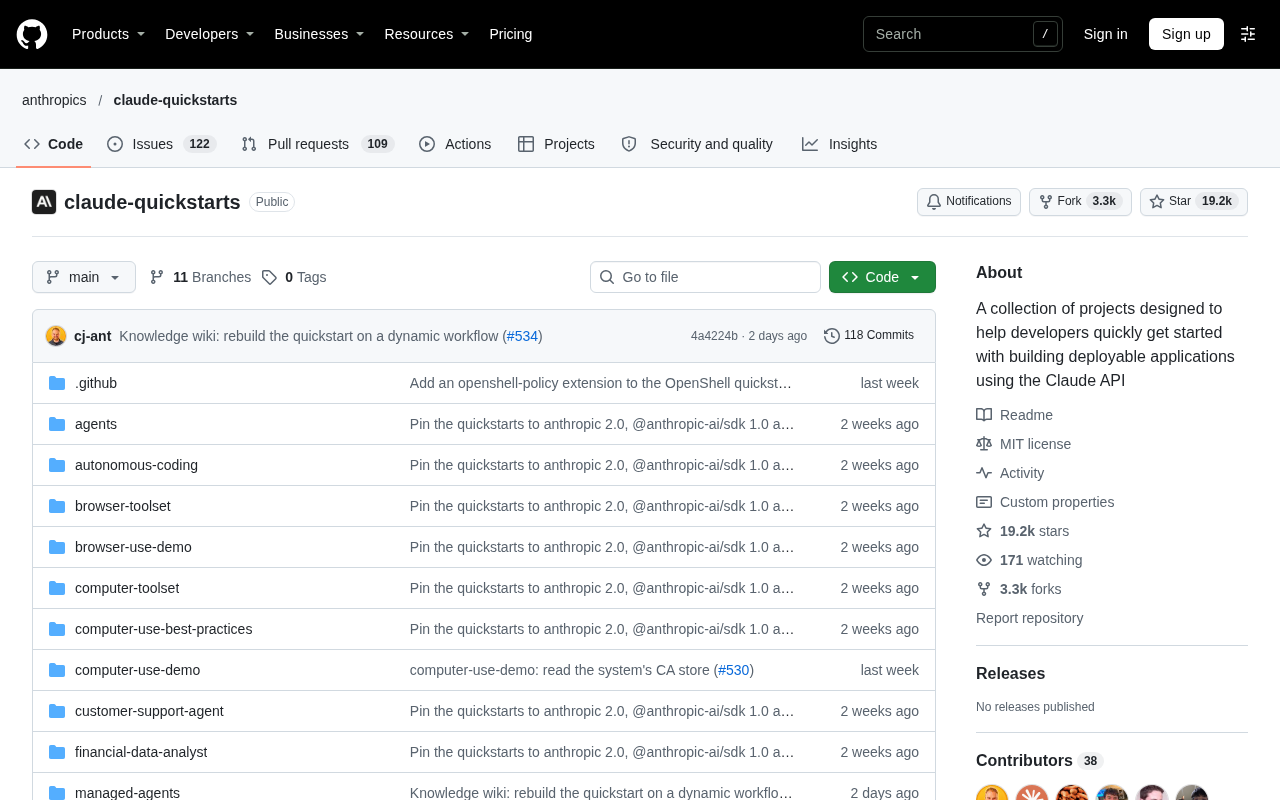
Anthropic's official claude-quickstarts project collection helps developers quickly build deployable apps with the Claude API. Nearly 20k stars, Python-based, great for beginners and prototyping.
 Tech Frontiers
AI Agents Connecting Directly to APIs: Which Calls Can Be Safely Allowed?
AI agents can call any API, but the real challenge is deciding which calls can be safely allowed. This article analyzes allowance decisions from three dimensions—intent matching, least privilege, and controllable impact—and argues that the control layer should sit outside the agent, combined with audit traceability to build a trustworthy API call governance mechanism.