Serbia's Election Shake-Up: Vučić Concedes Defeat as Student Movement Makes History
Serbia's student movement camp defeated Vučić, who had ruled for over a decade, in a snap election, reshaping the balance of power.
Serbian President Vučić conceded defeat in the snap parliamentary election, with a student-led opposition camp achieving a historic victory and ending the SNS's dominant rule since 2012. The election was initially seen as a power-consolidation move, but the student movement rapidly turned street protests into electoral force. The new government may lean toward the EU but remains constrained by energy dependence and Kosovo.
On the political map of the Balkans, an election earthquake driven by a student movement is rewriting Serbia's balance of power. According to Reuters, Serbian President Vučić has publicly conceded defeat in the snap parliamentary election, and the opposition camp—a political alliance centered on a student movement—has achieved a historic victory. The result marks the first time the Serbian Progressive Party (SNS), which has been in power continuously since 2012, has lost its dominant position in a nationwide election.
A Snap Election Ignited by Students
The snap election was originally interpreted by outsiders as a political maneuver by Vučić to consolidate power, but events unfolded in a way that completely defied the ruling party's expectations. Pre-election polls had already shown strong momentum for the opposition camp, and the final vote count confirmed that this trend was irreversible.
According to Reuters, Vučić delivered a speech after the results became clear, conceding defeat and congratulating his opponents. For a leader who has long controlled the political arena with a hardline posture, such a public concession is extremely rare in Serbia's modern political history. In the Hacker News discussion thread, some commenters compared this moment to the domino effect during the revolutions in Eastern Europe, arguing that its symbolic significance far exceeds that of an ordinary change of government.
The Serbian Progressive Party (SNS) was founded in 2008 by a splinter from the then-Radical Party, and began to dominate the political scene after the 2012 parliamentary election. Party leader Vučić went on to serve as prime minister and then president. During its time in power, the party gained stable support through a line that balanced pro-European orientation with nationalism, but in recent years it has faced domestic and international criticism over media freedom, electoral integrity, and anti-corruption issues. Understanding the SNS's long period of dominance helps clarify why the student movement camp's victory is seen as a turning point that breaks more than a decade of political monopoly.
How the Student Movement Became a Political Variable
The most striking variable in this election is a political force that grew out of campus protests. What began as a student movement opposing government policies and demanding accountability crossed the divide from the streets to the ballot box within months.
According to Reuters, student groups explicitly set the political goal before the election of "driving Vučić out of power." Analysts point out that the movement's mobilizing capacity came from its deep reach into young voters and its precise capture of social discontent. The long-standing fragmentation of traditional opposition parties instead made this emerging camp a natural vessel for consolidating anti-government votes.
Interestingly, some users in the HN discussion also raised doubts: the politicization of student movements often faces the tests of insufficient organizational experience and internal disputes over direction. Whether a short-term election victory can be translated into long-term governing capacity is a far more difficult question than winning votes.
Regional and Geopolitical Impact: Europe Eastward or Westward
Serbia has long maintained a delicate balance between the European Union and Russia, and Vučić's personal diplomatic style shaped this balance to a large extent. Whether this line will be adjusted after the opposition comes to power has become a core concern for international observers.
In the discussion prompted by the Reuters report, most commenters believe that a government led by the student movement may lean more toward European integration in foreign policy, but in practice it will still face structural constraints such as energy dependence and the Kosovo issue. A change of government does not equal a diplomatic pivot, a point repeatedly borne out in Balkan politics over the past decade and more.
The Kosovo issue is an unavoidable structural topic in Serbian diplomacy. Kosovo unilaterally declared independence in 2008; Serbia does not recognize its statehood, while most EU countries do. The EU makes normalization of relations one of the core conditions for Serbia's accession negotiations, while Russia diplomatically supports Serbia's position. No Serbian government can easily make fundamental concessions on the Kosovo issue, which limits the practical room for adjusting the diplomatic line.
Multiple Signals from One Election
From a broader perspective, Serbia's election offers several signals worth tracking:
- The return of youth political participation: Students have shifted from protesters to governing participants, breaking the stereotypical narrative of young people's political apathy.
- The limits of strongman politics: A leader who had been in power for more than a decade stepped down after an election defeat, showing that institutional electoral mechanisms remain an effective channel for power succession.
- The maturation of digital mobilization: The heated discussion of the event on platforms such as HN (200 points, 110 comments) shows that such political events are gaining attention and interpretation from transnational tech communities.
The election result is only the starting point. Whether the student movement can deliver on its political promises at the governance level, and whether Serbia's diplomatic scales will be recalibrated, will gradually become clear in the coming months. What is certain is that this election has already become an important observation window into changes in the political ecology of Southeastern Europe.
Hacker News (HN) is a tech and startup community operated by Y Combinator, focused mainly on technology, startups, and science, but it also generates high-density discussion of major international events. The "200 points, 110 comments" mentioned in the article are HN's post popularity and interaction metrics, reflecting that the event attracted more attention in the transnational tech community than ordinary political news. Such discussions often mix geopolitical, energy, and information-warfare perspectives, and can serve as a sample for observing international public reaction to Serbia's political situation.
One-line Summary
Serbia's student movement camp defeated Vučić, who had ruled for more than a decade, in a snap election, rewriting the balance of power.
Paragraph Summary
Serbian President Vučić conceded defeat in the snap parliamentary election, and the opposition camp centered on a student movement achieved a historic victory, ending the SNS's dominant rule since 2012. The election was originally seen as a maneuver by Vučić to consolidate power, but the student movement rapidly transformed from street protests into an electoral force through its mobilization of young voters and its capture of social discontent. Analysts believe the new government may lean more toward the EU in foreign policy, but will still be constrained by structural factors such as energy dependence and the Kosovo issue. The election also highlights multiple signals, including the return of youth political participation, the limits of strongman politics, and the maturation of digital mobilization.
Related articles

Building a Lights-Out Factory with a Dozen Agents: Lauren Tan's Trust Ladder and the Michelin Kitchen
Lauren Tan shares how a dozen coordinated agents merge 2,500+ PRs monthly: the trust ladder, Michelin kitchen metaphor, verification skills, and inner/outer loop connections reveal the environment engineering philosophy behind the lights-out factory.

GPT-6.1 Terra In-Depth: Positioning a Mid-Tier Model for Vision and Computer Use
OpenAI releases GPT-6.1 Terra, focused on visual reasoning and computer use, priced between flagship Sol and lightweight Luna. We break down its mid-tier positioning, pricing strategy, use cases, and reasoning-level test results.
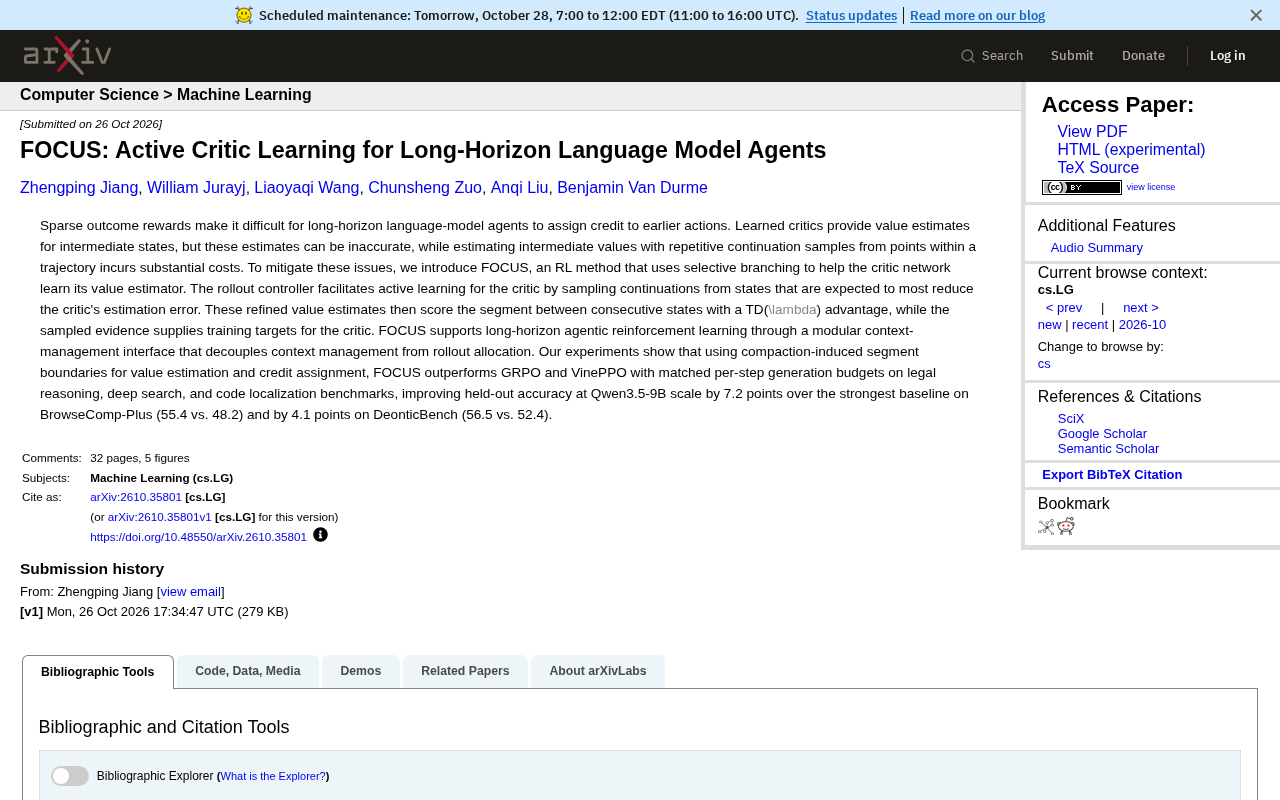
FOCUS: Active Critic Learning Solves Long-Horizon Agent Credit Assignment
FOCUS introduces selective branching and active critic learning to ease credit assignment in long-horizon LM agents, surpassing GRPO and VinePPO on BrowseComp-Plus and other benchmarks under matched budgets.