Shipping 10 Apps in One Year with AI: A Programmer's Decision to Quit and Go Indie

A 30-year-old programmer shipped 10 apps in one year using AI coding tools and quit to go indie.
Video creator Johnny quit his programming job at 30 to pursue indie development full-time. Using AI coding tools like Cursor, he shipped 10 iOS apps from scratch in a single year, proving the viability of solo development. He positioned himself as a "π-shaped talent" with two pillars—building products with AI and content creation/distribution—forming a business loop of product revenue and content-driven traffic that showcases new possibilities for individual developers in the AI era.
A 30-Year-Old Programmer's Crossroads
The trade war is still ongoing, the market is sluggish, and he just turned 30—quitting a job under these circumstances sounds like a crazy decision. But for video creator Johnny, it was a carefully considered choice.
"You're always chasing certainty, but how stable is so-called stability, really?" Johnny posed the question in his video. To him, the nine-to-five grind after graduation felt more like a curse—it bought out your time, your energy, your curiosity, and your creativity.
This wasn't an impulsive move. With the help of AI coding tools, Johnny built and shipped 10 iOS apps from scratch in a single year. That experience showed him the real potential of indie development and ultimately gave him the courage to quit.
A Born Builder: Seeds of Creativity
Looking back at Johnny's upbringing, you can see he was a builder at heart. As a kid, he took the paddle wheel from a science kit steam engine, strapped it onto a mini 4WD car, and turned it into his own "007 submarine."
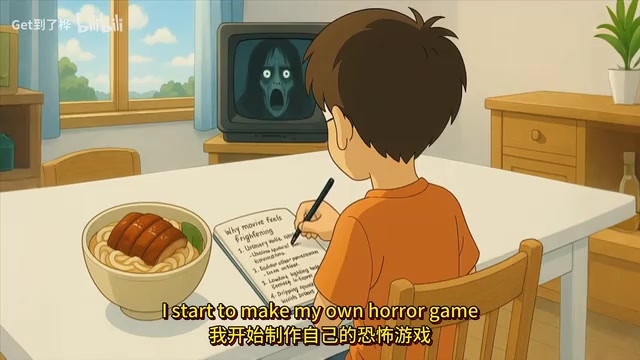
Even more impressive: after a bet with a friend, he started making his own horror game. He watched one horror movie every day, studying how they scared people, then built those elements into his game at night. In just one summer, his game racked up over 200,000 downloads.
He even created a board game that combined Hearthstone and Monopoly—because his mom said he was playing too many video games and it was bad for his eyes, so he made a game that didn't require a screen. This mindset of "creatively solving problems when hitting constraints" ran through his entire indie development journey.
The Exploration Phase: Trying Everything, but Lacking the Ability to Ship
Johnny's path wasn't always smooth. Before finding his way into AI-powered development, he tried many directions: vlogging, photography, running a YouTube channel, doing photography work in Manhattan...

"These were all great memories, but from a business value perspective, they weren't exactly successes," Johnny admitted honestly. He had been asking himself the same question for years and finally realized the core issue—he lacked the ability to turn ideas into shipped products.
No matter how many creative ideas you have, if you can't independently complete the entire pipeline from concept to product, those ideas will forever remain just ideas. This pain point wasn't truly solved until AI coding tools came along.
AI Coding Changed Everything: The Path to 10 Apps in One Year
"Starting with GPT 3.0, I was already using AI to write code. It didn't feel like programming—it felt like witnessing a miracle."
Johnny started squeezing every spare second out of his life to build products with AI. He even had Cursor (an AI coding assistant) fix bugs and add features for him while driving home. In one year, he built 10 iOS apps from scratch:
About AI Coding Tools: Cursor is an AI coding assistant built on large language models, belonging to the same emerging "AI-native IDE" category as GitHub Copilot. The core principle behind these tools is feeding code context into large models like GPT-4 and Claude, which then generate code suggestions, fix bugs, and even produce complete feature modules from natural language descriptions. Unlike traditional IDE plugins, Cursor adopts a "conversational programming" paradigm—developers describe requirements in natural language, and the tool automatically handles the code implementation. The significance of this technological breakthrough is that it lowers the cognitive barrier of programming from "how to write code" to "how to describe requirements," enabling designers, product managers, and even entrepreneurs with no programming background to produce working software prototypes—or even shipped products—in a relatively short time.
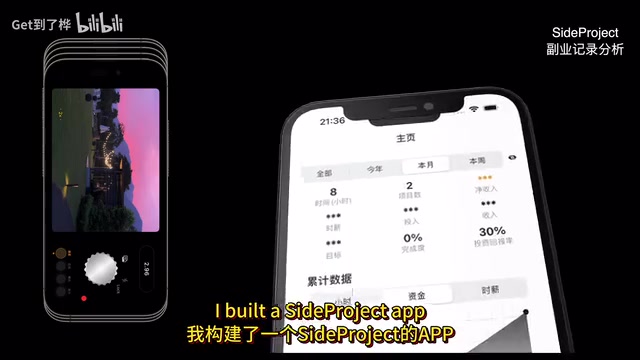
- Side Project Tracker: An app for tracking and visualizing the progress of side projects
- Cinematic Expand: A cinematic expansion camera app focused on taking beautiful photos
- Mixed Lens: A camera app that truly brings black pro-mist filter effects to iPhone
These apps were not only fun but also generated revenue. For someone who wasn't a full-time developer, this level of output would have been nearly unimaginable before the AI era. It's worth noting that a larger industry trend supports this phenomenon: the low-friction distribution mechanisms of the App Store and Google Play, combined with the widespread adoption of payment infrastructure like Stripe, allow individual developers to sell digital products globally without traditional channels. AI coding tools further compress the time cost from idea to launch—MVP development cycles that used to take 3–6 months are now claimed by some developers to be compressible to just days, giving rise to emerging concepts like "Micro-SaaS" and "Vibe Coding."
Why Not Do Indie Development While Keeping a Day Job?
Many people ask: why not do both? Johnny's answer was refreshingly honest:
First, you can't work on personal projects during office hours. Second, the more practical issue is that after overtime, you come home completely exhausted, open your video editing software, and just sit there staring at the screen, unable to do anything. Fatigue devours all creativity. "Doing both" in this state is essentially self-deception.
Finding His "π-Shaped Talent" Indie Development Path

In his last graduate school class, Johnny's professor introduced the concept of "T-shaped talent." The "T-shaped talent" model was originally popularized by IDEO design firm CEO Tim Brown in the 1990s, referring to someone who has deep expertise in one professional domain (the vertical stroke of the T) while maintaining broad cross-disciplinary understanding (the horizontal stroke). This model has been widely applied in hiring and career planning throughout the internet era. But for someone like Johnny, with wide-ranging interests who never confines himself to a single domain, his professor suggested he consider becoming a "π-shaped talent"—a versatile professional with two deep skill pillars. The π-shaped talent concept, proposed by Japanese management scholars, emphasizes that an individual possesses two deep professional pillars, shaped like the Greek letter π. In the AI era, the value of this model is further amplified: when AI tools can handle a large amount of execution-level work, human core competitiveness shifts toward "cross-domain integration ability"—deeply fusing technical capabilities with non-technical abilities like content creation, market insight, and user operations to form a composite advantage that AI finds difficult to replicate.
Years later, with the help of AI coding tools, Johnny finally figured out his π-shaped path:
- First pillar: Build & Sell—using AI to transform ideas into actual products
- Second pillar: Content creation & distribution—documenting the process on camera and publishing content across YouTube, Reddit, X, TikTok, and other platforms
The combination of these two skills forms a complete business loop: the product itself generates revenue, content drives traffic to the product, and the content itself can also be monetized. This is a personal business model that only became truly viable in the AI era.
Three Key Takeaways for Indie Developers in the AI Era
Johnny's story reflects several key trends for indie development in the AI era:
1. AI Has Dramatically Lowered the Barrier to Shipping Products
In the past, building an app independently required mastering multiple disciplines: programming, design, testing, and more. Now, AI coding assistants (like Cursor and GitHub Copilot) enable non-professional programmers to efficiently produce usable products. The gap between creative vision and execution is being bridged by AI.
2. Build in Public Has Become the New Indie Development Paradigm
Building products while creating content, openly sharing the construction process—this "building in public" approach
Related articles
Meta Muse Hits 900K Downloads in Six D…
Meta Muse Hits 900K Downloads in Six Days: The AI Agent Era Has Officially Arrived
Meta's AI agent Muse hit 902K downloads in 6 days, topping US App Store and Google Play charts above ChatGPT and Claude. A deep dive into Muse's capabilities and the AI Agent race.
 Industry Insights
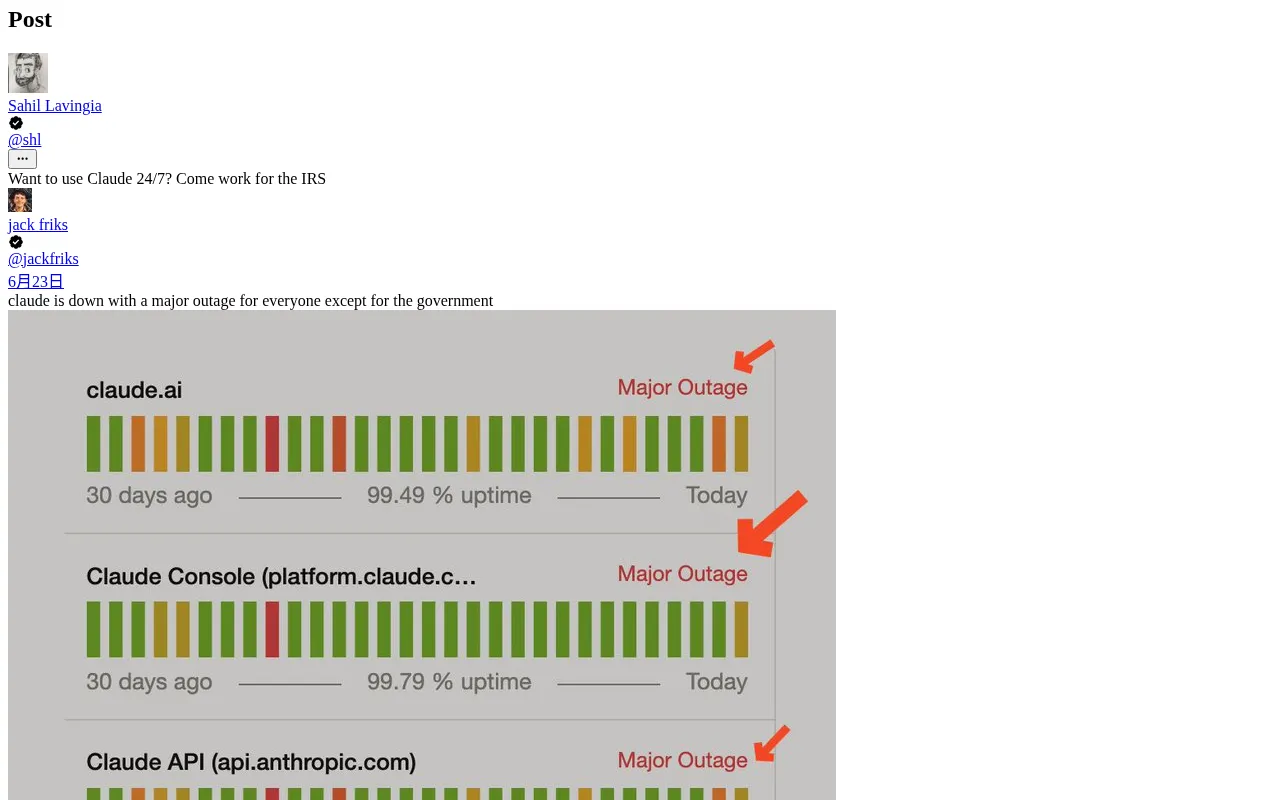
IRS Fully Embraces Claude AI, Accelerating Federal Government's AI Adoption
The IRS is recruiting staff with 24/7 Claude AI access, marking Anthropic's breakthrough into the federal government. Explore the strategic implications and tax use cases.
 Industry Insights
The IRS Mobile App Debate: A Trust Crisis in Government Digital Transformation
The IRS's proposed mobile app has sparked heated debate. This article analyzes the core arguments, exploring data security, privacy, and the trust crisis in government digital transformation.