shot-scraper 1.12 Adds WebP Support: Dramatically Smaller Screenshot File Sizes
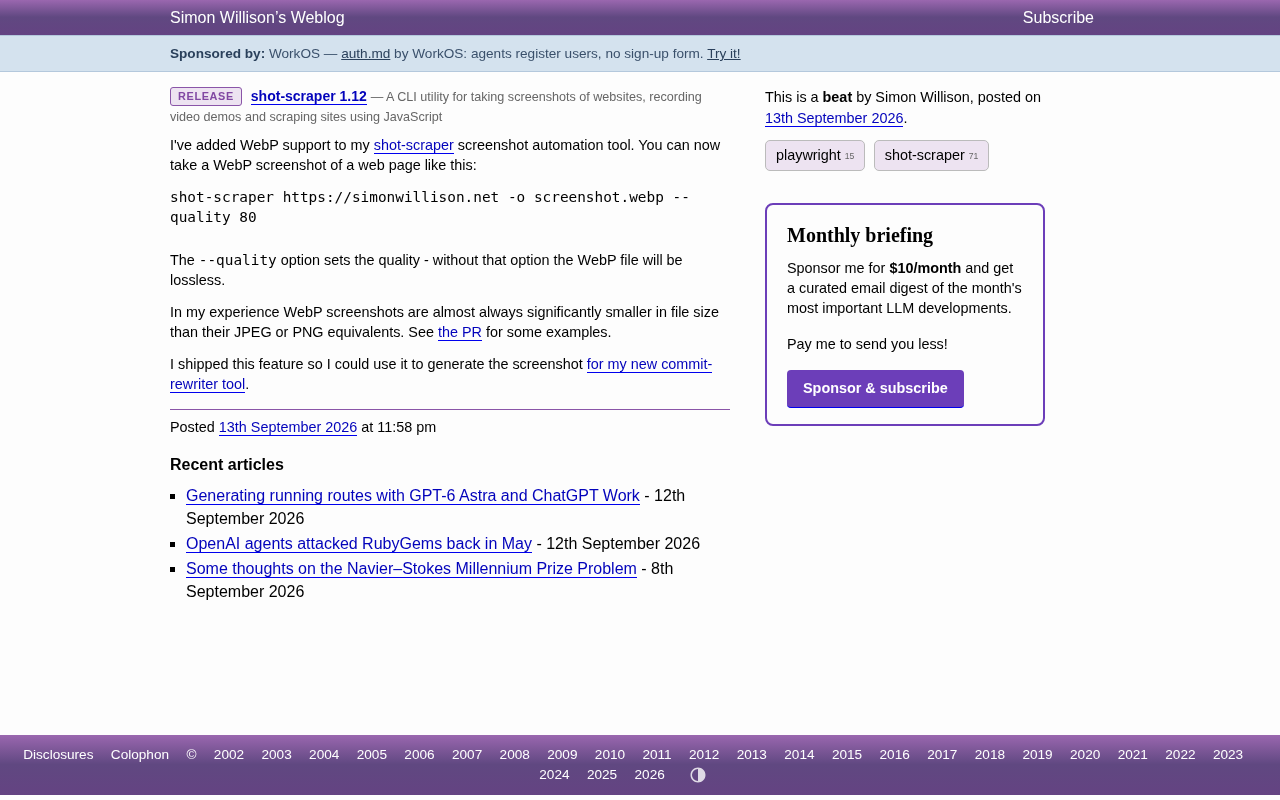
shot-scraper 1.12 adds WebP output support for significantly smaller bulk screenshot file sizes.
Developer Simon Willison has released shot-scraper 1.12, a command-line screenshot tool, with WebP format output as the core improvement. Users simply change the output filename extension to `.webp` and can choose between lossy or lossless compression via the `--quality` parameter. Introduced by Google, WebP typically reduces file sizes by over 25% compared to JPEG and PNG at similar quality — a meaningful advantage for screenshot-heavy web pages. The feature was directly motivated by the author's own need to generate images for his commit-rewriter tool, a classic example of open-source "scratch your own itch" iteration.
Developer Simon Willison has released version 1.12 of his screenshot automation tool shot-scraper, with WebP format support as the headline update. For developers and content creators who regularly need to generate web screenshots in bulk, this is a handy practical improvement.
What WebP Support Brings
shot-scraper is a Playwright-based command-line screenshot tool that automates the process of capturing web pages. Previously, it primarily output PNG and JPEG formats. In version 1.12, users can now generate screenshots directly in WebP format.
Usage is straightforward — simply specify a .webp output filename in the command:
shot-scraper https://simonwillison.net -o screenshot.webp --quality 80
The --quality option controls image quality. Without this parameter, shot-scraper produces a lossless WebP file; adding it enables lossy compression, trading a small reduction in quality for a significantly smaller file size.
Playwright is an open-source browser automation framework developed by Microsoft, supporting the Chromium, Firefox, and WebKit browser engines. Compared to the earlier Puppeteer, Playwright offers more comprehensive cross-browser support and a more stable API. Because shot-scraper is built on top of Playwright, it can render fully JavaScript-driven dynamic pages rather than just scraping static HTML — meaning screenshots accurately reflect what a user would actually see in their browser.
Why Choose WebP
WebP is a modern image format introduced by Google that typically delivers smaller file sizes than JPEG and PNG at comparable visual quality. In the release notes, the author explicitly states that based on his real-world experience, WebP screenshots are almost always significantly smaller than their JPEG or PNG equivalents.
This matters especially in scenarios where large numbers of screenshots need to be embedded in web pages. Smaller image sizes translate directly to faster page load times, lower bandwidth consumption, and a better user experience. The associated Pull Request also includes concrete file size comparison examples for anyone who wants to dig into the numbers.
WebP was released by Google in 2010, with its compression algorithms based on VP8 video coding technology (lossy) and WebP lossless encoding (lossless). According to Google's own benchmarks, WebP lossy compression is on average 25–34% smaller than JPEG at equivalent quality, while WebP lossless compression is on average 26% smaller than PNG. WebP also supports transparency (alpha channel), a feature JPEG lacks — making it a viable replacement for both PNG and JPEG in many scenarios. All major browsers (Chrome, Firefox, Safari 14+, Edge) now natively support WebP, cementing its status as a practical choice for web images.
A Real-World Use Case
Worth noting is that this feature wasn't built as a purely technical exercise — the author had a concrete practical need driving it. He explains that WebP support was added specifically to generate illustrative screenshots for his new tool, commit-rewriter.
This "build what you need" development pattern is a common path for open-source tool iteration: the author is both maintainer and heavy user, so feature utility gets validated against real-world scenarios. Playwright-based screenshot automation tools like this see broad use in generating documentation images, monitoring visual changes on web pages, and automated testing. The addition of WebP makes the tool one step more efficient in terms of output.
Summary
The shot-scraper 1.12 update may be modest in scope, but it addresses a genuine pain point for screenshot tools: file size. By introducing WebP format support alongside flexible quality control options, it gives users the freedom to balance image quality against file size. For developers who rely on automated screenshot workflows, upgrading to the new version and experimenting with WebP output in place of traditional PNG or JPEG is an optimization well worth considering.
Related articles
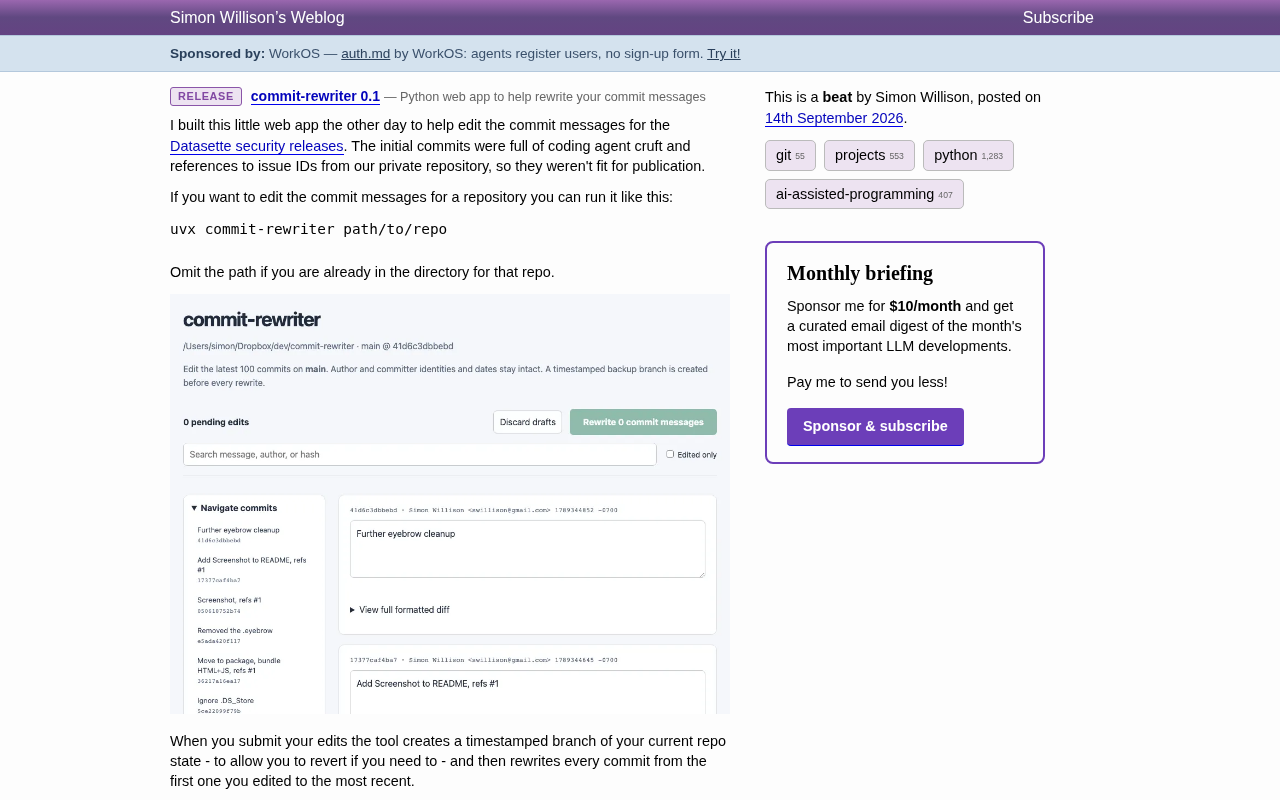
commit-rewriter 0.1: An Open-Source Tool for Batch Rewriting Git Commit Messages
commit-rewriter 0.1 is an open-source Git commit batch-rewriting Web tool by Simon Willison. Run it instantly with uvx to clean AI agent cruft and private refs, with timestamped backup branches for safe rollback.
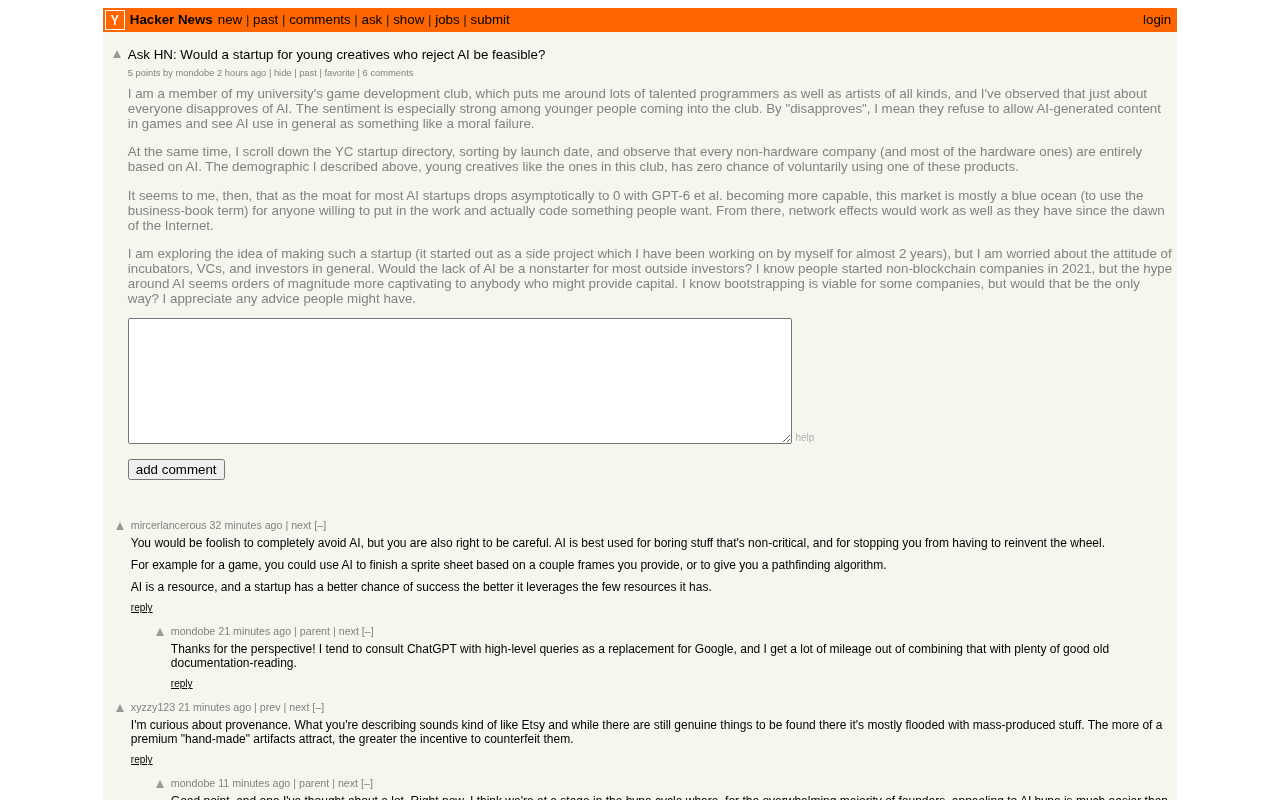
Young Creatives Who Reject AI: Can an Anti-AI Startup Actually Work?
As generative AI sweeps creative industries, a contrarian idea emerged on Hacker News: building a startup for young creatives who refuse AI. We analyze the real demand, possible product forms, and viability challenges.
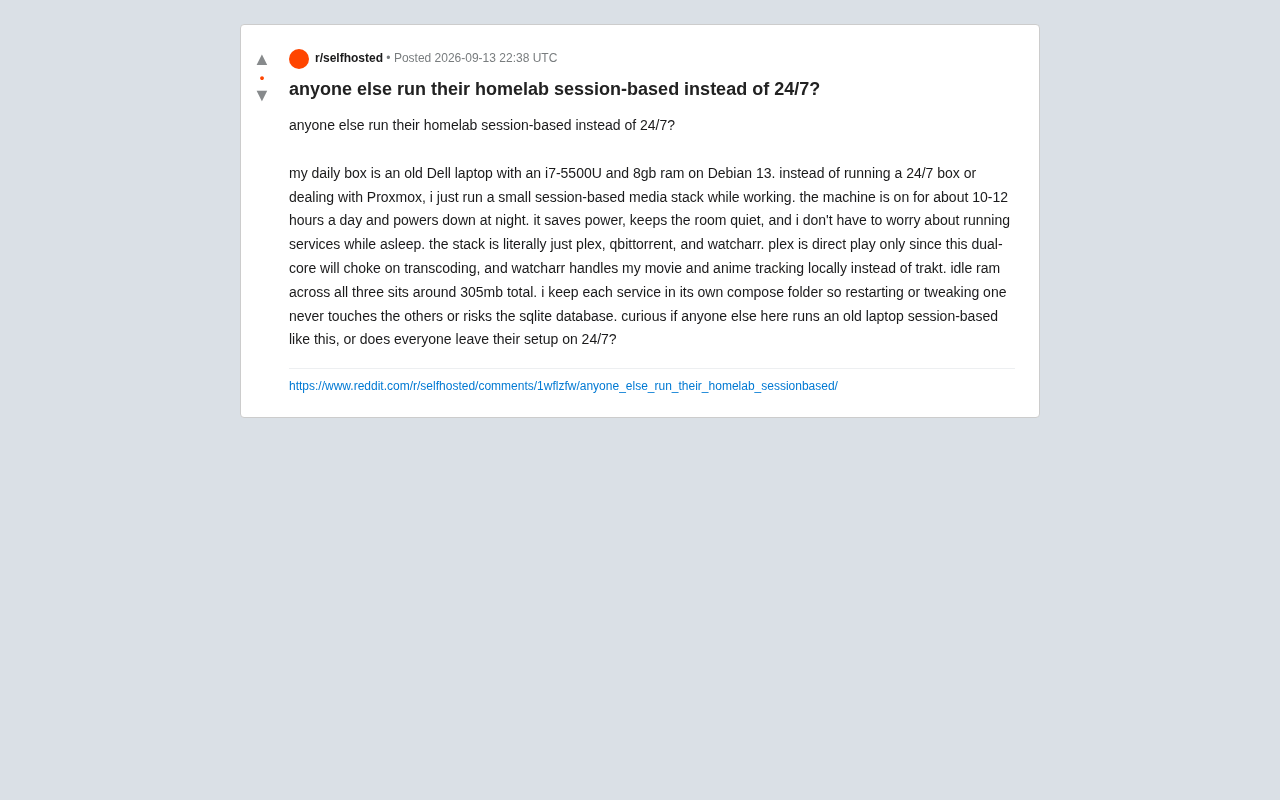
Session-Based Home Server: Running a Low-Power Homelab on an Old Laptop
A Reddit user runs Plex, qBittorrent, and Watcharr on a 10-year-old laptop for just 10–12 hrs/day, using only 305MB RAM idle. Exploring session-based vs. 24/7 Homelab trade-offs.