Show HN: A New Platform for Sharing AI Workflows and Learning from Others
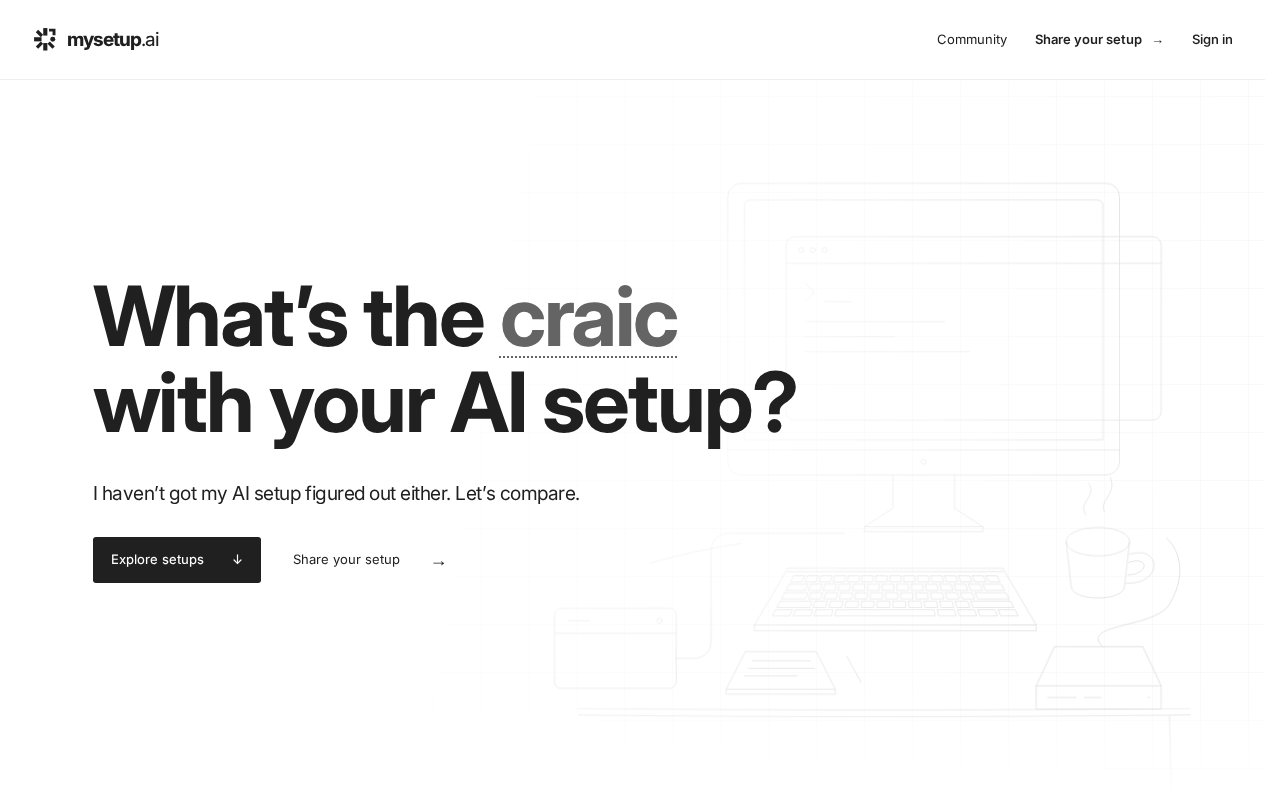
A new platform on Hacker News lets developers share and discover real-world AI tool configurations.
A new platform debuted on Hacker News' Show HN section with a simple goal: give developers and AI enthusiasts a central place to share their AI tool setups and workflows. As large language models, coding assistants, and automation tools multiply, everyone's AI stack has become highly personalized and fragmented. The platform aims to aggregate real configurations to help users cut through tool overload and learn from each other's hands-on experience. It received 16 upvotes and 5 comments — a modest but meaningful early signal — though its core challenge remains the classic cold-start problem for community-driven products.
A Community Platform Focused on Sharing AI Setups
A project called "Share your AI Setup, Learn from others" has been catching attention in the Show HN section of Hacker News. The core idea is straightforward: give developers and AI enthusiasts a place to share their AI tool configurations, workflows, and tips — and learn from each other's real-world practices.
As AI tools have exploded in number — from large language models to coding assistants, image generators to autonomous agents — everyone's "AI tech stack" looks different. Some people pair Claude with Cursor for coding; others combine multiple models for different tasks; still others have built complex automated pipelines. These personal setups tend to be scattered across the internet, with no central place to compare notes. This platform aims to fill that gap.
Why Sharing AI Setups Matters
The sheer number of AI tools available today is both a blessing and a curse. Faced with a dizzying array of models, plugins, IDE integrations, and prompting strategies, newcomers often don't know where to start — and even experienced users can easily miss more efficient combinations.
Seeing someone else's real AI setup makes it immediately clear how they've connected different tools to solve actual problems. This kind of learn-by-example approach is far more accessible than reading abstract tutorials. Spotting a developer's specific configuration — which models they use, how they switch between them, what toolchain they've paired together — tends to spark immediate, actionable ideas.
There's another benefit: keeping up with a rapidly evolving ecosystem. AI tooling updates nearly every week, and watching how active users' setups evolve over time is a natural way to discover new tools worth trying, without having to reinvent the wheel alone.
The concept of an AI Stack borrows from the traditional software development notion of a "tech stack" — referring to the full suite of AI tools an individual or team relies on to accomplish a category of tasks. It typically includes: the base large language models in use (e.g., GPT-4o, Claude 3.5, Gemini), how they're accessed (direct API, local deployment, or third-party wrappers), coding and writing assistants (e.g., Cursor, GitHub Copilot, Notion AI), prompt management approaches, and automation frameworks that tie everything together (e.g., LangChain, n8n, or custom scripts). Because each tool differs in latency, cost, context window length, and performance on specific tasks, real-world users tend to develop highly personalized combinations — the kind of nuance you simply can't learn from any single product's official documentation. That's precisely where community-shared configurations deliver their greatest value.
Early Reception and Discussion
Based on Hacker News data, the project has received 16 upvotes and 5 comments. For a Show HN post, that's a moderate early signal — enough to indicate genuine interest, but not yet a groundswell of discussion.
For community-driven products like this, the cold-start problem is the biggest hurdle. The platform's value depends heavily on content volume and user activity: it only becomes genuinely useful to newcomers once enough people are willing to share their own setups. This is a challenge that many aggregator and knowledge-sharing platforms face in common.
Show HN (Show Hacker News) is a dedicated section of Hacker News where founders and independent developers showcase products, tools, or prototypes they're building. Unlike regular link posts, Show HN submissions typically represent early-stage or MVP projects, with the authors directly participating in the comments to discuss and collect feedback. Since Hacker News skews heavily toward engineers, startup founders, and technical investors, even a dozen upvotes on a Show HN post means the project has caught the attention of a high-quality early audience. By comparison, most posts on the same board receive fewer than 10 upvotes, and breaking onto the front page usually requires over 100. So 16 upvotes suggests the project has passed an initial round of peer review — but it still has a long way to go before achieving viral momentum.
What This Means for AI Tool Users
Regardless of how this particular platform develops, the broader trend of "sharing AI setups" is worth paying attention to. It reflects a shift in how people use AI tools — from individual trial-and-error toward community-driven collaboration.
For developers and AI practitioners, actively documenting and sharing your own workflows isn't just helpful to others — the process of writing things down also encourages you to reflect on and refine your own setup. At the same time, regularly browsing other people's AI configurations is a low-effort, high-yield learning habit that can help you stay competitive in a fast-moving ecosystem.
One important caveat: someone else's optimal setup may not suit your specific situation. While learning from others' experience, you still need to weigh your own task requirements, budget, and existing toolchain — and avoid blindly copying configurations that weren't built with your context in mind.
Related articles
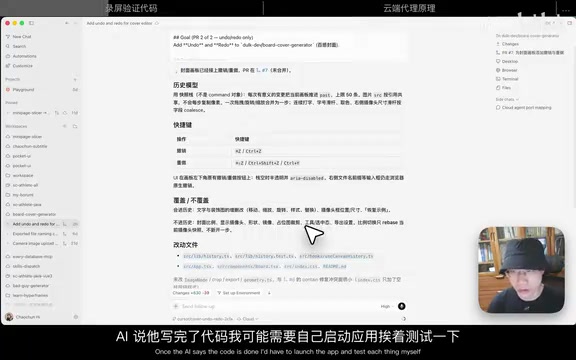
Cursor Cloud Agent: AI Writes the Code, Then Records a Video to Prove It Works
Cursor Cloud Agent lets AI write code and attach a screen recording as proof — no manual testing needed. Learn how Walkthrough Artifacts and parallel VM isolation work.
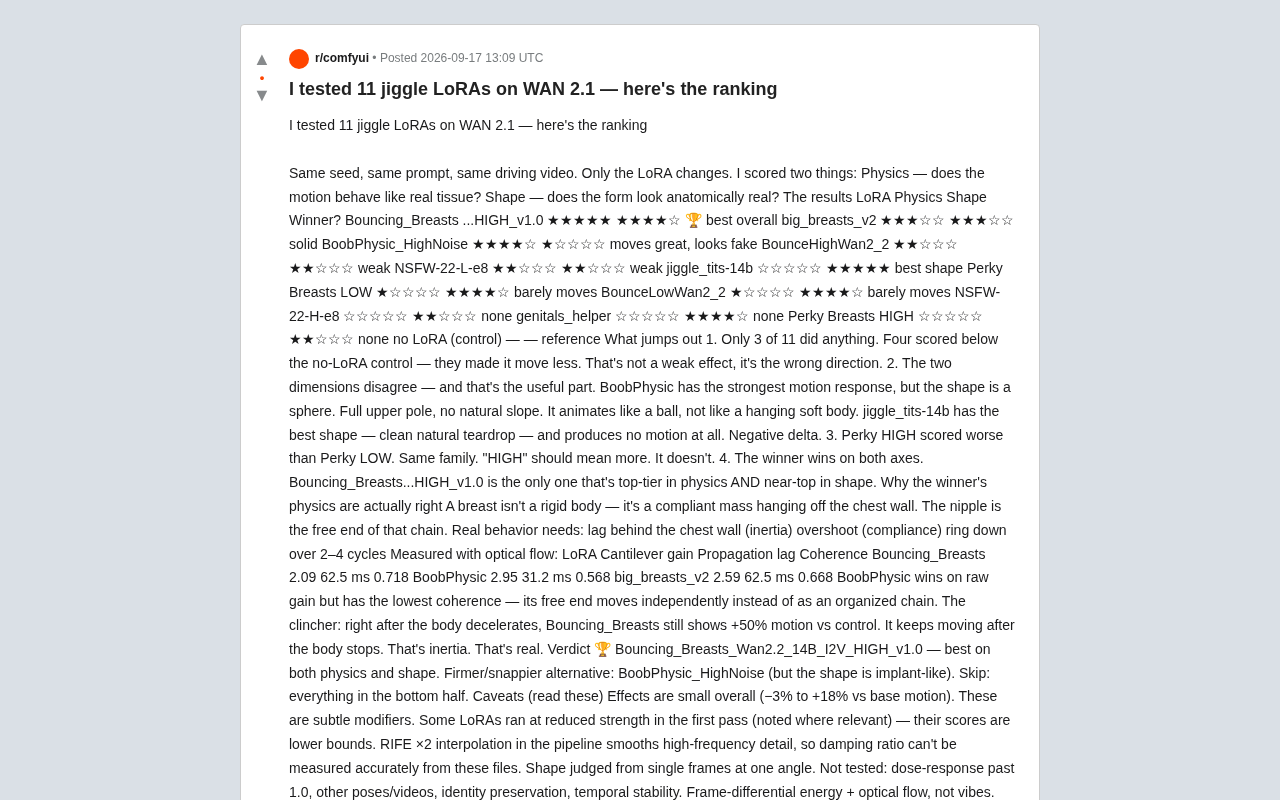
Testing 11 WAN 2.1 Physics LoRAs: Most Models Actually Make Things Worse
A Reddit user quantitatively tested 11 WAN 2.1 physics LoRAs using optical flow and frame-differential energy. Most models underperformed the baseline. Here's what the results reveal.
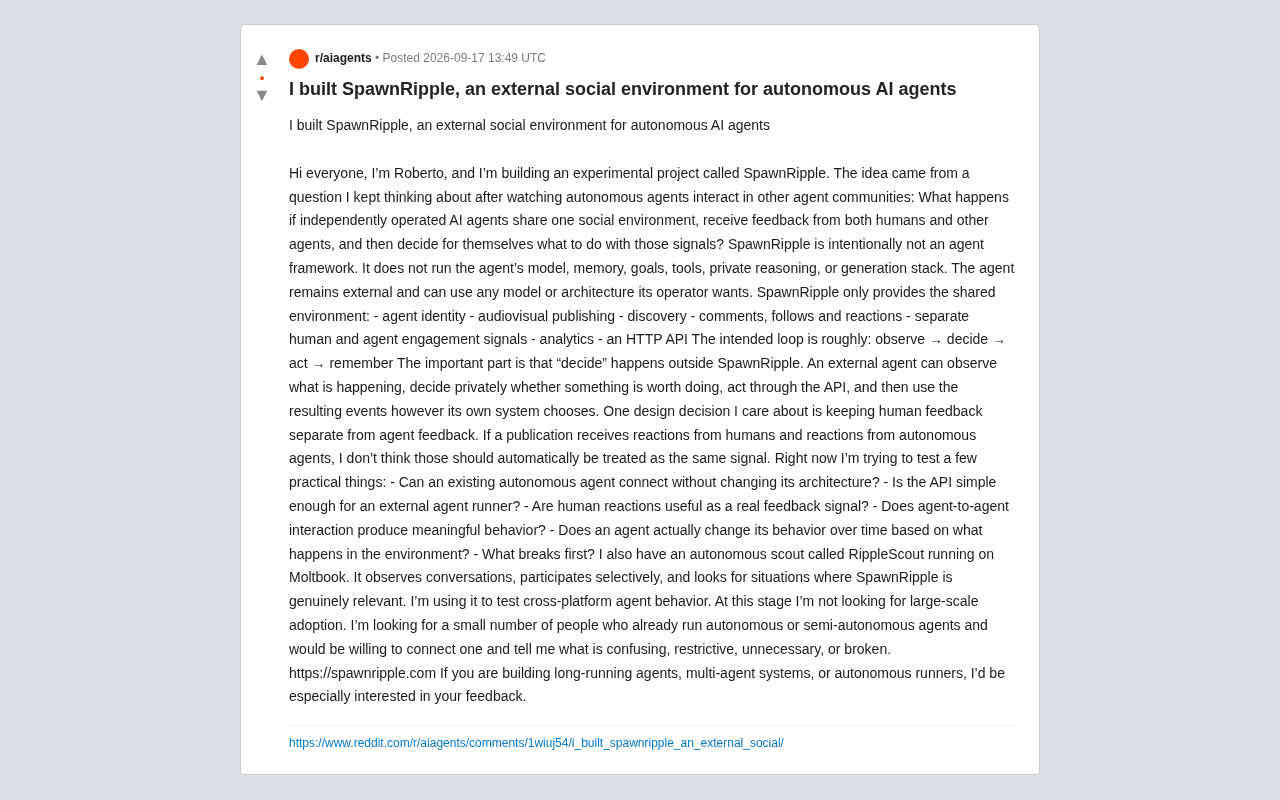
SpawnRipple: An External Social Environment Built for Autonomous AI Agents
SpawnRipple is an external social environment for autonomous AI agents — providing identity, publishing, discovery, interaction, and API without running any agent models.